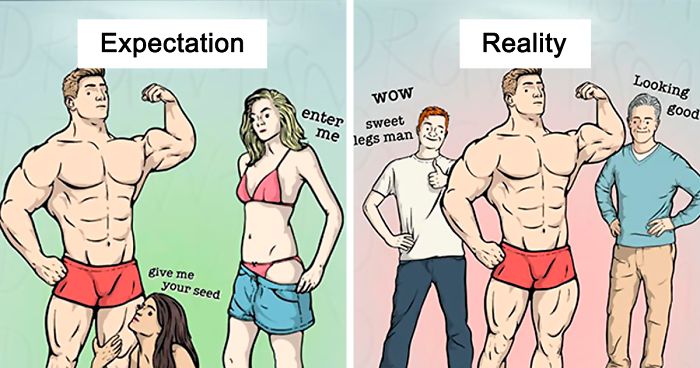
Everyday life is full of tiny absurdities. We pretend to understand workplace meetings, nod thoughtfully when someone explains cryptocurrency, and open the refrigerator six times as though a cheesecake might spontaneously appear. Most of us simply accept these moments and continue with our day. Drawtism turns them into illustrations.
Known for blunt humor, surreal twists, exaggerated characters, and jokes that occasionally stroll across the line of good taste without checking for traffic, Drawtism creates comics that expose how ridiculous ordinary behavior can be. His work is not polished into harmless motivational content. It is awkward, mischievous, sometimes dark, and frequently accurate enough to make readers feel personally investigated.
The collection commonly presented as 35 Unapologetic Illustrations By Drawtism That Poke Fun At Everyday Life captures relationships, technology, social expectations, bodily functions, work, pets, and the strange private thoughts people carefully avoid mentioning at dinner. Behind the silliness is an observant artist who understands a useful comic principle: reality usually needs only one small adjustment before it becomes completely ridiculous.
Who Is Drawtism?
Drawtism is the online identity of a United Kingdom-based illustrator whose route into cartooning was anything but conventional. He has described himself as an engineer rather than a formally trained artist. His recognizable style developed through experimentation, digital drawing, and a willingness to publish jokes that more cautious creators might quietly return to the drafts folder.
His serious interest in drawing emerged after a motorcycle accident in 2018 led to a lengthy hospital stay. While recovering and unable to walk, he began doodling on an iPad. The activity offered entertainment during an extremely difficult period and eventually became a creative outlet with an audience far beyond the hospital room.
A later joke involving an intentionally rough dog portrait helped push the project forward. When the humorous post disappeared from a local sales page, he created his own platform and continued publishing. That decision transformed a private experiment into a recognizable body of online work.
Drawtism has acknowledged an appreciation for wholesome internet artists, but his personal voice is drier, more direct, and more surreal. The result feels distinctly British: emotional restraint on the surface, chaos underneath, and at least one character behaving as though embarrassment is a government conspiracy.
Why Drawtism’s Everyday-Life Illustrations Work
Successful observational comedy begins with recognition. The audience needs to see a familiar habit, frustration, or social ritual before the artist disrupts it. Drawtism often starts with something harmlessa conversation, a pet, an ordinary household objectand then introduces an unexpected visual interpretation.
This structure creates a quick “I get it” moment. The scene is understandable in seconds, yet the joke reveals a perspective the reader probably had not considered. The humor may be childish, uncomfortable, clever, or deliberately stupid. Sometimes it manages all four before breakfast.
35 Everyday Absurdities Seen Through Drawtism’s Unfiltered Lens
Relationships, Romance, and Domestic Diplomacy
-
1. The Difference Between Romantic Expectations and Reality
Romance promises candlelight, meaningful eye contact, and elegant declarations. Daily relationships deliver stolen blankets, mysterious bathroom noises, and arguments about whose turn it is to empty the dishwasher.
-
2. Couples Who Communicate Entirely Through Facial Expressions
Long-term partners can conduct a complete argument using one raised eyebrow. Drawtism understands that silence is not always peaceful; sometimes it is simply a strongly worded email delivered by the forehead.
-
3. Dating Profiles Versus the Person Who Arrives
Online dating encourages selective presentation. The profile says “adventurous traveler.” The date reveals that the adventure was walking to a different supermarket because the usual one had run out of chips.
-
4. The Unwritten Rules of Sharing Food
“I’m not hungry” frequently means “I plan to eat 40 percent of your meal.” Drawtism turns this familiar relationship betrayal into the serious territorial dispute it has always been.
-
5. The Battle for Control of the Thermostat
One partner is dressed for an Antarctic expedition while the other is sweating like a witness under cross-examination. Domestic harmony survives many challenges, but 72 degrees may finish it permanently.
-
6. Selective Hearing in Long-Term Relationships
A person may fail to hear three requests to take out the trash yet detect the quiet opening of a snack wrapper from two rooms away. Science remains cowardly and refuses to explain this phenomenon.
-
7. Affection Expressed Through Mild Annoyance
Not every loving relationship sounds loving. Sometimes affection appears as teasing, complaining, or placing a cold foot against someone who was previously enjoying a peaceful evening.
Work, Ambition, and Professional Pretending
-
8. Meetings That Should Have Been Emails
Few modern experiences are more universal than attending a 60-minute meeting to receive information that required two sentences. Drawtism’s style is ideal for exposing this ceremonial kidnapping of employees.
-
9. Looking Busy When the Boss Walks Past
The sudden transformation from recreational scrolling to intense spreadsheet analysis is one of humanity’s fastest physical reactions. Even professional athletes cannot minimize a browser window with such urgency.
-
10. Workplace Motivation Posters
Corporate walls confidently announce that teamwork makes the dream work. Meanwhile, the printer is broken, Kevin has missed another deadline, and nobody knows what the dream actually is.
-
11. The Emotional Journey of Monday Morning
Monday is not technically responsible for anyone’s problems, but it continues to arrive with suspicious regularity. Drawtism treats the beginning of the workweek like the recurring villain it deserves to be.
-
12. Pretending to Understand Business Jargon
Professionals regularly promise to circle back, leverage synergies, and identify scalable solutions. Translated into ordinary language, this usually means nobody has made a decision.
-
13. The Fantasy of Working From Home
Remote work was supposed to offer freedom and balance. It also introduced video calls, accidental microphones, lunchtime laundry, and the alarming realization that sweatpants can become a permanent identity.
-
14. The Five-Minute Task That Consumes an Entire Day
Simple assignments have a remarkable ability to create passwords, technical problems, missing files, and six unrelated conversations. By the end, the task remains unfinished but everyone has learned something disturbing about the software.
Technology and the Digital Circus
-
15. Checking a Phone Without Knowing Why
The hand reaches for the device before the brain has issued instructions. There is no notification, message, or emergencyonly the possibility that something mildly interesting happened seven seconds ago.
-
16. Social Media’s Carefully Edited Reality
Online life features beautiful breakfasts, clean homes, and inspiring routines. Outside the frame are dirty dishes, unpaid bills, and someone taking 46 photographs of toast.
-
17. The Emotional Power of a Low Battery Warning
A phone at five percent creates more urgency than many genuine life responsibilities. Suddenly, finding a charger becomes a heroic quest involving negotiation, betrayal, and furniture rearrangement.
-
18. Password Requirements Designed by Villains
The password needs an uppercase letter, a symbol, a number, an ancient rune, and the emotional maturity to accept rejection. Naturally, it still cannot resemble any password previously remembered.
-
19. Autocorrect’s Commitment to Sabotage
Autocorrect ignores obvious spelling errors but enthusiastically replaces a normal word with something career-ending. It is less a writing tool than a tiny legal liability living inside the phone.
-
20. Online Arguments Nobody Wins
Two strangers begin by discussing a movie and finish by questioning each other’s intelligence, ancestry, and right to own a microwave. The internet remains undefeated at turning opinions into blood sports.
-
21. The Infinite Scroll
A person opens an app for one minute and emerges 90 minutes later knowing how an otter eats watermelon but forgetting why the phone was opened in the first place.
Food, Bodies, and Other Biological Inconveniences
-
22. Healthy Eating Plans Versus Evening Hunger
At breakfast, the future looks bright and full of vegetables. By 10 p.m., a person is eating shredded cheese over the sink like a raccoon with a mortgage.
-
23. The Refrigerator Inspection Ritual
Nothing new appears, yet the door keeps opening. Perhaps the human brain believes chilled air can generate snacks through persistence.
-
24. Exercise Equipment Becoming Furniture
The treadmill begins as an investment in wellness and ends as an expensive clothing rack. It still supports weight, just not in the way advertised.
-
25. Aging Arriving Through Tiny Betrayals
Getting older is rarely announced dramatically. It arrives through unfamiliar back pain, excitement about kitchen storage, and the involuntary noise made when standing up.
-
26. The Body Choosing the Worst Possible Moment
Hiccups, sneezes, stomach noises, and urgent bathroom requirements obey no social calendar. The human body is essentially an unprofessional coworker that cannot be fired.
-
27. Diet Advice From People Holding Dessert
Everyone becomes a nutrition expert when discussing someone else’s plate. Their authority increases dramatically when they are personally eating cake.
-
28. The Dangerous Confidence of Home Remedies
Someone’s uncle once cured an unspecified illness with vinegar, onions, and positive thinking. The story has now become medical policy at every family gathering.
Pets, Social Behavior, and Everyday Chaos
-
29. Cats Treating Humans as Unpaid Staff
Cats accept food, shelter, and devotion while maintaining the expression of a disappointed landlord. Their occasional affection feels less like love and more like a performance review.
-
30. Dogs Celebrating Absolutely Everything
A dog greets a five-minute absence as though its owner has returned from a decade at sea. This enthusiasm is wonderful, especially when compared with the cat’s ongoing tax audit.
-
31. Small Talk as a Competitive Endurance Event
People discuss weather not because the atmosphere is fascinating, but because silence has entered the room and must be defeated before it becomes powerful.
-
32. Public Transportation Personal-Space Experiments
A nearly empty vehicle somehow inspires one stranger to sit directly beside another. Social science has not determined why, possibly because researchers are afraid to make eye contact.
-
33. Shopping for One Item and Buying Twelve
The original mission was toothpaste. The final cart contains candles, cookies, storage containers, and no toothpaste. Retail environments operate outside normal memory laws.
-
34. The Confidence of People Giving Unrequested Advice
Some individuals can solve careers, relationships, parenting, and global economics while remaining unable to return a borrowed container.
-
35. Laughing at the Mess Because the Alternative Is Screaming
This may be Drawtism’s central theme. Life is confusing, embarrassing, physical, unfair, and astonishingly silly. Turning the mess into a joke does not fix it, but it makes the mess easier to recognize.
The Art of Being Unapologetically Funny
Drawtism’s comics are described as unapologetic because they rarely soften the premise to please every possible reader. He is willing to examine sensitive subjects, expose hypocrisy, and use intentionally lowbrow humor. That freedom produces energetic work, but it also explains why some illustrations attract disagreement.
Edgy comedy is most effective when it targets recognizable behavior rather than vulnerable people. There is an important difference between mocking everyday foolishness and reducing real communities to stereotypes. Cartoon history demonstrates how easily exaggeration can challenge power or reinforce prejudice. Responsible irreverence therefore requires more than shock value; it needs a clear idea underneath the provocation.
At his best, Drawtism points the joke toward universal weaknesses: ego, laziness, vanity, awkwardness, dishonesty, hunger, lust, and our strange dependence on glowing rectangles. Readers may not identify with every illustration, but almost everyone eventually encounters one that feels uncomfortably specific.
A Reader’s Experience of Entering Drawtism’s World
The experience of moving through a large collection of Drawtism illustrations is similar to listening to a brutally honest friend narrate a crowded room. At first, the drawings appear simple and mischievous. Then patterns emerge. People are constantly pretending, misunderstanding one another, surrendering to instincts, or discovering that the respectable version of adulthood is mostly decorative packaging.
One illustration may produce an immediate laugh because the visual punch line is wonderfully ridiculous. Another creates a delayed reaction. The reader studies the scene, recognizes the hidden implication, and then experiences the small mental click that makes visual comedy satisfying. The joke does not always arrive through dialogue. A posture, background detail, exaggerated expression, or unexpected object can carry the entire idea.
The collection also creates the uncomfortable pleasure of recognition. A joke about procrastination is funnier when the reader is currently avoiding work. A comic about late-night eating becomes suspiciously personal when viewed with crumbs on the keyboard. Drawtism’s everyday-life humor works because it transforms private habits into shared evidence. Apparently, everyone is strange; some people are simply better at closing their browser history.
There is also relief in the artist’s lack of polish at the emotional level. Social media frequently presents life as a parade of achievements, attractive rooms, perfect relationships, and morning routines that begin before the sun has received permission to rise. Drawtism offers the opposite. His characters are messy, impulsive, confused, inappropriate, and often defeated by ordinary objects. They remind readers that imperfection is not a personal branding failure. It is the standard human operating system.
Reading these comics with friends adds another layer. People rarely respond to the same illustration in the same way. One person laughs immediately. Another says, “That is literally you,” beginning a completely separate comedy performance. Someone else objects to the joke, which may lead to a discussion about taste, boundaries, or whether the artist has gone too far. That conversation is part of the experience. Satirical art is not required to produce universal agreement; sometimes its value comes from revealing where people draw their own lines.
The best way to approach Drawtism’s work is therefore without expecting every image to be elegant, wholesome, or profound. Some jokes are deliberately foolish. Some are sharp observations wearing childish costumes. Some will miss completely. Others may remain in the reader’s memory because they capture a frustrating truth more efficiently than a serious essay ever could.
Most importantly, the collection encourages a useful habit: stepping outside an irritating moment long enough to see its comic shape. The next pointless meeting, awkward conversation, technological failure, or refrigerator inspection can become material. Nothing has improved, exactly, but the experience has been reframed. The universe is still chaotic; it is simply wearing a slightly funnier hat.
Conclusion
35 Unapologetic Illustrations By Drawtism That Poke Fun At Everyday Life demonstrates why relatable comics remain so shareable. They compress complicated experiences into instantly recognizable scenes, then add exaggeration, surprise, and just enough bad behavior to make the truth entertaining.
Drawtism’s journey from engineer and hospital-bed doodler to widely shared online illustrator also proves that an effective creative voice does not require a traditional route. Observation, persistence, and the confidence to publish unusual ideas can matter as much as formal credentials.
His drawings may be blunt, weird, occasionally uncomfortable, and proudly unserious. Yet beneath the chaos is a consistent invitation: notice how strange ordinary life already is. Then laugh before somebody schedules another meeting about it.