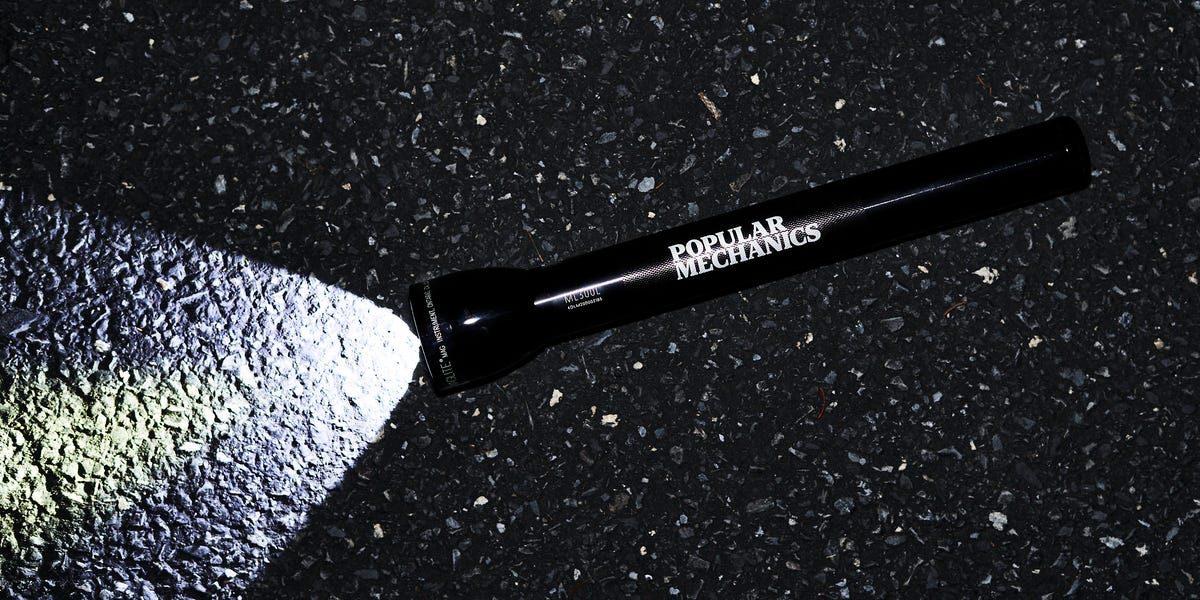
The Maglite ML300L is the kind of flashlight that walks into a room, clears its throat, and reminds every tiny keychain light that adulthood exists. It is not the newest-looking flashlight on the shelf, nor is it trying to be a pocket-size gadget with seventeen charging ports and a personality disorder. It is a full-size, D-cell LED flashlight built around an old-school idea: make it tough, make it bright, make it simple enough to use when the power is out and everyone is suddenly acting like they live in a haunted mansion.
In this Maglite ML300L review, we will look at brightness, beam quality, runtime, durability, battery life, everyday usability, value, and whether this classic-looking LED flashlight still makes sense in a market full of rechargeable tactical lights. The short answer: yes, for the right buyer. The longer answer is much more interesting, and thankfully involves fewer dead batteries than your junk drawer.
Maglite ML300L Review: Quick Verdict
The Maglite ML300L is best for people who want a reliable home, garage, vehicle, camping, or emergency flashlight with a long throw, tough aluminum construction, and excellent runtime. It is not the best everyday-carry flashlight because it is large and heavy. It is also not rechargeable in the standard ML300L version, so buyers who want USB-C convenience may prefer another model. But as a dependable full-size LED flashlight, the ML300L still earns its place.
The biggest strengths are its durable build, strong beam distance, adjustable spot-to-flood focus, multiple power modes, and familiar Maglite feel. Its weaknesses are also obvious: it is bulky, it relies on D-cell batteries, and its beam is more practical than pretty. Think of it as a pickup truck, not a sports car. It may not win a beauty contest, but it will show up when the basement breaker trips at midnight.
What Is the Maglite ML300L?
The Maglite ML300L is a full-size LED flashlight from Maglite, a brand famous for rugged aluminum flashlights used by homeowners, mechanics, campers, security workers, and emergency responders. The ML300L series includes different battery configurations, commonly including 2D, 3D, and 4D versions. Specs can vary by exact model, generation, and package, but the family is generally known for high-output LED performance, long battery life, IPX4 water resistance, 1-meter drop resistance, and a multi-mode electronic switch.
The 2D model is the most practical for many homes because it balances size, brightness, and runtime. The 3D and 4D versions add more battery capacity, longer runtime, and in some cases more brightness and beam distance, but they also become larger and heavier. In other words, choose the 2D if you want a big flashlight; choose the 4D if you want a flashlight that could probably intimidate a raccoon into leaving your trash cans alone.
Key Specifications and Features
Brightness and Beam Distance
The Maglite ML300L is designed around usable brightness rather than gimmicky lumen numbers. Depending on the exact version, you may see output ratings ranging from the high 400-lumen range on some current 2D listings to more than 700 lumens on the 3D model and around 1,000 lumens on certain 4D versions. Older or retailer-specific listings may show different numbers, such as 524 lumens for the 2D model and 625 lumens for the 3D model.
That variation is why it is important to check the exact SKU before buying. Still, the real story is not just lumens. The ML300L uses a deep reflector and adjustable focus system, giving it strong throw for outdoor scanning, driveway checks, campsite use, and emergency visibility. It can reach much farther than many small flashlights with similar lumen claims because reflector design matters. Lumens tell you how much light is produced; beam design tells you where that light actually goes.
Power Modes
The ML300L typically includes several lighting functions, including high power, low power, eco mode, momentary mode, and strobe. Maglite’s Quick-Click system allows users to cycle through function sets. This means the flashlight can be configured for general use, outdoor use, law enforcement-style use, or tactical-style access patterns depending on the model.
For most users, high mode is for outdoor distance, low mode is for routine tasks, and eco mode is for long-lasting emergency lighting. Strobe is there if you need it, though most homeowners will use it approximately never unless they accidentally click into it and briefly turn the hallway into a budget nightclub.
Battery Life
Runtime is one of the ML300L’s strongest selling points. D-cell batteries are large, but that size gives the flashlight serious endurance. The 2D version can run for hours on high and dramatically longer on lower modes. Current 2D specifications often list very long low and eco runtimes, while 3D and 4D models can stretch runtime even further.
The standard ML300L is not rechargeable, which is either a downside or a practical advantage depending on your situation. For everyday use, rechargeable flashlights are convenient. For emergency kits, D-cell flashlights still make sense because alkaline batteries are widely available and easy to store. During a power outage, it is comforting to know your flashlight does not need a wall outlet that is currently as useful as a chocolate teapot.
Design and Build Quality
The ML300L looks and feels like a Maglite. That means an aluminum body, textured grip, substantial weight, and a no-nonsense shape. It does not feel flimsy. It does not rattle like a toy. It has the sturdy, slightly overbuilt personality that made Maglite famous in the first place.
The anodized aluminum body gives it good resistance against scratches and daily abuse. The flashlight is also water resistant, typically rated IPX4, meaning it can handle splashes and rain but should not be treated like a diving light. It is also rated for a 1-meter drop, which covers the kind of normal accidents that happen when you are balancing a flashlight, toolbox, and your last remaining patience.
The head rotates to adjust the beam from spot to flood. This old Maglite feature remains useful. A tighter spot helps when checking the far end of a yard or trail. A wider flood helps when working under a sink, walking around a campsite, or looking for the one screw that absolutely launched itself into another dimension.
Performance: How Bright Is the Maglite ML300L in Real Use?
In real-world use, the ML300L feels bright enough for most household and outdoor tasks. It is not the brightest flashlight money can buy, and flashlight enthusiasts may point out that many smaller modern lights produce higher maximum lumens. That is true. But brightness is only part of the story.
The ML300L’s beam is useful because it throws well. For checking a backyard, walking a dog, inspecting a garage, searching a dark shed, or lighting a trail, the beam has enough reach and intensity to feel confident. The focused beam is especially helpful outdoors, where smaller flood-heavy flashlights may look bright up close but fade quickly at distance.
Indoors, high mode can be more than you need. Low mode is usually better for closets, breaker panels, attic steps, and under-sink plumbing. Eco mode is useful when you want long runtime rather than maximum brightness. During emergencies, that matters. A flashlight that lasts a long time is often more valuable than one that blasts a wall with absurd brightness for ten minutes and then dies dramatically.
Beam Quality: Spot, Flood, and Focus
The adjustable beam is one of the ML300L’s signature features. By twisting the head, you can move between a tighter spotlight and a broader flood. The spot mode gives good distance and makes the flashlight useful for outdoor scanning. The flood mode is better for close-up tasks.
However, the beam is not perfect. Compared with premium enthusiast flashlights, the ML300L beam can look a little uneven, especially when adjusted between extremes. Some users may notice artifacts or a less refined transition between spot and flood. For practical work, this usually does not matter. For flashlight hobbyists who enjoy discussing tint, CRI, spill, hotspot shape, and beam artifacts over coffee, it may matter a lot.
For the average buyer, the beam does the job well. It is bright, adjustable, and capable of reaching farther than many compact lights. It may not be art-gallery lighting, but you are probably not using it to illuminate a Renaissance painting in the garage.
Ease of Use
The ML300L is simple once you understand the click system. The main switch controls power and modes, while the Quick-Click function sets allow access to different combinations. Some users will love the flexibility; others may wish it were just on, low, high, off. Fortunately, after a short learning curve, the flashlight becomes easy to operate.
The large body is comfortable for gloved hands, making it useful for winter, camping, roadside tasks, and work environments. It is also easy to find in a drawer, toolbox, or vehicle. Tiny flashlights are convenient until they disappear into the mysterious black hole where tape measures, 10mm sockets, and your motivation to clean the garage all live.
Pros and Cons
Pros
- Durable aluminum construction with classic Maglite feel
- Strong beam distance for outdoor use
- Adjustable spot-to-flood focus
- Long runtime, especially on low and eco modes
- Multiple lighting functions and configurable mode sets
- Good choice for home, garage, vehicle, camping, and emergency kits
- Uses widely available D-cell batteries
Cons
- Large and heavy compared with modern compact LED flashlights
- Standard ML300L models are not rechargeable
- Beam quality may not satisfy flashlight enthusiasts
- D-cell batteries add cost and weight
- Mode system may take a few minutes to learn
Maglite ML300L vs. Modern Rechargeable Flashlights
Modern rechargeable flashlights often offer higher peak lumens, USB-C charging, magnetic tail caps, pocket clips, compact bodies, and advanced battery indicators. If you want a light for everyday carry, one of those compact rechargeable models may be a better fit. The ML300L is not trying to be that.
Instead, the ML300L is better understood as a full-size utility flashlight. It is meant to live in a kitchen drawer, garage cabinet, truck, emergency kit, cabin, workshop, or camping bin. It is easy to grip, hard to lose, and ready for situations where size is not a problem.
Rechargeable lights are excellent when you remember to charge them. The ML300L is excellent when you remember to keep fresh D batteries nearby. Neither approach is perfect. The best option depends on whether your life is more “organized charging station” or “I found batteries in a drawer and they are probably fine.”
Who Should Buy the Maglite ML300L?
The Maglite ML300L is a strong choice for homeowners who want one dependable flashlight for power outages, outdoor checks, and household repairs. It is also good for campers who value durability and runtime over pocket portability. Mechanics, property owners, security workers, and anyone who likes full-size tools may appreciate its size and build.
It is not ideal for backpackers trying to cut weight, urban everyday-carry users, or buyers who want built-in charging. It is also not the best choice for someone who wants the smallest possible flashlight with the highest possible turbo output. But for practical, old-fashioned reliability with LED efficiency, the ML300L makes a convincing case.
Buying Tips
Before buying, confirm the exact ML300L version. The 2D, 3D, and 4D models differ in brightness, size, runtime, weight, and price. Retail listings may show different lumen numbers because of model variations or older specifications. Check battery count, included packaging, color, and whether batteries are included. In most cases, D-cell batteries are not included.
If you plan to use the flashlight mainly indoors, the 2D model is usually enough. If you want longer runtime and do not mind extra size, the 3D or 4D version may be worth considering. For a vehicle or emergency kit, remember to store batteries properly and inspect them occasionally to avoid corrosion.
500-Word Experience Section: Living With the Maglite ML300L
Using the Maglite ML300L feels different from using a modern pocket flashlight. The first thing you notice is the weight. It has presence. Pick it up, and it immediately feels like a tool rather than a gadget. That may sound old-fashioned, but in real life it is comforting. When the lights go out during a storm, a tiny flashlight can feel like a toy. The ML300L feels like it has a mortgage, a retirement plan, and strong opinions about extension cords.
In a home setting, the flashlight shines brightest as an emergency and utility light. It is easy to keep near a back door, in a hallway closet, or beside a breaker panel. The large body makes it simple to grab quickly, even in the dark. During a power outage, low mode is usually the best setting. It gives enough light to move around safely without burning through batteries too quickly. Eco mode is excellent when you need long-lasting background light, such as setting the flashlight upright or bouncing the beam off a ceiling.
Outside, the ML300L becomes more impressive. The focused beam reaches across yards, driveways, fields, and tree lines better than many compact lights. If you hear a noise near the trash cans, this flashlight lets you investigate from a respectful distance, which is the correct distance for both raccoons and suspicious garden hoses that look like snakes. The adjustable focus is genuinely useful here. A wider beam helps while walking, while a tighter beam helps identify objects farther away.
For garage and workshop tasks, the ML300L is durable and easy to handle, though its round body can roll if placed on a flat surface. It is not as convenient as a magnetic work light for hands-free repairs, and it is not small enough to hold comfortably in your mouth while fixing something. Please do not do that anyway. Dentists already have enough drama. Still, for general inspection, looking behind appliances, checking attic corners, or finding dropped hardware, it performs well.
The battery situation is the main lifestyle question. D batteries are not as common in daily use as AA, AAA, or rechargeable lithium-ion cells. They are bigger, heavier, and more expensive. But they also provide long runtime and are easy to store for emergencies. The smartest approach is to keep a fresh set nearby and check them a few times a year. Remove batteries if the flashlight will sit unused for a long time.
After living with the ML300L, the impression is clear: this is not the flashlight for minimalists or gear nerds chasing maximum lumens per ounce. It is for people who want a tough, dependable, full-size LED flashlight that works when needed and does not require an app, firmware update, or emotional support cable. It is practical, slightly nostalgic, and still very useful.
Final Verdict: Is the Maglite ML300L Worth It?
The Maglite ML300L is worth buying if you want a rugged, full-size LED flashlight with strong beam distance, long runtime, adjustable focus, and a proven design. It is especially good for emergency preparedness, home use, camping, garages, vehicles, and general utility work. It is less appealing if you want a compact rechargeable flashlight for everyday carry.
Its best quality is confidence. The ML300L feels dependable. It is not flashy in the modern gadget sense, but it is effective, sturdy, and easy to trust. In a world where many products feel disposable, the Maglite ML300L still feels like something you buy once and keep for years. That alone gives it a certain charm.
Note: Specifications can vary by ML300L model, battery configuration, package, and production generation. Always verify the exact SKU and current manufacturer details before purchasing.