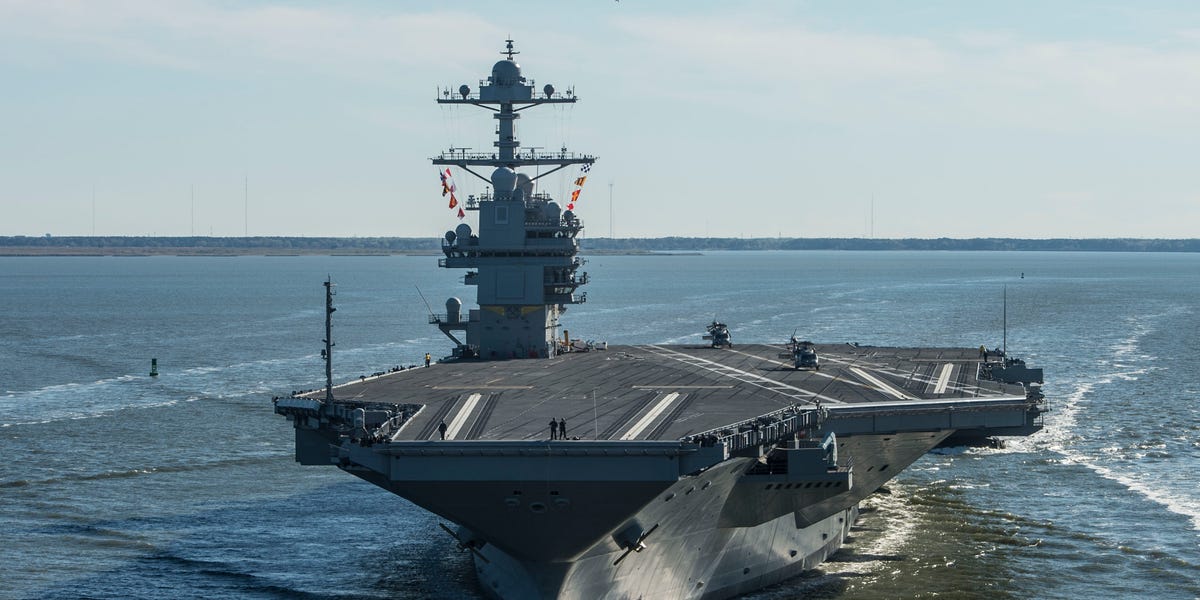
Building an aircraft carrier sounds simple if you say it fast: make a huge ship, put airplanes on top, add sailors, and try not to misplace the ocean. In reality, a modern aircraft carrier is one of the most difficult machines humans have ever built. It is a floating airport, nuclear power plant, weapons depot, command center, hospital, repair shop, city, and military base squeezed into one steel monster that must survive storms, enemy threats, and the occasional 3 a.m. coffee shortage.
The main keyword here is aircraft carrier construction, but the real story is bigger than welding metal. It is about nuclear propulsion, advanced electronics, precision aviation systems, supply chains, military requirements, shipyard labor, budget pressure, and testing that can take years. A carrier cannot be “mostly good.” If a commercial building has one slow elevator, people complain. If an aircraft carrier has a weapons elevator problem, flight operations, combat readiness, delivery schedules, and billions of dollars can feel the impact.
So why is it so hard to build aircraft carriers? Because every part of the ship has to do something extreme, and every extreme part has to work with every other extreme part. That is engineering with a capital “E” and a headache with a capital “Please Send More Coffee.”
1. An Aircraft Carrier Is Not Just a Ship
A common mistake is imagining an aircraft carrier as simply a very large boat. It is much closer to a mobile airbase that happens to float. The U.S. Navy uses carriers to project power, support allies, deter aggression, respond to crises, and maintain maritime presence across the globe. That mission demands far more than speed and size.
A modern nuclear-powered aircraft carrier must launch and recover aircraft, move weapons safely, produce enormous electrical power, feed thousands of people, desalinate seawater, treat injuries, repair aircraft, coordinate communications, defend itself, and operate for months away from home. It must do all of that while moving through a corrosive saltwater environment that treats metal like a snack.
2. The Scale Is Absurd
Aircraft carriers are enormous, but the challenge is not only their size. The difficulty comes from density. Inside the hull are miles of cables, pipes, ventilation systems, electronics, machinery rooms, fuel lines, weapons magazines, crew spaces, galleys, medical facilities, and command areas. Every inch matters. Shipbuilders do not have the luxury of saying, “Let’s add a spare basement.” The ocean is not accepting renovation permits.
The Ford-class carrier was designed with a larger flight deck, greater electrical capacity, improved weapons movement, and more automation than earlier classes. These upgrades are intended to increase sortie generation and reduce crew workload, but they also make design integration more demanding. When one compartment changes, dozens of nearby systems may need to change too.
3. Nuclear Propulsion Raises the Difficulty Level
Nuclear propulsion gives U.S. supercarriers tremendous endurance and power, but it also adds strict engineering, safety, security, and quality-control requirements. A nuclear-powered aircraft carrier is not something a shipyard can improvise like a weekend garage project. The reactors, shielding, control systems, steam plants, and supporting machinery must meet exacting standards.
This is one reason only a tiny industrial base can build nuclear-powered carriers. In the United States, Newport News Shipbuilding has long been the sole designer and builder of nuclear-powered aircraft carriers for the Navy. That concentration of expertise is powerful, but it also means the nation depends on a specialized workforce, rare facilities, and suppliers that cannot be replaced overnight.
4. Carrier Flight Operations Are Brutally Demanding
Launching a fighter jet from a ship is an act of controlled violence. The aircraft must accelerate from zero to flying speed in a very short distance. Landing is even more dramatic: a jet touches down on a moving deck and catches an arresting wire to stop before it runs out of runway. For pilots, it is skill. For engineers, it is physics wearing steel-toed boots.
Ford-class carriers introduced the Electromagnetic Aircraft Launch System, known as EMALS, to replace traditional steam catapults. EMALS uses stored kinetic energy and solid-state electrical power conversion, allowing computer-controlled launches with smoother acceleration and broader aircraft compatibility. That sounds elegant, and it is, but it also means the ship must integrate high-power electrical systems, software, sensors, cooling, safety procedures, maintenance plans, and training into one reliable launch system.
EMALS: A Giant Leap With Giant Integration Work
EMALS is designed to launch everything from heavy strike fighters to future lighter unmanned aircraft. That flexibility is one of its biggest advantages. But new technology often behaves like a toddler with a physics degree: impressive, promising, and occasionally determined to make everyone late. Ford-class carriers had to prove that EMALS could operate repeatedly, safely, and reliably in real shipboard conditions.
AAG: Catching Aircraft Is Not Optional
The Advanced Arresting Gear, or AAG, is another Ford-class innovation. It uses digital controls, energy absorbers, and power conditioning equipment to recover a wider range of aircraft with less maintenance and greater control than legacy arresting systems. But because arresting gear is mission-critical, even small reliability concerns matter. If the system used to stop aircraft is not ready, the carrier’s central purpose is compromised.
5. New Technology Creates a Testing Trap
One major reason aircraft carrier construction is so difficult is that new systems are often developed while the ship itself is being built. That creates a dangerous overlap. If a system matures late, the shipbuilder may have to redesign, rework, or delay other areas. This is like trying to build a house while the oven, plumbing, and elevator are still in experimental mode.
Government reviews of the Ford-class program repeatedly highlighted risk from concurrency, which means designing, building, and testing at the same time. Concurrency can save time if everything works. If not, it can create expensive rework. On a carrier, rework is not simply removing a panel and trying again. It may mean cutting into finished compartments, rerouting cables, retesting systems, and adjusting schedules across thousands of workers.
6. Weapons Elevators Are Harder Than They Sound
To a casual observer, a weapons elevator may sound like a freight elevator with a scarier job description. On a Ford-class carrier, the Advanced Weapons Elevators are electromagnetic systems designed to move ordnance quickly and safely from magazines to the flight deck. Their purpose is simple: get the right weapons to the right aircraft at the right time.
The engineering is anything but simple. These elevators must move heavy, dangerous loads through a warship without compromising safety, speed, shock resistance, or survivability. They must integrate with magazines, weapons handling routes, sensors, software, power systems, and flight deck operations. Delays and technical issues with these elevators became one of the best-known examples of why building a first-in-class carrier can be so difficult.
7. The Supply Chain Is a National Project
An aircraft carrier may be assembled in one shipyard, but it is built by a nationwide industrial network. Pumps, valves, steel, electronics, propulsion components, radar parts, software, coatings, turbines, specialty fasteners, and countless other items come from suppliers across the country. Many of these suppliers are highly specialized. Some may be sole-source providers, meaning there is no easy backup if production slows.
This makes timing critical. A late component can block an entire construction sequence. If a system cannot be installed when planned, workers may need to complete surrounding work out of order, which increases labor hours. The ship may look impressive from the pier, but hidden inside may be schedule puzzles that would make a project manager stare quietly into the distance.
8. Skilled Labor Cannot Be Downloaded
Shipbuilding depends on people with rare skills: nuclear engineers, naval architects, welders, pipefitters, electricians, machinists, software specialists, quality inspectors, planners, logisticians, and test crews. These workers need years of training. A shipyard cannot simply “scale up” like a phone app. You cannot press a button and produce 500 experienced nuclear-qualified shipbuilders by Monday.
That workforce challenge affects cost, schedule, and quality. If experienced workers retire faster than new workers can be trained, knowledge gaps appear. If production is delayed, suppliers may lose skilled labor. If orders are spaced too far apart, the industrial base cools down; if orders come too quickly, it overheats. Aircraft carrier construction requires a steady rhythm, not a panic drum solo.
9. Cost Control Is a Battle of Its Own
Modern U.S. aircraft carriers cost many billions of dollars each. The Ford-class program has faced public scrutiny over cost growth, schedule delays, and accountability. But carrier cost is difficult to manage because the ship is both a military platform and a long-term national investment. A carrier may serve for about 50 years, with modernization and maintenance throughout its life.
Reducing crew size, improving automation, increasing sortie generation, and adding electrical power can save money over decades. However, those savings often require expensive upfront development. This creates a political and engineering dilemma: spend more now to save later, or avoid risk now and possibly pay more over the ship’s lifetime.
10. Testing Must Prove the Ship Can Fight
A carrier does not become ready just because it floats. It must pass trials, conduct training, validate systems, complete certifications, and prove that the crew and ship can operate together. Sea trials test propulsion, steering, navigation, communications, power systems, and other basics. Later events test aviation operations, weapons handling, damage control, combat systems, and strike group integration.
Testing can expose flaws that were invisible on paper. That is not failure; that is what testing is for. The problem is that every discovered issue has a cost. Fixes may require engineering analysis, parts, shipyard labor, sailor training, and retesting. On a first-in-class ship, the learning curve can be especially steep.
11. First-in-Class Ships Are Basically Engineering Laboratories
The first ship in a new class always carries extra risk. It proves the design, reveals hidden problems, and teaches lessons for follow-on ships. USS Gerald R. Ford was the first new U.S. carrier design in more than 40 years. That meant the Navy and industry were not merely repeating a familiar recipe; they were introducing major changes to propulsion, electrical power, aircraft launch systems, aircraft recovery systems, weapons movement, flight deck layout, and software-controlled operations.
The good news is that lessons from the lead ship can improve later carriers. The bad news is that the lead ship pays much of the tuition. And when the classroom is a nuclear-powered supercarrier, tuition is not cheap.
12. The Ship Must Keep Evolving for Decades
A carrier built today must remain useful decades from now. That means designers need to anticipate future aircraft, sensors, weapons, drones, electronic warfare systems, command networks, and defensive technologies. Nobody can predict the future perfectly, so ships need growth margin: extra electrical power, adaptable spaces, flexible networks, and modernization pathways.
This long service life is one reason the Ford class emphasizes electrical capacity and flexible infrastructure. Future systems may demand more power and data than older carriers were designed to provide. Building that future-ready capacity into the ship is smart, but it adds complexity from day one.
13. Everything Must Work in the Harshest Office Environment on Earth
The sea is a terrible place to run delicate machinery. Saltwater corrodes. Vibration loosens. Heat builds. Storms bend schedules. Jet blast punishes deck equipment. Weapons handling requires flawless safety discipline. Nuclear systems require exact standards. Aircraft operations leave little room for casual mistakes.
That is why aircraft carrier construction involves so much redundancy, compartmentalization, testing, inspection, and documentation. A carrier must absorb damage, isolate failures, continue operating, and protect its crew. It is not built for ideal conditions. It is built for the day everything gets loud, wet, hot, confusing, and inconvenient.
Real-World Example: The Ford-Class Learning Curve
The Gerald R. Ford class shows both the promise and the pain of modern carrier construction. The class introduced 23 new technologies, including EMALS, AAG, and Advanced Weapons Elevators. These systems are intended to increase combat effectiveness, reduce manpower, improve sortie generation, and support future aircraft. They also created integration and reliability challenges that affected schedules and testing.
USS Gerald R. Ford was delivered to the Navy in 2017 and later completed post-delivery work, trials, and training before becoming a more mature operational platform. Follow-on ships, including John F. Kennedy, Enterprise, and Doris Miller, benefit from lessons learned, but they also continue to face the reality that advanced carriers are among the most complex defense projects in the world.
Why Other Countries Do Not Build Many Supercarriers
Many nations operate smaller carriers or amphibious assault ships, but very few build nuclear-powered supercarriers. The reason is not lack of ambition. It is the massive combination of cost, shipbuilding capacity, nuclear expertise, aircraft development, pilot training, escort ships, logistics, maintenance infrastructure, and operational doctrine.
A carrier is not useful by itself. It needs aircraft, trained crews, supply ships, destroyers, submarines, maintenance yards, command networks, and decades of institutional experience. Building the ship is hard. Building the ecosystem around the ship is even harder.
Experience Section: What Aircraft Carrier Construction Teaches Us
One of the most useful ways to understand why aircraft carriers are so hard to build is to compare them to big projects in everyday life. Anyone who has renovated a kitchen knows that moving one sink can reveal three plumbing problems, two electrical surprises, and one mysterious pipe nobody wants to claim. Now imagine that kitchen is nuclear-powered, carries fighter jets, must survive explosions, and needs to feed several thousand people while crossing an ocean. Suddenly, your contractor showing up late with the wrong tile feels almost relaxing.
The first lesson is that complexity multiplies. In a small project, one delay may be annoying. In aircraft carrier construction, one delay can affect multiple trades, supplier schedules, test events, and Navy planning. A late component does not wait politely in the corner. It pushes other work out of sequence. Workers may have to install temporary systems, leave access areas open, or return later to redo work. That is expensive because shipbuilding rewards doing tasks in the right order.
The second lesson is that new technology always charges an admission fee. EMALS, AAG, and electromagnetic weapons elevators were not added because engineers were bored and wanted extra paperwork. They were designed to make carriers more capable for future warfare. But advanced systems require testing, debugging, software maturity, training, spare parts, and maintenance procedures. Innovation is valuable, but it rarely arrives wearing a tidy bow.
The third lesson is that skilled people are the real secret weapon. Steel matters. Software matters. Nuclear reactors definitely matter. But none of it comes together without shipbuilders, sailors, engineers, inspectors, and program managers who understand how tiny details affect the whole ship. A good weld, a correctly routed cable, a carefully tested valve, or a well-written procedure can prevent major problems later.
The fourth lesson is patience. Aircraft carriers are built for decades of service, not for a product launch cycle. That means decisions made during design can affect sailors who have not even been born yet. More electrical capacity, better modernization access, and reduced manpower may seem abstract during construction, but they can shape the ship’s usefulness for half a century.
Finally, aircraft carrier construction reminds us that “hard” does not mean “impossible.” It means the project lives at the edge of what an industrial nation can design, fund, build, test, and sustain. A carrier is not just a weapon. It is a national engineering exam taken in public, graded by the ocean, and retaken every time the ship goes to sea.
Conclusion
Aircraft carriers are hard to build because they combine nearly every difficult engineering problem into one platform. They require nuclear propulsion, aviation systems, weapons handling, advanced electronics, massive electrical power, survivability, logistics, habitability, software, and human expertise. They must work as ships, airbases, command centers, and cities. They must be safe in peacetime and lethal in wartime.
The Ford-class experience shows why the challenge is so intense. New technologies can increase capability, but they also bring integration risk. Cost control matters, but long-term performance matters too. Skilled labor is essential, but difficult to grow quickly. Testing takes time, but skipping it is not an option.
In the end, building an aircraft carrier is hard because the ship is asked to do something almost unreasonable: carry an airport across the planet, launch combat aircraft from the sea, protect thousands of people, adapt for 50 years, and look intimidating enough that adversaries reconsider their life choices. That is not just shipbuilding. That is industrial civilization doing push-ups.
Note: This article is written for web publication in standard American English and synthesizes real public information about modern U.S. aircraft carrier construction without embedding source links in the HTML body.