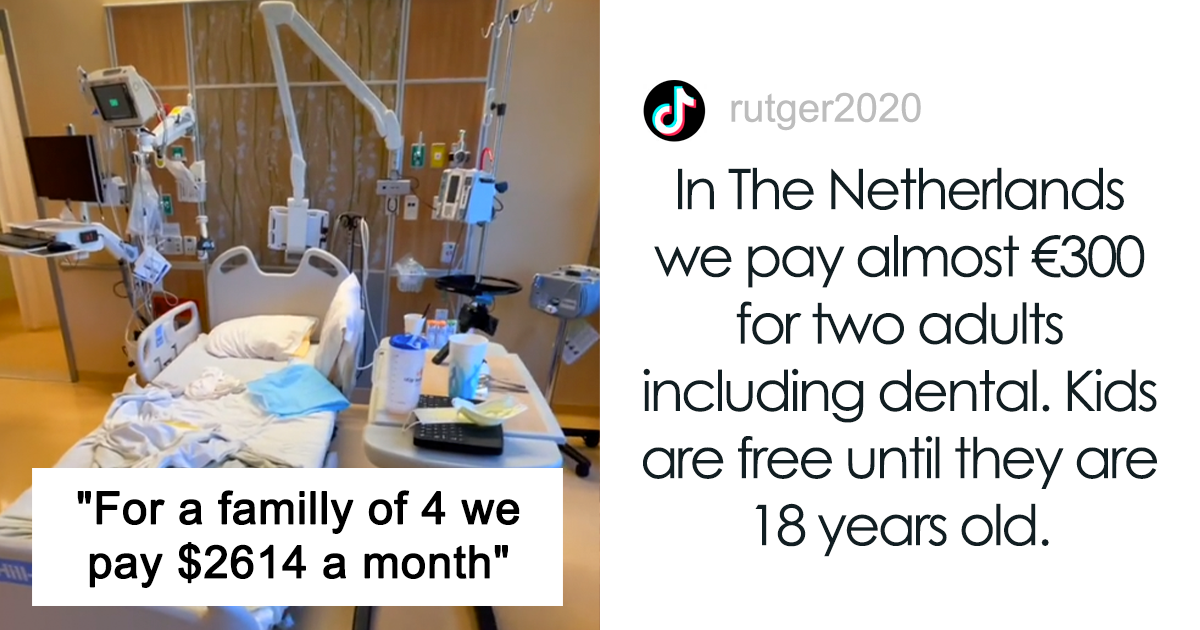
Paying $2,614 every month for health insurance sounds less like a household expense and more like financing a small yachtexcept the yacht comes with deductibles, network restrictions, and no complimentary dental cleaning.
That was the figure shared by California entrepreneur and content creator Marina Mogilko when she explained the cost of covering herself, her husband, and their two children. Her video, originally reported in April 2022, quickly became an international conversation about health insurance costs, taxes, medical bills, and what the word “free” means in different health care systems.
The family’s reported premium equals $31,368 per year before adding dental care, uncovered services, or other out-of-pocket expenses. While the price stunned viewers abroad, current insurance data show that the number was not some social-media typo. It was an especially visible example of a much larger American affordability problem.
Source support for the original account and reported plan details.
What Did the California Family Receive for $2,614 a Month?
According to Mogilko’s explanation, she selected a Blue Shield of California plan partly because it offered a broad provider network. As a small-business owner, she wanted access to respected hospitals and specialists without constantly requesting referrals.
The reported monthly cost was approximately $787 for each adult and roughly $520 for each child, bringing the family total to $2,614. The coverage reportedly included low copayments for many office visits and access to services such as acupuncture and chiropractic care. Dental treatment, however, was not included.
A Pediatric Bill That Looked Scary but Cost the Family Nothing
Mogilko also showed viewers an example from a routine pediatric visit. The provider’s initial charge was approximately $1,319. After the insurer’s negotiated adjustment and payment, the family reportedly owed nothing for that particular appointment.
That example captured one of the strangest features of American medical billing: a statement may display a four-figure price for an ordinary visit, followed by discounts, insurer payments, and a dramatically smaller patient balance. Reading an explanation of benefits can feel like opening a restaurant check where the soup was listed at $900 but somehow became free after three mysterious accounting rituals.
Her plan still did not eliminate every expense. She said an earlier uncomplicated delivery had left her paying slightly more than $2,000 out of pocket. A large monthly premium, therefore, did not guarantee that every medical event would arrive with a $0 balance.
Is $2,614 a Month an Unusually High Health Insurance Premium?
It is high, but it is not disconnected from the broader market.
In 2022, the average total annual premium for employer-sponsored family coverage in the United States was $22,463. By 2025, that national average had reached $26,993. California’s average annual family premium was even higher at $28,397, or about $2,366 per month.
Mogilko’s annual total of $31,368 was therefore substantially above the 2022 national employer-plan average. It was also somewhat higher than California’s 2025 average total family premium. However, those comparisons require an important warning label: employer-sponsored insurance and individually purchased coverage do not place the bill in the same hands.
Source support for national and California employer-sponsored premium benchmarks.
Most Employees Never See the Full Premium
With job-based health insurance, employers commonly pay most of the premium while employees contribute through payroll deductions. In California during 2025, workers contributed an average of 27% of the premium for family coverage.
That arrangement can make a $28,000 plan feel like a $600 monthly expense to the employee because the company quietly pays the remainder. The employer contribution is still part of the worker’s compensation, but it never reaches the checking account, so it is easy to overlook.
Self-employed people and small-business owners often encounter the price differently. Unless they qualify for marketplace subsidies or arrange employer coverage through a business, they may see nearly the entire premium on one invoice. The hidden elephant in the corporate benefits room suddenly walks onto the credit-card statement wearing a name tag.
The Premium Is Only the Admission Price
Monthly premiums are often discussed as though they represent the full cost of insurance. They do not. A household may also face several other expenses:
- Deductible: The amount a patient generally pays before the plan begins sharing many costs.
- Copayment: A fixed amount for a doctor’s visit, prescription, test, or service.
- Coinsurance: A percentage of the negotiated medical cost paid by the patient.
- Out-of-pocket maximum: The annual ceiling on covered in-network cost sharing, excluding premiums.
- Noncovered services: Care such as adult dental treatment, certain therapies, or out-of-network services that the plan may not pay for.
A lower-premium plan can become expensive when someone needs surgery, regular prescriptions, physical therapy, or specialist care. Meanwhile, a more expensive plan may save money for a family expecting childbirth or managing a chronic condition.
This is why comparing premiums alone is like choosing a hotel based only on the lobby. The deductible, provider network, drug formulary, coinsurance, and out-of-pocket limit are waiting upstairs.
Why Can Family Health Insurance Cost So Much in California?
Age and Household Size
Individual-market premiums are generally calculated for each family member. Adults usually cost more to insure than children, while premiums for older adults can be significantly higher than those for younger adults. Adding a spouse and two children is not the same as purchasing one policy with a small family surcharge.
Location and Provider Prices
Premiums reflect regional medical costs. Hospital prices, specialist charges, wages, real estate, prescription spending, and the negotiating strength of major health systems can all influence what insurers expect to pay.
A Broad Provider Network
Plans with access to more hospitals and specialists may cost more than tightly managed plans. A household paying for a preferred-provider organization or another flexible network is partly buying convenience: fewer referral requirements, more physician choices, and a better chance that a favorite hospital is included.
The Benefit Level
Plans with small copayments and limited cost sharing tend to charge higher premiums. Consumers are essentially deciding whether to pay more predictably every month or accept greater financial risk when care is needed.
Subsidy Eligibility
Marketplace assistance is based largely on household income, household size, and the cost of benchmark coverage. Many Covered California customers receive financial help, but higher-income families may qualify for less assistance or none at all, depending on the rules in effect for the coverage year.
Source support for Covered California assistance and federal marketplace eligibility guidance.
Why International Commenters Found the Bill So Shocking
Viewers from the United Kingdom, Germany, the Netherlands, Norway, Denmark, and other countries responded with descriptions of their own systems. Some said they paid little or nothing when visiting a doctor or delivering a baby. Others described payroll contributions, taxes, mandatory premiums, deductibles, or supplemental insurance.
The comparisons were entertaining, but “my health care is free” is incomplete shorthand. Medical professionals, hospitals, medications, equipment, and buildings must still be funded. The meaningful question is not whether society pays. It is how society collects the money, how evenly it spreads financial risk, and what patients must pay when they become sick.
The United Kingdom
In England, the National Health Service is primarily tax-funded, and many services are available without a separate bill at the point of care. That greatly reduces billing work for both patients and physicians. The trade-offs may include waiting periods for some nonemergency services and more limited access to certain treatments than wealthy consumers might purchase privately.
Germany
Germany requires health insurance and provides near-universal coverage. Most residents participate in statutory insurance funded through wage-based contributions shared by employers and employees. The payment is visible in earnings and payroll costs rather than appearing as a separate $2,614 family invoice.
The Netherlands
Dutch adults purchase mandatory coverage from regulated private insurers and may face premiums, deductibles, and copayments. Children under 18 are automatically covered, with the government financing their coverage. It is not a completely free system, but its structure treats children differently from the per-person premiums that surprised viewers in Mogilko’s breakdown.
Source support for the U.K., German, and Dutch system descriptions.
Americans Pay More, but Do They Receive More?
National spending data explain why one family’s bill resonated so strongly. U.S. health expenditures reached $5.3 trillion in 2024, equal to $15,474 per person and 18% of the country’s gross domestic product. The United States spent a substantially larger share of its economy on health care than other wealthy countries.
Higher spending does provide real advantages in some areas, including advanced medical technology, rapid access to certain specialists for well-insured patients, highly regarded research institutions, and innovative treatments. The problem is inconsistency. A patient with excellent coverage may receive extraordinary care quickly, while another person across town delays a test because the deductible is unaffordable.
International comparisons from the Commonwealth Fund have repeatedly found that the United States spends the most while performing poorly on access, administrative efficiency, equity, and several health outcomes. In other words, America owns the world’s most expensive kitchen but still occasionally forgets to feed everyone.
Source support for current national health spending and international comparisons.
Having Insurance Does Not Always Mean Health Care Is Affordable
Most Americans do have some form of insurance. Census data show that 92% of the population had coverage for at least part of 2024, and employment-based plans remained the most common source.
Coverage, however, does not automatically prevent financial pressure. A person can be insured and still struggle with premiums, deductibles, prescription costs, out-of-network bills, or services excluded from the plan.
KFF estimated that Americans owed at least $220 billion in medical debt, with approximately 14 million adults owing more than $1,000. West Health and Gallup reported that only 49% of U.S. adults were “cost secure” in 2025, meaning they could consistently access and afford needed care and prescriptions.
This is why the California family’s story was bigger than one expensive policy. It represented the anxiety created when households pay large premiums but remain uncertain about what an illness will actually cost.
Source support for coverage, medical debt, and affordability findings.
How Families Can Evaluate Their Health Insurance Options
There is no universally cheapest plan because medical needs and subsidy eligibility differ. Families can still make more informed decisions by examining the complete financial picture.
- Check marketplace assistance every year. Income, household size, and subsidy rules change. A family that received no help previously may qualify during a later enrollment period.
- Estimate total annual spending. Add 12 months of premiums to likely deductibles, copayments, coinsurance, prescriptions, and dental expenses.
- Confirm the provider network. Verify hospitals, pediatricians, specialists, laboratories, and urgent-care clinics directly with both the insurer and provider.
- Review the drug formulary. A plan that looks inexpensive can become costly when an essential medication is placed on a high-priced tier.
- Consider expected life events. Pregnancy, planned surgery, therapy, and ongoing specialist visits may justify a higher-premium plan with lower cost sharing.
- Investigate public programs for children. Depending on income and eligibility, Medicaid or the Children’s Health Insurance Program may reduce the cost of covering younger family members.
- Read the summary of benefits. Insurance has more vocabulary than a tax form, but the standardized summary can reveal important exclusions before enrollment.
The Larger Lesson Behind a $2,614 Monthly Premium
It would be easy to treat the story as another viral example of California being expensive. That explanation is incomplete. The deeper issue is how the United States distributes the cost of medical care.
People with generous employer benefits may never see the full price of their insurance. Self-employed workers often see it immediately. Lower-income households may receive marketplace assistance. Older adults depend on Medicare, qualifying families may use Medicaid, and millions of people move among systems when their jobs, ages, incomes, or family circumstances change.
The result is not one health care system but a complicated collection of overlapping systems. Each has different premiums, enrollment rules, networks, deductibles, and paperwork. That complexity consumes money while making it difficult for families to understand what they are buying.
Other countries also debate taxes, waiting times, physician shortages, and benefit limits. No national system operates on fairy dust. Yet the online reaction to Mogilko’s bill highlighted a fundamental difference: residents of many peer countries do not routinely face the possibility that family insurance alone could rival the cost of housing.
Extended Experiences: What a Bill Like This Feels Like in Real Life
The following scenarios are illustrative composites based on common insurance arrangements. They are not presented as interviews with specific individuals.
The Self-Employed Parent Who Sees the Entire Invoice
Imagine two parents running a small online business in California. Revenue looks healthy on paper, but there is no corporate human-resources department negotiating benefits and no large employer quietly paying most of the premium.
Every month, the family receives an insurance bill of more than $2,000. It is due whether anyone visits a doctor or not. During healthy months, the payment can feel like money disappearing into a very responsible-looking cloud. During a medical emergency, however, the broad hospital network becomes extremely valuable.
The parents experience two emotions at once: gratitude that their children have access to care and frustration that maintaining that access requires more money than many households spend on rent. They hesitate before hiring another employee or investing in equipment because next year’s premium increase is unknown.
The Employee Who Thinks Family Coverage Costs $550
Now consider a parent employed by a large technology company. The paycheck shows a $550 monthly deduction for family insurance. The coverage feels expensive but manageable, especially when compared with the California mom’s $2,614 bill.
Then the employee studies the annual benefits statement and discovers that the company contributes another $1,700 or more each month. The actual policy cost is not dramatically different; the difference is who receives the invoice.
This realization changes how the employee views compensation. Health insurance is no longer a bonus sprinkled on top of salary. It is a major financial benefit that may discourage the worker from changing jobs, starting a business, or reducing working hours. Economists call this employment lock. Families call it, “We cannot lose this insurance.”
The International Group Chat
Finally, picture friends in California, London, Berlin, and Amsterdam comparing medical expenses. The Californian mentions the monthly premium, deductible, pediatric network, and separate dental plan. The friend in England says a hospital visit usually produces no individual bill. The German friend describes paycheck contributions shared with an employer. The Dutch friend pays an individual premium but explains that the children are covered without separate premiums.
For a few minutes, everyone assumes someone else has discovered the perfect system. Then the details arrive. One friend mentions waiting for a nonurgent specialist. Another discusses taxes. Someone complains about finding a dentist. The Californian praises the speed and quality of a recent specialist appointment but admits that comparing plans required a spreadsheet that deserved its own emotional-support animal.
The conversation ends without declaring a flawless winner. Instead, the friends recognize that every country makes choices about financing, access, patient payments, and waiting. The striking feature of the American experience is not simply that people pay. It is that families may pay through taxes, employer compensation, premiums, deductibles, copayments, and uncovered billsall while struggling to calculate the final price in advance.
Conclusion
The California family’s $2,614 monthly premium became viral because it transformed an abstract policy debate into a household number anyone could understand. At $31,368 per year, the policy cost more than some full-time workers earn before taxes.
The plan also offered meaningful value: a broad network, low charges for certain visits, and protection against much larger medical bills. That is the uncomfortable reality of American health insurance. Coverage can be both essential and painfully expensive at the same time.
International commenters were right to be surprised, but comparisons should go beyond the word “free.” Every health care system collects money somewhere. The central question is whether costs are predictable, fairly distributed, administratively manageable, and low enough that families can seek care without treating the insurance bill as a second mortgage.