Colonial history is often presented as a procession of flags, forts, trade routes, and stern-looking men pointing at maps. That tidy version leaves out an important detail: many colonial enterprises were spectacularly bad business plans.
European monarchs, private companies, bankers, military officers, and freelance adventurers repeatedly attempted to establish settlements thousands of miles from home. They expected gold, spices, farmland, obedient labor, strategic ports, and immediate profits. Instead, they frequently encountered disease, food shortages, depleted resources, local resistance, stronger rivals, and the inconvenient discovery that drawing a border on a map did not make anyone inside it cooperate.
The following failed colonies stretched from Venezuela and Panama to Taiwan, California, and the Indian Ocean. Some lasted decades. One barely survived long enough to unpack the luggage. Although the colonizers ultimately lost their settlements, Indigenous communities and transported laborers often suffered violence, displacement, coercion, and exploitation along the way. Colonialism could fail financially while still leaving a painfully durable human cost.
10. Klein-Venedig: Germany’s Search for El Dorado
Location: Present-day Venezuela
Approximate duration: 1528–1546
Klein-Venedig, meaning “Little Venice,” began as an unusual arrangement between an emperor and his creditors. Charles V, who ruled Spain as Charles I, owed enormous sums to the Welser family, a powerful banking house based in Augsburg. In 1528, the Welsers received the right to administer and exploit a large portion of Venezuela.
The concession transformed bankers into colonial governors. Their agents were expected to establish towns, expand trade, find mineral wealth, and enforce imperial authority. The attraction was obvious: rumors of El Dorado suggested that somewhere beyond the coast sat a city practically wallpapered in gold.
Why the Venture Collapsed
The Welsers devoted much of their energy to expeditions into the interior rather than building a stable economy. Their representatives employed violent conquest, Indigenous enslavement, African slave labor, and coercive extraction. Tropical illness, resistance from Indigenous communities, leadership disputes, and long supply lines weakened the venture.
The final act was less corporate restructuring and more extremely hostile takeover. In 1546, Spanish official Juan de Carvajal ordered the execution of Welser governor Philipp von Hutten and Bartholomeus Welser. The Spanish Crown terminated the family’s administration soon afterward. The Welsers had gone looking for unlimited gold and instead discovered the early modern equivalent of bankruptcy with swords.
9. Sagallo: The Russian Colony That Lasted Weeks
Location: Present-day Djibouti
Duration: 1889
In the late nineteenth century, European powers were dividing much of Africa among themselves. Russia had influence across Eurasia but possessed no recognized African colony. Nikolai Ivanovich Ashinov, a Cossack adventurer with more confidence than authorization, decided to correct this supposed oversight.
Ashinov led a group of Cossacks, priests, women, and children to an abandoned Egyptian fort at Sagallo on the Gulf of Tadjoura. The settlers raised a Russian flag and renamed the place New Moscow. Ashinov apparently believed that presenting the Russian Empire with a completed colony would force the government to support him.
This was optimistic. Sagallo stood inside territory claimed by France, and the Russian government had not approved the occupation. French authorities demanded that the settlers leave. When they did not, French warships bombarded the fort in February 1889.
After casualties and a rapid surrender, the survivors were transported away. Russia disavowed the adventure, Ashinov was punished, and New Moscow vanished before it had time to develop old neighborhoods. Sagallo demonstrated a useful diplomatic principle: surprising two major powers with an unauthorized colony is not an effective path to long-term real estate ownership.
8. Dutch Formosa: A Trading Empire Meets Koxinga
Location: Present-day Taiwan
Duration: 1624–1662
The Dutch East India Company, commonly known as the VOC, established Fort Zeelandia in southwestern Taiwan in 1624. The company hoped to use the island as a base for commerce with China and Japan while interfering with Portuguese and Spanish trade.
Dutch Formosa became more than a warehouse beside the sea. The VOC collected taxes, encouraged agriculture, built forts, supported missionary activity, and recruited Chinese migrants to develop farms and commercial networks. The colony produced sugar, deerskins, rice, and other goods.
Economic activity did not equal political security. Indigenous communities resisted Dutch military campaigns and religious interference. Chinese farmers and laborers also rebelled against taxation and company rule.
The Siege That Ended Dutch Rule
The decisive threat arrived from across the Taiwan Strait. Zheng Chenggong, better known as Koxinga, was a Ming loyalist fighting the newly established Qing dynasty. Needing a secure base, he invaded Taiwan in 1661 with a large force and besieged Fort Zeelandia.
After months of isolation, shortages, and fighting, the Dutch surrendered in February 1662. The VOC had created a profitable colonial system, but profitability was not enough when a determined army arrived and the nearest meaningful reinforcements were inconveniently far away.
7. The Darien Scheme: Scotland Bets the National Savings
Location: Present-day Panama
Duration: 1698–1700
The Darien Scheme was built around an idea that looked excellent on a map. Scotland would establish a colony called New Caledonia on the Isthmus of Panama. Goods could supposedly move across the narrow land bridge between the Atlantic and Pacific, allowing Scotland to become a global trading power.
The Company of Scotland raised an extraordinary amount of money from investors. Estimates vary, but the scheme consumed a major share of the country’s available commercial capital. Thousands of Scots invested in what promoters described as a historic route to prosperity.
The selected site was hot, humid, difficult to cultivate, and surrounded by terrain that made transportation far harder than promotional material suggested. Supplies spoiled. Disease spread. Trade was minimal. English colonies were discouraged from helping because England did not want to provoke Spain, which considered the region part of its empire.
The first settlement was abandoned after enormous loss of life. A second expedition departed before fully learning what had happened to the first. Spanish forces then attacked, ending the project.
Roughly 2,000 participants died, and Scotland suffered a devastating financial shock. The disaster did not single-handedly cause the 1707 union with England, but it increased the economic and political pressure behind it. Darien was effectively a national startup whose founders skipped market research, climate analysis, supply planning, diplomatic clearance, and the small question of whether Spain might object.
6. Santo Tomás: Belgium’s Tropical Sales Brochure
Location: Guatemala
Approximate duration: 1843–1854
Before Belgium acquired its infamous African empire, King Leopold I and Belgian investors explored colonial opportunities elsewhere. One project centered on Santo Tomás de Castilla, a coastal district in Guatemala granted to the Belgian Colonization Company.
Promoters imagined an agricultural and commercial settlement connected to the interior by roads and supported by a modern port. European recruits were promised fertile land, economic opportunity, and the chance to build a prosperous community.
The reality included swamps, inadequate housing, weak infrastructure, poor administration, financial disorder, yellow fever, and malaria. Many settlers lacked the skills or resources needed to establish farms in a tropical environment. Promised construction projects advanced slowly or never appeared at all.
By 1850, much of the colony had already disintegrated. Survivors moved elsewhere in Guatemala, returned to Europe, or attempted to rebuild their lives independently. The company formally abandoned the settlement during the 1850s.
Santo Tomás offers a timeless warning about promotional language. When an investment prospectus uses the word “paradise” repeatedly but says very little about mosquitoes, drainage, drinking water, medical care, or roads, the mosquitoes probably wrote the missing appendix.
5. Austria’s Nicobar Islands Experiment
Location: Indian Ocean
Approximate duration: 1778–1785
The Habsburg monarchy was a major European power, but it was not well equipped for overseas empire. Its political strength rested largely on continental armies rather than a worldwide navy. Merchant William Bolts nevertheless persuaded Austrian leaders to support trade with Africa and Asia.
In 1778, an expedition occupied Nancowry in the Nicobar Islands. A small group of men was left with livestock, weapons, laborers, and instructions to establish an Austrian base. The islands were renamed in honor of Empress Maria Theresa, because giving a distant place a royal name was apparently considered an acceptable substitute for sending regular supplies.
Fresh water and food became persistent problems. Vienna showed little interest in supporting the isolated outpost, while Denmark maintained an earlier claim to the islands. When settlement leader Gottfried Stahl died in 1783, the project lost its remaining direction. The colonists abandoned the position by the middle of the decade.
Austria later considered returning, but British control made that impractical. The Nicobar effort proved that a colony requires more than a flag, a charter, and six increasingly concerned people wondering whether the supply ship took a wrong turn at Madagascar.
4. New Courland: Tobago’s Tiny Would-Be Empire
Location: Tobago
Period of repeated attempts: 1638–1690
The Duchy of Courland and Semigallia occupied part of modern Latvia and was formally connected to the Polish-Lithuanian Commonwealth. Despite its small size, Courland developed shipyards, merchant fleets, and remarkably ambitious colonial plans.
After several unsuccessful attempts, Courlanders established New Courland on Tobago in 1654. They built Fort Jacobus and attempted to develop plantations and trade. Enslaved Africans were transported to support the colonial economy, connecting even this miniature empire to the brutality of Atlantic slavery.
The Dutch had established their own position on Tobago, and the two settlements competed for control. Courland’s situation became especially fragile when Duke Jacob Kettler was captured during the Northern Wars. Without reliable support from Europe, the Couronian colony surrendered to the Dutch in 1659.
Treaties temporarily restored Courland’s claims, and settlers made several attempts to return. Rival European powers, Indigenous resistance, warfare, and limited resources repeatedly destroyed those efforts. Courland finally gave up its Tobago ambitions in 1690.
For a brief moment, one of Europe’s smallest states operated an Atlantic empire. Unfortunately, it had the naval endurance of a paper umbrella and selected an island desired by nearly every country with a ship.
3. Britain’s Failed Invasions of the River Plate
Location: Present-day Argentina and Uruguay
Duration: 1806–1807
The River Plate episode was technically a pair of military invasions rather than a completed colony. Nevertheless, Britain clearly hoped to establish a lasting commercial and political presence in Spanish South America.
In 1806, British forces captured Buenos Aires with surprising ease. Spanish imperial defenses were weak, and officials initially retreated. The invaders expected local residents to accept British authority, perhaps because colonial strategists have always enjoyed confusing an unlocked door with a warm welcome.
Local militias reorganized and recaptured the city. Britain returned the following year with a much larger force. Its troops seized Montevideo and advanced on Buenos Aires, where defenders fought from streets, rooftops, courtyards, and houses.
The urban battle became chaotic and costly. British commander John Whitelocke agreed to surrender and evacuate both Buenos Aires and Montevideo.
The defeat had consequences beyond Britain’s embarrassment. Local residents had defended the region without effective assistance from Spain, strengthening their political confidence and military organization. That experience contributed to the independence movement that followed. Britain failed to gain a colony and accidentally gave future revolutionaries an extremely persuasive team-building exercise.
2. Fort Ross: Russia’s California Supply Depot
Location: Northern California
Duration: 1812–1841
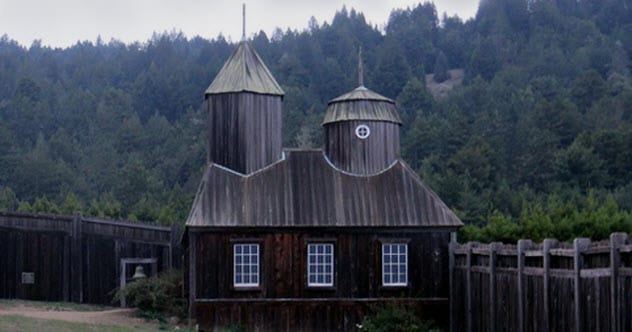
Fort Ross was established by the Russian-American Company on the northern California coast. Its principal purpose was to produce food for Russian settlements in Alaska while extending the company’s profitable fur operations southward.
The settlement included Russians, Alaska Native hunters, people of mixed Russian and Native ancestry, and local Indigenous workers, including members of the Kashaya Pomo community. Sea otter hunting provided valuable pelts, while farms, workshops, ranches, and shipbuilding supported the settlement.
The economic model gradually stopped working. Sea otter populations declined sharply after intensive hunting. Agricultural production never supplied Alaska as efficiently as company officials had hoped. Maintaining an isolated California settlement was costly, and new commercial arrangements made Fort Ross less important.
The Russian-American Company sold the property to John Sutter in 1841. A few years later, gold was discovered at Sutter’s sawmill, helping trigger the California Gold Rush. Russia had therefore sold its California property shortly before the neighborhood became dramatically more expensivea historical transaction that probably still causes phantom pain in accounting departments.
Fort Ross was not an immediate disaster. It survived for nearly three decades and developed a complex multicultural community. Yet it failed in its central commercial purpose: producing sustainable profits and reliably supplying Russian Alaska.
1. Roanoke: The Colony That Vanished
Location: Present-day North Carolina
Period of English attempts: 1585–1590
Sir Walter Raleigh sponsored England’s attempts to establish a permanent settlement on Roanoke Island. The first colony, founded in 1585 as a largely military outpost, suffered from poor supplies and worsening relations with nearby Indigenous communities. Its remaining settlers returned to England in 1586.
A second group of approximately 118 men, women, and children arrived in 1587 under Governor John White. They had intended to settle near Chesapeake Bay but were left at Roanoke instead. White soon sailed to England for supplies.
War with Spain and the Spanish Armada delayed his return. When White finally reached Roanoke in 1590, he found the settlement dismantled and abandoned. The word “CROATOAN” had been carved into a post, possibly indicating that the colonists had moved to Croatoan Island, now Hatteras Island.
No confirmed account explains what happened. Proposed possibilities include relocation, assimilation with Indigenous communities, starvation, disease, violent conflict, or movement toward another destination. Archaeological research continues, but the mystery remains unresolved.
Roanoke failed because England could not maintain communication, supplies, leadership, or security across the Atlantic. It became history’s most famous unanswered forwarding address and a warning that a colony cannot survive when its entire customer-support department disappears for three years.
Why So Many Colonial Enterprises Failed
Promoters Mistook Maps for Reality
Colonial planners frequently made decisions from European capitals using incomplete charts, exaggerated travel accounts, and assumptions about climate and geography. A narrow isthmus appeared easy to cross. A green coastline appeared fertile. A natural harbor appeared ready to become a profitable port. On arrival, settlers discovered mountains, swamps, unfamiliar seasons, unsafe water, and soil that did not behave like soil at home.
Supply Chains Were Fragile
A delayed ship could mean hunger rather than a mildly apologetic delivery notification. Settlements needed food, tools, weapons, medicine, replacement personnel, livestock, and spare equipment. Storms, warfare, piracy, political changes, and simple incompetence could interrupt supplies for months or years.
Colonial Powers Underestimated Local Resistance
Colonizers often assumed that Indigenous peoples and established populations would accept foreign occupation. They ignored existing political systems, trade networks, territorial rights, and military capabilities. Resistance was not an unexpected complication of colonialism; it was a predictable response to invasion, exploitation, and displacement.
Profits Were Expected Too Quickly
Investors wanted immediate returns from gold, furs, sugar, trade, or agriculture. When resources proved scarce, markets changed, or operating expenses increased, distant governments lost enthusiasm. Settlers who had been advertised as pioneers were suddenly treated as inconvenient entries in a financial ledger.
Experiencing the History of Failed Colonies Today
Studying failed colonies is a different experience from reading the triumphant national histories built around settlements that survived. Successful colonies often produced capitals, institutions, monuments, and archives celebrating their founders. Failed ventures leave quieter evidence: a reconstructed fort, fragments of pottery, an old map, a cemetery, a place-name, or a few sentences in a shipping record.
Visit the Landscape, Not Just the Monument
At places such as Fort Ross or Roanoke Island, the surrounding geography explains more than a plaque can. Visitors can examine the distance between farmland and the coast, the exposure of a harbor, the availability of fresh water, and the scale of the terrain. A colonial plan that looks reasonable on a small map can appear absurd when viewed from the ground.
The landscape also reveals that these were never empty territories. Indigenous communities lived, traded, farmed, hunted, and maintained political relationships long before foreign settlers arrived. Historical sites become more meaningful when visitors learn the names and experiences of those communities rather than treating colonization as the beginning of local history.
Compare the Advertisement With the Outcome
One of the most revealing ways to study colonial enterprises is to compare promotional claims with later reports. Investors were promised fertile soil, strategic harbors, abundant resources, easy trade, and cooperative populations. Letters written after arrival often described spoiled food, illness, administrative disputes, missing tools, and unpaid salaries.
This contrast feels remarkably modern. The technology has changed, but the language of reckless promotion has not. Replace “untapped tropical paradise” with “revolutionary market opportunity,” and several colonial prospectuses begin to sound like startup presentations created five minutes before the meeting.
Look for the People Missing From Official Narratives
Colonial records tend to emphasize governors, captains, investors, and military commanders. A deeper experience requires searching for the laborers, women, children, enslaved Africans, Indigenous guides, translators, farmers, sailors, and craftspeople whose work sustained each settlement.
Failure did not affect everyone equally. Investors could lose money while remaining safely in Europe. Settlers could sometimes return home. Enslaved people and displaced Indigenous communities usually had no comparable escape. Remembering that imbalance prevents failed-colony stories from becoming harmless comedies about badly organized adventurers.
Notice What Survived the Failure
A colony could disappear while leaving behind crops, architecture, religious traditions, altered trade routes, mixed communities, military knowledge, and political consequences. The River Plate invasions strengthened local militias. The Darien disaster changed Scottish political calculations. Dutch Formosa reshaped migration and agricultural development in Taiwan. Fort Ross remains part of California’s diverse history.
The best experience of these sites and stories therefore combines curiosity with skepticism. Enjoy the strange flags, ambitious maps, improbable journeys, and spectacular administrative mistakes. At the same time, ask who financed the project, who performed the labor, who already lived there, who paid the human cost, and who later controlled the story.
That approach makes failed colonial enterprises more than historical trivia. They become case studies in logistical arrogance, speculative finance, environmental misunderstanding, political resistance, and the recurring human habit of believing that confidence can compensate for preparation.
Conclusion
These ten colonial failures differed in scale, location, and duration, but they shared familiar weaknesses. Their organizers exaggerated potential profits, minimized risk, misunderstood local conditions, depended on unreliable supply systems, and underestimated the people whose lands they intended to control.
Klein-Venedig chased imaginary gold. Sagallo lacked legal approval. Darien consumed Scottish wealth. Santo Tomás sold settlers a fantasy. Austria neglected its Nicobar outpost. Courland challenged larger naval powers. Britain underestimated Buenos Aires. Russia exhausted Fort Ross’s commercial resources. The Dutch lost Taiwan to a stronger army. Roanoke simply vanished from the documented record.
The humorous side of these stories lies in the confidence of the planners: the belief that oceans, governments, ecosystems, diseases, and entire populations would politely cooperate with a business proposal. The darker lesson is that failed colonialism was still colonialism. Even ventures that collapsed could produce violence, forced labor, displacement, and lasting disruption.
Empires liked to imagine themselves as permanent. History repeatedly answered with abandoned forts, unpaid accounts, empty warehouses, and weeds growing through the headquarters.