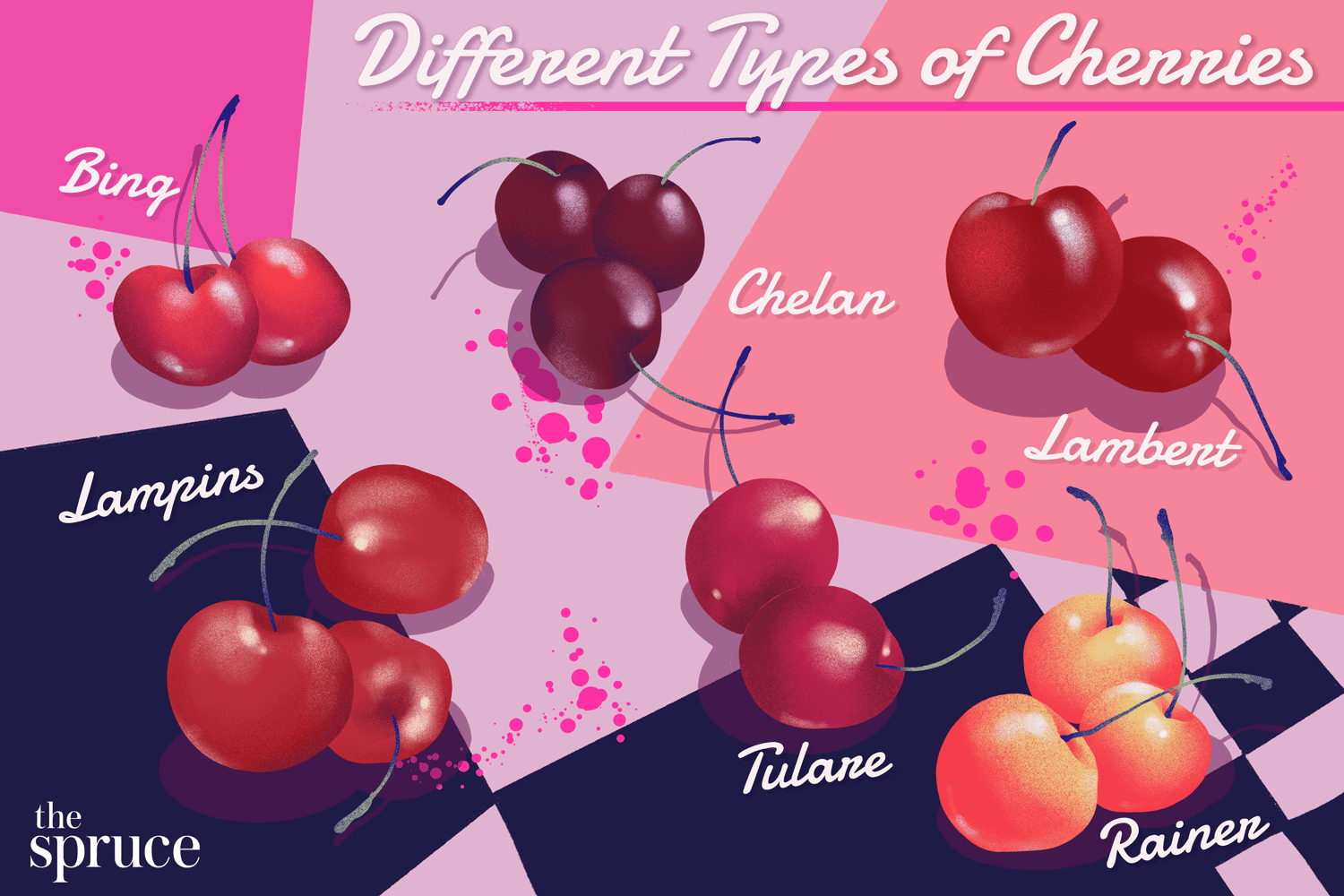
Sweet cherries have a short season and a big personality. They show up like a summer friend who texts
“in town for two weeks!!!” and expects you to drop everything (you should). From the first California
boxes in late spring to the Pacific Northwest peak in early summer, sweet cherries roll through the
U.S. in waveschanging varieties, flavors, and textures as the weeks go by.
If you’ve ever grabbed a bag labeled “dark sweet cherries” and wondered, “Okay, but who are you
really?”you’re not alone. “Bing” is the celebrity name everyone knows, but it’s not the only star on
the tour. Rainier brings the golden glamour. Chelan shows up early like it’s trying to beat traffic.
Sweetheart arrives late and refuses to leave. And Tulare? It’s the slightly tangier cousin of Bing that
deserves more attention than it gets.
Sweet vs. Sour: A 30-Second Reality Check
This article is about sweet cherries (the fresh-snacking kind). Their species is commonly
Prunus avium, and they’re bred for high sugars, firm flesh, and that “one more handful” effect.
Sour/tart cherries (often Prunus cerasus) are usually destined for pies, juice, and
dried snacks. Grocery stores sometimes mix the language, but your taste buds will know immediately.
How to Think About Sweet Cherry “Types” (Without Getting a Horticulture Degree)
In everyday shopping, sweet cherries usually fall into two big buckets:
dark-sweet and blush/yellow. Dark-sweets range from deep red to almost black
(Bing is the famous example). Blush/yellows have a golden base with a red-pink blush (Rainier is the icon).
Why the Store Label Might Not Match the Real Variety
Commercial growers plant many cultivars to spread harvest timing, improve cracking resistance, and hit
market windows. So the bag that says “dark sweet cherries” might contain Bing… or Skeena… or Lapins…
or Sweetheart… or a mix. That’s not a conspiracyit’s produce logistics wearing a trench coat.
The “Season Timeline” Trick
A practical way to understand varieties is by when they ripen. Many cultivar charts describe
timing relative to Bing (for example, “10–12 days before Bing” or “20 days after Bing”). That timeline
is gold because it explains why cherries seem to “change” week to weekfirmer one week, juicier the next,
sweeter later on.
The Headliners: Classic Sweet Cherry Varieties
Bing: The Standard Bearer
Bing is the reference point for dark sweet cherries in the United States: large, heart-shaped,
mahogany-to-dark-red skin, and a balanced sweet flavor with enough acidity to keep it interesting. It’s also
a benchmark for texturefirm and juicy when handled well. If a new dark cherry gets introduced, someone
inevitably asks, “Okay, but how does it compare to Bing?”
Best for: snacking, fruit boards, salads, baking when you want cherries to hold shape.
Flavor vibe: classic “sweet cherry” with a rich finish.
Rainier: The Golden Child
Rainier cherries are the “designer sneakers” of the produce aisle: yellow-gold skin with a red
blush, delicate sweetness, and a dessert-like vibe. They’re often very sweet, and their lighter color can fool
you into thinking they’ll taste mild. Surprise: they’re candy with a pit. They also bruise more easily than
darker cherries, so handle them like you’re carrying tiny water balloons filled with joy.
Best for: pure snacking, fancy bowls, fruit tarts, and anything where looks matter.
Flavor vibe: sweet, delicate, sometimes with a floral/peachy impression.
Royal Ann (Napoleon): Old-School Sweetness
Royal Ann (also called Napoleon in some contexts) is a lighter-colored sweet cherry
with a classic history. Today it’s more often associated with processed uses (like maraschino-style production),
but it’s still part of the family tree that shows up in cherry history and breeding discussions.
Van and Lambert: The Supporting Legends
Van is a well-known sweet cherry often discussed as breeding stock and as a commercial cultivar in
some growing regions. Lambert is another traditional dark cherry name you may see referenced.
Depending on where you live, you might find these fresh in season, but they’re also important “background characters”
in the story of how modern cherries got so big, firm, and consistent.
Early Birds: Sweet Cherries That Start the Party
Early-season cherries matter because they kick off the market windowespecially when the season begins in warmer
areas and then moves north. Early cherries can be slightly lighter in flavor than peak-season fruit, but many are
bred to deliver strong sweetness and firmness right out of the gate.
Chelan: Early, Dark, and Dependable
Chelan is a leading early dark-red variety known for firm texture and sweet flavor. It ripens
notably earlier than Bing, making it a go-to for extending the dark cherry season. If you see dark cherries early
in the summer and they seem a touch milder than later batches, Chelan (or a similar early cultivar) may be part
of the story.
Best for: early-season snacking, baking, and all-purpose use.
Flavor vibe: sweet and pleasant, often a bit milder than later-season cherries.
Brooks and Friends: The Fast Starters
Brooks is commonly mentioned among early dark-sweet cherries, especially in California production.
Early varieties are often selected for attractive color, firmness, and the ability to ship wellbecause the first
cherries of the year travel fast and get photographed a lot. (Yes, your cherry bowl is basically a seasonal selfie.)
Early Robin: A Head Start on Blush Cherries
If you love Rainier-style cherries, you may see earlier blush types marketed as an early-season alternative.
Early Robin is one example often described as similar in look and vibe, arriving before the main
Rainier wave.
Mid-Season Favorites: Where Variety Really Shows
Mid-season is where the sweet cherry world gets fun. This is when many growers layer varieties to manage harvest
timing, match orchard microclimates, and reduce weather risk (especially rain cracking close to harvest).
Lapins: Big, Dark, and (Often) Self-Fertile
Lapins is widely grown and frequently praised for large size, firmness, and a sweet flavor profile.
It’s also commonly noted as self-fertilea big deal in sweet cherry growing because many varieties
require cross-pollination. For consumers, that translates to a variety that’s popular, productive, and often easy
to find during the season.
Best for: snacking, baking, freezing (holds texture well).
Flavor vibe: rich dark-sweet, crowd-pleasing.
Skeena: Late-Leaning Firmness (The Crunch Factor)
Skeena is known for very large fruit and a firm, crunchy textureone of those cherries that makes a
satisfying “snap” when you bite in. If you like your cherries less delicate and more “juicy marble,” Skeena is your
friend.
Regina and Kordia: The “Premium Dark” Lane
You’ll sometimes see varieties like Regina and Kordia discussed as premium-style
dark cherriesoften large, firm, and sweet, with good eating quality. Availability varies by region and retailer,
but these names pop up in grower and produce-industry variety lists for a reason: they can deliver that “wow” bite.
Benton and Selah: Bred for Quality Upgrades
Modern breeding programs (especially in the Pacific Northwest) have produced cherries aiming for larger size, improved
firmness, and better resistance to issues like rain cracking. Benton and Selah are
examples you’ll see referenced in cultivar lists and extension resources, often positioned as strong quality performers.
Late-Season Closers: When the Best Cherries Refuse to End
Sweetheart: The Name Is Accurate (And It Shows Up Late)
Sweetheart is famous for arriving lateoften well after Bingand for being very sweet with firm texture.
Late-season cherries can taste especially rich because they’re hitting the market after the early rush, when growers
and retailers are focused on top-eating quality.
Best for: straight-up snacking, party trays, and anyone who wants the season to keep going.
Flavor vibe: sweet, slightly aromatic, and satisfying.
Staccato and Other Late Varieties
Depending on the growing region and year, you may also see late-season dark cherries marketed under names like
Staccato or other branded cultivar labels. The common theme: late timing, firm texture, and strong
sweetnessbecause late cherries are basically the encore performance.
Spotlight Variety: Tulare (A Bing-Like Cherry With Extra Tang)
Tulare cherries deserve more love, partly because they’re often described in relation to Bingand
partly because they bring their own twist. Tulare is commonly noted as a Bing-related cherry (often
described as a second-generation seedling of Bing) and is associated with California production and an
earlier ripening window than Bing.
What Tulare Tastes Like
Think: dark-red, firm, juicy, and sweetbut with a noticeably brighter acidity than many dark-sweet
cherries. If Bing is smooth jazz, Tulare is jazz with a little trumpet solo. That mild tang can make Tulare feel
especially refreshing and “lively,” which is why it works great both fresh and in desserts that benefit from
sweetness plus zip.
Why Growers and Shippers Like It
Tulare is often discussed as having strong storage and shipping characteristicsimportant for cherries
because they’re delicate, seasonal, and prone to bruising. Some horticultural references also note a relatively
low chill requirement (helpful for warmer winter areas), and the variety is described as producing
uniform fruit with good handling traits.
Best for: snacking if you like a tangy finish, baking, jams, and “cherry things” that want a little bite.
Flavor vibe: dark-sweet with a tart-leaning sparkle.
Choosing the Right Sweet Cherry for What You’re Doing
If You’re Snacking (The Most Important Use Case)
- Love classic dark cherry flavor: Bing, Lapins, Skeena, Sweetheart
- Want maximum candy sweetness: Rainier (and other blush/yellow types)
- Prefer sweet with a tangy finish: Tulare (and some early dark-sweets)
If You’re Baking
Go for firm, dark-sweet cherries when possibleBing-like types tend to hold shape better and keep a
deeper cherry flavor after heat. Rainiers can bake beautifully too, but their delicate flavor can get shy in a busy
recipe unless you keep the seasoning gentle.
If You’re Freezing or Preserving
Firmer varieties (think Bing family, Lapins, Skeena) tend to freeze well. For jam, a cherry with a touch more acidity
(hello, Tulare) can taste brighter and less one-note once sugar enters the chat.
Buying and Storing Sweet Cherries Like You Mean It
At the Store
- Look for green stems: fresher cherries usually have stems that are still green and flexible.
- Shiny skin + firm feel: dull, soft fruit is a sign you’re late to the party.
- Avoid sticky leaks: cherries shouldn’t look like they already started a syrup business in the bag.
At Home
- Keep them cold: refrigerate promptly; cherries don’t improve on the counter.
- Don’t wash until you’re ready: moisture speeds up spoilage.
- Handle Rainiers gently: they bruise more easily than darker cherries.
Cherry Season Experiences (About ): A Tasting Tour From Bing to Tulare
If you want to really understand sweet cherry varieties, try treating cherry season like a tiny summer “tour.”
Not a cross-country road trip (unless you’re living the dream), but a simple, repeatable experiment: buy one bag
each week for a month and pay attention. You’ll start noticing that cherries aren’t just “cherries.” They’re
personalities.
Week one often feels like the opening act. The cherries are exciting because they’re finally back,
even if the flavor is a little more “bright” than “deep.” This is where early dark-sweetsoften including Chelan-style
typescan show up firm and pretty, ready for snacking and salads. You might catch yourself thinking, “These are good!”
and then, two weeks later, you’ll discover what “great” is. That’s the season doing its thing.
Then comes the moment when you bite into a peak dark cherrymaybe Bing, maybe a Bing-like cultivarand it tastes like
summer got promoted. The best part is the texture: that firm outer bite, then the juicy middle, then the lingering
cherry sweetness that makes you reach for another without even negotiating with yourself. If you’re hosting friends,
this is the time for the “cherry bowl on the counter” move. People will hover near it like it’s a campfire.
Somewhere in the middle of the season, you run into Rainiers, and suddenly the fruit bowl looks like it
dressed up for a wedding. They’re sweet in a different wayless “dark caramel” and more “honeyed sunshine.” If you’ve
only eaten dark cherries, Rainiers can feel like discovering a new playlist in a genre you already love. The experience
tip here is simple: don’t toss them around in the bag, don’t cram them under heavy groceries, and don’t leave them in a
warm car while you “just run one more errand.” Rainiers bruise fast, and bruised Rainiers are basically heartbreak in
fruit form.
And then there’s Tulare, the variety that can surprise you. Imagine expecting a Bing-like sweetness and
getting a little extra tang at the endlike the cherry is politely reminding you it’s still fruit, not candy. That hint
of acidity can be a superpower. It makes Tulare taste refreshing when it’s hot out, and it makes desserts taste less
sugary and more balanced. If you bake, try a simple cherry crisp with minimal spices and let Tulare’s sweet-tart edge
carry the whole show.
Late season is the encore. You find a bagmaybe Sweetheart or another late dark-sweetand the flavor feels extra rich,
like the season is giving you its final best effort. At this stage, the “experience” is also about gratitude:
cherries are fleeting. Eat them fresh. Share them. Freeze a batch if you can. And if you’re pitting a lot at once,
put on a show or musicbecause pitting cherries is the kind of task that turns you into a thoughtful philosopher with
purple fingers.