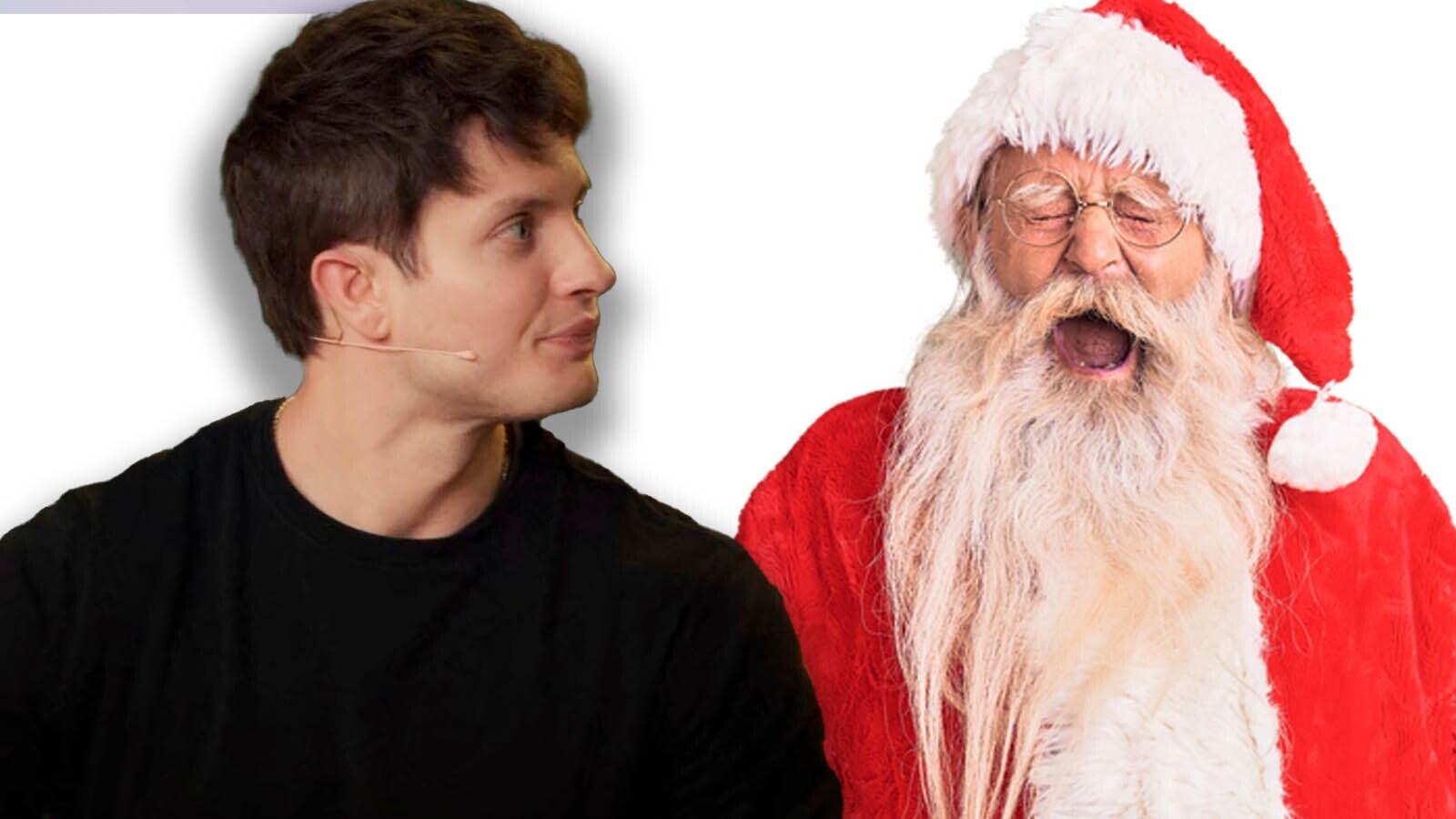
Nothing says holiday cheer quite like opening Netflix, minding your own peppermint-business, and getting hit with a Santa spoiler before the cocoa even cools. That was the complaint from some parents in late 2025, when Matt Rife’s holiday special Matt Rife: Unwrapped – A Christmas Crowd Work Special started surfacing in autoplay clips and, according to angry moms, dads, and anyone else trying to protect the North Pole brand, delivered the kind of information young children are not exactly hoping to learn from a streaming app.
But the internet’s reaction had an extra layer of “here we go again” baked into it. The backlash was not only about one holiday-themed joke landing at the worst possible time. It also revived memories of an earlier controversy from 2023, when Rife was accused of dragging a 6-year-old into his orbit of edgy humor after the child criticized his Netflix special. So when people joked that Matt Rife had “ruined Christmas for kids,” they were not just talking about one December mishap. They were talking about a pattern, or at least a reputation, that has followed him ever since he became one of comedy’s biggest algorithm-friendly stars.
That is what makes this story more interesting than a simple pile-on. It is not only about whether a comic should make naughty jokes in a Christmas special. Of course he can. It is about audience, timing, platform design, public image, and the increasingly blurry line between stand-up performed for adults and clips that wander into family spaces uninvited. In other words, this is not just a Matt Rife story. It is a 2020s fame story with tinsel on top.
Matt Rife, Viral Fame, and the Business of Being “Edgy”
Matt Rife did not become a breakout name by playing it safe. He rose fast as a viral stand-up comic with a huge online following, powered largely by crowd work clips, social media circulation, and a persona that mixed smooth confidence with “did he really just say that?” energy. For a while, that formula worked like a charm. He was young, quick on his feet, camera-friendly, and endlessly shareable.
Then came the inevitable challenge for internet comedians: what kills in a clipped, self-selected feed does not always land the same way in a full special viewed by a broader audience. Once a comic graduates from short-form virality to Netflix placement, the room gets bigger, the expectations change, and so does the scrutiny. Suddenly, jokes are not just going to your fans. They are going to critics, casual viewers, parents, think-piece writers, and one aunt in Ohio who doesn’t know what crowd work is but knows when something feels tacky.
Rife learned that the hard way with Natural Selection, his 2023 Netflix special, which drew sharp backlash over material many viewers felt crossed the line from provocative into lazy or mean-spirited. His defenders argued that offense is part of comedy. His critics argued that “it’s just a joke” becomes a flimsy shield when the target is vulnerable people, abuse victims, or, yes, literal children.
The 2025 Christmas Mess: When Autoplay Became the Grinch
A holiday special meets the worst possible entry point
On paper, Unwrapped sounded simple enough: a holiday-themed crowd work special built around gifts, traditions, and family-season chaos. That alone would not normally trigger a cultural crisis. But the controversy was not driven mainly by the existence of the special. It was driven by how some viewers encountered it.
According to parents who posted online, Netflix autoplayed a preview in which Rife casually dropped a Santa spoiler right at the top. And there it was: one second you are opening an app, the next second your child is getting a crash course in the logistics of Christmas. Parents complained that they did not even have time to grab the remote, fake a coughing fit, or yell, “Look! Reindeer outside!” before the damage was done.
That distinction matters. A stand-up special labeled for older audiences is one thing. A promotional clip that starts blaring in a family room is another. Much of the backlash, in fact, was aimed not only at Rife but at Netflix’s autoplay design and promotional choices. The joke may have belonged to the comedian, but the distribution ambush belonged to the platform. In that sense, the real co-star of this mini-drama was the modern streaming interface, which has never met a subtle moment it couldn’t ruin with confidence.
Why the outrage spread so fast
The reaction took off because it touched a familiar parental nerve. People can disagree all day about what counts as acceptable stand-up material for adults. But when content jumps the velvet rope and lands in front of kids unexpectedly, the debate changes. It becomes less about freedom of expression and more about context. Parents were not debating whether edgy comedy should exist. They were asking why a Christmas spoiler was the very first thing some households heard when opening a mainstream streaming service during the holiday season.
And because Rife was already a magnet for controversy, the moment came preloaded with history. The autoplay clip did not introduce him as a blank slate. It reintroduced him as a comic many viewers already associated with boundary-testing material and public backlash. Once you have that reputation, every new stumble looks less like an accident and more like a sequel.
No, This Wasn’t the First Time
The 2023 incident people immediately remembered
The reason so many reactions used the phrase “not the first time” is that a previous episode was still sitting in the internet’s memory like a half-decorated fruitcake nobody wanted but nobody forgot. In December 2023, Rife was accused of responding to a young boy online after the child criticized his comedy. The widely reported allegation was that he told the 6-year-old that Santa was not real and that the child’s mother bought gifts with money from OnlyFans.
That story spread quickly because it managed to hit several public nerves at once: a celebrity apparently arguing with a child, an adult joke aimed at a kid, and a holiday reference that made the whole thing feel especially nasty. The mother, TikTok creator Bunny Hedaya, publicly rejected the claim embedded in the comment and blasted Rife for turning her son into part of the spectacle. Whether people were already fans of Rife or not, the optics were terrible. A comic can survive being called offensive. It is much harder to look cool while reportedly beefing with a first grader.
And that is the key reason the 2025 Christmas uproar landed with such force. The newer controversy was not judged in isolation. It was filtered through the older one. A lot of online reactions were basically saying, “Oh, so we’re doing this again?” When public memory already contains a story about a comedian allegedly spoiling Santa for one child in the middle of an insult, another Santa-related backlash is going to arrive with extra voltage.
The Larger Matt Rife Problem: Who Is the Joke For?
Rife’s controversies tend to revolve around one central tension: he performs with the swagger of a comic who wants credit for being fearless, but he rose within an ecosystem that rewards broad appeal, visual charm, and social-media intimacy. That combination builds a massive audience, but not a uniform one. Some fans want raw stand-up. Some want flirtatious crowd work. Some just want funny clips. Some discovered him because their friend sent a thirst-trap compilation with punchlines attached. That is not exactly a small, sturdy bunker of people all signed up for the same comedic contract.
So when Rife leans hard into provocation, the reaction can be unusually intense. His critics argue that he sometimes confuses shock with sharpness. His supporters say he is being punished for refusing to soften his act. The truth may be less dramatic and more practical: the bigger and broader your audience gets, the more carefully context has to travel with the material. If the joke escapes the room it was meant for, all bets are off.
This is why the Christmas controversy felt both ridiculous and revealing. On one level, it was a classic internet outrage cycle: a clip, a backlash, a pile of hot takes, and everyone pretending this was either the end of civilization or no big deal at all. On another level, it exposed a real issue about distribution. Comedy is contextual. A line that adults choose to hear in a stand-up special is not the same as a line that erupts, uninvited, in a household with children decorating cookies nearby.
Comedy, Cruelty, and the Thin Ice of “Just Kidding”
Rife is hardly the first comedian to discover that edgy material can generate more headlines than laughs. But his case is especially illustrative because the backlash is often tied less to taboo topics in the abstract and more to tone. Many critics of his 2023 material did not simply say the jokes were offensive. They said the jokes felt cheap. That is a more dangerous accusation for a comic, because it suggests not brave boundary-pushing but weak craftsmanship.
That same critique hovered over the Christmas controversy. The Santa spoiler itself was not some dazzlingly original act of comic terrorism. It was more like a cultural rake left on the lawn for somebody’s kid to step on. The outrage came not because the bit was too daring for civilization, but because it felt careless in the environment where it was delivered.
And this is where Rife’s brand gets tricky. When a comedian courts edginess, every controversy can still serve the brand by keeping the name in circulation. But there is a threshold where the persona stops feeling dangerous and starts feeling predictable. That is the risk. If audiences begin to expect a comedian to say something tacky at the expense of an easy target, the comic no longer seems thrilling. He just seems committed to the bit in the least interesting way possible.
Why the Story Stuck
This whole episode stuck because it brought together three irresistible ingredients: Christmas innocence, online memory, and a famous person with baggage. That is tabloid jet fuel. Add Netflix autoplay and you have a modern parable about how platforms can turn a regular promotional decision into a household-level controversy.
It also stuck because Christmas is one of the last shared fictions that many families still actively perform together. Parents move elf dolls around like underpaid theater interns. Kids write letters to a man who runs a gift empire from the Arctic. Adults happily conspire in a yearly lie because it creates wonder. You can argue that children eventually learn the truth and survive just fine, but timing matters. Parents tend to prefer that the reveal comes from life, age, or a sibling with a loose mouth on the school bus, not from a comedian firing it through a streaming app.
So yes, the headline is dramatic. But it works because it captures the weirdly specific truth of the moment: to some viewers, this was not a brand-new scandal. It was a callback. The Santa spoiler in 2025 was funny to some, annoying to others, and infuriating to a loud subset of parents. But above all, it felt familiar. And in entertainment, familiarity is where reputations harden.
Experiences That Make This Topic Hit So Hard
If you want to understand why this story resonated beyond people who already love or hate Matt Rife, think about the average holiday household. December is chaos dressed as tradition. Parents are tired, kids are overstimulated, and everyone is one sugar cookie away from emotional weather. Into that delicate ecosystem comes a streaming platform, an autoplay preview, and a joke that lands like a tiny sleigh-shaped grenade.
For a lot of adults, the story triggered memories of the exact moment childhood magic cracked. Sometimes it was a cousin who talked too much. Sometimes it was a classmate on the playground who wore truth like a weapon. Sometimes it was overhearing parents whispering in the kitchen about receipts, wrapping paper, and “where did you hide the scooter?” That memory stays vivid because it is usually not just about Santa. It is about the first time a child realizes the grown-up world runs on performance, secrecy, and negotiated myths. Heavy stuff for someone still eating candy canes for breakfast.
Parents felt the controversy in a different way. Many of them were not devastated because one joke existed; they were irritated because they lost control of the reveal. Modern parenting already involves policing screens like a 24-hour security detail. Families try to manage YouTube, social feeds, chat apps, and streaming menus, all while pretending this level of vigilance is normal and definitely not turning their brains into mashed potatoes. So when a platform unexpectedly serves up a holiday spoiler, it feels like one more reminder that the internet does not care about your family traditions. It cares about engagement.
There is also something uniquely aggravating about a spoiler that arrives through convenience technology. Nobody sat down, selected a mature stand-up special, and said, “Kids, gather around, today we learn about brand synergy and disillusionment.” The whole complaint was about accidental exposure. That is what made so many reactions feel relatable even among people who were not deeply invested in Matt Rife one way or the other. The emotional logic was simple: I did not invite this into my living room.
Then there is the memory of the 2023 child-related controversy, which made the newer story feel personal to people who follow internet culture. Once a public figure gets associated with dragging kids into adult jokes, even indirectly, every similar incident starts to feel like part of a pattern. Fair or unfair, that is how reputation works online. People do not evaluate each moment from scratch. They stack them. They build a little bookshelf in their minds labeled “things this person does,” and every new event gets shoved onto the same shelf until it bends.
And finally, there is the comedy side of the experience. Plenty of adults enjoy meaner, sharper, more transgressive humor. But most still want it to feel intentional, crafted, and worth the discomfort. When it instead feels like collateral damage, the reaction changes from “that was dark” to “that was lazy.” That distinction is why this topic lingered. It was never only about Santa. It was about whether the joke was smart enough, placed carefully enough, and delivered in the right space. For many critics, the answer was no. For many fans, the answer was “lighten up.” For everyone else, it was another reminder that in the streaming era, even Christmas magic can get interrupted by autoplay.
Conclusion
Matt Rife did not invent edgy comedy, holiday spoilers, or internet backlash. But this story became sticky because it fused all three. The 2025 uproar over a Santa-spoiling clip from Unwrapped probably says as much about Netflix’s promotional choices as it does about Rife’s comedic instincts. Still, the reason the moment caught fire was obvious: people remembered the 2023 episode in which he was accused of aiming a similarly cruel holiday line at a small child. That history gave the newer controversy a nasty sense of déjà vu.
In the end, the headline works not because Matt Rife literally owns the power to destroy Christmas, but because he has become an unusually effective symbol for a certain kind of modern entertainment mess. Platform algorithms blast adult jokes into family spaces. Comics chase provocation because provocation travels. Audiences carry receipts from previous scandals. And before you know it, a holiday promo becomes a referendum on celebrity, timing, and whether the naughty list now includes whoever approved autoplay.