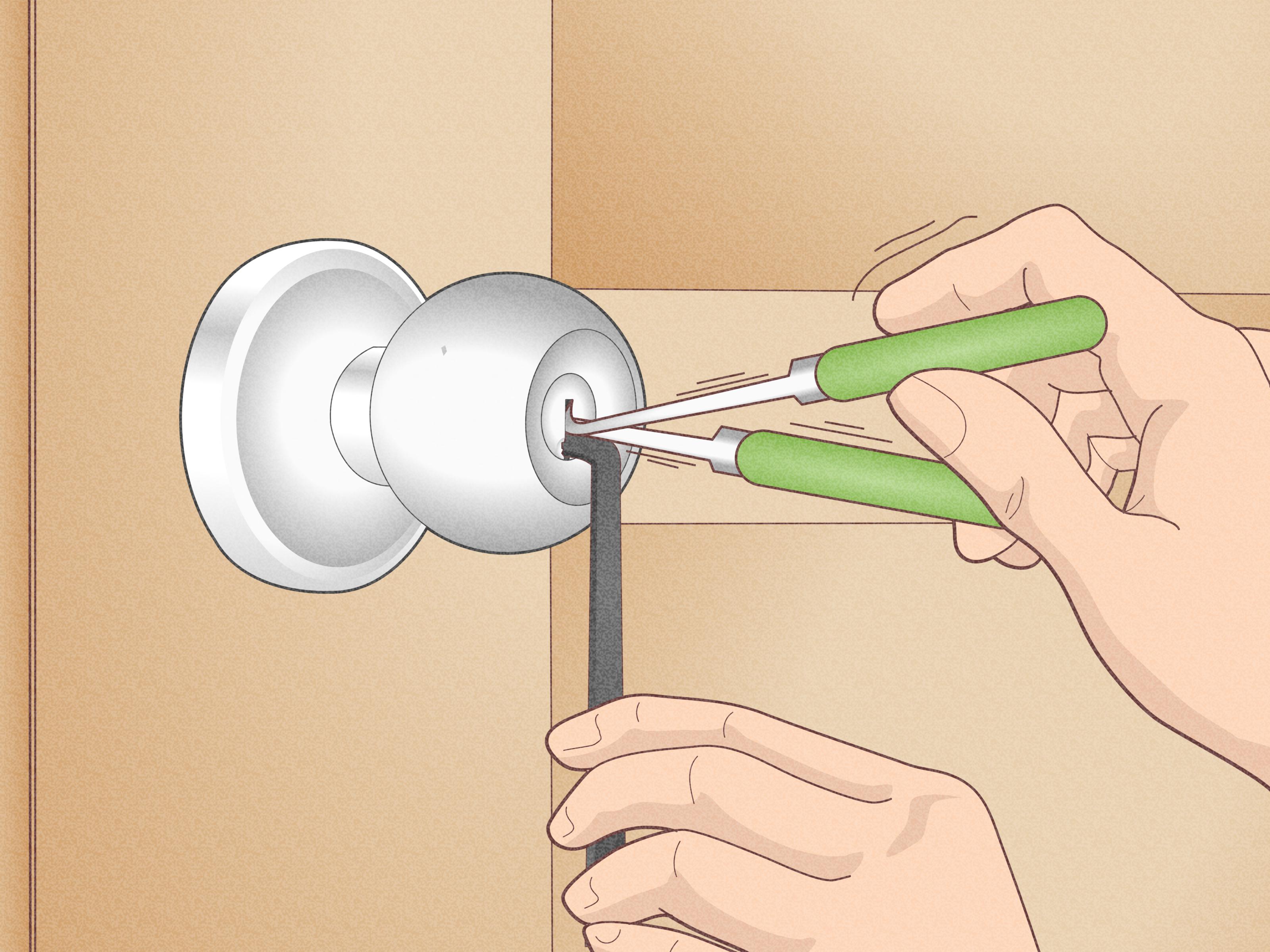
Important note: This guide is intended for lawful lockouts involving property you own, rent, or are explicitly authorized to access. It explains how to identify doorknob locks, evaluate safe options, and communicate with a locksmith. It does not provide step-by-step instructions for defeating security hardware. When ownership or authorization is uncertain, leave the lock alone and contact the property owner, building manager, or local authorities.
Getting locked out has a special talent for happening at the least convenient moment. Your keys may be sitting on the kitchen counter, your phone battery may be auditioning for the role of “dead brick,” and the doorknob suddenly looks smugger than any piece of hardware has a right to look.
Before searching for ways to pick a doorknob lock, pause and identify what is actually on the door. A bedroom privacy knob, an exterior keyed-entry knob, a deadbolt, and a smart lock are built for different purposes. They also require very different responses when something goes wrong.
The safest solution may be a manufacturer-supplied emergency key, a spare key, a battery replacement, minor maintenance, or a qualified locksmith. Understanding the lock first helps you avoid turning a five-minute inconvenience into a damaged door, a ruined lock, and an unexpectedly creative repair bill.
First, Confirm That You Have Permission
Lock manipulation should be performed only on your own lock or with clear authorization from the owner. Even when no damage is intended, attempting to open someone else’s locked door can create serious legal and personal-security problems.
Professional locksmiths commonly ask for identification and evidence that the customer is authorized to enter. Depending on the situation, useful documentation may include a driver’s license showing the address, a lease, a property-management contact, a vehicle registration, or confirmation from the owner.
If a child, vulnerable adult, or pet is trapped in immediate danger, call emergency services instead of experimenting with the hardware. Smoke, fire, extreme heat, a medical emergency, or an active threat changes the situation from an ordinary lockout into an emergency.
Common Types of Doorknob Locks
Manufacturers and home-improvement retailers generally divide residential doorknob hardware into several functions: dummy, passage, privacy, keyed entry, electronic, and smart. Correct identification is the most important first step because some knobs do not contain locks at all.
Dummy Doorknobs
A dummy knob is essentially a decorative pull. It does not rotate a working latch and contains no locking mechanism. Dummy hardware is often installed on shallow closets, pantry doors, and one side of a pair of French doors.
If a door with dummy hardware will not open, the problem is probably elsewhere. The door may be held by a separate latch, roller catch, surface bolt, magnetic catch, or hardware on the opposite leaf. Attacking the decorative knob would be like blaming the doorbell because the refrigerator stopped cooling.
Passage Doorknobs
Passage knobs rotate and retract a latch, but they do not lock. They are commonly used on hallways, closets, laundry rooms, and other interior spaces that do not require privacy.
When a passage knob refuses to open, likely causes include a loose spindle, worn internal parts, a misaligned latch, a sagging door, or pressure between the latch and strike plate. The issue is usually mechanical failure rather than a locked cylinder.
Privacy Doorknobs
Privacy locks are typically installed on bedrooms and bathrooms. They usually lock from the inside with a push button or thumb turn. Many include a small exterior emergency-release opening and a manufacturer-supplied privacy key.
These locks are designed to provide personal privacy, not the same level of security expected from exterior hardware. Use only the emergency-release device and procedure supplied by the manufacturer. An improvised object can snap inside the opening, damage the mechanism, or turn a simple lockout into a complete knob replacement.
Keyed-Entry Doorknobs
Keyed-entry knobs are intended for exterior doors and other locations requiring controlled access. They normally use a key cylinder on the outside and a button, thumb turn, or similar control on the inside.
Many residential keyed knobs use a pin-tumbler-style cylinder, but appearance alone does not reveal the cylinder’s internal design, security features, condition, or resistance to manipulation. Some products incorporate additional protective elements, and commercial-style cylindrical locks may be significantly more robust than inexpensive residential hardware.
Because keyed-entry knobs are security devices, unauthorized or amateur manipulation can damage the cylinder, disable the latch, or leave the property less secure after the door is opened. A qualified locksmith can evaluate whether the best authorized solution is nondestructive entry, key creation, cylinder service, rekeying, or replacement.
Deadbolts and Combination Locksets
A doorknob and a deadbolt are separate locking points, even when they use the same key. Opening or repairing the knob does not release an engaged deadbolt. Exterior doors often combine a keyed knob or lever with a single-cylinder deadbolt for additional security.
Before assuming the knob has failed, determine whether a second lock is engaged. Repeatedly twisting, pulling, or striking the knob will not persuade a deadbolt to reconsider its career choices.
Electronic and Smart Locks
Electronic doorknobs and smart locks may open with a code, app, fingerprint, access card, or connected-home platform. Some retain a mechanical keyway as a backup, while others provide external battery contacts or another emergency-power method.
For an electronic lockout, check the manufacturer’s instructions before assuming the mechanical components are defective. Common issues include depleted batteries, expired access codes, disabled user accounts, connectivity failures, incorrect time schedules, and outdated firmware.
Connected locks should use unique passwords, current software, and a secured home network. Cybersecurity guidance for internet-connected devices consistently recommends changing default credentials and installing available updates.
Tools Associated With Lawful Lockout Work
The correct tool depends on the lock, the door, the failure, and the user’s authorization. A professional locksmith does not simply arrive with one magical metal gadget and dramatic background music. The technician first diagnoses the hardware and chooses the least destructive appropriate method.
Safe Tools for Homeowners
For ordinary troubleshooting, a homeowner’s useful “lockout kit” is surprisingly unexciting:
- A working phone and portable charger
- A flashlight for reading model numbers and inspecting the door gap
- The manufacturer-supplied privacy-release key
- Fresh batteries for an electronic lock
- A documented spare key stored with a trusted person
- Identification and proof of residence
- The lock manufacturer’s manual or official support information
- A lock lubricant specifically approved for the hardware
Avoid filling a lock with household oil, cooking spray, or a mystery substance from the back of the garage. Incorrect lubricants can attract dirt, gum up small components, or interfere with finishes. If the key or knob suddenly becomes difficult to operate, door alignment, weather, worn keys, loose hardware, and internal wear are all possible causes.
Professional Diagnostic and Entry Tools
Licensed or qualified locksmiths may carry key gauges, inspection equipment, cylinder-service tools, key machines, extraction tools, manufacturer-specific equipment, and specialized nondestructive-entry tools. Professional training may also cover lock servicing, key fitting, impressioning, decoding, manipulation, and hardware installation.
These tools are not interchangeable. Their safe use depends on training, lock identification, authorization, and an understanding of how the door assembly works. Incorrect use can bend internal components, trap broken material in the keyway, damage the cylinder housing, or create a lock that appears functional but no longer provides reliable security. ALOA describes locksmiths as security professionals who handle emergency service, key creation, rekeying, lock installation, and broader door-hardware work.
Tools You Should Not Improvise
Social media is full of improvised lockout tricks involving thin metal, plastic cards, paper clips, drills, screwdrivers, and other household objects. These demonstrations often omit crucial details: the door may be staged, the hardware may already be damaged, the latch may not be protected, or the creator may be working on a practice lock removed from a door.
Improvised tools can break inside a lock, scratch the door, damage weatherstripping, defeat a fire rating, or injure the user. Drilling is especially destructive and should not be treated as a universal shortcut. A trained locksmith may drill hardware in limited circumstances, but only after evaluating replacement requirements and determining that less destructive authorized options are unsuitable.
Diagnose the Problem Before Calling It a Lockout
Check for Door Pressure
A latch can bind when the door shifts because of humidity, temperature changes, loose hinges, foundation movement, or a misaligned strike plate. If your key turns but the door does not open, the cylinder may be operating correctly while pressure prevents the latch or bolt from retracting normally.
Do not force the key. Keys are small, leverage is powerful, and extracting half a key from a cylinder is nobody’s preferred weekend activity.
Inspect the Key
A worn, bent, cracked, or poorly duplicated key may fail even when the lock remains serviceable. Try an original or known-good spare if one is legally available. Stop if the key requires unusual force, does not insert fully, or begins to bend.
Test the Electronic Power Source
For keypad and smart locks, replace the batteries according to the manufacturer’s directions. Confirm battery orientation, clean battery contacts only as recommended, and check whether the lock provides a low-power warning or emergency-power feature.
Determine Whether the Lock Has Failed Internally
If the knob spins freely, the interior control moves without operating the latch, or the handle feels unusually loose, an internal spindle, chassis, spring, or connection may have failed. The chassis is the internal body containing much of the working mechanism, and its design helps determine the lock’s function.
When to Call a Professional Locksmith
Call a locksmith when the lock is keyed, the door is an exterior entry, a key has broken inside, the cylinder turns without retracting the latch, a deadbolt is involved, or the property must be secured immediately after entry.
A professional is also the better choice when the door is part of a fire-rated assembly, an apartment building, a commercial property, a master-key system, or an access-control network. Door hardware can affect more than security. Egress rules are intended to ensure that occupants can leave during an emergency, and certain doors must open from the egress side without a key, tool, or special knowledge.
Accessibility matters as well. ADA design standards state that accessible door hardware should be operable without tight grasping, pinching, or twisting of the wrist; lever-operated and push-type mechanisms are among the acceptable designs. Replacing a difficult round knob with appropriate lever hardware may improve usability for people with limited hand strength or dexterity.
How to Choose a Reputable Locksmith
A lockout creates urgency, and urgency can make an unbelievably cheap advertisement look attractive. Unfortunately, the lowest phone quote may not resemble the final invoice.
Ask for the company’s full name, physical service area, estimated call-out fee, labor range, after-hours charges, replacement-hardware costs, and payment terms. Explain the lock type as accurately as possible and send a photograph if requested.
When the technician arrives, verify the company identity and ask for an updated estimate before work begins. A legitimate technician should also care whether you are authorized to enter. Be cautious if the person immediately insists that every lock must be drilled without first inspecting the hardware.
ALOA advises consumers to hire trained security professionals and provides information about certifications and locating qualified locksmiths. Its scam-reporting guidance recommends recording the company, technician, date, location, contact information, charges, and applicable license details. General FTC guidance also recommends researching contractors, obtaining clear terms, and being cautious about pressure tactics or unexpected payment demands.
Should You Replace or Rekey the Lock?
Opening the door solves today’s lockout. It does not always solve tomorrow’s security problem.
Rekeying changes the cylinder so old keys no longer operate it while allowing the existing lock body to remain in place. Replacement installs new hardware. The appropriate choice depends on the lock’s age, condition, grade, key control, compatibility, and the reason access was lost.
Consider rekeying or replacing locks after moving into a home, losing keys in a way that connects them to your address, ending a tenancy, dismissing a contractor with key access, or discovering attempted tampering. ALOA specifically recommends changing locks when moving into a newly purchased house because previous copies of the keys may still exist.
When buying replacement hardware, review independent certification rather than relying only on words such as “premium,” “maximum,” or “fortress-like.” ANSI/BHMA standards evaluate categories such as security, durability, strength, and finish. Traditional commercial grades run from Grade 1, the highest, through Grades 2 and 3, while residential certification may separately rate key performance categories.
How to Prevent the Next Lockout
- Give a labeled spare key to a trusted person rather than hiding one beside the door.
- Replace bent or badly worn keys before they break.
- Keep electronic-lock batteries on a replacement schedule.
- Store manufacturer emergency keys where adults can find them.
- Record lock models, key codes, receipts, and warranty information securely.
- Check hinges, strike alignment, and loose screws during routine home maintenance.
- Use unique credentials and current firmware for connected locks.
- Change or rekey locks when access permissions change.
Do not create an emergency-entry plan that interferes with emergency exit. NFPA guidance emphasizes maintaining usable escape routes and avoiding locking arrangements that prevent occupants from leaving safely during a fire.
Experience-Based Lessons From Common Doorknob Lockouts
The following lessons are drawn from common lockout patterns and composite scenarios rather than a claim that every door behaves identically. Locks are tiny mechanical systems attached to large wooden or metal objects that swell, shift, sag, and occasionally develop attitudes.
Experience One: The “Locked” Closet That Was Not Locked
A homeowner found that a hall closet knob turned but the door remained shut. Because the knob looked like every other knob in the house, the first assumption was that someone had somehow locked it.
Closer inspection showed that it was passage hardware with no lock cylinder. The actual problem was a worn connection inside the knob that no longer retracted the latch. Identifying the hardware prevented wasted time searching for a nonexistent keyway.
Lesson: A closed door is not automatically a locked door. Spinning knobs, drooping levers, and handles that move without resistance often indicate mechanical failure.
Experience Two: The Bathroom Emergency Key Had Disappeared
A family had a standard privacy knob with an exterior emergency-release opening. The supplied release key had originally been placed on top of the door frame, which seemed clever until cleaning, painting, and several years of household migration sent it into another dimension.
After the lockout was resolved with the correct authorized method, the family attached replacement emergency keys to labeled hooks in two adult-accessible locations.
Lesson: Emergency hardware is useful only when someone can find it. Store privacy keys safely, but not inside the room they are intended to open.
Experience Three: The Key Was Fine, but the Door Had Shifted
In another common situation, an exterior key entered normally and rotated partway, yet the door would not open. The owner assumed the cylinder was failing and repeatedly applied more force.
The underlying problem was door alignment. Seasonal movement had placed pressure on the locking components. Forcing the key could have broken it and added a second problem to the first.
Lesson: Resistance can come from the door and frame, not just the cylinder. When operation changes suddenly, inspect alignment, hinges, and the strike instead of treating the key like a miniature crowbar.
Experience Four: The Smart Lock Was Not Particularly Smart Without Power
A keypad lock stopped accepting codes late at night. Several code resets were attempted before anyone checked the batteries. The batteries were depleted, and the lock’s documented emergency-power option had never been reviewed.
Once access was restored, the owner added battery replacement to a recurring home-maintenance calendar and stored the manual digitally.
Lesson: Learn the backup procedure before the backup is needed. Smart locks should have a clear plan for dead batteries, account loss, network outages, and phone failure.
Experience Five: The Cheapest Locksmith Became the Most Expensive
A customer selected a service based on an extremely low advertised price. The technician arrived in an unmarked vehicle, declared that drilling was the only option, and presented a much larger invoice after damaging the hardware.
A written estimate, company verification, and questions about nondestructive options would have made the warning signs easier to recognize.
Lesson: During a lockout, compare more than the opening price. Ask who is coming, what the service call includes, why destructive work is necessary, and what replacement hardware will cost before authorizing it.
Experience Six: Opening the Door Was Only Half the Job
After lost keys were used to regain authorized entry, the owner initially planned to keep using the same lock. The problem was that the missing keys could have been labeled or found near identifying information.
The lock was subsequently rekeyed, eliminating access by the old keys without requiring every part of the door hardware to be replaced.
Lesson: Think beyond entry. Ask whether the lock remains secure, whether unknown key copies exist, and whether damaged components need service.
Conclusion
Knowing how to handle a doorknob lockout begins with identification, not manipulation. Determine whether the hardware is dummy, passage, privacy, keyed entry, electronic, or paired with a deadbolt. Then choose the least destructive lawful option.
Manufacturer-provided emergency tools may be appropriate for interior privacy hardware, while fresh batteries or official recovery procedures may solve an electronic lockout. Keyed exterior locks, damaged cylinders, broken keys, fire-rated doors, and commercial hardware generally belong in the hands of a qualified locksmith.
The best lockout strategy is also the least cinematic: maintain the door, keep authorized spares, document your hardware, replace batteries, verify service providers, and never force a key that is clearly asking you to stop.