Good design has a funny way of stopping us mid-scroll. One minute you are checking your phone “for two seconds,” and the next you are staring at a tea bag holder shaped like a tiny fisherman, wondering why every kitchen object has not been this charming since the beginning of civilization. That is the appeal behind the “Design Therapy” Instagram account: it collects clever, beautiful, strange, soothing, and occasionally wonderfully impractical design ideas that remind us the world can be improved one smarter object at a time.
The viral collection highlighted by Bored Panda celebrates innovation across product design, interior design, architecture, furniture, packaging, craft, technology, public spaces, and art. Some examples are practical enough to deserve a place in your home tomorrow. Others are more conceptual, the sort of ideas that make you say, “I don’t know where I would put that, but I absolutely want to emotionally support it.” Together, they show why innovative design is not just about looking cool. Great design solves problems, creates emotional connection, improves usability, supports accessibility, and occasionally makes bread packaging look like it has a modeling contract.
What Makes Design Feel Innovative?
Innovative design usually does at least one of three things: it solves a familiar problem in a surprising way, transforms an ordinary object into an experience, or uses form and material to change how we feel. Human-centered design experts often describe strong design as the meeting point of desirability, feasibility, and viability. In plain English, people should want it, it should be possible to make, and it should make sense in the real world. A chair that looks like a moonbeam is lovely, but if sitting on it feels like being punished by modern art, we have a problem.
The best examples from Design Therapy work because they balance imagination with intention. A fold-down ironing board hidden behind a mirror does not merely look clever; it saves space. A street bin concept can make public cleanliness more intuitive. A packaging idea can turn a boring grocery shelf into a moment of delight. Even sculptural pieces and installations can be useful when they invite reflection, create calm, or help people notice their environment differently.
50 Innovative And Awesome Design Examples Worth Studying
Below are 50 design ideas inspired by the Design Therapy collection, rewritten and analyzed through the lens of usability, creativity, visual hierarchy, material innovation, emotional design, and everyday problem-solving.
- Jiang Taigong tea bag holders: A tiny fishing-themed holder turns steeping tea into a miniature scene, proving that small rituals deserve theatrical flair.
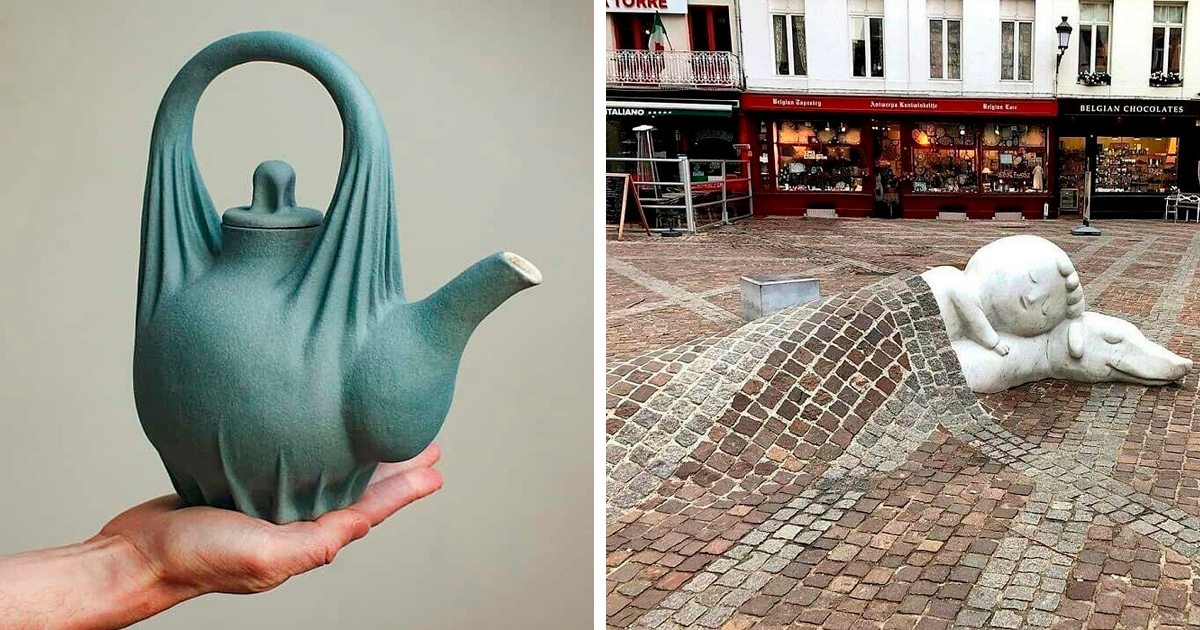
- Nello and Patrasche sculpture: Public sculpture becomes emotionally memorable when storytelling, affection, and craftsmanship meet in one touching form.
- Creative milk packaging: Packaging can communicate freshness, playfulness, and brand identity before a customer even reads the label.
- Lee Sangsoo-style line sculptures: Minimal forms can express movement and personality without visual clutter.
- The Bouquetpot: A planter that makes flowers feel arranged by design rather than dropped into a container after a grocery-store panic buy.
- Crocheted Bernie Sanders artwork: Meme culture becomes textile design, turning a viral moment into warm handmade humor.
- Vanessa Barragão hand-tufted rug: Fiber art can make floors feel like landscapes, not just places where socks disappear.
- Villa Saraceni-inspired architecture: Sculptural buildings show how homes can respond to location, sunlight, and drama without apologizing for being gorgeous.
- Gabriel Dawe-style thread installations: Color, light, and tension transform simple thread into an immersive optical experience.
- Agnes Hansella macramé work: Knotting becomes architecture in miniature, giving texture and rhythm to interior spaces.
- Ming Dynasty-inspired porcelain: Traditional visual language feels new when reinterpreted through modern forms and refined materials.
- Interactive glass-floor experiences: Spatial design can create adrenaline, wonder, and a strong urge to double-check your life insurance.
- Matthew Simmonds miniature architectural sculpture: Tiny carved spaces remind us that scale can intensify detail rather than reduce impact.
- Rotganzen disco ball design: Familiar party objects become surreal when softened, melted, or visually distorted.
- Optical artwork: Eye-bending compositions prove that perception itself can be a design material.
- Rainbowkimono Eye Pod: Wordplay and craftsmanship combine in a design that is both funny and surprisingly intricate.
- Moonjoo Jo street bin concept: Public design works best when it makes the correct behavior easy, visible, and satisfying.
- Harris Armstrong stained glass: Colorful windows shape mood by controlling light, atmosphere, and focus.
- Balloon dog anatomy sculpture: Playful objects become conversation pieces when designers reveal an unexpected inner logic.
- Kumi Yamashita origami: Folded paper becomes shadow, portrait, and structure, showing how simple materials can deliver complex results.
- Trash-to-shirts fashion: Upcycling turns waste into wearable design, making sustainability more visible and less preachy.
- Periodic table with real elements: Educational design becomes memorable when information is tactile, visual, and collectible.
- Carl Theodor Sørensen round gardens: Landscape design can use geometry to make outdoor spaces feel organic, communal, and slightly magical.
- Trojan horse keyboard concept: A playful historical reference turns a common device into a visual joke with serious craft energy.
- The Hug Ring: Jewelry can carry emotional symbolism without needing a paragraph-long explanation card.
- Caleb Woodard cabinet design: Furniture becomes sculpture when texture, joinery, and surface rhythm work together.
- Tanaka Tatsuya miniature “Ironing Chips” artwork: Reframing ordinary snacks as tiny landscapes shows how design can refresh perception.
- Surreal bus design: Transportation concepts can challenge expectations, though safety still deserves a front-row seat.
- Nils Wodzak fold-down ironing board mirror: Multifunctional design shines in small homes where every square inch is paying rent.
- Kobbi Cimerman separator panel: Smart partitions offer privacy, movement, and visual interest without building permanent walls.
- Livia Marin “Broken Things” ceramics: Damaged objects become poetic when repair, collapse, and beauty are intentionally merged.
- Knots Studio woven stool: Softness and structure meet in furniture that looks tactile before anyone touches it.
- Richard Malachowski reading light: A lamp can become part of a reading ritual when function and form quietly support each other.
- Rolf Sachs lighting installation: Light design creates atmosphere, but great light design creates memory.
- Chromato_mania needle painting: Textile detail can be so precise it tricks the eye into reading thread as aerial landscape.
- Surglinok teapot: Ceramic design can turn daily serving objects into expressive table sculptures.
- Cargotecture stacked containers: Modular architecture shows how reused industrial materials can become bold living spaces.
- Bobby Ricci dog house concept: Pet furniture no longer has to look like it was designed during a garage emergency.
- Atelier Février Nazar rug: Pattern, symbolism, and craft combine in a rug that acts as both floor covering and visual anchor.
- Francis Bitonti 3D-printed flatware: Digital fabrication can make everyday tools feel futuristic, though comfort still matters at dinner.
- Family-style candle holders: Simple silhouettes can suggest warmth, togetherness, and narrative with minimal detail.
- Kanghee Kim surreal artwork: Digital collage and photography can create impossible spaces that still feel strangely believable.
- Hopeinthewoods handcrafted kitchen items: Handmade tools bring texture and personality back into the most practical room in the home.
- Schimmel Pegasus grand piano: Musical instruments can become sculptural icons while still honoring performance.
- NOS Architecture street installation: Public art changes how people move through a city, even if it also makes them walk slower and take twenty photos.
- AZIO retro classic keyboard: Vintage form paired with modern technology proves nostalgia can still be useful.
- Piero Lissoni patchwork design: Patchwork can feel calm and luxurious when proportion, tone, and material are controlled.
- Daniel Buren architectural installation: Repetition and color can transform buildings into immersive visual systems.
- Hoon Yoon Flexi-Bike: Mobility design gets exciting when flexibility, storage, and urban practicality are considered together.
- Johnson Tsang porcelain sculptures: Porcelain becomes expressive when technical mastery allows delicate objects to look fluid, emotional, and alive.
Why These Designs Work So Well
They Make Function Feel Emotional
A tea bag holder is not a life-changing invention, unless you are very serious about chamomile. But the Jiang Taigong design works because it turns a small action into a moment. Emotional design does not always require luxury materials or complicated technology. Sometimes it is simply the difference between “I used this” and “I smiled while using this.”
They Respect Human Behavior
Smart design observes how people actually live. The fold-down ironing board mirror is brilliant because it understands real homes: limited storage, awkward chores, and the eternal problem of where to hide an ironing board so guests do not think you live inside a laundry basket. The object solves a real inconvenience while staying visually clean.
They Use Materials In Unexpected Ways
Innovative product design often begins with the question, “What else can this material do?” Thread becomes light. Porcelain appears liquid. Shipping containers become housing. Rugs become landscapes. When designers push material beyond its usual role, familiar objects feel new again.
They Encourage Better Public Spaces
Design Therapy’s examples are not limited to private interiors. Street bins, installations, gardens, benches, stained glass, and public sculptures show how design can improve shared environments. Good public design should be legible, durable, inclusive, and emotionally generous. Bad public design makes people confused. Great public design makes people behave better without feeling bossed around by a trash can.
Design Lessons For Homeowners, Creators, And Brands
The biggest lesson from these 50 examples is that innovation does not always mean inventing something enormous. In many cases, the breakthrough is a small twist: a new storage method, a warmer material, a more intuitive shape, a more delightful metaphor. Brands can learn from this by making packaging more expressive and useful. Homeowners can learn from it by choosing pieces that combine beauty with purpose. Designers can learn from it by remembering that novelty alone is not enough; a design still has to serve people.
For digital creators and marketers, the Design Therapy phenomenon also explains why visual inspiration performs so well online. People love before-and-after transformations, surprising mechanisms, satisfying textures, clever packaging, and objects that look like they were designed by someone who had coffee and empathy on the same morning. On Instagram, where attention is brutally competitive, design content succeeds when the idea is readable in seconds but interesting enough to examine longer.
How To Recognize Truly Good Design
Not every beautiful object is good design, and not every useful object is beautiful. The best work usually sits in the middle. Ask four simple questions. Does it solve a problem? Is it easy to understand? Does it feel good to use or experience? Does it improve the environment around it? If the answer is yes, the design is probably doing more than posing for the camera.
Accessibility also matters. A chair should support bodies, not just win applause from people who never sit down. A public installation should consider movement, safety, and visibility. A package should be attractive but still easy to open, recycle, and identify. Innovation becomes more meaningful when it includes more people.
Experience: What Design Therapy Teaches Us About Everyday Life
Spending time with design collections like this changes the way you look at normal objects. Suddenly, the boring things around the house start raising their hands like guilty students. The spoon drawer looks underdeveloped. The laundry area looks like it was planned by someone who disliked joy. The entryway key bowl begins to feel less like organization and more like a ceramic trap for loose coins, old receipts, and one mysterious battery nobody remembers buying.
The most interesting experience is realizing that good design is not reserved for museums, luxury homes, or people who say “negative space” at dinner parties. It lives in the cup you reach for every morning, the lamp that does not glare in your eyes, the chair that supports your back, the package that opens without a wrestling match, and the public bench that actually invites people to sit. Design is everywhere, which is wonderful, because it means life is full of opportunities for improvement. It is also mildly alarming, because once you notice bad design, you cannot unsee it.
Design Therapy’s collection is especially enjoyable because it mixes practical ideas with pure visual pleasure. Some pieces would fit easily into daily life, like multifunctional furniture, clever lighting, handcrafted kitchen tools, and space-saving storage. Others are more dreamlike: sculptural pianos, surreal bus concepts, porcelain faces, optical installations, and gardens that look like geometry decided to relax. That mix matters. Practical design improves routines, while poetic design improves imagination. A healthy culture needs both.
For homeowners, the collection offers a useful reminder: do not decorate only for looks. Choose objects that help the room behave better. A separator panel can soften an open-plan space. A textured rug can define a seating area. A reading light can make a corner feel intentional. A handmade bowl can turn a simple meal into a small ceremony. Design does not have to shout. Sometimes it just quietly makes Tuesday less boring.
For designers, the experience is a creative nudge. Look at the overlooked. Study awkward habits. Notice where people struggle, improvise, stack, hide, tape, balance, or complain. Those little frustrations are design briefs wearing casual clothes. A great idea may begin with a tea bag string, a cramped hallway, a dog bed, a trash bin, or a drawer that refuses to close because someone owns seventeen spatulas. Innovation often starts exactly where irritation begins.
Most importantly, these examples remind us that design can be therapeutic not because every object is soft, beige, and whispering “mindfulness,” but because thoughtful design reduces friction. It makes life smoother, clearer, safer, funnier, warmer, and more humane. That is the real charm of Design Therapy: it shows a world where creativity is not decoration added at the end. It is care, built into the object from the beginning.
Conclusion
The “Design Therapy” Instagram account proves that innovative design can be practical, emotional, funny, sculptural, sustainable, and surprisingly comforting all at once. From tea bag holders and folding ironing boards to public installations, 3D-printed flatware, stained glass, modular architecture, and poetic porcelain sculptures, these 50 examples show how creativity changes ordinary experiences. The best designs do not simply ask us to admire them. They ask us to live better with them.
Whether you are decorating a home, building a brand, designing a product, or simply collecting ideas for your next inspiration board, the lesson is clear: awesome design begins with attention. Pay attention to people. Pay attention to materials. Pay attention to tiny problems. Then add imagination, craft, and just enough humor to keep the world from looking like a spreadsheet.
Note: This article is a fully rewritten, original synthesis based on real design examples, design research principles, and reputable design-focused references. It is prepared for web publishing without source-link clutter or automated citation placeholders.