Editorial note: This article is written in a light, family-friendly style and is inspired by real parenting discussions online, expert guidance on toddler language development, and common child-behavior advice. It does not reproduce private posts verbatim.
When Tiny Humans Discover Big, Bad Words
There are many parenting milestones people warn you about: the first steps, the first tantrum in a grocery store, the first time your toddler says “no” with the confidence of a tiny union leader. But nobody properly prepares parents for the first time a cherub-faced toddler drops a curse word with perfect timing, excellent pronunciation, and absolutely zero understanding of the social earthquake they just caused.
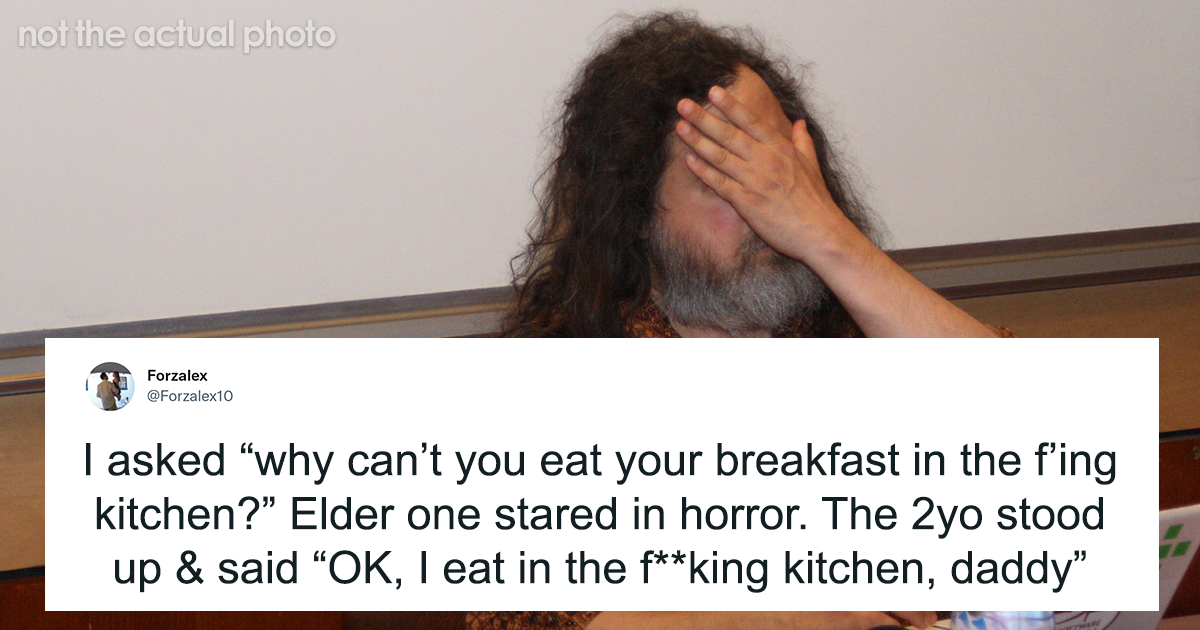
That is why stories about toddlers using curse words spread so quickly on Twitter, now known as X. Parents hear them, freeze, make the fatal mistake of laughing, and then immediately realize they have created a monster. One giggle from Mom or Dad and suddenly the forbidden word becomes the hottest new single in the toddler household charts.
The viral appeal of “kids cursing” stories is easy to understand. Toddlers are still learning language, tone, emotion, timing, and social rules. They repeat what they hear. They test reactions. They try words on like rain boots. Sometimes those words are “please,” “banana,” and “I love you.” Other times, after Dad stubs his toe or Mom drops a casserole, the new vocabulary comes from the spicy adult drawer.
For parents, the moment is usually equal parts hilarious, embarrassing, and spiritually humbling. One second you are packing snacks. The next, your two-year-old is narrating traffic like a retired New York cab driver.
Why Toddler Swearing Is So Funny Online
Parenting humor works because it tells the truth with crumbs in its hair. The funniest tweets about toddlers using curse words usually follow the same pattern: an innocent child, a wildly inappropriate phrase, and a parent trying not to react because they know laughter is gasoline.
Online collections of funny parenting posts often feature moms and dads describing children who swear at dropped toys, misbehaving socks, closed snack cabinets, slow elevators, family pets, and the general injustice of bedtime. The comedy comes from contrast. Toddlers look like walking marshmallows, but sometimes they speak like someone who has worked twelve years in airport customer service.
One parent might share that their toddler shouted a censored version of “What the heck?” at a puzzle piece that refused to fit. Another might confess that their preschooler learned an adult phrase from a grandparent, then used it during circle time with the confidence of a motivational speaker. A dad may admit his child picked up a word in traffic and repeated it at the exact moment Grandma entered the room, because toddlers are not just children; they are timing experts with yogurt on their sleeves.
These stories do not go viral because parents are proud of bad language. They go viral because every parent understands the collision between ideal parenting and real life. You can read all the child-development books, prepare nutritious lunches, and speak in calm Montessori tonesthen accidentally teach your toddler a four-letter word while assembling a bookshelf called “simple.”
What Child Development Tells Us About Copycat Language
Toddlers learn by listening, watching, repeating, and experimenting. Around age two and three, children rapidly expand their vocabulary, begin combining words, ask questions, and use language to express needs, feelings, and opinions. Unfortunately for parents, toddlers do not arrive with a built-in “not for preschool” filter.
That means a curse word may be stored in the same mental basket as “duck,” “truck,” “snack,” and “again.” The toddler does not necessarily understand that one word makes adults gasp while another gets them applause. What they do understand is reaction. A big laugh, a dramatic gasp, or a frantic “Don’t say that!” can make the word feel powerful.
This is why many parenting experts recommend staying calm when kids use inappropriate language. If the word was random or attention-seeking, a huge reaction may encourage a repeat performance. If the child is old enough to understand, parents can explain the family rule: “That word is not for kids,” “We do not use words that hurt people,” or “You can say ‘I’m frustrated’ instead.”
The goal is not to shame the child. Toddlers are not tiny villains. They are tiny scientists. They press buttons to see what happens. Sometimes that button is a forbidden word. Sometimes it is the microwave. Either way, someone should probably intervene calmly.
30 Amusing Toddler Curse-Word Moments Parents Understand
Below are thirty original, family-friendly examples inspired by the kinds of funny parenting moments moms and dads share online. They are not copied tweets; they are recreated scenarios that reflect the classic chaos of toddler language, social media parenting humor, and real-life family awkwardness.
1. The Traffic Report
A toddler in the back seat hears Dad mutter during traffic. Ten minutes later, the child points at a red light and repeats the censored phrase with the accuracy of a navigation app that has had enough.
2. The Fallen Cracker Incident
A cheese cracker falls under the couch. The toddler looks into the darkness, sighs deeply, and says a word no one has ever taught during snack time.
3. The Preschool Surprise
A parent receives a note from daycare: “We are working on kind words today.” Translation: someone brought home vocabulary from a weekend football game.
4. The Toy Truck Problem
The toddler cannot attach two toy train pieces. After three attempts, they whisper a forbidden word with the emotional weight of a project manager facing a deadline.
5. The Grandma Visit
Grandma walks in wearing a new hat. The toddler studies it, pauses, and says, “What the…” The family has never changed the subject faster.
6. The Grocery Store Broadcast
In aisle seven, a toddler announces a newly learned word at full volume. Every adult nearby suddenly becomes fascinated by pasta sauce labels.
7. The Dog Blame Game
The dog steals a nugget. The toddler points dramatically and delivers a censored insult usually reserved for sports referees.
8. The Sock Betrayal
A sock feels “wrong.” The toddler collapses on the floor and uses language suggesting the sock has committed tax fraud.
9. The Puzzle Review
A puzzle piece does not fit, so the toddler gives it a one-star review using a word the family thought was only heard after stepping on building blocks.
10. The Phone Call Echo
Mom ends a stressful call and mutters under her breath. The toddler repeats it cheerfully into a toy phone all afternoon.
11. The Church Whisper
In a quiet room, the toddler drops a curse word in a whisper that somehow carries across four rows. Toddlers do not understand volume. They only understand destiny.
12. The Car Seat Complaint
The buckle pinches a jacket. The toddler reacts like a commuter whose flight has been canceled twice.
13. The Swear Jar Entrepreneur
A parent introduces a swear jar. The toddler begins pointing out everyone else’s mistakes, proving capitalism starts early.
14. The Bathtub Commentary
Water gets in the toddler’s eyes. A shocking word appears. Bath toys stare silently from the bubbles.
15. The Dinner Table Remix
The toddler mispronounces a curse word so badly that the adults cannot decide whether to correct it, ignore it, or frame it as a new pasta shape.
16. The Airport Delay
A delayed flight inspires a parent to mutter. A toddler repeats it loudly near boarding group three, becoming the unofficial spokesperson for the terminal.
17. The Bedtime Negotiator
When told it is bedtime, the toddler folds their arms and delivers a phrase usually heard during contract disputes.
18. The Lost Blue Cup
The blue cup is missing. The red cup is unacceptable. The toddler’s response suggests the household has entered a constitutional crisis.
19. The Holiday Dinner Moment
A toddler repeats a spicy phrase learned from an uncle. Every adult immediately knows which uncle.
20. The Playground Echo
Another child says a bad word. The toddler repeats it for “practice,” because apparently the playground now offers continuing education.
21. The Movie Night Mistake
Parents think the toddler is asleep during a grown-up movie. The next morning, the toddler proves they were not asleep enough.
22. The Broken Crayon Rage
A crayon snaps. The toddler looks at both pieces and expresses disappointment in a way that feels oddly corporate.
23. The Public Restroom Echo
Public restrooms create echoes. Toddlers create consequences.
24. The Grandparent Denial
Grandpa insists he never says that word. The toddler then repeats it in Grandpa’s exact accent.
25. The Doorbell Drama
The doorbell rings during nap time. The toddler wakes up and comments with the fury of a tiny neighborhood watch captain.
26. The Ice Cream Disappointment
Vanilla is offered when chocolate was expected. A short, sharp word escapes. The family learns dessert has emotional stakes.
27. The Vacuum Cleaner Feud
The toddler hates the vacuum. The vacuum receives language that should probably be redirected into “I feel scared.”
28. The Shoe Problem
The left shoe goes on the right foot. The toddler reacts as though footwear itself has betrayed civilization.
29. The Toy Commercial Influence
A toy breaks after three minutes. The toddler uses a phrase heard from a parent reviewing online shipping delays.
30. The Mirror Practice
The toddler stands in front of the mirror repeating the forbidden word, testing tone, rhythm, and facial expressions like a Broadway performer in rehearsal.
Why Parents Laugh Even When They Know They Shouldn’t
Parents laugh because toddler swearing is unexpected. It is absurd. It interrupts the serious business of raising a child with a moment so ridiculous that the adult brain short-circuits. A two-year-old saying a grown-up phrase is like seeing a raccoon drive a golf cart: you know there are concerns, but first you need a second to process the spectacle.
Laughter can also be a stress release. Parenting toddlers is beautiful, but it is not exactly peaceful. There are tantrums, spilled juice, mysterious sticky patches, and debates about whether pants are necessary for public life. When a child uses a curse word in a silly context, parents may laugh because the alternative is quietly dissolving into the laundry pile.
Still, the reaction matters. A huge laugh can turn one accidental word into a family catchphrase. Toddlers are excellent at noticing which behaviors make adults light up. If a word gets attention, they may repeat it at breakfast, during pickup, in front of the pediatrician, and anywhere else the universe wants to test you.
How Parents Can Respond Without Making It Worse
The best response depends on the child’s age, the context, and the family’s values. A toddler who repeats a word once may only need a neutral redirect. A preschooler using it repeatedly may need a simple explanation and a consistent rule.
Stay calm first
Reacting like the house just exploded can make the word more exciting. Try a calm face, even if your soul has briefly left your body.
Name the rule simply
Use short, clear language: “That word is not for kids,” or “We use kind words.” Long lectures often disappear into the toddler atmosphere.
Offer replacement words
Children need alternatives. Try “Oh, bananas,” “That’s frustrating,” “I’m mad,” “Oops,” “Rats,” or the timeless classic, “Dagnabbit.”
Watch adult language
Children copy what they hear. If parents want fewer spicy words in the house, the grown-ups may need to edit their own soundtrack, especially during traffic, sports, furniture assembly, and stepping on toys.
Do not shame curiosity
A toddler repeating a word is not usually trying to be rude. They are exploring language. Correct the behavior without making the child feel bad for learning.
Teach context as they grow
Older children can understand that some words are rude, hurtful, private, or inappropriate in school and public places. Toddlers need simpler boundaries first.
The Difference Between Funny Swearing and Hurtful Language
Not every “bad word” moment is the same. A toddler repeating a random curse after dropping a block is different from a child using cruel or insulting language toward another person. Parents should treat hurtful speech more seriously because it involves respect, empathy, and social behavior.
Even young children can begin learning that words affect people. A helpful rule is: “We do not use words to hurt someone.” This teaches more than manners. It teaches emotional awareness. The goal is not to raise children who never hear a bad word. The goal is to raise children who understand that language has power.
Parents can also separate “adult words” from “mean words.” Some families may choose strict rules around all profanity. Others may take a more relaxed approach at home but set firm limits for school, relatives’ houses, and public spaces. The important part is consistency. A toddler cannot follow a rule that changes every time Dad watches basketball.
Why Twitter Parenting Stories Feel So Relatable
Twitter became a natural home for parenting comedy because it rewards short, sharp observations. Parenting toddlers is made of tiny episodes: one strange sentence, one public meltdown, one snack negotiation, one horrifyingly accurate imitation of Mom on the phone. These moments fit perfectly into tweet-sized stories.
Parents share them because they want to laugh, but also because they want to feel less alone. The internet can make parenting look polished, filtered, and suspiciously beige. Funny tweets about toddlers cursing remind everyone that real family life is louder, messier, and much more likely to involve someone yelling about applesauce.
When moms and dads read these stories, they often think, “Oh good, it’s not just my child.” That relief is powerful. Parenting humor creates community. It says: your toddler is not broken, your house is not uniquely chaotic, and yes, other families have also had to explain why certain words are not appropriate at story time.
What These Moments Reveal About Toddlers
Toddler curse-word moments are funny, but they also reveal something amazing about early childhood. Children are listening all the time. They are studying tone, context, facial expressions, and emotional energy. They may not understand the meaning of every word, but they notice which words carry force.
This is why toddlers often repeat curse words with such dramatic precision. They are not just copying vocabulary. They are copying performance. The sigh before the word. The hand gesture. The annoyed face. The way Dad says it when the Wi-Fi stops working. Toddlers are tiny mirrors, and sometimes the mirror has no mercy.
That can be uncomfortable for parents, but it is also useful. A child’s language gives adults feedback about the environment. If a toddler repeats yelling, sarcasm, or insults, it may be a sign to soften the household tone. If a toddler repeats “thank you,” “try again,” and “I’m sorry,” that shows the power of modeling too.
of Parenting Experience: Surviving the Toddler Potty-Mouth Phase
Every parent who has lived through the toddler curse-word phase eventually earns the same badge: the ability to keep a straight face while chaos unfolds. This is harder than it sounds. Toddlers do not use forbidden words randomly. They use them at the worst possible time, with the best possible delivery, and often in front of the exact person you hoped would never hear it.
The first experience many parents describe is shock. They wonder, “Where did my child learn that?” Then, after two seconds of honest reflection, they remember the traffic jam, the dropped phone, the burned toast, or the moment someone stepped barefoot on a plastic dinosaur. Parenting has a way of turning adults into detectives who already know the suspect.
The second experience is the battle against laughter. Parents know they should stay calm, but toddlers are comedy professionals by accident. A child who cannot pronounce “spaghetti” may somehow pronounce a curse word with courtroom clarity. The mismatch is what breaks people. Parents bite their lips, stare at the ceiling, cough into their sleeves, or leave the room to laugh silently near the laundry basket.
The third experience is realizing that attention is currency. If a toddler says a bad word and the whole room reacts, the child learns that the word has magic. It can stop adults, change faces, create noise, and possibly delay bedtime. From the toddler’s point of view, this is a successful scientific discovery. From the parent’s point of view, it is time to become boring.
Many parents find success with replacement phrases. Silly substitutes work because toddlers still get drama without the social problem. “Oh pickles,” “fudge nuggets,” “holy guacamole,” and “biscuits” may sound ridiculous, but ridiculous is often perfect for toddlers. A child who yells “Oh, pickles!” after dropping a block still gets emotional release, while the adults avoid an awkward daycare conversation.
Another common experience is the family language reset. Once a toddler becomes a walking recorder, grown-ups suddenly notice their own habits. The kitchen becomes cleaner linguistically. Traffic commentary becomes more creative. Sports nights require restraint. Even grandparents may receive gentle reminders, though grandparents are famous for denying everything while toddlers provide live evidence.
Parents also learn that one slip does not define a child. A toddler using a curse word is usually not a sign of bad character, bad parenting, or a future career in dockside shouting. It is a normal language experiment that needs calm guidance. The child is learning which words belong where, just as they learn that crayons go on paper, shoes go on feet, and peas apparently go everywhere except the mouth.
In the end, the toddler potty-mouth phase becomes one more family story. It is embarrassing in the moment, hilarious later, and strangely educational for everyone involved. The child learns boundaries. The parents learn self-control. The household learns that “dagnabbit” is a surprisingly useful word. And years later, when the child is older, someone will retell the story at dinner while the once-tiny offender insists, with deep personal dignity, that they never said such a thing.
Conclusion: Laugh, Guide, and Keep the Swear Jar Handy
Toddlers using curse words can be funny because the moment is so unexpected, but it is also a reminder of how quickly children absorb the world around them. They hear more than adults realize, copy more than adults expect, and repeat the one phrase everyone hoped they missed.
The healthiest response is usually a blend of humor, calm correction, and consistent modeling. Parents do not need to panic over one badly timed word. They also do not need to turn every incident into a viral family tradition. Laugh later, redirect now, and remember that language learning is messy.
Those viral stories from moms and dads online are popular because they capture real parenting: imperfect, hilarious, exhausting, and full of surprises. Toddlers may be small, but their timing is enormous. And if your child has ever shouted a censored curse word at a banana, a sock, or a slow elevator, congratulations. You are officially in the club.