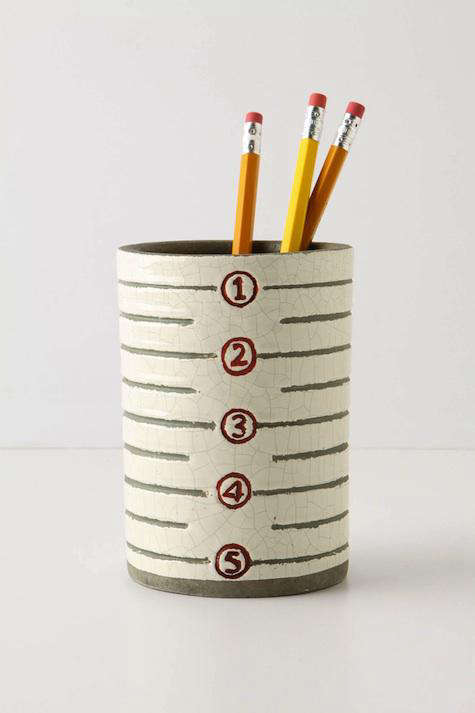
A well-designed office does not need a battalion of gadgets, a wall of motivational slogans, or a desk large enough to land a small airplane. Inspired by the practical, beautifully restrained accessories favored by Remodelista editors, these ten office essentials show how thoughtful tools can make a workspace calmer, more efficient, and considerably nicer to look at.
Why Thoughtful Office Essentials Still Matter
The original Remodelista editors’ office essentials roundup appeared in 2011, when a handsome pencil cup, a wooden tape dispenser, and an industrial metal stapler could still command attention without needing Bluetooth. Its selections were wonderfully ordinary: pencils, scissors, storage boxes, magazine files, a task lamp, and other hardworking objects that made daily office life more orderly.
That approach feels even more useful today. Modern desks are crowded with laptops, charging cables, earbuds, video-call equipment, and at least one mysterious adapter that nobody remembers buying. Adding more technology is rarely the solution. What most workspaces need is a smaller collection of reliable office essentials that reduce friction instead of creating another instruction manual.
The Remodelista philosophy is not simply “buy attractive desk accessories.” It is closer to “choose useful objects so carefully that you will not need to replace them next season.” Natural materials, straightforward construction, compact proportions, and visual restraint are central to the look. A good tool should work hard, age gracefully, and avoid shouting across the room.
Build a Functional Foundation First
Before shopping for a beautiful stapler, make sure the workspace itself is comfortable. A stylish desk cannot negotiate with an aching neck. Position the primary screen directly in front of the body, with the top of the display around eye level or slightly below it. Keep the keyboard and mouse close enough that the elbows remain relaxed rather than reaching forward like someone trying to rescue a cookie from a high shelf.
The chair should support the lower back, allow the feet to rest flat, and place the forearms roughly parallel to the floor. Smaller users may need a footrest, while taller users may need to raise the work surface. The correct setup depends on the person rather than on whatever height the furniture manufacturer decided looked elegant in a catalog.
Lighting matters too. Natural daylight is welcome, but direct glare on a monitor is not. An adjustable task lamp can illuminate documents, sketches, and notebooks without blasting the entire room. Finally, remember that no chair is comfortable enough to make eight motionless hours healthy. Change positions, stand periodically, stretch, and take short walking breaks. Your fountain pen will not be offended.
The 10 Easy Pieces for a Remodelista-Inspired Office
1. A Sculptural Pencil Cup
The humble pencil cup is the smallest piece of office furniture and possibly the most judgmental. Fill it with 47 dried-out markers, and it becomes a monument to procrastination. Limit it to a few excellent writing tools, and it instantly makes the desk appear intentional.
The original Remodelista selection featured a cup decorated with ruler-like inch markings. The exact product matters less than the principle: choose a compact container with enough character to earn its visible position. Ceramic, powder-coated steel, solid wood, recycled glass, and heavy stoneware all work well. Avoid oversized organizers with a dozen compartments unless you genuinely use everything they hold.
A pencil cup should contain only the daily cast: two pens, two pencils, a highlighter, and perhaps a small pair of scissors. Supporting actors belong in a drawer.
2. Writing Tools Worth Reaching For
Remodelista’s editors highlighted California incense-cedar pencils and the Lamy Safari fountain pen, two objects that demonstrate how good design can improve an unglamorous task. A quality pencil sharpens cleanly, feels balanced, and does not splinter halfway through an important note. A dependable fountain pen or rollerball adds just enough ceremony to slow down hurried handwriting.
There is no productivity medal for owning thirty pens. Select a small writing kit based on actual habits. Writers and illustrators may need multiple line weights. Most office workers need one comfortable pen, one backup, and a pencil for temporary notes. Test grip diameter, weight, ink flow, and whether the pen smears under your writing hand.
The best writing tool is not necessarily the most expensive. It is the one that works every time and never requires vigorous scribbling in the margin to wake it from a nap.
3. Lidded Storage Boxes
Heavy-duty office storage boxes are the quiet heroes of workspace organization. They hide spare cords, archived notebooks, envelopes, photo equipment, product samples, and supplies that are necessary but visually chaotic. Remodelista’s linen-covered library boxes offered a softer alternative to shiny plastic bins while remaining practical enough for regular use.
Choose boxes that fit the shelf rather than buying storage first and discovering later that the lids collide with the bookcase. Matching containers create visual calm, but labels are essential. Otherwise, every box becomes a tasteful mystery novel titled Possibly Chargers.
Use broad categories such as “Mailing Supplies,” “Receipts,” “Tech Accessories,” or “Reference Materials.” Avoid creating hyper-specific categories that require a committee meeting each time you put away a paper clip.
4. A Paper-and-Pen Landing Tray
A shallow tray creates a defined home for the items currently in use: today’s notebook, an incoming document, a pen, and perhaps a ruler. Remodelista’s featured paper-and-pen holder was crafted as a refined wooden desktop object, but the organizational concept works with cork, metal, leather, or molded fiber.
The key word is current. This is not a tray where papers go to begin a new civilization. Empty it at the end of the day or at least once a week. File reference material, recycle unnecessary sheets, and transfer action items to a calendar or task system.
A landing tray is particularly useful in a shared living space. It allows work materials to be gathered quickly when the dining table must return to its evening career as a dining table.
5. Proper Office Scissors
The original editors admired lightweight Japanese stainless-steel scissors that had been produced for decades. That longevity reflects an important rule for office essentials: simple cutting tools should cut cleanly, feel comfortable, and survive more than one encounter with cardboard.
Look for sharp stainless-steel blades, smooth action, a grip that suits the dominant hand, and a length appropriate for common tasks. Compact scissors work for thread, labels, and envelopes. Longer blades are better for paper, packaging, and presentation boards.
Keep office scissors at the desk rather than allowing them to migrate into the kitchen, garage, or gift-wrapping wilderness. A designated pair prevents the familiar household investigation that begins with, “Who took the good scissors?” and ends with everyone denying knowledge under oath.
6. A Wire Basket for Active Materials
A vintage-style wire basket introduces light industrial character while keeping magazines, catalogs, project folders, and rolled plans visible. Unlike a solid bin, an open basket lets users identify the contents quickly. It also discourages unchecked accumulation because the mess remains visible rather than disappearing behind a lid.
Use wire baskets for active projects or frequently referenced materials, not permanent archives. Place one under the desk for recycling, beside a reading chair for journals, or on a low shelf for current client folders. Felt pads can protect wood floors and shelving from scratches.
Scale is important. A basket that is too small becomes decorative clutter. One that is too large may tempt its owner to retain every catalog printed since 2008. Choose a size based on a clear function and establish a maximum capacity.
7. An Adjustable Task Lamp
An articulating desk lamp is one of the most useful pieces in the entire office. Remodelista’s selection paired mechanical joints with a heavy stone base, combining practical movement with visual substance. A modern version should offer adjustable height and direction, stable construction, and a shade that keeps the bulb from glaring directly into the eyes.
Position the lamp on the side opposite the writing hand to reduce shadows across paper. Angle it toward the work surface rather than toward the monitor. Warm-to-neutral light is generally comfortable for reading and writing, while dimming controls help the lamp adapt from bright daytime tasks to calmer evening work.
A task lamp also improves the atmosphere of a home office. Overhead lighting often makes a room feel like an airport security checkpoint. A focused pool of light creates a more welcoming zone and visually separates work from the surrounding room.
8. A Weighted Tape Dispenser
A wooden tape dispenser may sound like a luxury until you attempt to tear tape one-handed from a flimsy plastic model and launch the entire device across the desk. A solid, weighted dispenser stays put, cuts cleanly, and turns an inexpensive supply into a dependable tool.
Wood is particularly compatible with the Remodelista aesthetic because it softens the visual presence of office equipment. Metal, stone, and heavy recycled plastic can work equally well. Check that replacement tape rolls are easy to find and that the cutting edge is sharp but safely positioned.
The dispenser can serve practical roles beyond mailing. Use removable tape for temporary labels, low-tack tape for planning layouts, or decorative paper tape for color-coding notebooks. Just avoid collecting so many patterns that the tape requires its own filing department.
9. A Desktop Stapler with Some Weight
Remodelista’s editors selected the classic Ace Pilot stapler, a design associated with early twentieth-century office equipment. Its appeal comes from honest construction: metal body, visible mechanism, substantial base, and no attempt to resemble a futuristic spaceship.
A stapler should operate smoothly, open for bulletin-board use when needed, and accept commonly available staples. Weight is helpful because it prevents sliding and allows clean one-handed operation. For a modern minimalist office, powder-coated black, gray, cream, or brushed metal finishes blend easily with other desk accessories.
Before buying, consider whether stapling is genuinely part of the workflow. A nearly paperless office may be better served by a compact model stored in a drawer. The Remodelista approach is selective, not ceremonial. There is no need to display a stapler simply because every office comedy has one.
10. A Vertical Filing System
The final essential combines magazine files, a memo board, and a simple rule: move information upward rather than allowing it to spread sideways. Remodelista editors used wooden magazine holders and magnetic boards to organize publications, reminders, and household paperwork without covering the desktop.
Magazine files are ideal for current issues, slim catalogs, notebooks, and project folders. Arrange them by topic and label the front or spine. A magnetic, cork, or fabric memo board can hold a calendar, a short task list, reference images, and one or two meaningful personal items.
Resist turning the board into a physical version of an overflowing browser. Display only material that supports current work. Remove expired coupons, ancient invitations, and inspirational quotations that have become invisible through overexposure. Vertical organization works best when it remains edited.
How to Choose Office Accessories That Last
Favor Useful Materials
Wood, steel, aluminum, cork, leather, glass, and sturdy recycled fiberboard tend to age more gracefully than thin, brittle plastic. Material alone does not guarantee quality, but solid construction usually feels better in the hand and withstands daily use. Check joints, hinges, cutting edges, finishes, and replaceable parts before focusing on brand names.
Measure Every Footprint
Desk accessories occupy valuable working territory. Measure the available surface, drawer depth, shelf height, and cable-clearance areas before buying anything. Leave empty space for opening a notebook, reviewing documents, or simply resting the forearms. A desk should function as a work surface, not as an exhibition of everything ever purchased for it.
Create Storage by Frequency of Use
Daily items belong within arm’s reach. Weekly supplies can live in a drawer or nearby cabinet. Archival materials should move to higher shelves, closed boxes, or a separate storage area. This frequency-based system is more practical than organizing solely by appearance because it follows real behavior.
Buy Slowly
A coherent office rarely arrives in one enormous shopping order. Start with the problem that interrupts work most often. If papers multiply overnight, add a tray or magazine file. If lighting is poor, begin with a task lamp. If cables are taking hostages, install clips or an under-desk cable tray. Solve one annoyance, observe the result, and then choose the next piece.
Experience Notes: Living with a Ten-Piece Office Setup
A practical office reset usually feels most dramatic during the first morning. The visual difference is immediate: fewer loose objects, a clearer central work area, and no pile of papers leaning against the monitor like a structurally questionable apartment building. The deeper benefits, however, become noticeable over the following days.
On day one, the pencil cup exposes how many writing tools no longer work. Testing every pen may seem unnecessarily thorough, but it prevents future interruptions. The survivors go into the cup; duplicates and specialty markers move into a drawer. Suddenly, choosing a pen requires no thought. It is a tiny improvement, yet it happens repeatedly throughout the week.
The paper tray becomes the next test. At first, nearly everything seems worthy of landing there. Mail, notes, receipts, sketches, and printouts arrive with impressive speed. By the third day, it becomes clear that a tray needs an operating rule. A useful one is simple: papers may enter freely, but they must be filed, scheduled, digitized, delegated, or discarded during a weekly review. Without that ritual, even the most beautiful tray becomes a horizontal junk drawer.
The task lamp often delivers the most surprising change. Focused light makes handwriting easier to read, improves contrast on printed pages, and creates a visual boundary around the work area. In a room shared with other activities, switching off the lamp at the end of the day becomes a satisfying closing signal. Work has not merely paused; the office has officially clocked out.
Storage boxes require more discipline. Labeling them feels obvious until vague names such as “Miscellaneous” begin appearing. A better label describes a specific future search: “Spare Computer Cables,” “Tax Records,” or “Packaging Supplies.” The goal is not to classify every object with museum-level precision. It is to help a tired person find something six months later without opening seven boxes.
The wire basket and magazine files also reveal what is genuinely active. Publications that have not been opened in months can be recycled or archived. Project folders that remain current stay visible. This reduces the subtle anxiety produced by stacks of unread materialthe office equivalent of having twelve television episodes queued and feeling judged by all of them.
After a week, the most valuable result is not decorative consistency. It is reduced hesitation. Scissors are where they belong. Tape can be torn with one hand. Current documents occupy one controlled location. Reference material stands vertically instead of migrating across the desk. The workspace requires fewer small decisions, leaving more attention for actual work.
There are also limits. Elegant accessories cannot compensate for an uncomfortable chair, a low laptop screen, poor cable management, or a schedule without movement breaks. Nor will a minimalist setup stay minimal automatically. Every incoming object still needs a destination. Maintenance is part of the design.
The ten-piece approach works because it imposes a useful boundary. Rather than asking, “What else could I add?” it asks, “What earns a place here?” That question encourages better purchases, easier cleaning, and a workspace that feels personal without becoming crowded. The experience is less about achieving a perfect editorial photograph and more about building a desk that quietly helps, hour after hour.
Conclusion: A Better Office, One Useful Object at a Time
The enduring charm of Remodelista editors’ office essentials comes from their ordinariness. Nothing on the list promises to revolutionize human productivity. These are pencils, boxes, scissors, trays, lamps, and filing toolssimple objects selected with unusual care.
That restraint is exactly what makes the concept valuable. A successful office does not distract its user with constant novelty. It provides comfortable physical support, puts frequently used tools within reach, contains visual clutter, and leaves enough empty space for ideas to develop.
Begin with one persistent problem rather than an entire makeover. Replace the lamp that glares, contain the papers that wander, or retire the cup of unusable pens. Over time, a collection of durable and attractive office essentials can create a workspace that is calmer, easier to maintain, and pleasant enough that Monday morning loses at least some of its theatrical menace.