Broadway is often treated as musical theater’s ultimate finish line, but theater history has a funny habit of ignoring the map. Some shows become international blockbusters without ever booking a Broadway house. Others conquer Off-Broadway, inspire fiercely loyal fan bases, or get so close to a Broadway opening that you can practically hear the orchestra tuning uponly for the curtain never to rise.
That is what makes the story of famous musicals that never made it to Broadway so fascinating. A Broadway transfer can be derailed by money, mixed reviews, creative disagreements, impossible production costs, bad timing, or, in one spectacular case, a financing scandal involving imaginary investors. Theater, as it turns out, can produce backstage plots wilder than anything happening under the spotlight.
The following ten shows are not obscure curiosities gathering dust in a theatrical attic. They include record-breaking Off-Broadway productions, global hits, cult classics, Disney adaptations, a Queen jukebox extravaganza, and one very ambitious trip to Middle-earth. Yet none has opened as a Broadway production.
1. The Fantasticks
Few musicals demonstrate how little a show actually needs Broadway better than The Fantasticks. Written by Tom Jones and Harvey Schmidt, the deceptively simple romantic fable opened Off-Broadway at the Sullivan Street Playhouse in 1960. Its original production ran for an extraordinary 42 years and 17,162 performances. A later Off-Broadway revival pushed the show’s New York performance total even higher.
The musical follows two young lovers, their meddling fathers, and a mysterious narrator named El Gallo. Its tiny cast, intimate staging, and famously economical production style helped make it one of the most frequently produced musicals in the world. The song “Try to Remember” became a standard far beyond theater circles.
Broadway usually represents a step up in commercial scale. The Fantasticks proved that staying small could be its superpower. Moving it to a giant Broadway theater might have been like transferring a candlelit dinner into a football stadium: possible, certainly, but missing the point.
2. tick, tick… BOOM!
Before Jonathan Larson changed Broadway with Rent, he wrote about an aspiring composer staring down his 30th birthday and wondering whether the artistic life was worth the sacrifice. That intensely personal project eventually became tick, tick… BOOM!.
Larson originally performed the material as a rock monologue. After his death in 1996, playwright David Auburn reshaped it into the three-character musical that premiered Off-Broadway in 2001. The show has since enjoyed numerous revivals and major regional productions, while Lin-Manuel Miranda’s 2021 film adaptation introduced Larson’s earlier work to a much larger audience.
Yet the stage musical itself has never opened on Broadway. Its reputation instead grew through cast recordings, intimate productions, and the emotional connection audiences feel with its questions about ambition, time, friendship, and whether your career is supposed to have made sense by age 30. Spoiler: apparently not.
3. Heathers: The Musical
Heathers: The Musical turned a dark 1988 movie about popularity, bullying, and teenage murder into one of the internet generation’s favorite cult musicals. With music, lyrics, and a book by Laurence O’Keefe and Kevin Murphy, the show premiered in Los Angeles before opening Off-Broadway at New World Stages in 2014.
The original New York run was relatively brief, but the musical refused to behave like a show that was finished. Its cast recording found a huge audience, productions flourished internationally, and a revised version became particularly successful in London. The musical later returned to New York Off-Broadway, where its continuing popularity again demonstrated the strength of its fan base.
Despite all that enthusiasm, Heathers has remained outside Broadway. In some ways, that outsider status fits the show. It is loud, sharp, sarcastic, emotionally messy, and embraced by younger audiences who often discover musicals online long before they enter a theater. Very.
4. Bat Boy: The Musical
A musical inspired by a sensational tabloid story about a half-boy, half-bat creature does not immediately sound like the beginning of serious theater. That is precisely why Bat Boy: The Musical works.
With music and lyrics by Laurence O’Keefe and a book by Keythe Farley and Brian Flemming, the show premiered in Los Angeles in 1997 and opened Off-Broadway in 2001. Beneath the outrageous premise is a surprisingly emotional story about prejudice, identity, family, and society’s treatment of anyone considered different.
The musical developed a devoted cult following and has remained popular with regional theaters. New York revivals and concert-style presentations have periodically revived discussion about whether Bat Boy could finally fly onto Broadway.
So far, it has not. The show remains one of Off-Broadway’s great oddball success storiesa musical that can move from gothic horror to rock anthem to emotional sincerity before the audience has time to ask why everyone is suddenly singing about bats.
5. The Baker’s Wife
Some musicals never reach Broadway yet produce a song so famous that theater fans assume the show must have been a Broadway hit. The Baker’s Wife is a prime example.
Written by composer-lyricist Stephen Schwartz and book writer Joseph Stein, the musical follows an older baker whose beautiful younger wife runs away with another man, throwing a French villageand its bread supplyinto crisis. The show embarked on a troubled pre-Broadway tour in 1976 but closed before reaching New York.
Its score, however, refused to disappear. “Meadowlark” became one of Schwartz’s best-known standalone songs and a favorite of ambitious singers everywhere. The musical was repeatedly revised and later received major regional, international, and Off-Broadway productions.
The irony is delicious enough to serve with a baguette: The Baker’s Wife failed to reach Broadway, yet parts of its score became more enduring than those of many shows that did. Sometimes the road to theatrical immortality takes a very strange detour.
6. Rebecca
No list of musicals that almost made it to Broadway would be complete without Rebecca, because few theatrical near-misses have produced a backstage saga this extraordinary.
Based on Daphne du Maurier’s Gothic novel, the musical by Michael Kunze and Sylvester Levay became a major European success. A Broadway production was announced, a theater was secured, and preparations advanced toward a planned 2012 opening.
Then the financing collapsed.
The story became even more remarkable when federal authorities prosecuted a businessman who had defrauded the production through a scheme involving fictitious overseas investors. Suddenly, a musical about secrets, deception, and a haunting absence had acquired a real-life backstage story involving secrets, deception, and investors who did not exist. Subtle, fate was not.
The planned Broadway production was canceled before performances began. Rebecca has continued to receive productions elsewhere, but its Broadway debut remains one of modern musical theater’s most notorious unrealized openings.
7. Love Never Dies
Writing a sequel to one of the most successful musicals in history is a bold undertaking. Writing a sequel to The Phantom of the Opera is the theatrical equivalent of deciding that Mount Everest could use a second floor.
Andrew Lloyd Webber’s Love Never Dies premiered in London in 2010, continuing the stories of the Phantom and Christine in early-20th-century Coney Island. A Broadway production was planned, postponed, and ultimately never materialized.
The musical did not vanish. A substantially reworked Australian production earned a warmer reception, was professionally filmed, and helped the show build an international afterlife. It has since appeared in tours, concerts, and productions around the world.
Still, the Broadway transfer once envisioned for the show never happened. Love Never Dies therefore occupies an unusual position: it is the official sequel to a legendary Broadway phenomenon, yet the sequel itself has never played Broadway. The Phantom may be famously difficult to get rid of, but apparently even he can miss a transfer.
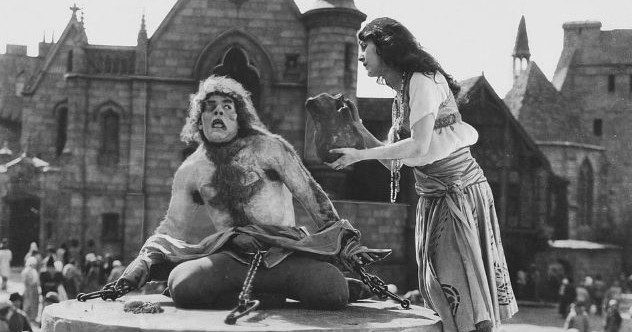
8. The Hunchback of Notre Dame
Disney’s stage version of The Hunchback of Notre Dame seemed to possess several ingredients associated with a Broadway arrival: a famous title, music by Alan Menken, lyrics by Stephen Schwartz, beloved songs from the 1996 animated film, and an epic story with enormous emotional weight.
The English-language stage adaptation received major U.S. productions at La Jolla Playhouse and New Jersey’s Paper Mill Playhouse in 2014 and 2015. Its darker tone, large choir, and blend of the Disney film with elements from Victor Hugo’s novel earned passionate admirers.
But the production did not transfer to Broadway.
Instead, the musical developed a robust life in regional, community, and international theater. Its demanding choral writing and dramatic scale have helped make it an attractive choice for companies capable of assembling large ensembles.
For many fans, Hunchback remains the Disney musical that feels as though it should have had a Broadway chapter. Its absence from the Main Stem has only added to its mystique.
9. We Will Rock You
Queen songs, a futuristic dystopia, a rebellious hero, and enough arena-rock energy to make a chandelier nervous: We Will Rock You was never designed to be shy.
Written by Ben Elton and built around Queen’s catalog, the musical opened in London’s West End in 2002. Critics were not universally kind, but audiences turned it into a long-running hit. The show expanded internationally and reached the United States through a Las Vegas production and later touring engagements.
What it never did was open on Broadway.
That may seem surprising for a jukebox musical powered by songs such as “Another One Bites the Dust,” “Somebody to Love,” “Bohemian Rhapsody,” and, naturally, “We Will Rock You.” Yet a successful Broadway production is not an automatic requirement for global popularity.
We Will Rock You is perhaps the clearest example on this list of a musical that built a large commercial identity while simply taking a different route around New York.
10. The Lord of the Rings: A Musical Tale
Adapting J.R.R. Tolkien’s sprawling fantasy epic into a single stage musical was never going to be a modest undertaking. The original production of The Lord of the Rings premiered in Toronto in 2006 before transferring to London’s West End in 2007, where its scale, elaborate staging, and enormous production costs drew considerable attention.
It did not continue to Broadway.
Years later, the material was radically reimagined in a more intimate, actor-musician format. That version eventually made its U.S. premiere at Chicago Shakespeare Theater in 2024, demonstrating that the musical could return without trying to outspend Mordor.
Even with its famous source material and renewed theatrical life, The Lord of the Rings: A Musical Tale has never opened on Broadway. The show’s journey illustrates a recurring lesson in musical theater: bigger is not always better, and sometimes a supposedly failed concept simply needs a different scale, a different room, and fewer elevators hidden under Middle-earth.
Why Do Famous Musicals Fail to Reach Broadway?
A musical can be artistically successful and still never reach Broadway. The reasons usually involve a combination of economics, timing, logistics, and creative risk.
Broadway Is Extremely Expensive
Large productions require substantial capitalization, and operating costs continue after opening night. A show that works beautifully in a smaller theater may become financially dangerous when expanded into a Broadway house.
A Transfer Can Change the Show
Broadway is not simply another location. Producers may demand revisions, larger sets, different casting, or a new marketing strategy. For an intimate work such as The Fantasticks, remaining Off-Broadway can preserve the qualities that made the show successful.
Timing Can Destroy Momentum
Available theaters, investors, competing productions, critical reception, and audience trends all matter. A Broadway transfer can be delayed until the original momentum has disappeared.
Broadway Is Not the Only Measure of Success
This may be the biggest lesson of all. A musical can thrive through regional productions, international licensing, cast albums, tours, concerts, schools, community theaters, and streaming adaptations. Broadway is prestigious, but it is not the entire theatrical universe.
The Experience of Discovering a Great Musical That Never Played Broadway
There is a special pleasure in discovering a famous musical outside the traditional Broadway canon. The experience often begins with a song rather than a full production. Someone hears “Meadowlark,” discovers the cast recording of Heathers, watches a production of Hunchback at a regional theater, or encounters tick, tick… BOOM! through its film adaptation. Then comes the inevitable question: “Wait, this was never on Broadway?”
That surprise changes the way many people think about musical theater. Broadway is so dominant in popular coverage that it can appear to be the official registry of important shows. In reality, musical theater is much larger and considerably messier. Some extraordinary works develop in small spaces. Others become more famous after closing. A few spend decades being revised, rediscovered, licensed, recorded, and passionately defended by fans.
Seeing one of these shows in a regional or Off-Broadway setting can also produce a different kind of audience experience. The room may be smaller. The production may rely more on imagination than machinery. Performers may be only a few feet away. Instead of watching a multimillion-dollar commercial event, audiences can feel as though they have discovered something personal.
Cast recordings play an especially important role. For shows without a Broadway production preserved in the public imagination, the album often becomes the definitive version. Fans build entire mental productions from voices, orchestrations, photographs, and scattered performance clips. By the time they finally see the musical live, they may already know every pause, harmony, and dramatic key change. Theater fans are nothing if not wonderfully prepared.
There is also an appealing sense of alternative history. Watching The Baker’s Wife invites speculation about what might have happened had its 1976 journey reached New York. Reading about Rebecca feels like examining the ghost of a Broadway production that almost existed. Hearing Love Never Dies raises questions about how New York audiences might have responded to the Phantom’s second act.
For theater lovers, these unrealized Broadway stories are not merely failures. They reveal how unpredictable the art form can be. A musical may lose investors and gain a cult following. It may receive poor reviews in one city and find enthusiastic audiences in another. It may disappear for years and return in a completely new form. Sometimes not reaching Broadway becomes part of the show’s identity.
The best way to explore these musicals is to approach them without treating Broadway approval as a quality certificate. Listen to the scores. Seek out licensed regional productions. Watch professional recordings where legally available. Compare different versions of shows that have evolved over time. The experience can open a much wider view of musical theaterone in which success is measured not only by a Times Square marquee but by whether people are still singing the songs years later.
And people are definitely still singing these songs.
Conclusion: Broadway Is a Destination, Not a Definition
The history of musical theater is filled with shows that reached Broadway and disappeared quickly. It is also filled with shows that never arrived there and somehow became unforgettable.
The Fantasticks broke longevity records Off-Broadway. Heathers became a global cult phenomenon. We Will Rock You conquered international stages. Rebecca became legendary partly because of the extraordinary circumstances that prevented its Broadway opening. The Baker’s Wife gave musical theater one of its most enduring songs without completing its original trip to New York.
These famous musicals that never made it to Broadway remind us that a theater district does not determine artistic survival. Audiences do. Songs do. Revivals, recordings, performers, and passionate fans do.
Broadway may be the brightest marquee in American musical theater, but some of the most interesting stories belong to the shows that never saw their names in its lights.
Note: “Broadway” is used here in its strict theatrical sense: a production presented in an officially recognized Broadway theater. Several shows on this list have played Off-Broadway, elsewhere in New York City, on U.S. tours, or at major American regional theaters. Production status was reviewed through July 2026.