British religious history is not only cathedrals, choir music, and portraits of men whos prophets with sealed boxes, mathematicians calculating the apocalypse, naturalists wrestling with fossils, and clergymen who treated the pulpit as experimental theater.
“Eccentric” is a historical description here, not a medical diagnosis or a dismissal of sincere faith. These are people whose claims, ideas, or religious experiments landed far outside the mainstream. Some were talented, some were reckless, and several were a complicated mixture of both.
Why Britain Had So Many Religious Mavericks
From the Reformation through the Victorian era, Britain was a busy workshop for belief. The established church had influence, but dissenters, revival movements, expanding print culture, scientific discoveries, imperial contact, and political anxiety all created openings for new spiritual systems. Give a determined person a Bible, a pamphlet, and a confidence level that could block sunlight, and an audience might appear.
1. Joanna Southcott: The Prophet With the Locked Box
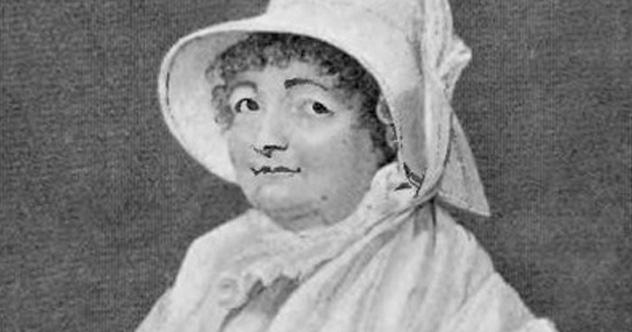
Joanna Southcott, born in Devon in 1750, worked in domestic service before announcing that she received divine messages. Her writings attracted thousands of followers. In 1814, at age 64, she declared that she would give birth to Shiloh, a messianic figure linked to biblical prophecy. The prediction failed to unfold, and she died later that year.
Her influence endured through a box said to contain sealed prophecies, meant to be opened in a national emergency with Church of England bishops present. The later Panacea Society kept Southcott’s memory alive for decades. Her career proves that prophecy can survive a missed deadline when believers find fresh meaning in the wait.
2. Philip Henry Gosse: The Aquarium Pioneer Who Invented Instant History
Philip Henry Gosse was a gifted naturalist, illustrator, and aquarium pioneer who helped make marine life a Victorian obsession. He also wrote Omphalos in 1857, attempting to reconcile a literal Genesis with geological evidence of an ancient Earth.
Gosse proposed that God created the world fully formed, complete with apparent signs of a past that had never occurred: trees with rings, rocks with fossils, and even Adam with a navel. Scientists rejected the idea because it made evidence impossible to trust; many Christians disliked the image of a deceptive God. The theory failed, but Gosse’s underlying questionhow faith responds to unsettling evidencehas never gone away.
3. J. Thomas Looney: The Shakespeare Fan Who Replaced Shakespeare
J. Thomas Looney had a surname that history was unlikely to let him forget. He was associated with the positivist Religion of Humanity before becoming famous for declaring that William Shakespeare did not write Shakespeare’s works.
In his 1920 book “Shakespeare” Identified in Edward de Vere the Seventeenth Earl of Oxford, Looney argued that Edward de Vere was the real author. The Oxfordian theory still has committed supporters, although mainstream scholarship continues to find the evidence for Shakespeare of Stratford decisive. Looney’s spiritual background matters because the Religion of Humanity gave reverence to human achievement. He effectively turned literary authorship into a sacred mysteryand then announced that the wrong saint was on the label.
4. Henry James Prince: The “Abode of Love” With a Warning Label
Henry James Prince moved from medicine into Anglican ministry before founding the Agapemone community in Somerset during the 1840s. Its name means “Abode of Love,” which sounds serene until you reach the historical footnotes.
Prince built a tightly controlled religious group around claims of extraordinary spiritual transformation. Critics and later historians recorded allegations of financial exploitation, coercive leadership, and sexual misconduct. The group continued after Prince died, led by John Hugh Smyth-Pigott, who later claimed to be Christ. The Agapemone offers a lasting lesson: charisma can create belonging, but any community that gives a leader unchecked power deserves searching questions.
5. Nathaniel Brassey Halhed: The Scholar Who Backed a Prophet
Nathaniel Brassey Halhed was a serious scholar and East India Company employee. He produced an early English translation of a Hindu legal compilation and wrote a pioneering Bengali grammarwork that belongs to the complicated history of both scholarship and colonial rule.
In the 1790s, he became convinced by Richard Brothers, a former naval officer who claimed a divine role in restoring Israel. Halhed defended Brothers in Parliament and published a testimony supporting him, badly damaging his own reputation. His story is a useful antidote to the idea that education makes people immune to extraordinary claims. A brilliant mind can translate languages and still decide that the universe has sent a personal memo.
6. John M. Allegro: The Dead Sea Scrolls Scholar and the Sacred Mushroom
John Marco Allegro was an early scholar of the Dead Sea Scrolls, making the reaction to his 1970 book The Sacred Mushroom and the Cross especially explosive. He argued that Christianity developed from an ancient fertility cult centered on psychedelic mushrooms and that biblical language was a code for botany and sex.
It was a thesis with no indoor voice. Specialists in biblical languages, ancient religion, and scroll studies rejected its etymologies and historical leaps. Still, Allegro’s episode is revealing: one provocative book can give an academic an enormous popular afterlife. His theory is not accepted scholarship, but it keeps reappearingproof that a sensational idea has more lives than a cat, especially when one of them may be a mushroom.
7. William Whiston: Newton’s Successor and Noah’s Comet
William Whiston was a mathematician, theologian, and successor to Isaac Newton as Lucasian Professor of Mathematics at Cambridge. In A New Theory of the Earth (1696), he used natural philosophy to explain creation and Noah’s Flood.
His grand mechanism was a comet. Whiston argued that a cometary encounter helped cause the Flood and shaped early Earth history. It was an audacious attempt to make Scripture and science cooperate, albeit with a dramatic amount of celestial plumbing. He later lost his Cambridge position because of Arian religious views that rejected the orthodox Trinity. Whiston was scientifically imaginative, theologically unorthodox, and absolutely convinced that truth would eventually fit together.
8. Samuel Wesley: The Clergyman Who Published Maggots
Samuel Wesley, father of Methodism’s John and Charles Wesley, was an Anglican clergyman with financial pressure, a large family, and a literary imagination that refused to wear sensible shoes. In 1685, he published Maggots, or Poems on Several Subjects Never Before Handled by a Scholar.
“Maggots” meant whimsical fancies, not a culinary proposal. The poems range from moral reflection to deliberately strange subjects, including mock dialogues and verse about ordinary objects. Wesley’s eccentricity was artistic rather than doctrinal, but the book is a useful reminder that British clergy were not always solemn thunder dispensers. Sometimes they found metaphysical possibilities in the household clutter.
9. John Napier: Logarithms by Day, Apocalypse Arithmetic by Night
John Napier, the Scottish mathematician best known for logarithms, took the Book of Revelation just as seriously as calculation. In A Plaine Discovery of the Whole Revelation of St. John (1593), he treated prophecy as a puzzle that could be decoded through careful patterns and chronology.
Napier identified the papacy with Antichrist and projected possible dates for the end of the world, including 1688 or 1700. Neither date arrived with an apocalypse attached, which is excellent news for everyone currently avoiding an email. His writing shows that “science” and religious speculation were not neatly separated in his era. For Napier, mathematics, theology, politics, and cosmic destiny belonged in one very large equation.
10. Reverend John “Mad Jack” Alington: The Parson Who Went Off-Script
Reverend John Alington inherited Letchworth Hall in Hertfordshire and acquired a reputation as a country-clergy original. After disputes about his place in parish worship, he began holding services at his home instead of retiring politely from the pulpit.
Local accounts describe music, unconventional preaching, and hospitality that included alcohol. The most colorful details belong partly to local tradition and deserve a raised historical eyebrow, but the broad picture is clear: Alington did not believe a service had to remain trapped inside the usual script. His legacy is the most British kind of religious rebellionturning an ecclesiastical dispute into something close to live entertainment.
What These Religious Eccentrics Tell Us About Belief
These figures are not united by “madness” or simple gullibility. They are united by a human appetite for a pattern big enough to organize a confusing world. Southcott offered prophecy; Gosse offered a history-proof creation; Whiston offered comets; Napier offered calculations; Allegro offered a hidden code beneath familiar stories.
Such impulses can produce art, scientific curiosity, new communities, and brave challenges to conformity. They can also produce false certainty, damaged reputations, and groups where leaders hold too much power. The practical historical questions are still useful: What evidence supports this claim? Who gains if it is believed? Can critics speak freely? And why does the story feel so persuasive right now?
Experiencing Britain’s Religious Eccentrics Today
Encountering Britain’s religious eccentrics today is less like visiting a museum of cartoon oddballs and more like opening a cupboard in an old house to find that every shelf contains a different version of reality. A visit to Bedford’s Panacea Museum, for instance, places enormous apocalyptic hope in a domestic setting. Rooms, letters, pamphlets, and the story of Joanna Southcott’s sealed prophecies make one point immediately: world-changing expectations did not always live in grand cathedrals. They could live beside a teacup, in a modest parlor, or inside a carefully guarded box.
Archives create another kind of encounter. Seeing the titles Maggots or A Plaine Discovery of the Whole Revelation makes the past feel stranger and more immediate than a tidy textbook account. These writers were not necessarily trying to be “weird.” They were trying to answer questions that felt urgent: What does Scripture mean? How old is the world? Is the official church trustworthy? Where is history going? Their language can make a modern reader smile, but the conviction beneath it is unmistakable.
The physical objects are often wonderfully ordinary. A book, a church, a hall, a scientific illustration, or a locked container may look harmless. Yet each once carried explosive possibilities. To a Southcottian, a box could hold national salvation. To Gosse, a fossil could threaten the truth of creation. To Whiston, a comet could explain a biblical catastrophe. The experience is therefore emotional as well as intellectual. You begin to see how familiar things become vessels for huge hopes.
Britain’s churches, libraries, and local museums also show how public memory edits eccentricity. Some people are remembered as innovators, some as cranks, and many as both. Gosse’s aquarium work deserves credit even though Omphalos failed. Napier’s logarithms changed calculation even though his end-times timetable did not. Allegro’s scroll scholarship mattered even though his mushroom theory was rejected. The best historical encounter refuses to flatten anyone into either a punch line or a hero.
There is an uncomfortable modern echo, too. We still have viral prophecies, secret-knowledge communities, charismatic online teachers, and bold interpretations that travel faster than careful evidence. The technology has changed; the craving for a master key has not. That does not make every unconventional belief foolish or dangerous. It means curiosity needs companyespecially evidence, humility, and the freedom to say, “This is fascinating, but perhaps we should not reorganize civilization around it before breakfast.”