A studio apartment can be wonderfully efficient until one extra delivery box lands by the door and suddenly the entire home looks like a warehouse with a bed in it. Because the bedroom, living room, dining area, and sometimes home office all share one open space, clutter has nowhere to hide. The solution is not to buy twenty plastic bins and hope they form a tasteful sculpture. It is to create storage that uses overlooked space, performs more than one job, and leaves the apartment easy to restore when the lease ends.
The best renter-friendly studio apartment storage ideas rely on freestanding furniture, removable organizers, hidden compartments, and flexible pieces that can move with you. The ten ideas below help you store more without turning every wall into a construction projector sacrificing the security deposit.
Start With a Storage Map, Not a Shopping Cart
Before buying shelves, measure the clearance beneath the bed, the width beside the refrigerator, the depth behind doors, and the height above closet rods. Group belongings by frequency of use: daily items within reach, weekly items higher or lower, and seasonal items in hidden storage. This prevents the classic mistake of organizing clutter into a more expensive shape.
10 Smart Storage Ideas for a Rental Studio
1. Turn the Space Under the Bed Into a Mini Basement
In a studio, the bed occupies a heroic amount of floor space while contributing almost nothing during daylight hours. Put that footprint to work with low rolling bins, zippered fabric bags, or drawers designed for under-bed storage. Use the area for off-season clothing, spare linens, shoes, luggage, holiday decorations, or hobby supplies.
Measure the clearance, including center supports, before ordering. Clear containers simplify identification, while opaque bins reduce visual noise. Label the short ends so the winter sweaters do not require an archaeological dig. Bed risers may add height, but check the frame manufacturer’s guidance. A bed with drawers can replace part of a dresser.
2. Choose Furniture With Secret Storage Lives
Multifunctional furniture is the closest a studio apartment gets to cloning square footage. A storage ottoman can hold blankets, act as a coffee table, provide extra seating, and support tired feet after a long day of pretending the laundry chair is not a real system. A lift-top coffee table can conceal electronics and paperwork while creating a temporary desk or dining surface. A bench with cubbies can define an entry zone and store shoes.
Prioritize pieces that replace something you already need: a dresser as a nightstand, a trunk as an end table, or a daybed with drawers as both sofa and bed. Reduce the number of pieces while increasing their functions.
3. Go Vertical With Freestanding Shelving
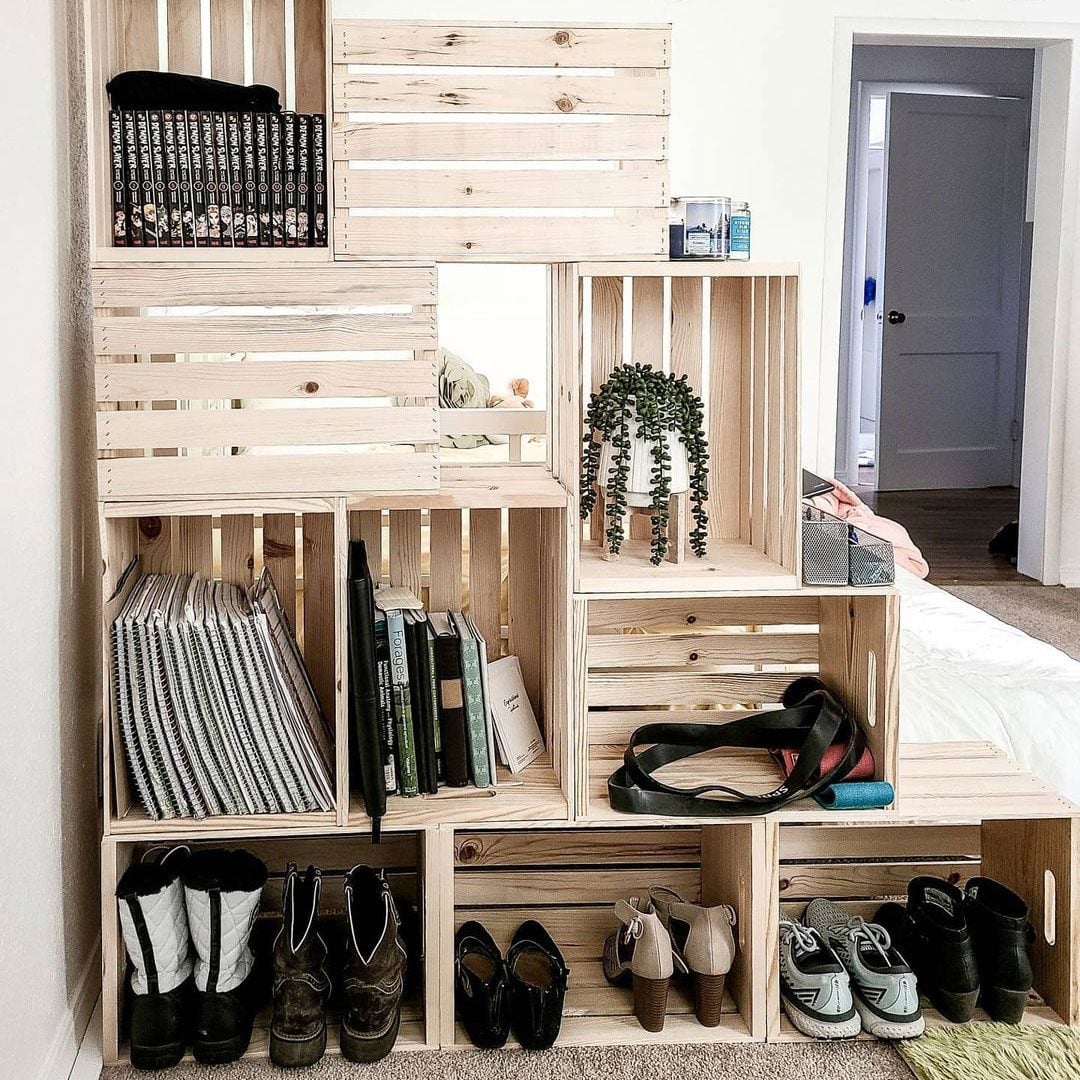
When floor space is scarce, height becomes valuable real estate. Tall, shallow bookcases can hold books, kitchen supplies, baskets, plants, office equipment, and folded clothing without extending far into the room. Matching boxes on upper shelves hide rarely used items, while attractive objects and everyday essentials can stay at eye level.
Choose a shallow unit that preserves the walkway. Keep heavy items low and follow the manufacturer’s anti-tip instructions; request written permission if anchoring is required. Modular shelves offer extra flexibility in a future apartment.
4. Use a Bookcase as Both Storage and a Room Divider
A studio often feels more comfortable when sleeping, working, and lounging areas have visual boundaries. An open bookcase placed perpendicular to a wall can divide the bed from the living area while providing storage on one or both sides. Unlike a solid partition, an open unit allows light to travel through the apartment and helps the space remain airy.
Use closed baskets below and lighter displays above. Leave some openings empty so the divider does not resemble a barricade. Test its footprint with painter’s tape and confirm that doors, drawers, and walking routes remain clear.
5. Put Doors to Work Without Drilling
The back of a door is often one of the most neglected storage surfaces in a rental. Over-the-door organizers can hold shoes, cleaning products, pantry items, scarves, accessories, toiletries, or rolled towels. Slim hanging racks can also create a small drop zone for handbags and jackets near the entrance.
Confirm that the organizer fits the door and clears hinges and trim. Felt pads can reduce bracket rubbing. Inside cabinets, lightweight removable hooks can hold small tools when the surface and weight rating permit. Test adhesives in a hidden spot and follow removal instructions; enthusiasm is not an approved technique.
6. Add a Rolling Cart That Changes Jobs
A narrow rolling cart can serve as a pantry today, a bathroom cabinet tomorrow, and a craft station after your sudden decision to become a watercolor artist. Because it moves, it can slide beside a refrigerator, tuck under a desk, or roll out when extra prep space is needed.
Assign each tier a category so it does not become a traveling junk drawer. Use it for kitchen supplies, work materials, or toiletries. Choose locking casters on sloped floors and keep fragile objects off the top tier.
7. Create Storage With Tension Rods and Slim Freestanding Racks
Tension rods can add temporary organization inside closets, cabinets, or sturdy wall-to-wall niches without screws. A second rod below an existing closet rod can create another hanging level for shirts, skirts, or folded pants. A small rod under the sink can hold spray bottles by their triggers, freeing the cabinet floor for bins.
Use tension systems only where surfaces are solid and parallel, and respect the stated weight capacity. They are useful for lightweight storage, not for recreating a department-store wardrobe in midair. Where tension rods are unsuitable, a slim freestanding garment rack can create an instant closet. Keep the display edited, use matching hangers, and place a lidded basket below for shoes or accessories so the rack looks intentional rather than recently evacuated.
8. Double the Capacity of Existing Closets and Cabinets
A tiny closet often has more unused air than usable storage. Add shelf risers to create two levels for dishes, pantry goods, folded clothes, or handbags. Hanging shelf organizers can turn vertical closet space into compartments for sweaters and linens. Stackable drawers make use of the floor, while under-shelf baskets capture the space beneath a shelf.
Give each category a boundary; otherwise, a shelf riser creates two floors of chaos. Keep daily items in the easiest reach, seasonal pieces high, and shoes or heavy bins low. Label opaque containers to prevent searching and duplicate purchases.
9. Make Visible Storage Look Deliberate
Not every studio has enough doors and drawers to conceal everything. When storage must remain visible, repeat colors, materials, or container shapes to create order. Matching baskets on a bookcase, identical hangers on a garment rack, and a consistent group of clear jars in the kitchen make practical storage feel like part of the decor.
Limit open shelves to items that are attractive, frequently used, or easy to maintain. Hide tangled cables, paperwork, medicine, backup toiletries, and miscellaneous objects inside closed boxes. A useful rule is to leave part of each shelf empty. The breathing room makes the apartment feel calmer and gives new items somewhere to land. Visible storage works best when it resembles a curated display, not evidence from a very organized yard sale.
10. Organize the Studio by Zones and Control What Comes In
Storage works better when every area has a purpose. Create a small entry zone with a tray for keys, a hook for a bag, and a basket for shoes. Keep work supplies near the desk, cooking tools near the kitchen, and sleep-related items near the bed. This reduces the migration of belongings across the apartment and makes cleanup faster.
Once the zones are established, protect them with a simple one-in, one-out habit. When a new mug, sweater, or decorative pillow arrives, remove an older item from the same category. Schedule a ten-minute reset once or twice a week to return objects to their zones. In a studio, clutter accumulates quickly, but the good news is that cleaning one room means cleaning the entire home. Efficiency has its perks.
How to Keep Renter-Friendly Storage Safe and Deposit-Friendly
Read the lease before installing anything, even when a product is advertised as removable. Ask for written approval before drilling, anchoring furniture, replacing hardware, or adding wall-mounted systems. Photograph existing conditions and save original hardware in a labeled bag.
Do not block vents, radiators, electrical panels, sprinkler heads, windows, or required exits. Check door swing and walkway clearance before adding racks or dividers. Finally, follow manufacturer weight limits. A renter-friendly solution should be easy to remove, but it should also remain safely in place while you live there.
Experience-Based Lessons: What Living With Studio Storage Actually Teaches You
The most successful studio storage plans rarely appear fully formed on move-in day. A realistic approach is to live in the space for a week or two, observe where clutter naturally collects, and then solve those specific pressure points. Consider a typical 350-square-foot rental with one shallow closet, a compact kitchenette, and a bed that seems to occupy its own ZIP code. The renter may initially purchase several decorative baskets, only to discover that the real problems are shoes near the door, work supplies on the dining table, and bedding with no seasonal home.
The first useful change is often not glamorous. Raising the bed slightly and adding two labeled rolling bins can remove a suitcase, extra sheets, and winter clothing from daily view. That single move may free enough closet space for a laundry hamper and vacuum. The lesson is that large, infrequently used objects should be assigned to hidden or low-access storage before smaller items are organized.
Next comes the entryway. In many studios, the front door opens directly into the living area, so keys, mail, shoes, and bags spread across the nearest surface. A narrow bench with shoe storage, a removable hook, and one tray can create a functional landing zone in less than three feet of wall space. After a few days, the renter notices that the apartment looks cleaner even though the amount of stuff has not changed. The improvement comes from reducing “homeless” objectsitems that previously had no assigned destination.
Another common discovery is that open storage has a maintenance cost. A garment rack may look beautiful when it holds twelve coordinated outfits. It looks less charming when it supports forty shirts, reusable grocery bags, a drying towel, and the mysterious jacket nobody remembers buying. Renters often learn to combine open and closed storage: display a small clothing rotation, move off-season garments into bins, and conceal accessories in a basket below. The rack remains practical without becoming the apartment’s main visual event.
Flexible furniture also proves its value over time. A rolling cart beside the desk can hold office supplies during the workweek, then roll toward the kitchen when guests arrive and extra serving space is needed. A storage ottoman can hide blankets and provide a seat without requiring another chair. These pieces adapt when the studio changes function throughout the day, which is more useful than furniture designed for one fixed task.
The final lesson is that storage cannot compensate for unlimited accumulation. Even a brilliantly organized studio has a capacity. A monthly review of clothing, pantry goods, papers, and decorative objects keeps systems from overflowing. Renters who treat available storage as a boundarynot a challenge to defeatusually find the apartment easier to clean, more comfortable to use, and much less stressful. The smartest studio is not the one that stores the greatest number of possessions. It is the one that makes daily life feel simple.
Conclusion
Renter-friendly studio apartment storage is less about squeezing an organizer into every inch and more about making each inch work intelligently. Start beneath the bed, climb the walls with safe freestanding storage, use doors and closet interiors, and choose furniture that performs multiple jobs. Then organize by zones and maintain a reasonable limit on what enters the apartment.
With the right system, a studio can feel organized without feeling sterile, and functional without resembling a storage unit that happens to have Wi-Fi. Better still, most of these ideas can move with you when the lease ends.