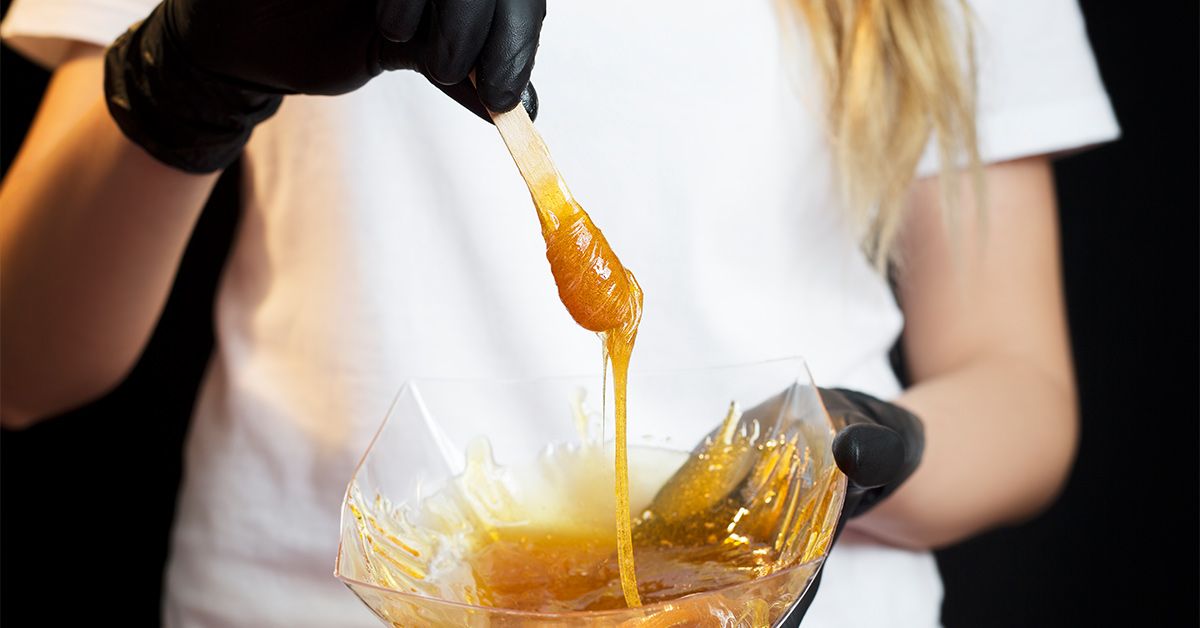
Honey may be better known for sweetening tea, rescuing bland oatmeal, and permanently gluing kitchen cabinet lids shut. However, this golden ingredient also has properties that can benefit dry hair and an uncomfortable scalp.
Research describes honey as a natural humectant, emollient, antioxidant, antimicrobial, and anti-inflammatory substance. In plain English, it can attract moisture, improve softness, and help create a calmer scalp environment. A small clinical study has even linked diluted honey applications with improvements in seborrheic dermatitis, flaking, itching, and associated shedding.
That does not mean honey is a miracle hair-growth drug. The direct research on ordinary honey as a hair treatment remains limited, and most established benefits involve conditioning the hair fiber or supporting scalp health. Used correctly, though, honey can be a surprisingly useful addition to a moisturizing hair-care routine.
What Does Science Really Say About Honey for Hair?
Honey contains mostly naturally occurring sugars, along with water, amino acids, organic acids, enzymes, minerals, and plant-derived compounds. Its precise composition varies according to the flowers visited by the bees, geographic region, storage conditions, and processing methods.
The sugars in honey are hygroscopic, meaning they attract and hold water. This is why cosmetic researchers classify honey as a humectant and conditioning ingredient. Reviews of honey in dermatology also describe antimicrobial, soothing, antioxidant, and tissue-supporting properties that may be relevant to the scalp.
The important distinction is that healthier-looking hair is not the same as faster-growing hair. Hair growth begins inside the follicle, while many cosmetic ingredients mainly affect the visible strand. Honey may make hair softer, smoother, shinier, and less likely to snap, but there is not strong clinical evidence that spreading grocery-store honey on your scalp will awaken dormant follicles or reverse hereditary hair loss.
1. Honey Helps Hair Hold On to Moisture
Honey’s most convincing hair-care benefit is its ability to attract and retain water. This humectant action can help dry strands feel more hydrated when honey is properly diluted and combined with a conditioner, mask, or water-based treatment.
Moisture matters because dry hair is generally rougher, less flexible, and more prone to tangling. Curly, coily, bleached, heat-styled, and naturally porous hair types may notice the biggest cosmetic difference because they often lose moisture more easily.
How to use this benefit
Mix a teaspoon of honey into a generous portion of moisturizing conditioner. Apply it to damp mid-lengths and ends, leave it on for 10 to 20 minutes, and rinse thoroughly. Applying honey straight from the jar may turn wash day into an unwanted upper-body workout.
2. It Can Make Dry Hair Feel Softer
Honey is frequently described in cosmetic research as both a humectant and an emollient. Humectants attract moisture, while emollient effects help improve the surface feel of hair and skin.
When a honey-containing treatment coats rough areas along the hair fiber, the strand may feel softer and less straw-like. The effect is cosmetic rather than permanent: Honey cannot rebuild severely damaged hair or fuse a split end back together. Nevertheless, softer hair is easier to handle and considerably less likely to inspire an emergency haircut at midnight.
3. Honey May Improve Shine
Hair looks shinier when its outer cuticle lies relatively smooth and reflects light evenly. Dryness, bleaching, ultraviolet exposure, friction, and frequent heat styling can leave that surface rough and dull.
By helping hair retain moisture and improving its conditioned feel, honey may temporarily smooth the fiber’s surface. That smoother surface can reflect more light, producing a healthier-looking gloss without requiring silicone-heavy shine sprays.
The result is usually most noticeable on hair that is dry but not coated with heavy product buildup. If the hair feels sticky or looks flat afterward, too much honey was used or it was not rinsed completely.
4. It May Reduce Frizz and Flyaways
Frizz becomes more visible when hair is dry, porous, damaged, or exposed to changing humidity. Roughened fibers separate from the main shape of a hairstyle, creating the familiar cloud of flyaways that appears five minutes after careful styling.
A diluted honey treatment can improve hydration and surface smoothness, making strands easier to align. This may reduce the appearance of frizz, especially in curly and textured hair that responds well to moisture-rich products.
Honey is not an all-day humidity shield, however. For lasting control, follow the treatment with a leave-in conditioner, cream, or light oil that helps slow moisture loss.
5. Better Conditioning May Mean Less Breakage
Honey does not strengthen hair in the same way that an engineered bond-building treatment or hydrolyzed protein formula might. Its moisturizing and conditioning effects can still help reduce a major cause of breakage: rough handling of dry, tangled strands.
Hair that bends more comfortably and separates more easily requires less pulling during detangling. Less force means fewer snapped ends, fewer tiny pieces in the sink, and a better chance of retaining length over time.
This is sometimes mistaken for faster hair growth. In reality, the follicles may be growing at their usual rate while the ends are simply surviving longer. Length retention is not as glamorous as a “growth miracle,” but it is far more believable.
6. Honey Can Make Detangling Easier
Tangles form when raised or damaged cuticles catch against neighboring strands. Curly hair, long hair, chemically treated hair, and hair exposed to frequent friction are particularly vulnerable.
Honey works best for detangling when it is blended into a slippery conditioner rather than used alone. The conditioner provides lubrication, while the honey contributes moisture and softness. Together, they may make knots easier to separate with fingers or a wide-tooth comb.
A gentler detangling method
Divide damp hair into sections, apply the mixture generously to the ends, and detangle from the bottom upward. Do not begin at the roots and drag every knot toward the ends like a snowplow. Slow sectioning usually prevents more breakage than any trendy ingredient can repair.
7. It May Soothe a Dry, Uncomfortable Scalp
Honey’s humectant and soothing properties may benefit a scalp that feels mildly dry or tight. Its anti-inflammatory activity has also attracted interest in dermatology, although evidence involving scalp-specific conditions is still developing.
A 2023 study evaluated a topical formula containing honey, probiotic extracts, turmeric, and vitamin B12 for dry-scalp symptoms. Because the product included several active ingredients, the results cannot be credited to honey alone, but the findings support further research into honey-containing scalp treatments.
Dry scalp should not automatically be treated as simple dehydration. Psoriasis, eczema, allergic contact dermatitis, fungal involvement, and seborrheic dermatitis can all cause itching or flakes. Persistent symptoms deserve an accurate diagnosis rather than an increasingly elaborate pantry mask.
8. Honey May Help With Dandruff and Seborrheic Dermatitis
One of the most interesting direct studies involved people with chronic seborrheic dermatitis affecting the scalp, hairline, face, or chest. Participants applied crude honey diluted with warm water to affected areas, left it in place for several hours, and repeated the treatment every other day.
The small study reported improvements in itching, scaling, and skin lesions. Participants who continued weekly applications also experienced fewer relapses than those who stopped. Researchers suggested that honey’s antifungal, antimicrobial, and anti-inflammatory properties may have contributed.
These results are promising but not definitive. The study was small, and its lengthy application method is not especially practical. Dermatologists continue to recommend proven dandruff ingredients such as ketoconazole, selenium sulfide, salicylic acid, zinc pyrithione, sulfur, or coal tar when appropriate. Honey should be viewed as a possible complementary option, not a guaranteed substitute for treatment.
9. Its Antimicrobial Properties May Support Scalp Health
Honey can inhibit certain microorganisms through several mechanisms. Its high sugar concentration creates osmotic pressure, its natural acidity makes the environment less welcoming to some microbes, and certain varieties generate hydrogen peroxide or contain additional antibacterial compounds.
These qualities explain why properly prepared medical-grade honey is used in some wound-care products. They also provide a scientific reason to investigate honey for scalp conditions influenced by microbial imbalance.
Kitchen honey is not sterile medical-grade honey, though. It should not be placed on infected skin, deep scratches, bleeding sores, or unexplained scalp lesions. Pain, pus, swelling, spreading redness, fever, or sudden patchy hair loss requires medical care, not a sweeter hair mask.
10. Honey Supplies Antioxidant and Anti-Inflammatory Compounds
Honey contains phenolic acids, flavonoids, and other bioactive compounds associated with antioxidant activity. Laboratory and clinical research has also documented anti-inflammatory effects, although potency varies substantially among different honeys.
Oxidative stress and chronic inflammation can affect the skin environment surrounding hair follicles. In theory, ingredients that help moderate these processes may support a healthier scalp. However, that does not prove that an occasional honey mask prevents hair loss or produces new growth.
The realistic benefit is supportive: Honey may help moisturize and calm the scalp while improving the appearance and manageability of the strands above it. Think useful supporting actor, not follicular superhero.
How to Make a Simple Honey Hair Mask
Moisturizing mask for dry lengths
- 1 teaspoon honey
- 2 to 3 tablespoons moisturizing conditioner
- 1 teaspoon warm water, if needed for easier spreading
Combine the ingredients until smooth. Apply the mixture to damp mid-lengths and ends. Leave it on for 10 to 20 minutes, then rinse thoroughly with lukewarm water. Shampoo lightly afterward if any residue remains.
Diluted scalp treatment
- 1 part honey
- 3 to 4 parts warm water
Apply a small amount to a clean scalp after completing a patch test. Leave it on for 10 to 15 minutes for an introductory treatment, then rinse extremely well. Stop immediately if burning, swelling, hives, or worsening itch develops.
Safety Tips Before Putting Honey on Your Hair
Patch-test the diluted mixture on a small area of skin before applying it widely. The U.S. Food and Drug Administration notes that cosmetic ingredients can trigger allergic contact dermatitis, which may appear as redness, itching, or a rash.
Avoid topical honey if you have experienced reactions to honey, bee-derived ingredients, or related botanical substances. Do not apply it to open wounds or an infected scalp unless a clinician has recommended an appropriate medical-grade product.
Use modest quantities. Too much honey can leave hair sticky, heavy, or difficult to rinse. Fine and low-porosity hair usually needs far less than thick, highly porous hair. A formulated honey shampoo, conditioner, or mask may also be easier to use than raw honey because cosmetic chemists have already solved the “How do we get this out?” portion of the experiment.
Experience Notes: What Using Honey on Different Hair Types Can Feel Like
The following practical scenarios reflect common experiences with honey-based hair treatments rather than guarantees from clinical trials. Results depend on hair texture, porosity, product buildup, climate, dilution, and the ingredients mixed with the honey.
Experience 1: Fine, straight hair
Fine hair often reacts dramatically to heavy ingredients. A full tablespoon of honey may leave it flat, coated, and strangely committed to the scalp. A better experience usually comes from mixing only a few drops or half a teaspoon into a lightweight conditioner. Applied mainly to the last few inches, the mixture can make dry ends feel smoother without sacrificing all volume. The most noticeable result is typically softness rather than a major visual transformation. Thorough rinsing matters, and shampooing the roots separately helps prevent residue. For this hair type, restraint is not boring; restraint is the difference between glossy hair and breakfast-themed helmet hair.
Experience 2: Curly or coily hair
Curly and coily textures frequently respond well to rich, water-based conditioning treatments. Honey can add useful humectant properties when blended into a deep conditioner with plenty of slip. During application, curls may feel more flexible and easier to separate into sections. After rinsing, some users notice improved curl definition and less brittle-feeling ends. In very humid weather, however, humectant-heavy routines can occasionally contribute to swelling or frizz, depending on the complete formula. Following the mask with a cream, gel, butter, or oil can help seal in the conditioned feel. Honey works best here as one team member, not the entire styling department.
Experience 3: Bleached or color-treated hair
Processed hair is often porous because chemical treatments alter the protective cuticle. A honey-and-conditioner mask can make bleached lengths feel softer and less crunchy for a wash cycle or two. Detangling may become easier, which is valuable because wet, chemically treated hair can break under surprisingly little tension. Still, the improvement is temporary conditioning rather than structural repair. Honey cannot reverse internal damage, restore missing cuticle layers, or eliminate split ends. Alternating moisturizing treatments with professionally formulated protein or bond-supporting products generally produces a more balanced routine. The honey mask handles comfort and manageability; specialized treatments handle the engineering work.
Experience 4: A mildly dry or flaky scalp
A carefully diluted honey mixture may feel soothing on a scalp that is mildly dry, especially when harsh shampoos or cold weather are contributing to tightness. The key word is diluted. Thick honey applied directly between dense hair can be difficult to distribute and even more difficult to remove. A squeeze bottle with a narrow applicator tip makes placement easier. After a brief treatment and thorough rinse, the scalp may feel less tight, but recurring greasy flakes, intense redness, plaques, sores, or significant itching suggest something more than ordinary dryness. In that situation, a dermatologist and a proven medicated shampoo are more useful than repeated kitchen experiments.
Experience 5: Expectations after several treatments
The most realistic changes appear quickly: softer ends, easier combing, temporary shine, and less roughness. What usually does not appear is a sudden crop of new hair. Because scalp hair grows gradually, dramatic before-and-after photographs taken days apart should be treated with skepticism. Over several weeks, reduced breakage may help hair retain more length, which can look like accelerated growth even when follicle activity has not changed. Keeping notes about the amount used, mixing ingredients, treatment time, and final texture makes experimentation more useful. Hair care is personal, but it should not become mysterious. Repeat what improves softness and comfort; discontinue anything that causes irritation, buildup, or disappointment.
Conclusion: Is Honey Worth Adding to Your Hair Routine?
Honey deserves its place in hair care primarily as a moisturizing and conditioning ingredient. Its natural sugars attract water, while its emollient qualities can improve softness, shine, detangling, and manageability. These effects may reduce breakage indirectly by making dry hair easier to handle.
Research also gives honey an intriguing role in scalp care. Its antimicrobial, antioxidant, and anti-inflammatory properties may help support a more comfortable scalp, and a small clinical study reported benefits for seborrheic dermatitis. Nevertheless, the evidence is not strong enough to call honey a cure for dandruff, scalp disease, or hair loss.
Use it diluted, combine it with a suitable conditioner, rinse thoroughly, and keep expectations realistic. Honey may help your hair behave better, but it cannot replace medical treatment, repair severely damaged fibers, or negotiate with your genetics.