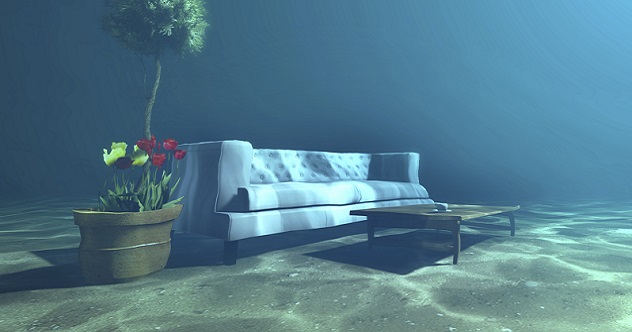
Human beings have spent centuries staring at the ocean and thinking, “That looks peaceful. Let’s put a bedroom in it.” Surprisingly, this idea has produced more than science-fiction sketches and suspiciously optimistic architectural renderings. Around the world, real underwater facilities have housed researchers, divers, hotel guests, and adventurers for periods ranging from one night to several months.
Some of these places are true underwater habitats, where occupants breathe pressurized air and enter through a moon pool. Others are luxury residences with submerged bedrooms, aquarium-facing walls, or living spaces built below the waterline. A few are historic facilities that are no longer available but proved that long-term underwater living was technically possible.
The following list focuses on real, habitable structures rather than proposed resorts that have existed only in promotional videos. Pack lightly, bring a healthy respect for engineering, and prepare to reconsider everything you thought you knew about ocean-view rooms.
What Qualifies as an Underwater Facility?
“Underwater living” can mean several different things. A saturation habitat such as Aquarius Reef Base maintains an internal pressure related to the surrounding water depth, allowing aquanauts to remain submerged for days. A hotel such as The Muraka keeps guests at normal atmospheric pressure behind thick acrylic walls. Aquarium suites provide an underwater visual experience without placing the entire building in the open ocean.
All three models are included here because people can genuinely eat, sleep, work, and spend extended time below a water surface in them. Their engineering, accessibility, and comfort levels vary enormously. One offers a private butler; another expects you to put on scuba equipment before going home. Life is about choices.
1. Jules’ Undersea Lab, Key Largo, Florida
Jules’ Undersea Lab is probably the closest an ordinary traveler can come to becoming an aquanaut without changing careers. Located in a lagoon at MarineLab Undersea Park in Key Largo, the habitat began life as a marine research station called La Chalupa. It was later converted into an underwater lodging and educational facility.
What Living There Is Like
Guests reach the habitat by scuba diving to its entrance and swimming upward through a moon pool. Inside, the water stays below because air pressure pushes against it. The living space includes sleeping areas, windows, basic kitchen equipment, communications systems, and enough domestic comfort to make the experience feel like camping inside a submarine-shaped apartment.
Jules’ is not merely suitable for a novelty overnight visit. In 2023, researcher Joseph Dituri remained inside for 100 days while conducting educational programs and studying the effects of prolonged exposure to increased atmospheric pressure. That achievement demonstrated that the facility is a functioning habitat, not just a hotel room with ambitious branding.
Recreational access and overnight programs can change, but Jules’ remains one of the rare underwater habitats designed to introduce members of the public to genuine undersea living.
2. Aquarius Reef Base, Florida Keys National Marine Sanctuary
Aquarius Reef Base is a working underwater research laboratory operated by Florida International University. It rests approximately 60 feet below the surface near Conch Reef in the Florida Keys National Marine Sanctuary.
A Real Home for Aquanauts
The habitat can support a team of scientists and technicians who live, sleep, eat, analyze samples, and prepare for dives without returning to the surface every evening. Its wet porch contains a moon pool that provides direct access to the surrounding reef.
Aquarius uses saturation diving principles. After occupants have remained at depth long enough, their tissues become saturated with inert breathing gases. They can then make repeated working dives without completing a full decompression cycle after each excursion. At the end of a mission, however, they must undergo a carefully managed decompression process.
This is not a vacation rental. Access is generally restricted to approved scientific, training, educational, or technology-testing missions. Nevertheless, Aquarius offers perhaps the best modern example of what a practical underwater workplace and residence looks like.
3. The Muraka at Conrad Maldives Rangali Island
The Muraka proves that underwater living does not have to involve bunk beds, damp dive gear, and dinner from a microwave. This two-level private residence at Conrad Maldives Rangali Island places its master bedroom more than 16 feet beneath the Indian Ocean.
Luxury Below the Waves
A curved acrylic shell surrounds the submerged bedroom, creating broad views of the natural reef and passing marine life. Guests can watch fish drift above the bed, observe the reef from the bathroom, and enjoy a private viewing area without wearing so much as a snorkel.
The upper level sits above the surface and includes additional bedrooms, indoor and outdoor living areas, dining space, a kitchen, a private pool, and staff accommodations. An elevator and staircase connect the two levels, so nobody has to scuba dive downstairs in formal dinner clothes.
The Muraka is genuinely habitable and bookable, although its rates place it firmly in the “ask before checking your credit limit” category. It combines conventional luxury-villa living with one of the world’s most immersive underwater bedrooms.
4. The Manta Resort Underwater Room, Pemba Island
Floating offshore from Pemba Island in Tanzania’s Zanzibar Archipelago, The Manta Resort’s Underwater Room functions like a tiny private island with a bedroom beneath it. The structure is anchored roughly 250 meters from shore in the ecologically important Pemba Channel.
A Self-Contained Marine Retreat
The accommodation has multiple levels. An upper deck provides open-air space for sunbathing and stargazing, while a water-level section supplies living and service areas. Below the surface, panoramic windows surround the bedroom, allowing guests to watch reef fish from bed.
In 2026, the resort introduced a new generation of the Underwater Room, developed after more than a decade of operating the original structure. The updated unit incorporates marine-grade construction, corrosion protection, climate control, ventilation, hybrid energy systems, and anchoring designed to reduce disturbance to the seabed.
The result feels more isolated than a normal hotel suite. Meals and assistance come from shore, but much of the experience consists of being alone with the sea. At night, exterior lighting reveals nocturnal marine activity around the windows. It is romantic, peaceful, and potentially alarming when a large fish suddenly appears beside your pillow.
5. Reefsuites at the Great Barrier Reef, Australia
Reefsuites offers two underwater guest rooms at Hardy Reef in Australia’s Great Barrier Reef. The suites form part of the Reefworld experience operated by Cruise Whitsundays and represent Australia’s first underwater accommodation.
Sleeping on the Outer Reef
Guests travel through the Whitsunday Islands to an offshore pontoon, spend the day snorkeling, swimming, diving, or observing the reef, and then remain after the regular day visitors depart. The submerged suites feature large windows in both the bedroom and bathroom, providing continuous views of marine life.
Unlike a coastal aquarium hotel, Reefsuites places visitors in the open-ocean environment of Hardy Reef. The surrounding water changes with weather, visibility, sunlight, currents, and animal activity. There is no guarantee that a photogenic turtle will appear precisely when your camera is ready. Marine wildlife has never respected a content schedule.
As of July 2026, the overnight experience operates from a dedicated premium Reefworld pontoon, with limited guest numbers, guided activities, meals, and upgraded services included in the journey.
6. Underwater Suites at Atlantis, The Palm, Dubai
The Underwater Suites at Atlantis, The Palm offer submerged views of the resort’s Ambassador Lagoon. These rooms are not exposed to the open sea, but their bedrooms and bathrooms sit beside a massive marine habitat containing tens of thousands of animals.
An Aquarium as Your Neighbor
Floor-to-ceiling windows allow guests to watch rays, sharks, and schools of fish cruise past while they relax in bed or soak in the bathtub. The suites are spacious, climate-controlled, and connected to the full services of a major luxury resort.
This approach removes many of the operational complications associated with an offshore habitat. Guests do not need dive training, decompression procedures, boat transfers, or emergency seasickness tablets. The trade-off is that the marine environment is managed rather than wild.
For travelers who want the visual drama of living underwater without surrendering room service, dry socks, or immediate access to a normal hallway, Atlantis offers one of the most accessible versions of the experience.
7. Equarius Ocean Suites, Resorts World Sentosa
Resorts World Sentosa in Singapore offers 11 Equarius Ocean Suites designed as two-story townhouses. Their upper levels provide conventional living areas and outdoor space, while the lower bedrooms look directly into a vast aquarium environment.
Two Worlds in One Suite
Guests can spend the day above ground and retreat to a lower-level bedroom where an enormous viewing panel replaces a traditional wall. Marine animals become the evening entertainment, which is excellent news for anyone tired of scrolling through streaming menus for 40 minutes.
The townhouse layout makes these suites more practical for a multi-night stay than many compact underwater rooms. There is room to spread out, access is straightforward, and personalized hotel service is available. No diving certification is required, and the pressure inside remains normal.
Technically, visitors are sleeping beside a controlled aquarium rather than beneath an open sea. Emotionally, however, waking up to rays and large fish gliding across the bedroom window still produces a convincing underwater-living effect.
8. InterContinental Shanghai Wonderland, China
InterContinental Shanghai Wonderland is built into the wall of a flooded former quarry in Shanghai’s Songjiang District. Most of its 18 floors descend below ground level, and its most distinctive accommodations include underwater-view rooms and a two-level underwater loft.
Living Inside a Quarry
The loft combines a bedroom and terrace near water level with a lower living room enclosed beside an aquarium. Guests can sit on a sofa while fish swim across the other side of the glass, creating the sensation of occupying the flooded portion of the quarry.
The hotel is more accurately described as a quarry-integrated underground resort with underwater accommodation than as a building sitting freely on the seafloor. Still, it is a remarkable example of architecture adapting to a water-filled industrial landscape.
Its conventional hotel infrastructure also makes extended stays realistic. Elevators, restaurants, housekeeping, utilities, and emergency systems are built into the property. You receive the underwater atmosphere without having to wonder whether breakfast will arrive in a waterproof container.
9. Utter Inn, Lake Mälaren, Sweden
Utter Inn began as an art project by Swedish artist Mikael Genberg. From the surface, it resembles a tiny traditional red Swedish cottage floating on Lake Mälaren near Västerås. Inside, a ladder leads to a submerged bedroom beneath the lake.
The Minimalist Underwater Cabin
The bedroom is intentionally simple, with windows that allow occupants to observe freshwater fish and the changing light beneath the surface. Unlike the polished acrylic tunnels of tropical resorts, Utter Inn feels like an eccentric lake cabin that misplaced its bedroom.
The project helped inspire later underwater accommodation concepts, including the original design behind The Manta Resort’s room. Its appeal comes from isolation and artistic playfulness rather than elaborate luxury.
Public access has historically been limited and seasonal, so prospective guests must verify its current operating status. Even when it is not accepting bookings, the structure remains an important real-world example of small-scale underwater lodging.
10. The Tektite Underwater Habitat, U.S. Virgin Islands
Tektite was a government-supported underwater laboratory installed in Great Lameshur Bay, St. John, in 1969. Although it is no longer available, it belongs on this list because scientists genuinely lived and worked inside it for extended missions.
Historic Proof of Long-Term Underwater Living
The habitat consisted of connected cylindrical structures containing sleeping quarters, laboratories, living space, equipment, and a moon-pool entrance. During the original Tektite mission, a four-person scientific crew remained underwater for approximately 60 days, setting a major endurance record at the time.
Tektite II followed in 1970 with multiple teams, including an all-female group led by marine scientist Sylvia Earle. Researchers studied coral reefs and marine organisms while psychologists and government agencies examined how isolated groups behaved in a confined environment.
NASA participated because underwater habitats offered useful analogs for space missions. Both environments require reliable life-support systems, disciplined routines, careful crew selection, limited privacy, and the ability to remain calm when the nearest normal grocery store is extremely inconvenient.
How Underwater Facilities Keep People Alive
Every habitable underwater structure must solve the same basic problems: pressure, breathable air, water intrusion, electricity, waste, temperature, communication, fire safety, and emergency evacuation.
Luxury suites generally maintain normal atmospheric pressure behind reinforced acrylic or structural glass. Occupants enter through dry corridors, elevators, staircases, or surface-level platforms. This makes them relatively similar to ordinary hotel rooms from a life-support perspective.
Ambient-pressure habitats are more complicated. Their internal pressure may match or approach the surrounding water pressure, allowing an open moon pool to remain usable. Air must be continually supplied, monitored, and circulated. Occupants may also breathe specialized gas mixtures depending on the habitat’s depth.
Fire is a serious concern because enclosed, oxygen-managed environments can be difficult to evacuate. Humidity encourages corrosion and condensation, while saltwater attempts to damage almost everything it touches. Engineers therefore use redundant pumps, power systems, communications equipment, sensors, emergency breathing supplies, and surface-support teams.
What Living Underwater Actually Feels Like: An Extended Experience Guide
The first surprise of an underwater stay is often how quickly the unusual becomes temporarily normal. At the beginning, every fish deserves a photograph. You watch the windows as if the ocean has organized a personal parade. After several hours, you may find yourself brushing your teeth while a ray glides past, acknowledging it with the casual nod normally reserved for a neighbor collecting the mail.
Arrival shapes the experience. At an aquarium suite, you simply unlock a door and walk downstairs. At an offshore room, you travel by boat before transferring to a floating structure surrounded by open water. At a true habitat such as Jules’ Undersea Lab, the journey requires diving equipment, a controlled descent, and entry through a moon pool. Your hotel check-in suddenly feels like the opening scene of an expedition.
Sound is different below the surface. A submerged hotel room can be extremely quiet, but it is rarely silent. Ventilation systems hum. Pumps operate. Water moves against the structure. Boats, rain, and mechanical equipment may create muffled vibrations. In a floating facility, gentle movement can be relaxing for one guest and a direct invitation to seasickness for another.
Natural light also behaves strangely underwater. During the day, sunlight filters through the water and paints moving patterns across walls, floors, and bedding. Colors become cooler, and the room may appear blue or green depending on water clarity. At sunset, brightness can disappear quickly. Exterior lights then reveal a different group of animals, including nocturnal fish, squid, and other creatures attracted to the illuminated structure.
Sleeping may take longer than expected. The logical part of your brain understands that the window was engineered to withstand substantial pressure. The imaginative part notices that several tons of water are waiting politely on the other side. Most guests gradually relax, but people with severe claustrophobia may find the environment uncomfortable, especially in compact rooms with limited exits.
Privacy can be another amusing adjustment. Fish have no respect for curtains, schedules, or social boundaries. In aquarium-facing bathrooms, guests may feel observed even though the observers are incapable of writing online reviews. In research habitats, privacy is a more serious challenge because several occupants may share a confined space for days or weeks. Small habits become noticeable, storage becomes precious, and cooperation becomes as important as technical expertise.
Food depends on the facility. Luxury residences may offer private chefs and elaborate dining. Offshore suites often receive meals from a nearby resort or pontoon. Research habitats rely on compact kitchens, prepared foods, and supplies delivered by support divers. Cooking options may be restricted by space, ventilation, fire-safety rules, or pressure. An underwater pizza delivery has occasionally been arranged at Jules’, but this should not be interpreted as a universal marine service.
The strongest part of the experience is usually emotional rather than luxurious. Underwater windows transform marine life from an attraction into a constantly changing neighborhood. You begin noticing patterns: a fish returning to the same corner, a school changing direction together, or reef activity increasing when the light changes.
That sustained observation can create a deeper appreciation for marine ecosystems. Coral reefs stop looking like decorative backgrounds and begin to feel like complex communities. At the same time, underwater living reveals how dependent humans are on engineering. Fresh air, dry bedding, electricity, communication, and safe structural barriers exist only because multiple systems continue working correctly.
Leaving can feel surprisingly abrupt. After hours of blue light and slow-moving marine life, the surface world may seem bright, noisy, and unnecessarily hurried. Traffic sounds harsher. Phone notifications feel less important. You may even miss the fish that spent the night staring into your room, although it probably forgot you immediately.
Conclusion
Underwater living is no longer limited to fantasy novels and futuristic movies. Researchers have spent months in pressurized habitats, while modern travelers can book submerged bedrooms overlooking coral reefs, lagoons, lakes, and giant aquariums.
The most convincing facilities do more than provide an impressive view. They demonstrate how architecture, life-support engineering, marine science, and human psychology come together in an environment where small failures can have large consequences.
Permanent underwater cities are still a distant prospect, but these 10 facilities show that humans can live below the surface safely and, in certain cases, extremely comfortably. Apparently, the main barriers between humanity and an aquatic lifestyle are engineering, availability, and a travel budget large enough to make your bank account gasp for air.
Note: Accommodation availability, admission requirements, prices, mission access, and operating schedules may change. Historic habitats such as Tektite are included as documented examples of successful human underwater habitation and are not currently bookable.