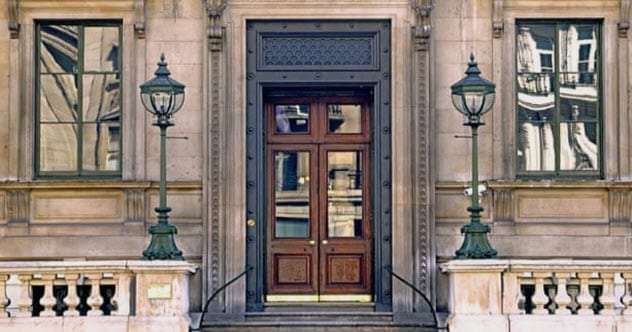
Say the words gentlemen’s club and the mind politely produces images of leather armchairs, silver trays, deep carpets, and men saying things like, “My dear fellow,” while quietly judging your socks. But history, as usual, refuses to behave. Behind many private members’ clubs were not just brandy snifters and respectable silence, but gambling, elitism, outrageous rituals, political plotting, vandalism, exclusion, and enough bad manners to make a butler faint into the soup.
This article looks at ten very ungentlemanly gentlemen’s clubs, using the term broadly: traditional London clubland institutions, secretive male societies, elite dining circles, student clubs, and private members’ clubs that became famous for behavior far removed from polished courtesy. Some were scandalous in their own time. Others look worse in hindsight. A few were probably exaggerated by gossip, satire, or political enemies, which is exactly what happens when wealthy men gather behind closed doors and everyone outside starts imagining the wallpaper sweating secrets.
The point is not that every member of every club was a villain twirling a mustache over the port. Rather, these examples show how exclusivity can create strange little kingdoms where normal rules get loosened, rewritten, or tossed into the fireplace with the dinner napkins.
What Makes a Gentlemen’s Club “Ungentlemanly”?
A traditional gentlemen’s club was supposed to offer sociability, privacy, conversation, dining, reading rooms, and professional networking. In practice, many early clubs also became safe spaces for high-stakes gambling, political maneuvering, drinking, and social gatekeeping. That mix can be useful if you are writing a novel about Regency rogues. It is less charming when actual lives, careers, reputations, and public institutions are affected by decisions made in rooms where half the population is not allowed through the front door.
So, for this list, “ungentlemanly” means one or more of the following: hypocrisy, exclusion, moral panic, destructive behavior, scandalous rituals, abuse of privilege, or social power hidden behind polished wood paneling. In other words, manners on the surface, mischief in the cellar.
1. White’s: The Club Where Gambling Wore a Tailcoat
White’s is one of the most famous names in London clubland and is often described as the oldest gentlemen’s club in the city. It began in the late seventeenth century as a chocolate house, which sounds innocent enough until you remember that eighteenth-century chocolate houses could be closer to casinos with better waistcoats.
White’s became famous for aristocratic exclusivity and a culture of betting. Its historical betting book recorded wagers on politics, births, deaths, marriages, weather, war, and other subjects that polite people might normally discuss without putting money on whether someone would survive the month. Gambling was a core part of early club culture, and White’s helped turn private vice into a social institution.
The ungentlemanly twist is not merely that members gambled. It is that gambling became a performance of class confidence. Rich men could risk outrageous sums, write the bet down, and call it leisure. A poor man doing the same might be called reckless. A gentleman doing it under chandeliers was apparently just “sporting.” Very convenient chandeliers.
2. Brooks’s: Politics, Port, and the Betting Book
Brooks’s, another classic London club, was associated with Whig politics and aristocratic gaming. Like White’s, it had a betting book, and its members recorded wagers that now read like tiny windows into a world where politics, gossip, and sport all became opportunities for financial bravado.
The club’s reputation is tied to figures such as Charles James Fox, the brilliant Whig statesman famous for both political talent and heavy gambling. Brooks’s shows how the private club could act as a second parliament: not elected, not transparent, but full of influence. Ideas moved over dinner. Alliances formed over wine. Bets turned public affairs into private entertainment.
Was it gentlemanly to debate liberty while belonging to a tiny circle of men with inherited access, money, and social protection? That depends on whether you were holding the glass or cleaning it. Brooks’s earns its place here because it represents the club as a velvet-lined engine of insider politics. Democracy may have been discussed, but not necessarily invited to dine.
3. The Hellfire Club: Piety, Parody, and Very Bad Optics
Few names in club history do more dramatic work than the Hellfire Club. The best-known version was linked with Sir Francis Dashwood and the Order of the Knights of St. Francis, also known as the Franciscans of Medmenham. Meetings were associated with West Wycombe, mock-monastic theater, classical symbolism, and stories of libertine excess.
How much of the Hellfire legend is fact, how much was gossip, and how much was political smear? Historians still treat some tales carefully. But the reputation was powerful: aristocrats dressing up religious parody as private amusement, playing with scandal, and apparently discovering that “What could possibly go wrong?” is not a risk-management plan.
The Hellfire Club is ungentlemanly not simply because of rumored debauchery, but because it turned privilege into theater. Ordinary people could be punished for irreverence. Elite men could stage it in caves and call it wit. That double standard is the real ghost haunting the candlelit corridor.
4. The Mohocks: The “Gentlemen” of Nighttime Panic
The Mohocks were less a neat clubhouse institution and more a rumored fraternity of violent young gentlemen said to have terrorized London streets in 1712. Reports claimed that well-born men roamed at night attacking passersby. Modern historians are cautious: the panic was fueled by rumor, newspapers, satire, and fear of aristocratic lawlessness.
Still, the Mohocks matter because people believed such a thing was possible. Londoners could imagine privileged young men acting like a private club of street bullies because the culture already had a place for elite male misbehavior. The rumors were lurid, but the anxiety behind them was real: were lurid, but the anxiety behind them was real: what happens when social rank protects bad conduct?
If the Mohocks were exaggerated, they were exaggerated in a very revealing direction. They became a symbol of gentlemanly manners turned inside out: silk stockings by day, chaos by night. It is hard to think of anything less gentlemanly than needing a royal proclamation to remind “young gentlemen” not to slash people in the street.
5. Beggar’s Benison: Enlightenment, But Make It Extremely Awkward
The Beggar’s Benison was an eighteenth-century Scottish male club based in Anstruther from 1732 to 1836. It focused on male sexuality, bawdy fellowship, erotic symbolism, and rituals that make most modern team-building exercises look mercifully normal.
Surviving artifacts associated with the club include ceremonial objects, glasses, sashes, seals, and items decorated with sexual imagery. The group attracted local gentry and, over time, men from higher social ranks. It is a vivid reminder that the eighteenth century was not just wigs, violins, and philosophical essays about reason. Sometimes it was also secretive male clubs behaving like a locker room with a Latin motto.
Its ungentlemanly quality lies in the gap between Enlightenment polish and private crudity. Publicly, many elite men spoke the language of improvement, reason, and civilization. Privately, some formed societies that turned women into symbols, jokes, or props in male fantasy. History does not always whisper. Sometimes it clears its throat and points at the punch bowl.
6. The Calves’ Head Club: Political Satire With a Side of Riot
The Calves’ Head Club was associated with anti-monarchical rumor and political provocation after the execution of King Charles I. Accounts claimed that members marked the anniversary of the king’s beheading with symbolic feasts and republican toasts. Much of what circulated about the club came from hostile pamphlets and may have been propaganda, but the story became part of political culture.
In the eighteenth century, rumor itself could be a weapon. A club did not have to be large, organized, or even fully real to become a scandal. The idea of men gathering in private to mock monarchy, religion, and national memory was explosive enough.
Ungentlemanly? Certainly, if one measures manners by tact. Even if some tales were exaggerated, the Calves’ Head Club shows how private dining societies could become symbols of factional rage. Today, it reads like a reminder that elite trolling existed long before comment sections. It just came with candles, taverns, and more veal than anyone needed.
7. The Sublime Society of Beefsteaks: Masculinity, Meat, and Mild Absurdity
The Sublime Society of Beefsteaks was founded in 1735 and became one of Britain’s most famous dining societies. Its members celebrated beef, liberty, theater, patriotism, and male fellowship. On the surface, this sounds almost wholesome. Who can object to dinner? Then the rituals arrive wearing a costume.
The society developed uniforms, ceremonies, songs, strict rules, symbolic objects, and an almost sacred devotion to steak. It attracted artists, actors, writers, and prominent men, making it more culturally lively than some stuffier clubs. Yet it still embodied the masculine club habit of making ordinary appetite into a grand institution from which women were largely excluded.
Its ungentlemanly quality is gentler than that of the Hellfire Club or Mohocks. The Beefsteaks were not famous for street terror. They were famous for turning meat into masculine identity with comic solemnity. Still, when men build a society around beef, port, hierarchy, and theatrical initiation, one is allowed to ask whether the vegetables were the only sensible adults in the room.
8. The Bullingdon Club: Oxford Privilege With a Repair Bill
The Bullingdon Club, Oxford’s notorious elite dining club, is famous for wealth, tailcoats, political alumni, and stories of destructive nights out. Its reputation includes reports of vandalism, heavy drinking, arrogance, and the tradition of paying for damage afterward, as though money were a moral eraser.
Former members have included prominent British politicians, which is why the club became more than a student scandal. It became a symbol of class entitlement: a place where young men could practice elite bonding through excess, then later enter public life claiming maturity had arrived, freshly pressed and ready for television.
The ungentlemanly element is not youthful stupidity alone. Many people are foolish at college and recover beautifully. The issue is the social meaning of consequences. If ordinary students smashed up a restaurant, the story might end with criminal records and ruined prospects. When privileged students do it, folklore may turn it into character-building. That is not tradition. That is insulation with cufflinks.
9. The Garrick Club: A Theater of Exclusion
The Garrick Club, founded in 1831 and long associated with theater, literature, law, politics, and public life, became one of the most discussed modern examples of old clubland exclusion. For nearly two centuries, women could not become full members. They could enter only under restrictions as guests of men.
In 2024, after public pressure and debate, the Garrick voted to admit women. The change was historic, but the controversy exposed why such clubs matter beyond private preference. When judges, politicians, journalists, actors, and senior officials share an exclusive social network, membership is not merely about lunch. It can shape access, familiarity, trust, and opportunity.
Its ungentlemanly quality is quiet, not rowdy. No smashed windows required. Exclusion can wear a dinner jacket and speak softly. The Garrick shows how a club can seem civilized while preserving social arrangements that benefit insiders and keep others waiting at the side door.
10. The Bohemian Club: Campfire Secrecy for the Powerful
The Bohemian Club was founded in San Francisco in 1872 and is famous for its annual Bohemian Grove retreat in California’s redwoods. It began with artists, writers, actors, lawyers, and journalists, then expanded to include powerful business and political figures. Its secrecy, male exclusivity, and theatrical rituals have made it a magnet for fascination, criticism, and conspiracy theories.
Not every private retreat is sinister. Powerful people are allowed to have hobbies, even if one of those hobbies involves symbolic ceremony in front of a giant owl. The problem is the optics of concentrated influence. When extremely powerful men gather in private, the public naturally wonders whether the world is being run over campfire coffee.
The Bohemian Club is ungentlemanly in the modern sense: not because every rumor is true, but because secrecy plus power plus exclusion creates distrust. A club can insist it is only about fellowship, art, and escape from care. The rest of us may still notice that care is easier to escape when someone else is serving dinner.
Bonus Modern Case: The Groucho Club and the Myth of the Cool Private Club
The Groucho Club in London was founded in 1985 as a creative, media-friendly alternative to stuffy old gentlemen’s clubs. It welcomed women from the beginning and built a reputation around writers, artists, publishers, musicians, actors, and professional hell-raisers. In many ways, it was designed as the anti-clubland club.
Yet private members’ clubs do not escape scrutiny just by changing the playlist. In 2024, the Groucho was temporarily closed after a police investigation into a reported serious crime at the premises. Authorities stated there was no suggestion that employees were involved, but the episode showed how quickly glamour can become a governance issue.
The Groucho belongs here as a reminder that ungentlemanly behavior is not limited to mahogany rooms and hereditary accents. Modern exclusivity can produce its own blind spots. A cooler room is still a private room, and reputation is not a substitute for responsibility.
Why These Clubs Still Fascinate Us
There is a reason stories about scandalous gentlemen’s clubs keep returning. They combine secrecy, status, ritual, and bad behavior, which is basically catnip for human curiosity. We want to know what happens behind the door marked “members only.” We want to know whether the powerful are as dignified in private as they look in portraits. Spoiler: often no.
These clubs also help explain how social power works. Power is not always exercised in official meetings with agendas and microphones. Sometimes it works through dinner invitations, old school networks, shared jokes, private introductions, and the quiet knowledge that “one of us” will receive a warmer hearing than a stranger.
That is why the issue of gentlemen’s clubs is bigger than eccentric history. The silly rituals are entertaining. The deeper pattern is serious. When access is limited, opportunity narrows. When misbehavior is forgiven because the offender has the right accent, school tie, family name, or bank balance, society absorbs the cost while the club keeps the silver polished.
Experiences and Reflections: Visiting the Idea of Clubland Without Joining It
Most of us will never belong to a grand private club with a century-old staircase, a dining room full of portraits, and a membership process that sounds like a minor royal succession. But we have all experienced smaller versions of clubland. The office clique that makes decisions before the meeting. The alumni network that opens doors before qualifications are discussed. The social circle where everyone knows the joke except the newcomer. The restaurant table where the bill arrives and someone casually says, “Let’s split it evenly,” after ordering a steak shaped like a medieval shield.
The world of ungentlemanly gentlemen’s clubs feels distant because of the costumes, titles, and architecture, but its habits are surprisingly familiar. Any group can become a club when belonging matters more than fairness. Any room can become exclusive when the rules are unwritten and the insiders pretend not to see them. That is why these old stories still land with a thud. They are not just about men in wigs behaving badly. They are about the human love of being inside the circle.
Imagine walking past a historic clubhouse in London. The windows glow. The door is heavy. Someone inside is laughing over dinner. From the sidewalk, the building looks dignified, almost wise. It has survived wars, governments, scandals, reforms, and possibly a shocking number of overcooked peas. But the question is not whether the building has history. The question is what kind of history it protected. Did it preserve conversation, art, friendship, and civic life? Or did it also preserve arrogance, exclusion, and the belief that rules are for people without membership cards?
That tension is what makes these clubs so useful to write about. They are funny because the rituals can be absurd. They are troubling because the absurdity often sits beside real influence. A man kissing a beef bone during a dining initiation is comic. A powerful network excluding women from professional access for nearly two centuries is not comic at all. The trick is to hold both ideas at once without spilling the port.
There is also a lesson for modern private clubs, coworking salons, luxury communities, founder retreats, and invitation-only networking groups. Exclusivity sells. People love velvet ropes because they make the other side look more valuable. But the more a club markets itself as refined, enlightened, disruptive, creative, or elite, the more it should expect scrutiny. Manners are not measured by the thickness of the carpet. They are measured by how people treat those with less power.
In that sense, the most gentlemanly club would not be the quietest, richest, oldest, or most secretive. It would be the one least afraid of accountability. It would not need scandal to discover inclusion. It would not confuse payment for damage with apology. It would not mistake ritual for virtue. And above all, it would understand that true class is not keeping people out; it is knowing how to behave when nobody can force you to.
Conclusion: When the Club Tie Becomes a Warning Label
The history of very ungentlemanly gentlemen’s clubs is funny, strange, and occasionally jaw-dropping, but it is not just a parade of eccentric rich men behaving like unsupervised theater props. These clubs reveal how privilege can hide behind tradition, how secrecy can protect misbehavior, and how exclusion can be disguised as etiquette.
White’s and Brooks’s show the gambling roots of clubland. The Hellfire Club and Beggar’s Benison show how elite men turned privacy into theater. The Mohocks and Bullingdon Club show the darker side of protected recklessness. The Garrick and Bohemian Club remind us that exclusion and influence remain modern questions, not museum pieces. And the Groucho Club proves that even anti-establishment clubs can face establishment-sized scrutiny.
Gentlemanliness, if it means anything, should mean restraint, fairness, humility, and responsibility. A club that lacks those qualities may still have excellent wine, but it has misplaced the point. The best rule for any private society is simple: if your traditions cannot survive daylight, perhaps they are not traditions. Perhaps they are just bad behavior with better stationery.
SEO Tags
{

  "meta_title": "Ungentlemanly Gentlemen's Clubs: 10 Wild Tales",

  "meta_description": "Explore 10 scandalous gentlemen's clubs, from Hellfire legends to Bullingdon excess, Garrick exclusion, and Bohemian secrecy.",

  "sapo": "Behind the polished doors of famous gentlemen's clubs lies a rowdier history than the leather chairs suggest. From gambling books at White's and Brooks's to Hellfire theatrics, Mohock panic, Bullingdon vandalism, and the long exclusion debates around clubs like the Garrick, these ten stories reveal how privilege, secrecy, and bad manners often shared the same dining table.",

  "keywords": [

    "ungentlemanly gentlemen's clubs",

    "gentlemen's clubs history",

    "Hellfire Club",

    "Bullingdon Club",

    "Garrick Club",

    "Bohemian Club",

    "private members clubs"

  ]

}/pre>