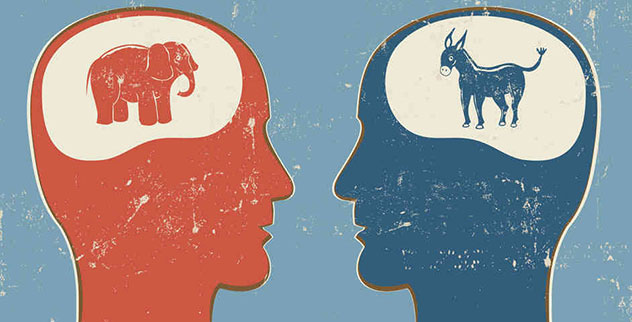
Americans do not need another speech about “working families” delivered from behind a podium that cost more than a used Honda. What they need is a clear, honest explanation of why politics so often feels like a rigged arcade game: loud, flashy, expensive, and mysteriously tilted against the people feeding it quarters.
This is not really about one party, one ideology, or one villain twirling a mustache in a Capitol cloakroom. It is about a political culture that too often rewards money over merit, performance over problem-solving, and tribal warfare over basic competence. The result is a government that can still do important things, but often does them late, awkwardly, expensively, and with a press conference attached.
So yes, the title is spicy. But the point is serious. Here are 10 ways our politicians keep failing the people they are supposed to represent, and why the frustration is not just emotional. It is rational.
1. They listen hardest to the people with the biggest checkbooks
In theory, democracy runs on votes. In practice, a shocking amount of it runs on access. Lobbyists, industry groups, trade associations, and well-funded advocacy networks can afford full-time staff, legal teams, consultants, and messaging experts whose entire job is to influence policy. Ordinary people, by contrast, are squeezing civic participation between work, childcare, rent, and whatever fresh disaster arrived in the group chat.
That imbalance matters. When lawmakers hear more often from organized money than from regular constituents, policy starts to drift toward the interests that can stay in the room the longest. It does not always look like a giant sack of cash with a dollar sign on it. Often it looks cleaner: a briefing memo, a regulatory comment letter, a “stakeholder meeting,” or a perfectly tailored amendment slipped into a much larger bill.
And that is how people end up wondering why popular frustrations keep lingering while specialized interests somehow remain very well hydrated.
2. They let dark money do its thing in the shadows
If regular campaign finance is a crowded bar, dark money is the guy in sunglasses paying everyone’s tab and refusing to say his name. Huge sums can flow through nonprofits and other vehicles that do not fully reveal donors, making it harder for voters to understand who is really financing the political messages flooding their screens.
This matters because transparency is not a decorative democratic accessory. It is the difference between an informed electorate and a nation of people trying to solve a murder mystery with half the pages ripped out. When voters see an ad, they should know who bought it, who benefits from it, and why it suddenly appeared two weeks before Election Day dressed like a public service announcement.
Instead, too often, the money trail vanishes into a maze of entities with generic names that sound like they were invented by a focus group and a fax machine.
3. They draw districts that choose voters instead of voters choosing them
Gerrymandering is one of the most elegant scams in modern politics because it can look boring while doing enormous damage. Move a few lines on a map, carve up a city, pack opponents into fewer districts, spread your own voters more efficiently, and suddenly representation gets weird.
Both parties have used mapmaking to their advantage, but the broader problem is structural: when politicians can help shape the electorate that will judge them, accountability gets bent out of shape. Instead of competing for persuadable voters, many lawmakers operate in districts where the general election is mostly theater and the real danger comes from a primary challenge.
That produces a nasty incentive. Rather than building a broad coalition, candidates often focus on pleasing the most energized slice of their own side. Translation: less persuasion, more performance art, more outrage, and more speeches designed to trend instead of govern.
4. They act like primary voters are the whole country
Because so many districts are effectively safe for one party, politicians often behave as if the only audience that matters is the one most likely to punish compromise. That means governing with one eye on the next primary, one eye on cable clips, and zero eyes on whether a solution would actually help the country.
This is how normal policy disagreements become loyalty tests. A lawmaker who even hints at cooperation can get treated like they wandered into enemy camp wearing a name tag that says “reasonable.” Suddenly, making a deal is not leadership. It is betrayal. And once compromise is stigmatized, stalemate becomes a badge of honor.
For voters in the middle, it feels ridiculous. For the political system, it is corrosive. It turns Congress into a place where being loud is safer than being useful.
5. They leave office and cash in on the connections they built in office
The revolving door is one of Washington’s least charming tourist attractions. People move from government into lobbying, consulting, legal work, and influence-heavy private roles, then sometimes back into government again. Expertise is valuable, sure. But so are guardrails, and ours are often too weak, too narrow, or too easy to sidestep.
The core problem is not merely corruption in the obvious envelope-under-the-table sense. It is the steady creation of a political culture where public office can become a networking accelerator for private gain. When officials know that future employers may be watching, the incentive to be aggressive on behalf of the public can get very soft around the edges.
At minimum, it creates the appearance that the same club keeps rotating seats while the public pays the cover charge.
6. They allow stock trading conflicts to keep smelling bad
Nothing says “trust us” quite like lawmakers making policy while actively trading individual stocks. Even when no law is technically broken, the appearance of a conflict is enough to undermine public confidence. If members of Congress receive sensitive briefings, shape industries through legislation, and then trade in markets affected by those decisions, people are going to raise an eyebrow so high it leaves orbit.
The defense is usually some variation of: “We disclose it.” Great. But disclosure after the fact is not the same thing as preventing the problem. A tiny penalty for late filings does not exactly scream “fearsome ethical deterrent.” It screams “parking ticket for a yacht owner.”
That is why this issue keeps coming back. It is not just about legality. It is about whether public service looks public-minded.
7. They turn basic budgeting into hostage negotiations
Funding the government should be one of the most routine functions in politics. Instead, it regularly turns into a cliffhanger episode where lawmakers inch toward shutdowns, continuing resolutions, and debt-limit drama while insisting they are the adults in the room. The adults in the room, meanwhile, are usually the people trying to figure out whether their paycheck, permit, contract, loan, trip, or benefits processing just got shoved into a bureaucratic blender.
Shutdowns and brinkmanship are not abstract. They disrupt services, delay work, rattle markets, waste labor, and create avoidable economic harm. Yet politicians still treat these episodes like leverage tools in a giant national game of chicken.
It is hard to convince people government is serious when it occasionally behaves like it misplaced the calendar, the budget, and its last ounce of dignity.
8. They reward gridlock and call it principle
Every generation gets told that this is simply what democracy looks like: debate, disagreement, friction. Fair enough. But there is a difference between healthy friction and a machine that keeps swallowing its own gears. In too many cases, Congress does not just move slowly. It fails to act on major issues until a deadline, a crisis, or a public embarrassment forces movement.
And then, when action finally happens, it is often jammed into giant must-pass bills that few people read in full and even fewer people can explain with a straight face. That is not a sign of wisdom. It is a sign that the system is being driven by panic and optics instead of deliberation and planning.
Gridlock also creates a vicious cycle. The less government solves, the less people trust it. The less people trust it, the easier it becomes for politicians to run against the very institution they are supposed to make work.
9. They chase headlines instead of long-term fixes
Politicians love ribbon cuttings, culture-war riffs, and slogans sturdy enough to survive a fundraising email. What they love much less is slow, boring, long-range work: reforming permitting, modernizing agencies, improving legislative capacity, tackling deficits honestly, and designing policies that still make sense after the next election cycle.
Real governing is deeply unglamorous. It involves spreadsheets, trade-offs, institutional reform, oversight, staffing, and the humility to admit that complex problems rarely fit on a bumper sticker. But short-term incentives reward emotional theater. So lawmakers keep swinging at symbolic targets while structural problems pile up like laundry in a dorm room during finals week.
The cost of political short-termism is not just annoyance. It shows up in infrastructure delays, unstable budgeting, neglected oversight, and the constant feeling that America is permanently one patch behind its own software update.
10. They have burned so much trust that even good actions look suspicious
This may be the worst one, because it poisons everything else. Once people conclude that politicians are self-serving, performative, and captive to special interests, even legitimate public action gets filtered through distrust. A good policy can be interpreted as a scam. A necessary compromise can be seen as weakness. A real reform can sound like branding.
That cynicism did not fall from the sky. It was earned over years of empty promises, selective outrage, hypocritical ethics, donor worship, and tactical incompetence. When voters say they feel ignored, exhausted, or manipulated, they are not being dramatic. They are describing the emotional residue of a political culture that too often treats public patience as an unlimited resource.
It is not unlimited. And when trust collapses, everything becomes harder: passing laws, enforcing rules, persuading the public, and holding bad actors accountable. A democracy can survive argument. It struggles when millions of people stop believing the argument is honest.
So What Is Really Going On Here?
The simplest explanation is not that every politician is evil. It is that the incentive structure is warped. Money buys access. Safe seats reward ideological purity. Weak ethics rules invite conflicts. Media ecosystems reward outrage. Deadlines become leverage. Performance gets attention; patient problem-solving often does not.
Put all of that together and you get a political class that may still contain talented, serious, well-intentioned people, but operates inside a machine that routinely rewards the wrong behavior. Even decent lawmakers can get trapped in indecent incentives.
That is why the public frustration feels so persistent. People are not just upset at personalities. They are reacting to patterns. They keep seeing the same script: big promises, donor pressure, partisan combat, deadline panic, symbolic messaging, weak accountability, and then one more speech about restoring faith in government. At this point, faith probably wants a vacation.
What This Looks Like in Everyday Life
500 More Words on the Human Experience Behind the Headline
Most people do not experience political dysfunction as a white paper. They experience it as drag. It is the drag on daily life when a parent tries to navigate a benefit office that is understaffed, or when a veteran waits too long for paperwork to move, or when a small business owner keeps hearing that lawmakers support entrepreneurship while watching basic permitting and funding policy bounce around like a shopping cart with one broken wheel.
It is the feeling of checking the news and seeing elected officials once again treating a shutdown or debt fight like a high-stakes poker tournament, while normal people are just trying to make payroll, book travel, keep the lights on, and maybe not develop a stress eye twitch before lunch. For federal workers and contractors, those episodes are not political metaphors. They are rent, groceries, childcare, medications, and delayed plans. For the public, they are canceled trips, slower approvals, unanswered phones, and one more reminder that dysfunction is not free.
There is also the everyday exhaustion of trying to follow politics without becoming spiritually dehydrated. You hear one politician rail against corruption while taking money from the exact ecosystem they claim to oppose. You hear another praise bipartisanship and then flee from it the second a primary challenge looks possible. You watch officials condemn insider culture while somehow always landing comfortably after office, cushioned by connections made during office. It creates a low, steady hum of disbelief. Not the dramatic movie kind. The quieter kind. The kind where people shrug and say, “Of course,” which may be the saddest sentence in democracy.
Then there is the map problem, which sounds technical until you realize it affects whether your vote feels meaningful. In a heavily engineered district, a voter can do everything civic textbooks ask of themregister, research, show up, voteand still feel like the result was mostly baked in. That sensation adds up over time. It teaches people that participation matters less than design, and that is a brutal lesson for a representative system to teach.
Even the language of politics can wear people down. Everything is framed as a battle, a war, a reckoning, a betrayal, a mandate, a total collapse, or the most important election in human civilization since fire. Meanwhile, the practical stuff that shapes ordinary lifehousing costs, transportation, prescription prices, agency competence, tax complexity, school funding, infrastructure maintenancegets discussed in fragments, often only after the system has already failed loudly enough to become impossible to ignore.
What many Americans are really reacting to is not a single scandal. It is accumulated disrespect. They feel talked at instead of listened to. Marketed to instead of represented. Asked for donations, votes, patience, and trust by people who too often seem more fluent in blame management than problem-solving. That is why anger at politicians can sound so personal even when the issue is structural. The experience is personal. It lands in family budgets, lost time, delayed plans, frayed nerves, and civic burnout. And when that happens for long enough, “politics” stops feeling like public service and starts feeling like an expensive inconvenience with campaign music.
Conclusion
The real scandal is not that politicians are imperfect. Of course they are. The scandal is that the system keeps rewarding the exact habits that make people trust politics less: dependence on big money, tolerance for secrecy, map manipulation, primary-driven extremism, revolving-door incentives, weak ethics, budget brinkmanship, legislative paralysis, and short-term thinking.
If Americans feel like their politicians are screwing them, it is not because they are too cynical or too online or insufficiently appreciative of the complexities of governance. It is because the evidence of misaligned priorities is everywhere. The fix is not magical. It is institutional: more transparency, stronger ethics, fairer maps, better legislative capacity, less brinkmanship, and a political culture that treats governing as a job instead of a content strategy.
Until then, voters will keep getting the deluxe Washington package: premium drama, limited accountability, and a bill they never agreed to pay.