Zombie movies are often treated like cinematic junk food: messy, loud, and best enjoyed with a suspiciously large bowl of popcorn. But the best zombie films do more than throw rubber intestines at the screen and call it dinner. They sneak into your brain, chew politely for a while, and leave you wondering whether your neighbor’s weird cough is just allergies or the beginning of civilization’s final group project.
This list focuses on zombie movies that actually terrify younot just because the undead are hungry, but because the films understand fear. Some use slow dread. Some use sprinting chaos. Some trap people in apartments, trains, malls, bunkers, or their own collapsing morality. Together, they prove that the zombie genre is not one thing. It can be political, emotional, disgusting, claustrophobic, funny in the worst possible way, and deeply human. Unfortunately for the humans, that usually means screaming.
For SEO purposes and reader sanity, we are using “zombie movies” broadly here. That includes classic reanimated corpses, infected humans, rage-virus maniacs, fungal nightmare people, and other apocalypse-adjacent flesh enthusiasts. Purists may grumble into their grave soil, but the terror is real.
What Makes a Zombie Movie Truly Scary?
A terrifying zombie film needs more than a crowd of groaning extras in gray makeup. The best scary zombie movies usually share three ingredients: isolation, inevitability, and uncomfortable social truth. The characters are trapped somewhere they cannot easily escape. The threat keeps coming no matter how many doors are locked. And beneath the blood, there is often a sharp question: What happens when society stops pretending to be polite?
That is why the following films still work. Their monsters are frightening, yes, but the humans are often worse. The zombies may bite, but panic, selfishness, denial, and bad leadership do most of the chewing.
1. Night of the Living Dead (1968)
The farmhouse nightmare that changed horror forever
George A. Romero’s Night of the Living Dead remains one of the most important zombie movies ever made because it makes the end of the world feel cheap, ugly, and painfully close. There is no grand mythology, no heroic military rescue, no glamorous monster. Just strangers trapped in a rural farmhouse while the recently dead gather outside like the world’s least welcome dinner guests.
The terror comes from how ordinary everything feels. The black-and-white photography gives the movie a newsreel harshness, as if the apocalypse accidentally got broadcast between local weather and a car dealership ad. The zombies are slow, but the situation is not. Every argument inside the house burns precious time. Every bad decision feels fatal. And the film’s ending still lands with a coldness that modern horror rarely matches.
Why it terrifies: It understands that fear is not always loud. Sometimes it is a boarded-up window, a basement argument, and the terrible realization that no one is coming to help.
2. Dawn of the Dead (1978)
Consumer culture, but make it undead
If Night of the Living Dead built the modern zombie, Dawn of the Dead taught it how to shop. Romero’s sequel moves the apocalypse into a shopping mall, where survivors hide among department stores, escalators, fake plants, and all the comforting junk civilization sells to itself before collapsing.
The film is terrifying because it is both gruesome and funny. The zombies wander the mall because some memory tells them this place mattered. That is funny for about two seconds. Then it becomes disturbing. The survivors have everything they could wantfood, clothes, furniture, entertainmentand still the mall feels like a beautifully lit tomb.
Dawn of the Dead is not just one of the best zombie movies of all time; it is one of the sharpest horror films about American consumption. The gore is legendary, but the real bite is satirical. It asks whether people become zombies because the dead return, or because they were already shuffling through life on autopilot.
Why it terrifies: It turns comfort into a trap. Suddenly the mall does not look like safety. It looks like bait.
3. Day of the Dead (1985)
The bunker movie where humanity is already rotting
Day of the Dead is meaner, sweatier, and more claustrophobic than Romero’s earlier zombie classics. Set mostly in an underground military facility, the film follows scientists and soldiers trying to understand the undead while everyone’s patience, ethics, and basic indoor voice disintegrate.
This is one of the most unsettling zombie films because the human environment feels diseased before the zombies even arrive. The bunker is full of fluorescent dread. The military characters bark orders like they can intimidate extinction into behaving. The scientists are desperate. The zombies are test subjects, threats, and, in the case of Bub, maybe something more complicated.
The practical effects remain stomach-turning, but Day of the Dead scares most effectively through pressure. It feels like being trapped in a sealed can with fear, ego, and a very bad ventilation system.
Why it terrifies: It shows that the apocalypse does not need to break society. Sometimes society brings a toolbox and finishes the job itself.
4. 28 Days Later (2002)
The movie that made zombies sprint into your nightmares
Danny Boyle’s 28 Days Later is technically an infected movie rather than a traditional undead film, but horror fans adopted it into the zombie canon because it changed the rhythm of the genre. These infected do not shuffle. They explode. They run, scream, vomit blood, and close distance with the athletic commitment of someone trying to catch the last airport shuttle.
The opening images of an empty London remain unforgettable. The silence is enormous. When the violence finally erupts, it feels less like a monster attack and more like civilization having a seizure. The digital video look adds grit and immediacy, making the world feel unstable even when nothing is moving.
What makes 28 Days Later especially terrifying is its emotional whiplash. It has beauty, grief, tenderness, rage, and sudden brutality. The infected are frightening, but the film’s most disturbing sections suggest that once law disappears, some people become predators without needing a virus.
Why it terrifies: It makes the apocalypse fast. Not “slowly gather supplies” fastmore like “tie your shoes wrong and perish” fast.
5. Dawn of the Dead (2004)
A remake that trades satire for pure panic
Remaking Romero is dangerous work. It is a little like repainting the Mona Lisa but adding more chainsaws. Yet Zack Snyder’s Dawn of the Dead works because it does not simply copy the original. It keeps the mall setting and the survival setup, then pumps everything full of adrenaline.
The opening sequence is one of the most effective in modern zombie horror. A normal suburban morning turns catastrophic with terrifying speed. The film wastes no time explaining itself. A child appears. A bite happens. A neighborhood becomes a war zone. Before the audience can emotionally locate the coffee maker, the world is already burning.
This version is less satirical than Romero’s and more interested in impact. The zombies are fast, the editing is sharp, and the action scenes have a nasty momentum. It is not subtle, but subtlety is overrated when the undead are sprinting through a parking lot.
Why it terrifies: It captures how quickly normal life can flip into chaos. One minute: breakfast. Next minute: roof-based survival strategy.
6. [REC] (2007)
Found footage with no room to breathe
The Spanish horror film [REC] is one of the most frightening found-footage movies ever made, and its zombie-adjacent outbreak is a masterclass in confinement. The setup is simple: a TV reporter and her cameraman follow firefighters into an apartment building, only to become trapped inside after a violent infection begins spreading among the residents.
The genius of [REC] is how small it feels. There are stairwells, hallways, apartments, and not nearly enough exits. The handheld camera is not a gimmick; it is part of the panic. Viewers only see what the characters see, and often what they see is blurry, badly lit, and rushing directly toward them with murderous dental enthusiasm.
As the film climbs toward its final sequence, the fear shifts from outbreak horror to something darker and more supernatural. By the end, [REC] feels like being locked inside a scream.
Why it terrifies: It weaponizes limited space. Every hallway becomes a throat, and the building is swallowing everyone alive.
7. Train to Busan (2016)
All aboard the trauma express
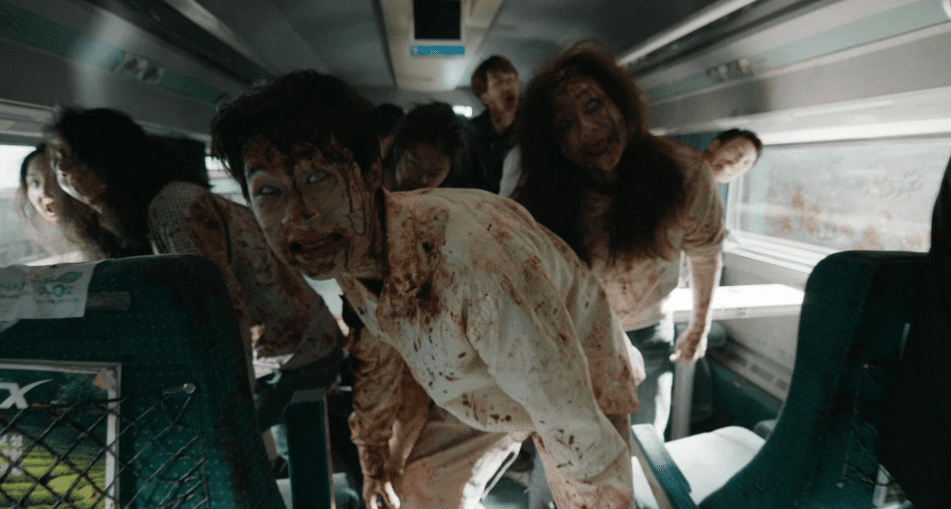
Train to Busan is proof that a zombie movie can be thrilling, heartbreaking, socially sharp, and still make you afraid of public transportation. Directed by Yeon Sang-ho, the film traps passengers on a high-speed train during a fast-moving outbreak in South Korea.
The train setting is brilliant because it creates constant forward motion without freedom. The characters are moving, but they are not escaping. Each car becomes its own battlefield, moral test, or temporary shelter. The infected transform quickly and attack in waves, creating some of the most intense zombie action sequences of the 21st century.
But what makes Train to Busan truly terrifying is not just speed. It is emotional investment. The film gives us characters worth protecting: a father and daughter, a pregnant woman and her husband, students, strangers, cowards, and heroes. When danger hits, it hurts because the people matter.
Why it terrifies: It combines relentless action with real emotional stakes. You are not just scared of who dies. You are scared of who survives and what survival costs.
8. The Girl with All the Gifts (2016)
A smart zombie movie with a very unsettling child
The Girl with All the Gifts brings intelligence and eerie restraint to the zombie genre. Based on the novel by M.R. Carey, the film imagines a world devastated by a fungal infection that turns humans into “hungries.” At the center is Melanie, a gifted young girl who appears human in many ways but is also infected.
The film’s terror is philosophical as much as physical. Melanie is charming, curious, and dangerous. She forces viewers to question where humanity begins and ends. Is she a child, a threat, the future, or all three at once? The adults around her are not simply heroes or villains either. They are frightened people trying to make impossible choices while the old world collapses.
This is not the loudest zombie movie on the list, but its ideas linger. Its infected are scary, but the real horror lies in evolution. The world is not just ending. It may be replacing us.
Why it terrifies: It makes the next stage of life look adorable, brilliant, and very capable of eating you.
9. The Night Eats the World (2018)
Loneliness is the monster, but the zombies help
The Night Eats the World takes the zombie apocalypse and strips it down to isolation. After a party in Paris, a man wakes up to discover that the city has fallen to the undead. He barricades himself inside an apartment building and attempts to survive alone.
Many zombie movies focus on groups, factions, and screaming arguments over who forgot to lock the door. This film is quieter. It studies routine, silence, boredom, paranoia, and the psychological cost of being alive when everyone else is gone. The zombies outside are terrifying because they are persistent, but the empty rooms may be worse.
The movie understands that survival is not only about food, weapons, and exits. It is about sanity. How long can a person remain human without other people? How much silence can the mind digest before it starts biting back?
Why it terrifies: It turns solitude into horror. The undead are outside, but the breakdown is happening inside.
10. The Sadness (2021)
An extreme infected nightmare for brave viewers only
The Sadness is not casual viewing. This Taiwanese horror film is one of the most brutal infected movies in recent memory, and it earns its reputation through relentless violence, cruelty, and social collapse. Its infected are not mindless shamblers. They are conscious, sadistic, and horrifyingly inventive.
The film imagines a virus that removes inhibition and turns people into their worst impulses. That concept is what makes it so disturbing. The monsters do not simply want to eat. They want to hurt, mock, humiliate, and destroy. It is zombie horror filtered through rage, exploitation cinema, and a pitch-black view of human nature.
This is the most extreme recommendation on the list, and it is not for everyone. But for seasoned horror fans looking for a zombie-style film that genuinely shocks, The Sadness delivers a hard slap with a contaminated glove.
Why it terrifies: It suggests that the scariest outbreak is not death. It is desire without conscience.
How to Choose the Right Zombie Movie for Your Fear Level
If you want classic dread, start with Night of the Living Dead. If you want social commentary with gore, choose Dawn of the Dead from 1978. If you want speed and panic, go with 28 Days Later, Dawn of the Dead from 2004, or Train to Busan. If you want claustrophobic terror, [REC] is your best bad idea. If you want something thoughtful and eerie, try The Girl with All the Gifts or The Night Eats the World. If you want to test whether your soul has a warranty, watch The Sadness.
The beauty of zombie horror is that it offers many flavors of fear. Some zombies shuffle. Some sprint. Some stare silently from the street. Some wear the face of someone you love. Some represent consumerism, militarism, disease, loneliness, evolution, or pure social rage. In other words, zombies are flexible employees. Terrible benefits, though.
Viewing Experiences: How These Zombie Movies Hit Differently in Real Life
Watching a zombie movie alone at midnight is not the same as watching one at 3 p.m. while folding laundry. At 3 p.m., you can tell yourself the film is “just cinema.” At midnight, every tiny noise in the kitchen becomes a meaningful plot development. The refrigerator hums, and suddenly you are considering whether canned beans count as a long-term survival plan.
The most terrifying zombie movies work because they follow you after the credits. Night of the Living Dead makes an ordinary house feel vulnerable. You notice windows. You think about basements. You realize that most household furniture is not designed for barricade efficiency, which feels like a major oversight by the home decor industry.
Dawn of the Dead changes how a mall feels. The bright lights, escalators, and food courts suddenly seem less cheerful. You may find yourself watching crowds differently, wondering how quickly convenience could become chaos. The film’s genius is that it makes consumer comfort look strangely undead. Everyone walking around with shopping bags begins to feel like part of the joke, and then you remember you also came for discounted socks. Horror is humbling.
28 Days Later and Train to Busan create a more physical kind of fear. They make you aware of distance. How far is the exit? How fast could you run? Are you wearing sensible shoes, or have you chosen fashion over survival like a doomed side character? Fast-zombie movies are especially rude because they remove the comforting fantasy that you could simply power-walk away from danger while holding a snack.
[REC] is the kind of film that makes apartment buildings feel suspicious. Elevators become traps. Stairwells become danger tubes. The camera’s limited viewpoint makes viewers lean forward even though leaning forward has never saved anyone in a horror movie. That is part of the fun: your body reacts as if it can help. It cannot. Your body is basically a popcorn delivery system with anxiety.
The quieter films, like The Night Eats the World and The Girl with All the Gifts, linger in a different way. They do not only ask, “Could you survive the zombies?” They ask, “What would survival do to you?” That question is scarier because it has no easy answer. Food, shelter, and weapons are practical problems. Loneliness, grief, trust, and moral compromise are much harder to store in a backpack.
And then there is The Sadness, which is less a casual movie night and more an endurance event with subtitles. It is the kind of film best watched when you already know your limits. Some horror is fun-scary, like a haunted house with a gift shop. This is not that. This is horror that makes you want to take a walk afterward, call a friend, drink water, and apologize to your nervous system.
For the best experience, match the movie to the mood. Do not begin with the most extreme title if you are new to zombie horror. Start with atmosphere, then increase intensity. Watch with lights low but not completely off unless you enjoy turning every coat rack into a suspect. Keep snacks simple. Avoid spaghetti during gore-heavy entries unless you have a heroic stomach. Most importantly, watch with people who understand the sacred rule of horror viewing: jokes are welcome, but talking during the scariest scene is a crime against cinema and possibly humanity.
Conclusion: The Dead Still Have Plenty of Life
The zombie genre refuses to die, which is either ironic or just very committed branding. From Romero’s farmhouse and mall to high-speed trains, infected cities, sealed apartments, bunkers, and lonely Parisian rooms, zombie movies keep finding new ways to terrify audiences. The best ones do not merely ask what happens when the dead rise. They ask what happens when fear rises, when systems fail, when strangers must trust each other, and when survival demands a price no one wants to pay.
These 10 zombie movies that will actually terrify you are not all scary in the same way. Some are bloody. Some are bleak. Some are emotional. Some are so intense they should come with a free blanket and a small apology. But each one proves that zombie horror is more than groans and gore. It is one of the most flexible, frightening, and strangely revealing corners of horror cinema.
Note: This article is original, web-ready content based on synthesized public film information, genre history, and editorial analysis. It contains no external source links or citation tags.