Cupboards are supposed to make life easier. In theory, they hide the cereal boxes, keep the pots from forming a metal avalanche, and give every mug, spice jar, and mystery lid a respectable place to live. In real life? Open the wrong cupboard on the wrong morning and you may be attacked by a casserole dish you have not used since 2017.
The good news is that you do not need a full kitchen renovation to create smarter storage. With a few affordable cupboard storage hacks, some basic DIY thinking, and a willingness to evict the lidless containers, you can turn cramped cabinets into hardworking, easy-to-use spaces. These ideas are inspired by practical home organization principles: use vertical space, make hidden areas accessible, group items by purpose, and stop pretending that “just shove it in there” is a system.
Below are 12 smart storage hacks for your cupboards that can help you organize kitchen cabinets, reduce countertop clutter, and make your home feel calmer without requiring a contractor, a trust fund, or a degree in advanced Tupperware geometry.
Why Cupboard Storage Gets Messy So Fast
Cupboards become cluttered because they are deep, dark, and often poorly divided. Most standard kitchen cabinets come with one or two shelves, which leaves a lot of unused vertical space. Items get stacked, smaller things disappear behind taller things, and before long you are buying another can of tomato paste because the first three are hiding in the back like tiny pantry fugitives.
The best cupboard organization ideas solve three problems: visibility, access, and categories. You should be able to see what you own, reach it without unloading half the cabinet, and know where it belongs when you put it back. That is the entire game. Everything else is just baskets with better lighting.
12 Storage Hacks for Your Cupboards
1. Start With a Full Cupboard Reset
Before buying organizers, pull everything out. Yes, everything. This is the step most people want to skip, and it is also the step that prevents you from organizing around expired soup, cracked plastic bowls, and that mug from a conference you do not remember attending.
Wipe the shelves, sort items by category, and create three piles: keep, donate, and toss. Expired food, warped food storage containers, chipped dishes, and gadgets with missing parts should not get prime real estate. Once the cupboard is empty, you can see how much space you actually have and what type of storage solution makes sense.
This reset also helps you build zones. Keep everyday dishes near the dishwasher, cooking oils near the stove but away from direct heat, baking supplies together, and kid-friendly snacks at a reachable height. A cupboard works better when it follows how your household actually moves.
2. Add Roll-Out Shelves for Deep Lower Cabinets
Deep lower cupboards are excellent at storing things and terrible at letting you retrieve them. A roll-out shelf or sliding basket changes that instantly. Instead of crouching like a treasure hunter and reaching blindly into the cabinet cave, you pull the shelf forward and see everything.
Roll-out shelves are especially useful for pots, pans, mixing bowls, small appliances, and cleaning supplies under the sink. They also help prevent duplicate buying because you can finally see what is hiding in the back. If you are comfortable with simple DIY projects, many roll-out systems can be installed with basic tools. For renters, freestanding sliding bins can offer a similar benefit without drilling.
For best results, store heavier items low and lighter items higher. A sliding shelf loaded with cast iron cookware may be useful, but only if the hardware is rated for the weight. Your cabinet should not sound like it is training for a demolition derby.
3. Use the Inside of Cabinet Doors
The inside of a cupboard door is valuable storage space that often goes ignored. Add slim racks, adhesive hooks, small bins, or custom holders to keep lightweight items within reach. This is a smart place for measuring spoons, pot lids, cutting boards, cleaning gloves, wraps, foil, or seasoning packets.
Before installing anything, close the door slowly with the organizer in place to make sure it clears the shelves. This one-minute test can save you from the deeply annoying discovery that your beautiful new door rack prevents the cabinet from closing.
Door storage works best for flat or lightweight items. Cutting boards, baking sheets, and lids are perfect candidates because they are awkward in a stack but tidy when stored vertically. It also turns dead space into useful space without changing the cabinet itself.
4. Install a Cutting Board Rack
Cutting boards are thin, slippery, and oddly skilled at sliding into the wrong place. A vertical cutting board rack keeps them upright, visible, and easy to grab. You can mount a rack inside a cabinet door, use a freestanding divider on a shelf, or repurpose a file organizer if the dimensions fit.
Store boards with the handles or longest edges facing upward so they are easy to remove. Keep wood boards separate from damp areas, and make sure they are completely dry before sliding them back into storage. A good rack also works for sheet pans, cooling racks, muffin tins, and serving trays.
This hack is especially helpful in small kitchens where every drawer is already doing three jobs and still asking for overtime.
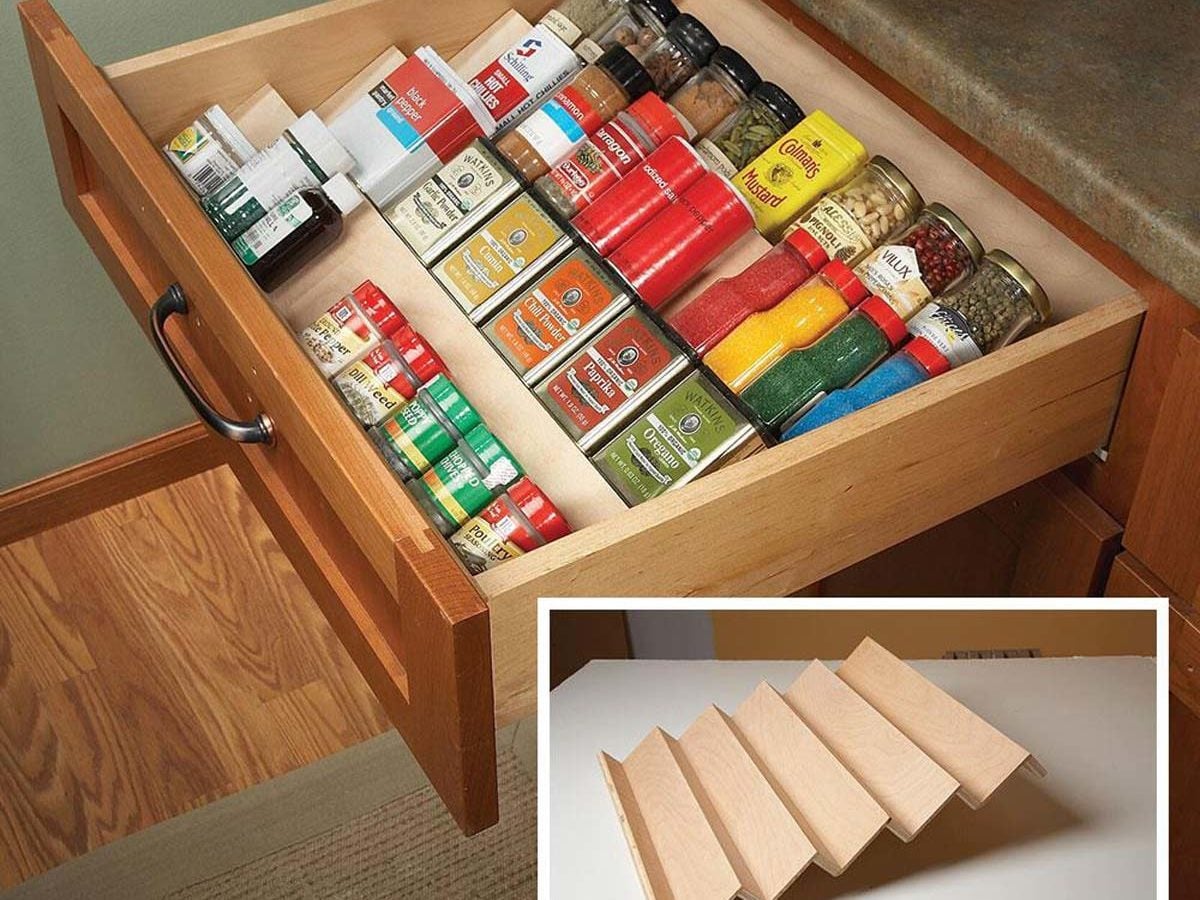
5. Build a Two-Tier Spice Rack
Spices are small, but they can create big chaos. When jars sit in a flat row, the ones in back become invisible. A two-tier spice rack, riser, or stair-step organizer solves the problem by lifting the back row so every label is visible.
You can buy expandable spice shelves or make a simple DIY version from scrap wood. Arrange spices alphabetically, by cuisine, or by frequency of use. The “whatever keeps you from buying cumin for the fourth time” method is also acceptable.
Keep spices away from heat, steam, and direct sunlight when possible. A cabinet near the stove may be convenient, but heat can shorten the life of herbs and spices. If you decant spices into matching jars, add labels and expiration dates so the system stays useful, not just photogenic.
6. Try a Tension Rod Spice Rack
A spring-loaded tension rod can become a surprisingly effective cupboard organizer. Place one near the front of a cabinet shelf to create a barrier that keeps spice jars, small bottles, or cutting boards from tipping forward. In shallow cabinets, a tension rod can also create a raised front row for lighter spice containers.
This is one of the cheapest storage hacks for cupboards because it requires no permanent installation. It is ideal for renters or anyone who enjoys solutions that cost less than a fancy coffee.
Measure the cabinet width before buying the rod, and choose one with rubber ends to protect the cabinet interior. Tension rods can also separate baking sheets, hold spray bottles under the sink, or create a simple divider for trays and lids.
7. Add an Extra Shelf or Shelf Riser
If your cupboard has tall empty space above short items, you are wasting storage. A shelf riser instantly creates a second level for plates, bowls, mugs, canned goods, or pantry staples. This hack is simple, inexpensive, and incredibly effective.
For a more permanent solution, install an extra shelf using plywood cut to size and shelf pins or supports. For a no-tools option, use freestanding wire or bamboo risers. The goal is to stop stacking items so high that removing one bowl requires the reflexes of a circus performer.
Shelf risers are particularly useful in upper cabinets where dishes and glassware often leave unused vertical space. They also make it easier to separate categories, such as everyday plates on the bottom and smaller bowls above.
8. Use File Organizers for Pans, Lids, and Wraps
Office supplies can be surprisingly good kitchen organizers. A metal or plastic file organizer can hold cutting boards, baking pans, lids, aluminum foil, parchment paper, and food storage bags. Mount one to the side of a cabinet, place one inside a cupboard, or attach a slim version to the inside of a door.
Vertical storage prevents flat items from becoming a leaning tower of frustration. Instead of pulling out five sheet pans to get to one cooling rack, you can slide out exactly what you need.
This hack is also great for organizing mail or recipe printouts that tend to migrate to the kitchen counter. Give paperwork a contained home, and your countertop may finally remember what it feels like to be visible.
9. Create a Measuring Cup and Spoon Station
Measuring cups and spoons are used often, but they are notorious drawer tanglers. Mount small hooks or a narrow strip of wood with cup hooks inside a cabinet door to keep them organized and easy to reach.
Place this station near your baking supplies for maximum convenience. You can also add labels for each measurement so cups and spoons return to the right spot. This is one of those little upgrades that makes cooking feel smoother because you are no longer digging through a drawer while flour dusts the counter like fresh snow.
Keep the mounted items lightweight and check that they do not hit shelves when the door closes. If the door is thin, use short screws or adhesive hooks designed for the weight.
10. Use Clear Bins for Small Pantry Items
Small packets, snack bars, seasoning mixes, tea bags, and baking decorations can turn into a cupboard swamp. Clear bins keep these little items contained while still making them visible. Group similar items together and label the bins so everyone in the household understands the system.
Use shallow bins for upper shelves and deeper bins for lower cabinets. Pull-out bins are especially helpful because you can remove the whole category at once instead of knocking over five things to reach the sixth.
Clear bins also help with grocery planning. When you can see that the snack bin is full, you are less likely to buy another box “just in case.” Your wallet and your cupboard will both breathe easier.
11. Hang Utensils or Mugs Under Cabinets
If drawer and cupboard space is limited, move some items out of the cupboard entirely. Hooks mounted under cabinets can hold mugs, measuring cups, or frequently used utensils. A rail system can keep spatulas, ladles, and tongs near the cooking zone while freeing drawer space.
This works best when the items are used daily and look reasonably tidy. If you hang every utensil you own, the kitchen can start to resemble a yard sale with plumbing. Choose a small set of essentials and keep the rest stored away.
Under-cabinet storage is also useful for paper towels, dish towels, and small baskets. The key is to use open space without making the kitchen feel crowded.
12. Turn Awkward Corners Into Reachable Storage
Corner cupboards can feel like storage black holes. A lazy Susan, turntable, swing-out shelf, or pull-out organizer can make awkward corners useful again. Use these areas for oils, vinegars, condiments, baking supplies, or small appliances that do not need daily access.
A turntable is especially helpful because it brings items from the back to the front with a simple spin. Choose one with raised edges for bottles and jars so nothing slides off. For lower corner cabinets, consider a pull-out or kidney-shaped rotating shelf if your budget allows.
The goal is simple: no item should require a rescue mission. If you have to remove eight things to reach one thing, the storage system is working against you.
Bonus Cupboard Organization Tips That Make the Hacks Last
Use Labels as Maintenance Instructions
Labels are not just for people who own matching baskets and perfect handwriting. They help everyone put things back where they belong. Label bins, shelves, and containers when categories are not obvious. This is especially helpful in pantry cupboards, shared homes, and kitchens where kids help themselves to snacks.
Store Items by Frequency of Use
Everyday items should be easy to reach. Holiday platters, specialty baking pans, and that giant stockpot you use twice a year can go higher, lower, or farther away. Prime cupboard space should be reserved for the things that actually earn it.
Measure Before You Buy Organizers
Cabinet organizers are helpful only when they fit. Measure width, depth, height, shelf clearance, and door clearance before purchasing bins, racks, pull-outs, or risers. A beautiful organizer that is half an inch too tall is not a storage solution; it is a return errand.
Do a Ten-Minute Weekly Reset
Cupboard organization is not a one-time event. Spend ten minutes each week putting stray items back, wiping sticky bottles, checking food dates, and straightening bins. Small maintenance prevents the dramatic Saturday cleanout where you discover three bags of powdered sugar and question your life choices.
Common Cupboard Storage Mistakes to Avoid
The biggest mistake is buying organizers before decluttering. Organizers should solve a specific problem, not create prettier clutter. Another common issue is over-decanting. Clear jars can look beautiful, but if you never remember cooking instructions or expiration dates, keep the original packaging or label carefully.
Avoid storing heavy items above shoulder height. Large appliances, stacks of plates, and glass mixing bowls belong in stable, accessible locations. Also avoid mixing unrelated categories in the same bin. If tea bags, birthday candles, batteries, and taco seasoning share a container, that is not a category. That is a junk drawer in witness protection.
Finally, do not ignore the needs of your household. A system that works for a solo cook may fail in a busy family kitchen. The best cupboard storage hacks are the ones people will actually use.
Real-Life Experience: What These Cupboard Hacks Look Like in Practice
The most useful lesson from organizing cupboards is that small changes often outperform big makeovers. In one compact kitchen, the lower cabinet near the stove was the main trouble spot. It held pans, lids, mixing bowls, cutting boards, and a waffle maker that seemed to be made entirely of awkward angles. Every dinner started with a clatter. The fix was not glamorous, but it worked: a vertical divider for sheet pans and cutting boards, a lid rack on the door, and a shelf riser for smaller pans. Suddenly, the cabinet stopped behaving like a booby trap.
Another practical experience involves the under-sink cupboard. This area usually becomes the land of half-used cleaners, spare sponges, trash bags, and one suspicious bottle with no label. A simple pull-out bin changed the whole space. Daily cleaners went in the front bin, dishwasher supplies went in a smaller container, and backup products moved to the back. The biggest improvement was not the bin itself; it was the rule that only under-sink items could live under the sink. No batteries, no flower vases, no “I’ll put this here for now” objects. That rule did more than any product.
Spice storage is another area where a tiny upgrade can feel luxurious. A two-tier rack makes cooking faster because labels are visible at a glance. It also reveals the truth about duplicates. Many kitchens contain multiple jars of garlic powder, cinnamon, paprika, or Italian seasoning because the older jar was hidden behind something taller. Once spices are easy to see, shopping becomes more accurate and cooking becomes less chaotic.
Door-mounted storage can be surprisingly satisfying, but it requires restraint. The inside of a cupboard door is not a magic wall where every homeless kitchen item should go. It works best for lightweight, frequently used tools: measuring spoons near baking supplies, cutting boards near the prep zone, or cleaning gloves under the sink. If the door feels heavy or does not close smoothly, remove something. Good organization should make the kitchen easier to use, not turn cabinet doors into gym equipment.
The most successful cupboard systems also leave a little empty space. This sounds strange when storage is tight, but packed cabinets are hard to maintain. A small amount of breathing room lets you put groceries away quickly, return dishes without rearranging everything, and notice when something is running low. Empty space is not wasted space; it is the difference between an organized cupboard and a puzzle you have to solve before breakfast.
In the end, the best storage hacks for cupboards are practical, affordable, and flexible. A roll-out shelf, a few hooks, a shelf riser, clear bins, and a weekly reset can make a kitchen feel larger without changing its footprint. You do not need a magazine-perfect pantry. You need cabinets that open without drama, close without force, and help you find the cinnamon before the pancakes get cold.
Conclusion
Smart cupboard storage is not about perfection. It is about making everyday life easier. When you use roll-out shelves, door racks, risers, bins, dividers, and simple DIY organizers, your cupboards become more than hidden boxes behind doors. They become useful, efficient storage zones that support the way you cook, clean, shop, and live.
Start with one cabinet. Empty it, clean it, remove what no longer belongs, and add one storage hack that solves the biggest frustration. Then move to the next cupboard. Before long, your kitchen will feel calmer, your counters will look clearer, and your casserole dishes may finally stop jumping out like they are auditioning for an action movie.
Note: This HTML article is written as original web-ready content in standard American English, with SEO tags included in JSON format at the end.