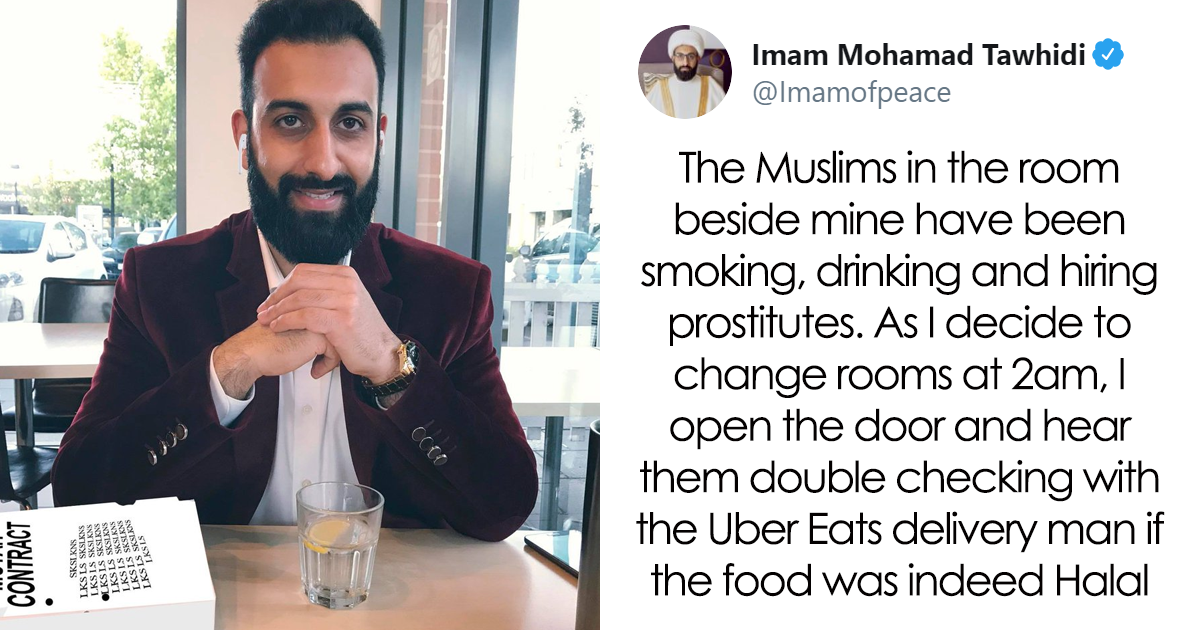
Social media is remarkably good at squeezing complicated subjects into tiny boxes. Unfortunately, it is equally good at labeling those boxes “all Muslims,” “all Christians,” “all immigrants,” or whatever other shortcut saves someone from the exhausting labor of meeting an actual human being.
That is why a 2019 collection of posts attributed to Mohammad Tawhidi attracted so much attention. The Australian Muslim speaker used Twitter to condemn terrorism, promote friendships across religious lines, defend personal choice, criticize hypocrisy, and occasionally swing a rhetorical frying pan at anyone he considered an extremist. Some posts were warm. Others were intentionally provocative. A few demonstrated that nuance and a character limit are not always roommates who share the refrigerator peacefully.
The collection presented Tawhidi as a Muslim educator challenging Islamophobic stereotypes. His public profile, however, is controversial. An Australian Broadcasting Corporation investigation questioned his academic credentials, documented criticism from Muslim community leaders, and examined earlier statements that appeared inconsistent with his reformist image. His posts should therefore be read as the views of one polarizing individualnot as an official explanation of Islam or the opinions of Muslims generally.
Note: The 27 entries below paraphrase and analyze the themes of the archived posts. They do not reproduce every tweet word for word.
Why Challenging Islamophobic Stereotypes Still Matters
Islamophobia is more than disliking a theological idea. It includes suspicion, discrimination, harassment, exclusion, and violence directed at people because they are Muslimor because someone assumes they are. That last part matters. Sikhs, Arabs, South Asians, immigrants, and people who simply “look Muslim” to a prejudiced stranger can also be targeted.
Pew Research Center surveys have repeatedly found that many Muslim Americans believe news coverage of Islam is unfair and that Muslims face substantial discrimination. Pew has also found that non-Muslims who personally know a Muslim tend to express more positive views. Meanwhile, research summarized by Georgetown University’s Bridge Initiative found that Muslims have frequently received disproportionately negative media portrayals, while ADL surveys have documented high levels of identity-based online harassment among Muslim adults.
The stakes are not confined to unpleasant comment sections. Federal agencies recognize religion-based threats, attacks, workplace harassment, and unequal treatment as serious civil rights concerns. Civil rights organizations have also reported thousands of complaints involving anti-Muslim or anti-Palestinian bias in recent years. A stereotype may begin as a lazy joke, but it can influence hiring decisions, school bullying, public policy, policing, and whether a family feels safe entering its own house of worship.
What the 27 Tweets Were Really Saying
Posts 1–7: Extremism, Responsibility, and Consistency
-
A suicide bomber is being exploited, not offered a shortcut to paradise.
The opening message dismantles terrorist recruitment with blunt logic: leaders who promise heavenly rewards rarely volunteer to test the offer themselves. The target is manipulation by extremists, not ordinary Muslim belief.
-
A Muslim visiting Auschwitz challenges the myth of inevitable Muslim-Jewish hostility.
Tawhidi’s visit and remembrance message emphasized that honoring Jewish victims of the Holocaust is compatible with Muslim identity. Solidarity does not require anyone to surrender a faith tradition; it requires recognizing another person’s humanity.
-
Extremism should not receive a political loyalty discount.
One post argues that people who condemn extremists only when they belong to an opposing group are not defending principles. They are merely supporting a team while wearing a referee’s shirt.
-
Ramadan can begin with interfaith friendship.
Before starting the Muslim holy month, he described plans to attend a Christian service and visit a Jewish organization. The post replaces the “clash of civilizations” script with something far less dramatic: neighbors showing up for one another.
-
Joining a terrorist organization is not a harmless teenage mistake.
His darkly humorous comparison distinguishes ordinary adolescent misbehavior from participation in organized violence. It rejects attempts to minimize serious choices while still leaving room for conversations about grooming and radicalization.
-
Authoritarian religious rules deserve scrutiny.
A sarcastic post suggested turning harsh legal principles against the people promoting them. It works as an anti-authoritarian joke, although reducing the enormous and varied subject of Sharia to a punchline can create new misunderstandings while challenging others.
-
Selective religious observance is comedy’s oldest renewable resource.
In one hotel anecdote, men allegedly ignored several religious prohibitions and then carefully verified that their delivered meal was halal. The point was hypocrisy, not the idea that Muslims are uniquely inconsistent. Every tradition has people who treat morality like a restaurant menu.
Posts 8–14: Humanity, Choice, and Personal Integrity
-
Differences do not cancel friendship.
A simple message offered friendship regardless of religion, race, gender, age, belief, or nonbelief. It challenged the stereotype that a devout Muslim must regard everyone outside the faith as an opponent or conversion project.
-
A Jewish doctor’s kindness defeats an antisemitic cliché.
Tawhidi described a Jewish physician voluntarily traveling to check on him after hospitalization. The story uses lived experience to challenge dehumanizing propaganda. A stereotype struggles to survive when the supposed enemy arrives carrying medical concern instead of a villain’s cape.
-
Technology companies should apply moderation standards transparently.
After receiving a warning connected to another country’s laws, he criticized what he saw as inconsistent platform enforcement. The useful takeaway is not that every geopolitical allegation in the post must be accepted, but that global moderation decisions deserve scrutiny and explanation.
-
A hijab should not erase the person wearingor not wearingit.
His message defended women who wear hijab, decline to wear it, use it occasionally, or choose fashionable versions. The central idea was agency: neither religious authorities nor hostile outsiders should treat a woman’s clothing as community property.
-
Human welfare should outrank sectarian competition.
A photograph with Sikh men accompanied a declaration that humanity matters more than religious division. The message does not require abandoning faith. It asks whether faith is producing compassion or merely providing expensive stationery for prejudice.
-
Being faithful does not require winning every argument.
Tawhidi wrote that his mission was not to convert readers or destroy their beliefs, but to remain both decent and religious. This directly challenges the stereotype of Muslims as permanently engaged in a civilizational sales pitch.
-
Human rights abuses deserve more than selective outrage.
One provocative post contrasted outrage over offensive comedy with inadequate attention to violent persecution of LGBTQ people by extremists. Its broader point is valid: symbolic debates should not distract from physical harm. Its partisan framing, however, risks replacing discussion with another shouting contest.
Posts 15–21: Interfaith Solidarity and Public Life
-
A rabbi can reconnect Muslim friends.
In one cheerful anecdote, a rabbi discovered that his Muslim friend was also someone Tawhidi had lost contact with. The result was a planned reunion. Interfaith relations sometimes arrive not as a summit with microphones, but as a surprisingly effective group chat.
-
A government and its people are not automatically identical.
Addressing Americans during tension with Iran, he argued that Iranian citizens should not be treated as interchangeable with their government. The distinction challenges the habit of assigning collective guilt based on nationality, religion, or political leadership.
-
Jewish people are not the enemies of Muslims.
A brief declaration rejected antisemitism without qualifications or rhetorical escape hatches. That matters because anti-Muslim and antisemitic conspiracy theories often feed each other, each portraying a diverse population as a secret, coordinated threat.
-
Violence against women cannot be excused as culture.
Responding to footage involving an acid attack, Tawhidi condemned the abuser’s attempt to normalize his actions. The tweet’s generalizing language about Pakistan was unnecessarily broad, but its essential message was clear: brutality is a choice, not a cultural inevitability.
-
Justice should not depend on applause.
He stated that changing follower counts would not alter his opposition to extremism or his support for oppressed people. Social media rewards instant approval, so refusing to rebuild one’s principles every time the algorithm coughs is practically an act of rebellion.
-
Religious holidays should not become partisan accessories.
A Christmas-and-Ramadan joke criticized people who welcome one religious greeting while treating another as offensive. The deeper lesson is consistency: pluralism works better when respect is extended across traditions rather than distributed according to political fashion.
-
Condemning extremists is necessary, but contempt is not dialogue.
One edgy greeting excluded terrorists, jihadists, and their defenders from a cheerful morning. Its anti-extremist position is obvious. Its “sleep forever” phrasing also shows the limitation of combative counterspeech: it may energize supporters while making meaningful engagement less likely.
Posts 22–27: Questioning Dogmaand Recognizing the Limits of Provocation
-
Antisemitic religious claims collapse under basic questioning.
A fictional dialogue exposed the inconsistency of insulting Jewish dietary practices when Muslims also avoid pork. It demonstrated a useful technique: calmly ask prejudiced claims to explain themselves until the logic starts looking for an emergency exit.
-
Institutional recognition is not proof of moral authority.
Tawhidi treated his lack of recognition from a national imam organization as evidence of independence and criticized its leaders. Readers should distinguish the broader argument about institutional accountability from personal allegations that require separate verification.
-
Religious prejudice can be taught through ordinary rituals.
He recalled being instructed as a child to cleanse a former church of supposed Christian impurity after it became a mosque. Whether treated as personal testimony or moral parable, the story shows how children can inherit disrespect long before they understand theology.
-
Public officials should serve citizens rather than ideological camps.
He described meeting politicians across the left, center, and right while judging them by their conduct. The ideal is sensible: cooperation should be possible without demanding total partisan obedience from everyone in the room.
-
One post risks reinforcing the stereotype it claims to challenge.
A sweeping statement portrayed Islam and Western values as fundamentally opposed and demanded that Muslim migrants conform or leave. Such language treats both “Islam” and “the West” as monoliths. It overlooks millions of Muslims already living ordinary Western lives and weakens the collection’s anti-stereotype message.
-
Labels matter less than shared civic work.
In a follow-up, Tawhidi identified as conservative but said his political meetings focused on peace, outreach, security, extremism, and practical social problems. The message closes the collection by arguing that collaboration does not require ideological cloning.
Why Personal Stories Can Change Minds
The most effective posts in the collection are not abstract lectures. They involve a doctor driving to visit a patient, a rabbi reconnecting friends, religious communities standing together, and people refusing to inherit someone else’s hatred. These stories replace a blurry category called “Muslims” or “Jews” with recognizable individuals.
Psychological research on intergroup contact suggests that meaningful interaction between members of different groups can reduce prejudice, particularly when people meet on relatively equal terms and cooperate rather than compete. Researchers studying counterspeech also note that social media can be used to challenge hateful narratives, although counterspeech alone cannot repair every platform or stop every coordinated campaign.
Representation matters for the same reason. PBS discussions of post-9/11 popular culture have examined how Muslim characters were repeatedly limited to terrorists, suspicious foreigners, or voiceless victims. Brookings researchers have similarly described the gap between perceptions of Islam and the far more ordinary, diverse realities of Muslim life. A single funny or compassionate post cannot erase decades of framing, but it can place one stubborn pebble in the machinery.
Related Experiences: What Challenging Islamophobic Stereotypes Looks Like Offline
The following composite experiences reflect commonly reported patterns. They are illustrative scenarios rather than accounts attributed to one specific person.
The Airport Conversation That Becomes an Identity Test
A Muslim traveler is pulled aside for additional screening. The procedure itself may be routine, but the questions drift from luggage to religious practice: Which mosque do you attend? How often do you pray? What are your political views? Suddenly, passing through an airport feels like sitting an oral examination on whether one’s faith is sufficiently harmless.
Challenging the stereotype does not mean demanding that security officials ignore genuine risks. It means recognizing that religion alone is not evidence of danger. Suspicion should follow credible behavior and information, not a name, beard, headscarf, accent, or passport stamp.
The Coworker Who Becomes the Office’s Unpaid Islam Department
After an international crisis, a Muslim employee arrives at work and is immediately asked to explain the actions of militants, foreign governments, clerics, and several centuries of history before lunch. Nobody asks the office Catholic to explain every Catholic politician, or the office atheist to issue a statement whenever another atheist behaves badly.
A better workplace allows curiosity without assigning collective responsibility. Employers also have obligations concerning religious discrimination, harassment, and reasonable accommodations such as religious clothing or prayer needs. The hijab is not a customer-service emergency, and Ramadan is not an elaborate attempt to confuse the scheduling software.
The Hijab Debate That Forgets the Woman
A Muslim woman wears a hijab and encounters two competing lectures. One stranger assumes she is oppressed and must be rescued. Another person insists that wearing it in a particular way is not sufficiently religious. Both sides speak passionately about freedom while treating her actual preference as a minor administrative detail.
Challenging the stereotype means allowing Muslim women to describe their own choices. Some view hijab as worship, identity, privacy, culture, or a combination of these. Others do not wear it. Real freedom includes more than approving choices that outsiders already understand.
The School Lunch Table Where Ordinary Friendship Does the Heavy Lifting
A student hears classmates repeat a joke connecting Muslims with terrorism. Before a teacher can deliver a twelve-slide presentation, another student says, “That describes nobody in my friend’s family.” The comment is small, but it changes the room. The targeted student is no longer an abstract representative of a frightening category. He is the kid who shares math notes and trades cookies at lunch.
This is how stereotypes often weaken: not through a perfect viral speech, but through repeated evidence that the stereotype does not match the person sitting two feet away.
The Breaking-News Comment Section
After a violent event, facts are incomplete, but online certainty is already operating at full battery. Users begin blaming entire religions, immigrants, Jews, Muslims, Arabs, or whichever population fits the day’s conspiracy template. A Muslim commenter feels pressured to condemn an act before anyone has confirmed who committed it.
Useful counterspeech slows the rush toward collective blame. It corrects false claims, supports targeted communities, reports threats, and refuses to reward trolls with endless attention. Humor can help, especially when it exposes absurd logic. Still, humor works best when it punches holes in prejudice rather than simply punching another population.
The Larger Lesson Behind the Tweets
The strongest message in this collection is not that Mohammad Tawhidi should speak for every Muslim. He should not, and no single person could. Muslims include conservatives, progressives, mystics, secular people, converts, immigrants, lifelong Americans, Sunnis, Shias, and individuals who disagree about practically everything except perhaps the suspicious speed at which family members notice an unmarried cousin.
The real lesson is that stereotypes survive by flattening differences. They tell us that nearly two billion people share one personality, one politics, one interpretation, and apparently one group calendar. Personal stories disrupt that flattening. Interfaith solidarity disrupts it. Consistent opposition to extremism disrupts it. So does acknowledging when supposedly stereotype-breaking rhetoric starts producing stereotypes of its own.
These 27 posts are therefore most valuable when treated as conversation starters rather than sacred screenshots. Some model courage and empathy. Some use sharp satire effectively. Others deserve criticism. Reading them thoughtfully means resisting both automatic hostility and automatic hero worshipthe two settings social media seems most eager to provide.
Islamophobic stereotypes are not defeated by proving that every Muslim is perfect. No community could survive that test. They are defeated by applying the same moral standard to Muslims that we apply to everyone else: judge individuals by their actions, allow disagreement without dehumanization, and never confuse the loudest extremist with the quiet family next door.
Research synthesized from Bored Panda, ABC News Australia, Pew Research Center, FBI, U.S. Department of Justice, EEOC, ACLU, CAIR, ADL, Associated Press, PBS, Georgetown Bridge Initiative, Brookings Institution, American Psychological Association, and Harvard Berkman Klein Center.