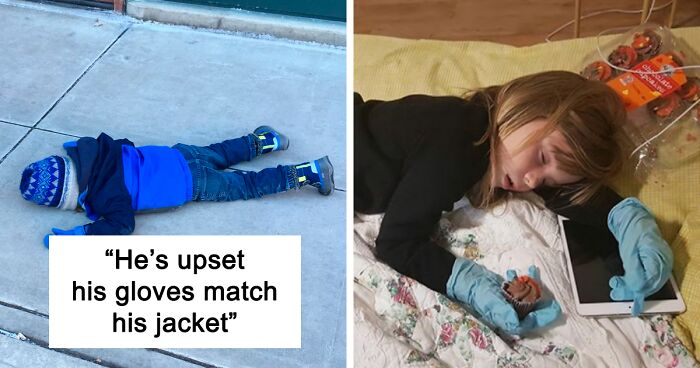
Children do not merely think outside the box. They turn the box into a submarine, appoint a stuffed giraffe as captain, and become deeply offended when the submarine cannot have pancakes.
Welcome to the marvelous world of kid logic, where a four-year-old can produce an argument that is completely incorrect, impressively confident, and somehow difficult to challenge without a flowchart. Adults have years of experience, abstract reasoning, and practical knowledge. Kids have imagination, half a conversation they overheard yesterday, and the absolute certainty that wearing shoes makes you run faster.
The following funny examples of kid logic are original, representative scenarios inspired by the delightfully literal, creative, and unpredictable ways young children often interpret everyday life.
Why Kid Logic Sounds Ridiculous but Is Actually Quite Clever
Young children are not miniature adults with fewer facts. Their thinking skills are still developing. During the preschool years, children gradually become better at following sequences, understanding time, solving problems, remembering instructions, and separating what they imagine from what other people know. Pretend play is also a normal cognitive milestone and an important way for children to practice language, planning, problem-solving, and social skills.
Research basis: developmental milestones and play guidance from the CDC, American Academy of Pediatrics, NAEYC, ZERO TO THREE, PBS Parents, and Stanford University.
Executive functionthe mental toolkit used to remember information, control impulses, shift attention, and organize actionsdevelops over many years. A child may therefore create a reasonable-sounding conclusion from one visible clue while overlooking six inconvenient details. That is not laziness. It is a brain practicing how to manage an increasingly complicated world.
Research basis: Harvard Center on the Developing Child and Penn State Extension.
Children may also use magical thinking, assume other people know what they know, interpret figures of speech literally, or connect two events simply because one happened after the other. Mix those habits with a powerful imagination, and you get the glorious reasoning collected below.
Research basis: HealthyChildren.org, Child Mind Institute, Children’s Hospital of Philadelphia, Cleveland Clinic, and Stanford’s Social Learning Lab.
When Children Take Adult Language Very Literally
-
1. The Lost Temper
After Dad says he “lost his temper,” his child begins searching under the couch. Everything important eventually ends up there, including crayons, coins, and apparently emotional stability.
-
2. The Honest Birthday Calculation
A five-year-old asks Grandma whether she was alive with the dinosaurs. Grandma says no, proving that even children occasionally abandon logic in favor of violence.
-
3. The Heavy Sleeper
Mom describes someone as a heavy sleeper. Her child concludes that the person should sleep downstairs because the upstairs floor might collapse.
-
4. The Broken Heart Emergency
A child hears that an aunt has a broken heart and immediately recommends the hospital, tape, and possibly a superhero bandage.
-
5. The Piece of Cake Problem
When a teacher says homework will be “a piece of cake,” one student spends the lesson wondering why nobody has handed out forks.
-
6. The Family Tree
A child asks where the family tree is planted and whether watering it will produce more cousins. Dad quietly considers reducing the watering schedule.
-
7. Sleeping Like a Baby
After hearing that Uncle Joe slept like a baby, a preschooler asks whether he woke up screaming every two hours and demanded milk.
-
8. Keep an Eye on the Cookies
Mom asks her child to keep an eye on the cookies. The child leans over the tray with one eye closed, successfully supervising dessert but not preventing theft.
-
9. Growing Out of Clothes
A child assumes that growing out of a shirt means becoming so large that the shirt explodes dramatically. Getting dressed suddenly feels like an action movie.
-
10. The End of the Road
After Dad says they have reached the end of the road, his passenger expects the pavement to stop at a giant cliff like an unfinished video game.
Kid Logic About Science, Nature, and the Human Body
-
11. Clouds Need Charging
Because phones stop working when their batteries run out, a child assumes rain happens when clouds become fully charged and must empty themselves.
-
12. The Moon Is Following Us
The moon appears beside the car for the entire drive, so it has obviously chosen this family. Perhaps it enjoys road trips and drive-through fries.
-
13. Fish Are Never Thirsty
Fish live in water, meaning they can drink whenever they want. This makes them the most prepared animals on Earth, according to one junior marine biologist.
-
14. Tall People Ate More Vegetables
Adults say vegetables help children grow. Therefore, the tallest person in town must have eaten an absolutely horrifying quantity of broccoli.
-
15. Haircuts Make People Younger
Hair grows as time passes. Removing some hair must reverse time. A short haircut should make Grandpa at least seven years younger by dinner.
-
16. Bandages Cure Everything
Bandages fix scraped knees, so they should also repair stomachaches, hurt feelings, broken toys, and Wi-Fi that has stopped cooperating.
-
17. Trees Create Wind
Whenever the wind blows, tree branches move. Clearly, trees are giant outdoor fans operated by squirrels or municipal employees.
-
18. The Sun Goes to Bed
The sun disappears every evening because it is tired. The moon works the night shift, although its employee benefits remain unclear.
-
19. Swallowed Seeds Grow in Stomachs
Plants grow from seeds, and stomachs receive food. Swallowing a watermelon seed therefore places everyone one unfortunate hiccup away from becoming a greenhouse.
-
20. Adults Know Everything
Teachers know many answers, and parents make many rules. Therefore, adults must know everything. This theory usually collapses when the printer stops working.
Funny Kid Reasoning About Time, Numbers, and Fairness
-
21. Tomorrow Never Arrives
Every time tomorrow arrives, adults call it today. A suspicious child concludes that “tomorrow” is a scam invented to delay trips to the playground.
-
22. Five Minutes Is Flexible
Five minutes of toothbrushing is unbearably long. Five minutes before bedtime is too short to begin a 900-piece building project. Both statements are legally binding.
-
23. Cutting Creates More Food
A sandwich cut into four pieces contains more food than one cut into two. Parents should remember this powerful economic strategy during periods of inflation.
-
24. The Bigger Number Wins
One child has three large cookies while another has four tiny cookies. Four is bigger than three, so justice has been served despite all visible evidence.
-
25. Being Six Takes Forever
A child who turned six yesterday announces that being six has lasted “for years.” Adults over 35 find this assessment unnecessarily provocative.
-
26. Older Means Taller
An older sibling must always be taller. Discovering a short adult causes the same intellectual crisis as discovering that teachers have first names.
-
27. Bedtime Is Not Fair
Adults stay awake after children go to bed, which is unfair. The fact that adults use this time to wash dishes and pay bills is rejected as propaganda.
-
28. Half a Cookie Is Still One Cookie
Breaking a cookie does not change its identity. Two halves are therefore two cookies, and eating both should count as responsible cleanup.
-
29. Counting Faster Changes the Deadline
When a parent says, “I’m counting to three,” a child believes shouting “three” first should end the process and transfer all legal authority.
-
30. Birthdays Cause Growth
Children become older on birthdays. Therefore, refusing a birthday party might prevent aging, while having two parties could unlock advanced height.
Kid Logic About Parents, Rules, and Other People
-
31. Parents Do Not Have Childhoods
Mom could not possibly have been a child because she was already Mom when her child arrived. Any old photograph showing otherwise is probably special effects.
-
32. Teachers Live at School
A teacher discovered in a grocery store produces genuine alarm. Why has she escaped? Who is watching the classroom? Does the principal know?
-
33. Marriage Creates Adults
A child assumes people become adults when they get married. Single adults must simply be unusually tall children with jobs and suspiciously good snacks.
-
34. Whispering Makes Secrets Invisible
Talking quietly prevents adults from hearing a secret, even when the whisper occurs six inches from an adult’s face and concerns stealing dessert.
-
35. Closed Eyes Create Invisibility
During hide-and-seek, a toddler covers both eyes. Since the toddler cannot see anyone, nobody can see the toddler. Physics has been defeated.
-
36. Apologies Cancel Consequences
Saying “sorry” immediately after drawing on the wall should return the wall to its original condition. The apology was sincere; the marker is permanent.
-
37. Rules Expire in Different Rooms
Mom said not to jump on the couch. She said nothing about the bed, chair, ottoman, or laundry basket. A future attorney has entered the chat.
-
38. Costumes Change Identity
Putting on a firefighter helmet makes a child a firefighter. Adults who continue using the child’s regular name are failing to respect the chain of command.
-
39. Grandparents Are Extra Parents
Grandparents have all the powers of parents but fewer rules and more cookies. This is not kid logic. This is a reasonably accurate organizational chart.
-
40. A Quiet Child Is Innocent
If nobody heard the crash, no rule was broken. Noise, not destruction, is apparently the central element required to establish guilt.
When Imagination Becomes a Complete Legal System
-
41. Stuffed Animals Have Feelings
A stuffed bear cannot be left face-down because it might become sad. It also requires a blanket, a bedtime story, and most of the adult’s pillow.
-
42. Monsters Respect Blankets
A blanket covering the head creates an impenetrable security system. Monsters may be terrifying, but they apparently respect cotton-based property boundaries.
-
43. Invisible Friends Need Real Snacks
An imaginary friend cannot be expected to attend a tea party without refreshments. The crackers may be real, but conveniently, the child handles all leftovers.
-
44. Cardboard Boxes Are Better Than Toys
The expensive toy inside the box has one purpose. The box is a castle, rocket, race car, restaurant, cave, and emergency home for dinosaurs.
-
45. Pajamas Control Dreams
Dinosaur pajamas produce dinosaur dreams. Rocket pajamas create space dreams. Plain pajamas are avoided because nobody knows what kind of chaos they might generate.
-
46. Toys Behave When Adults Enter
Toys move while people are away but immediately freeze when adults return. Several animated movies support this claim, making parental objections scientifically irrelevant.
-
47. Medicine Works Better With Negotiation
Medicine tastes bad, but consuming it with chocolate milk should make the treatment stronger. Medical professionals are encouraged to review this delicious breakthrough.
-
48. Cost Determines Deliciousness
A restaurant meal must taste better because it costs money. Food cooked at home is free, according to children who have never opened a utility bill.
-
49. Pets Understand Complete Sentences
The dog understands every word but chooses not to respond. This conclusion may be more accurate than many adults are prepared to admit.
-
50. Kisses Repair Injuries
A parent’s kiss can fix a bumped elbow. It follows that enough kisses should repair broken furniture, dead batteries, and possibly the national economy.
What Kid Logic Reveals About Children’s Developing Minds
These funny things kids say are entertaining because children build conclusions from whatever information is available to them. Their database is small, but their confidence is enterprise-level.
A preschooler who thinks trees create wind has correctly observed that moving branches and wind appear together. The mistake is not a failure to think. It is a cause-and-effect hypothesis awaiting more evidence. Similarly, a child who believes teachers live at school is using a limited but consistent set of observations: the teacher is at school every time the child is there.
Instead of immediately replying, “That makes no sense,” adults can ask, “What made you think that?” The answer often reveals a surprisingly coherent chain of reasoning. Asking follow-up questions encourages children to explain, compare, predict, and revise their ideas without making them feel embarrassed for being curious.
Adults can provide a simple correction while preserving the fun. For example: “It looks as though the moon follows our car because it is very far away. Nearby objects seem to move past us faster.” A child gets useful information without receiving a 45-minute astronomy lecture beside the highway.
Pretend play should not automatically be treated as confusion. Children commonly assign personalities to toys, transform ordinary objects, invent characters, and create imaginary situations. These activities can support creativity, communication, perspective-taking, and problem-solving.
Research basis: AAP, NAEYC, Child Mind Institute, ZERO TO THREE, PBS Parents, Cleveland Clinic, and Children’s Hospital of Philadelphia.
Experiences From the Wonderful World of Kid Logic
Living with kid logic often feels like sharing a home with a tiny philosopher who has never read a philosophy book but is prepared to challenge every assumption you possess. A routine request such as “Please put on your shoes” can become a courtroom debate. The child may explain that shoes are unnecessary because the car has a floor, socks already cover the feet, and nobody specifically confirmed that the destination requires walking. The reasoning is incomplete, but it is delivered with the confidence of someone presenting evidence to the Supreme Court.
Parents frequently discover that explanations create new mysteries instead of closing old ones. Tell a child that thunder comes from rapidly expanding air, and the next question may be, “Who put the air there?” Explain that Earth travels around the sun, and the child may want to know why everyone is allowed to stand up while the planet drives so fast. Every answer opens three additional doors, two windows, and a trapdoor leading directly to dinosaurs.
Teachers experience another version of this phenomenon. One student may insist that seven is older than six because it comes later. Another may conclude that the classroom plant is a student because it stays in the room, drinks water, and never completes homework. Correcting these ideas matters, but the most memorable moments come from first asking children to explain their thinking. Their responses often show observation, categorization, and pattern recognition working togethereven when the final conclusion lands somewhere near Mars.
Kid logic can also expose adult inconsistency. Adults tell children not to talk to strangers, then cheerfully ask them to say hello to a cashier they have never met. Adults forbid playing with food but arrange vegetables into smiling faces. They say bedtime is important, then remain awake watching television. From a child’s viewpoint, grown-up society is full of suspicious exceptions, invisible rules, and phrases nobody bothers to interpret literally.
Some of the sweetest experiences arrive when imagination and empathy overlap. A child may cover a toy truck with a blanket because it “worked hard.” A stuffed rabbit may receive medicine when its owner is sick. A cookie may be divided into uneven pieces because the imaginary friend “isn’t very hungry today.” These actions can look silly from the outside, but they allow children to rehearse care, responsibility, negotiation, and emotional understanding in a world they control.
The best response is often a mixture of curiosity, honesty, and humor. Adults do not need to agree that the moon is following the family car, but they can admire the observation before explaining the science. They do not need to serve dinner to an invisible dragon, but setting down one empty plate may turn an ordinary meal into a treasured memory. Kid logic does not last forever. Eventually, children learn the conventional explanations, understand the hidden rules, and stop asking whether bald people use shampoo. Until then, their strange conclusions offer adults something valuable: a chance to see familiar life as mysterious again.
Conclusion: Kid Logic Is a Feature, Not a Bug
Funny kid logic may sound like nonsense to adults, but it usually reflects imagination, literal interpretation, careful observation, or a developing ability to connect causes and consequences. Children are constructing explanations with the limited evidence they have, and the results can be hilarious, touching, and occasionally more sensible than the rules adults invented.
The next time a child announces that the moon is following the car or that two cookie halves count as two cookies, pause before correcting the conclusion. Ask how the idea works. You may hear a wonderfully creative explanationand you may never look at cookies, clouds, teachers, or cardboard boxes quite the same way again.