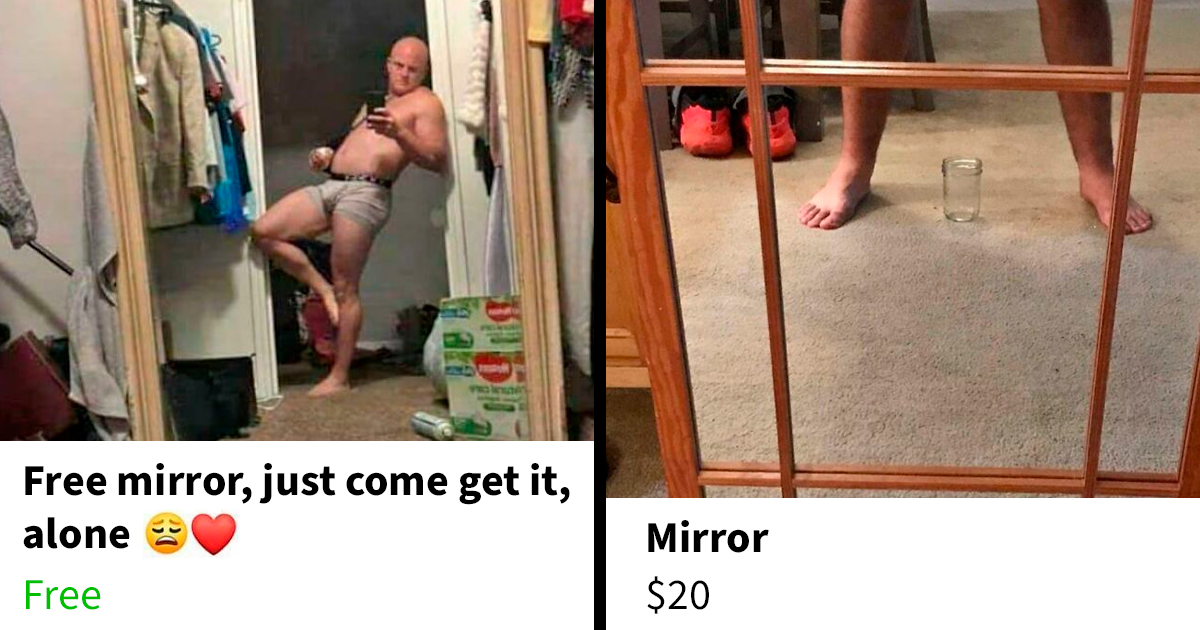
Selling a mirror online sounds easy. You take a picture, write “mirror, good condition,” pick a price that says “I know what I have,” and wait for someone with a blank wall and a dream. Simple, right? Not exactly. The moment a seller lifts a phone in front of a mirror, that shiny rectangle turns into a full-time investigative journalist. It captures everything: laundry piles, confused pets, suspiciously dramatic poses, chaotic rooms, mystery feet, and sometimes the seller themselves looking like they were caught in a wildlife documentary called Human Attempting Commerce.
That is why mirror listings, chrome kettle photos, glass table ads, shiny toaster pictures, and polished car part posts have become a special corner of online marketplace comedy. The item may be for sale, but the reflection is often the main event. In many cases, the mirror does not merely show the product. It exposes the entire behind-the-scenes production: the photographer crouching like a raccoon, the dog judging the transaction, the roommate wandering through in pajamas, or a background so messy it deserves its own listing.
This article explores the funniest types of reflective-item selling fails, why they happen, what sellers can learn from them, and why buyers secretly love them. Because sometimes the best product photo is not the one that sells the mirror. It is the one that accidentally sells the story.
Why Mirror Listings Become Accidentally Funny
Online selling platforms encourage clear photos, plain backgrounds, natural lighting, honest descriptions, and multiple angles. That advice is excellent, but reflective objects laugh in the face of good intentions. Mirrors, glass cabinets, stainless steel appliances, glossy shoes, polished jewelry, and metallic home decor all have one annoying superpower: they show what is around them.
A normal chair listing shows a chair. A mirror listing shows the mirror, the ceiling fan, the seller’s socks, the cat, three cereal boxes, and possibly the emotional state of the household. Reflective surfaces turn product photography into a group project, and not everyone in the room has agreed to participate.
The humor usually comes from contrast. The seller thinks they are presenting a classy home item. The reflection says, “Here is a man balancing on one foot behind a laundry basket.” That disconnect is what makes these online marketplace photos so memorable. They are part shopping, part accidental comedy, and part tiny documentary about real life refusing to be cropped out.
50 Hilarious Reflection Fails That Practically Sold the Item
Below are 50 common types of mirror and reflective-item listing moments that buyers have laughed at, shared, and remembered long after forgetting the actual price.
1. The Phone-In-Front-Of-Face Classic
The seller stands directly in the mirror, phone covering their face like a modern mask. The mirror is visible, technically. But the true product is “person trying very hard not to be seen while standing in the most visible place possible.”
2. The Accidental Outfit Reveal
Nothing says “vintage wall mirror” like a seller in pajama pants, business socks, and a hoodie from 2009. Buyers came for home decor and stayed for the fashion plot twist.
3. The Pet Cameo
A dog in the reflection staring directly into the camera can increase emotional value by at least 300%. The listing says “mirror, $35.” The reflection says “includes judgmental golden retriever energy.”
4. The Cat That Became The Main Character
Cats love appearing where they were not invited. A sleek black cat stretching in the mirror’s reflection can make the actual item feel like a portal to a tiny dramatic kingdom.
5. The Laundry Mountain Backdrop
A mirror photographed in front of a laundry pile tells buyers two things: the mirror works, and the seller has a very honest relationship with chores.
6. The Mysterious Bare Feet
Some listings feature no face, no body, only feet at the bottom of the mirror. It creates suspense. Is this a furniture ad or the opening scene of a low-budget detective movie?
7. The Seller Doing The Squat Pose
To avoid appearing in the shot, the seller crouches low, but the mirror catches them anyway. Now the listing includes a free tutorial in emergency yoga.
8. The “I Cropped Myself Out” Fail
The photo is cropped so tightly that half the mirror is missing, yet the seller’s elbow remains. The result is less “clean product image” and more “evidence folder.”
9. The Bathroom Chaos Reflection
Bathroom mirrors are dangerous territory. Toothbrushes, towels, hair products, and one mysterious bottle from 2016 all compete for attention.
10. The Roommate Walk-Through
A seller snaps the photo at the exact moment someone strolls by in the background. The reflection captures a guest star who did not approve this listing.
11. The Shiny Toaster Selfie
Polished appliances are tiny funhouse mirrors. A toaster can turn a normal person into a stretched silver goblin, which is not always a bad sales angle.
12. The Chrome Kettle Cinematic Universe
Shiny kettles reflect the whole kitchen in curved detail. Suddenly the kettle is not the item; it is a panoramic tour of breakfast decisions.
13. The Glass Table Illusion
A glass coffee table reflects ceiling lights, shoes, pets, and sometimes the seller’s entire living room. Buyers must solve a visual puzzle before finding the table.
14. The “Is That A Ghost?” Reflection
A blurry figure in the corner of the mirror can make a basic listing look paranormal. “Used mirror, minor scratches, possible haunted cousin included.”
15. The Car Door Reflection
Selling a car door or polished vehicle part often reveals the photographer standing proudly in the driveway like they are launching a luxury cologne campaign.
16. The TV Screen Trap
Black TV screens are basically mirrors with power cords. A seller hoping to show “screen in good condition” often shows their entire living room and snack arrangement.
17. The Sunglasses Listing Self-Portrait
Reflective sunglasses can capture the seller, the room, and the exact angle of desperation used to photograph small accessories for resale.
18. The Silver Bowl Surprise
A decorative bowl seems harmless until it reflects the seller’s face in a stretched, shiny oval. Suddenly it looks less like home decor and more like a carnival mirror.
19. The Jewelry Reflection Problem
Rings, watches, and bracelets pick up everything around them. One tiny watch face can reveal a phone, ceiling light, and a seller leaning in like a jeweler raccoon.
20. The Mirror Leaning Against Chaos
Some sellers prop a mirror against a wall without checking what it reflects. The result: a beautiful frame surrounding a dramatic exhibit called “Garage, Unfiltered.”
21. The Accidental Flex
Sometimes the seller is clearly trying not to pose. Other times, the reflection shows a suspiciously strong bicep angle. The mirror may be for sale, but confidence is free.
22. The Tiny Child Cameo
A child appearing in the corner of a reflection can add instant chaos. They often look directly at the camera, as if they know the internet will appreciate their timing.
23. The Background Item Everyone Wants Instead
The mirror is listed, but buyers ask about the lamp, the chair, the rug, or the weird duck statue in the reflection. The real sale was hiding behind the sale.
24. The “Clean Room Except One Thing” Fail
The seller stages the room beautifully, but the reflection catches one abandoned sock. That sock becomes the emotional center of the photo.
25. The Ceiling Fan Drama
Mirrors often reflect ceiling fans at strange angles, creating the illusion of spinning blades emerging from the seller’s head. Interior design meets superhero origin story.
26. The Flash Explosion
Flash photography and mirrors are natural enemies. One bright white burst can make the photo look like the mirror is opening a portal to another dimension.
27. The Ring Light Halo
Ring lights create a glowing circle in reflective surfaces. It may be great for beauty videos, but in a mirror listing it can look like the item has achieved enlightenment.
28. The “Professional” Photo With Amateur Reflection
A seller may use perfect lighting and a clean wall, only for the reflection to reveal cardboard boxes, tools, and a person standing on a chair.
29. The Mirror Too Tall To Photograph
Full-length mirrors force sellers to step back. The farther they step back, the more life enters the frame: doors, pets, laundry, snacks, and personal regrets.
30. The Closet Door Confession
Mirror closet doors reflect the entire bedroom. A simple listing becomes a room tour nobody booked but everyone attends.
31. The Shiny Coffee Maker Portrait
Coffee machines with glossy surfaces can capture a seller before caffeine. That is brave, vulnerable, and arguably more honest than most product descriptions.
32. The Glass Cabinet Double Reflection
Glass cabinets reflect the room and reveal what is inside. Buyers get two layers of visual confusion for the price of one.
33. The Outdoor Mirror With Neighborhood Bonus
An outdoor mirror photo may reflect cars, mailboxes, neighbors, or a person walking by. Congratulations, the listing now has a supporting cast.
34. The Dog Looking Guilty
A guilty-looking dog in the reflection can raise questions. Did it break the mirror? Did it list the mirror? Why does it know something?
35. The “Ignore The Mess” Caption
Any listing that says “ignore the mess” guarantees buyers will inspect the mess like forensic scientists.
36. The Seller’s Face Of Concentration
Reflective photos often catch the intense focus of someone trying to avoid reflection. That expression alone deserves a museum wall.
37. The Kitchen Sink Reveal
Selling a shiny pan? Check the reflection. It may reveal the sink situation, and the sink may have opinions.
38. The Decorative Tray With A Surprise
Mirrored trays look elegant until they reflect the ceiling, the phone, and the seller’s chin from an angle no chin has requested.
39. The Accidental Luxury Illusion
Sometimes a messy reflection makes a fancy item look less fancy. Other times, a clean reflection makes a cheap mirror look like it belongs in a boutique hotel.
40. The Dramatic Shadow
When the seller avoids reflection but leaves a huge shadow, the photo gains mystery. The mirror is haunted by someone trying to sell it.
41. The Full Family Background
A reflective surface can catch multiple people doing unrelated things. It is no longer a product listing. It is a sitcom still.
42. The Garage Sale Within The Listing
A mirror in a garage may reflect ten other items. Buyers might ask, “Is the bike for sale?” and forget the mirror entirely.
43. The Overly Honest Condition Reveal
A mirror photo can reveal scratches, smudges, and dust more clearly than intended. Funny, yes. Useful, also yes.
44. The Accidental Art Shot
Occasionally, a reflection fail becomes beautiful: a sunset, a plant, or a cozy room composition. The seller may have created art by accident.
45. The Confusing Perspective
Reflective listings can make rooms look like they have extra doors, floating lamps, or impossible architecture. Buyers need a map.
46. The Seller Hiding Behind Furniture
Some sellers attempt stealth by hiding behind a chair or plant. The mirror notices. The mirror always notices.
47. The “No Lowballers” Energy
A stern caption paired with a chaotic reflection is comedy gold. “Serious buyers only” hits differently when the seller’s dog is licking a window in the background.
48. The Holiday Decoration Time Capsule
A mirror listed in March may reflect Christmas lights still hanging. No judgment. The mirror simply reports the truth.
49. The Mirror That Shows Too Much House
Sometimes the item photo reveals personal details sellers probably did not intend to share. Funny online, but also a reminder to check backgrounds before posting.
50. The Reflection That Actually Sold It
Best of all is the listing where the reflection makes the item more interesting: a cozy room, a cute pet, a funny human moment, or a surprisingly stylish setup. The buyer may purchase the mirror because the reflection proves it belongs in real life.
Why Buyers Love These Accidental Marketplace Moments
Online shopping can feel cold and repetitive. One listing after another shows the same plain background, the same careful angle, and the same description: “good condition.” Reflection fails break the pattern. They remind people that behind every listing is a real person trying to sell a real object from a real home, usually while a pet interrupts and a pile of laundry waits off-camera.
That human element can make a listing more memorable. A flawless product photo may look professional, but a funny reflection makes people stop scrolling. It creates curiosity. It makes buyers zoom in. It invites comments. It may even build trust when the humor feels harmless and the item is still shown clearly.
Of course, there is a difference between charming and careless. A funny pet reflection is one thing. Personal documents, addresses, children’s private information, license plates, or anything sensitive in the background is another. The best marketplace humor is the kind that makes people laugh without exposing something that should stay private.
What Sellers Can Learn From Mirror Photo Fails
If you are selling mirrors or reflective items, the goal is not to erase personality completely. The goal is to make the product clear while avoiding distractions that steal attention. Use a clean wall, a neutral backdrop, or an uncluttered room. Turn off harsh flash. Use soft natural light near a window. Step slightly to the side instead of standing directly in front of the mirror. Photograph from an angle, but not so much that the item looks distorted.
For shiny metal, glass, jewelry, appliances, and glossy screens, reflections are easier to control when the surrounding area is simple. White poster board, a plain sheet, foam board, or a light tent can help create cleaner reflections. For smaller items, surround the product with neutral surfaces so it reflects something intentional instead of your snack table. For larger mirrors, check the whole reflection before taking the shot. Then check it again before uploading, because mirrors are sneaky little tattletales.
Good listings usually include multiple images: a straight-on shot, close-ups of the frame or finish, photos of flaws, size references, and detail shots. Buyers appreciate honesty. A scratch shown clearly is not necessarily a deal breaker. A scratch hidden behind a suspicious blur might be.
Why Reflections Can Help A Listing Stand Out
Here is the funny twist: not every reflection is bad. A mirror reflecting a clean, cozy room can help buyers imagine the item in their own home. A glass table reflecting warm lighting can look elegant. A polished tray reflecting candles or greenery can feel styled rather than accidental. The difference is intention.
Reflections become a problem when they compete with the item or reveal things the seller did not mean to show. But when controlled, they can create depth, mood, and realism. That is why professional product photographers spend so much time managing light, angles, backdrops, and surrounding surfaces. They know the object is not the only thing being photographed. With reflective items, the environment is part of the image.
For everyday sellers, that means a little staging goes a long way. Move clutter. Remove personal information. Wipe fingerprints. Choose a background that supports the item. If a reflection appears, make sure it is one you would not mind a stranger seeing. Ideally, the buyer should think, “Nice mirror,” not “Why is there a raccoon costume in the hallway?”
Experience Section: What These Reflection Fails Teach Us About Selling Online
Anyone who has ever tried to sell something online learns one truth quickly: the camera is honest, but reflective surfaces are brutally honest. You may believe your room looks fine. Then you take one mirror photo and discover that the reflection has captured a half-open drawer, a leaning tower of shoes, a snack wrapper, and your own face wearing the expression of someone negotiating with gravity. It is humbling. It is also very human.
The experience of photographing reflective items teaches patience. A normal product can be placed on a table and photographed in seconds. A mirror requires planning. Where will it lean? What will it reflect? Is the lighting too harsh? Is the phone visible? Is the dog about to wander into frame carrying a sock like a trophy? You start by trying to sell a mirror, but you end up directing a tiny movie where every background object wants a speaking role.
It also teaches privacy awareness. Many sellers focus only on whether the item looks good, but reflective photos may show more than expected. A mirror can reveal mail on a counter. A shiny appliance can show a house number through a window. A glossy screen can reflect family photos, school papers, or personal belongings. Before posting, it is worth zooming in on every corner of the image. The internet has excellent eyesight and absolutely no chill.
Another lesson is that buyers appreciate clarity more than perfection. A listing does not need to look like a magazine shoot. It needs to answer basic questions: What is the item? What condition is it in? How large is it? Are there scratches, cracks, dents, stains, or missing pieces? Is pickup required? Will it fit in a car? A funny reflection might attract attention, but clear details close the sale. Humor gets the click; useful information gets the message.
There is also a storytelling lesson. The funniest reflection fails become memorable because they feel unscripted. A cat in the background, a seller crouching awkwardly, or a roommate accidentally walking past makes the listing feel alive. People enjoy these moments because they cut through the polished sameness of online shopping. They show the wonderfully imperfect reality of people trying to declutter their homes, earn a little money, and photograph a mirror without becoming the mirror’s unwilling model.
For sellers, the best approach is balance. Do not panic if a harmless reflection sneaks in. A cute pet or cozy room can add charm. But do remove anything distracting, private, messy, or confusing. Take several photos, review them carefully, and choose the ones where the item remains the star. If the reflection is fun and safe, it may even help your listing stand out. If it looks like the mirror is reporting live from a disaster zone, retake the photo.
In the end, mirror listings are funny because they reveal the gap between what we intend to show and what life actually looks like. We intend to show a stylish frame. Life shows a laundry basket, a curious dog, and a human doing a half-squat behind a ficus. That is not failure. That is online selling at its most relatable.
Conclusion
Mirror and reflective-item listings are comedy machines because they expose the hidden theater behind everyday selling. A seller may think they are uploading a simple product photo, but the reflection may turn it into a tiny masterpiece of accidental humor. From pets and pajama pants to flash explosions and mysterious background objects, these moments prove that reflections can steal the spotlight faster than any marketing trick.
Still, beneath the jokes is a useful lesson: great online listings need clear photos, honest details, clean backgrounds, and a quick privacy check. A reflection can be charming, but it should not distract from the item or reveal personal information. Sell the mirror, not your entire afternoon. Unless, of course, your dog appears in the reflection looking majestic. In that case, congratulationsyou may have just upgraded the listing.
Note: This article is written from synthesized public guidance on online marketplace listings, product photography, reflective-surface photography, and digital privacy best practices. It uses original wording, generalized examples, and no copied captions or source-code citation markers.