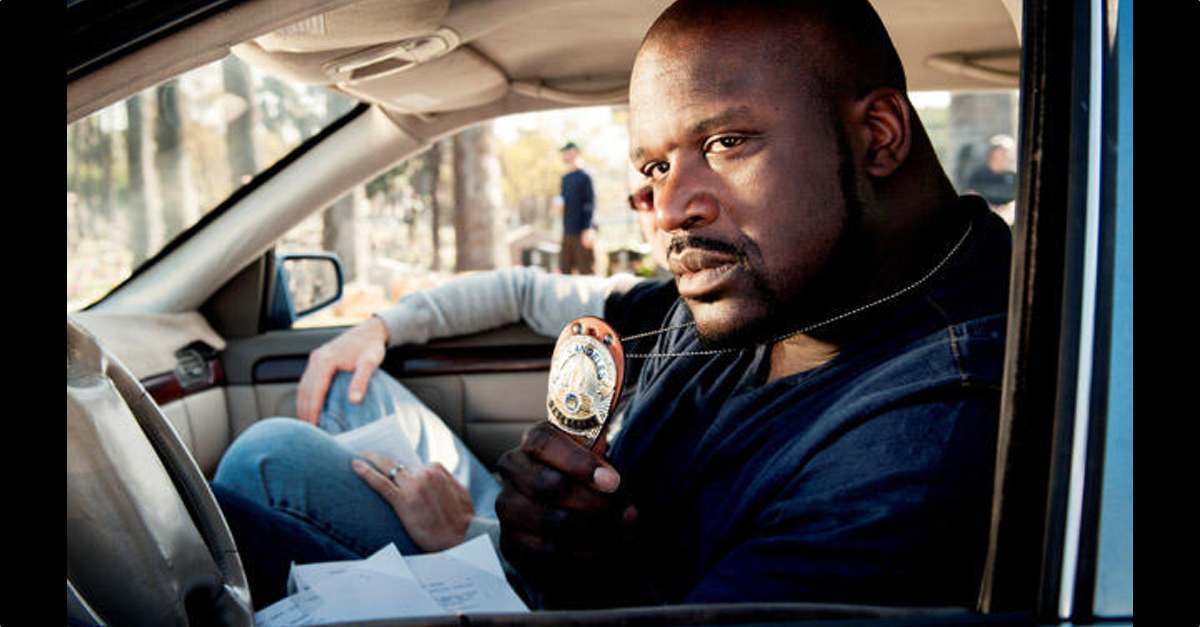
Celebrity culture is usually packaged like a glossy magazine cover: red carpets, designer outfits, mysterious skincare routines, and the kind of confidence that makes walking through an airport look like a perfume commercial. But every now and then, a famous person accidentally reveals the wonderful truth: they are just as capable of geeking out over a niche obsession as the rest of us.
That is what makes unexpected celebrity fanboys so entertaining. We expect actors to love scripts, musicians to love studios, and comedians to love applause. What we do not always expect is an action star who rolls dice in fantasy campaigns, a global pop icon who grew up loving starship adventures, or a Hollywood legend who gets genuinely emotional about the click-clack of a typewriter. Suddenly, fame feels less like a velvet rope and more like a group chat full of people defending their favorite fictional universe at 2 a.m.
Below are six celebrities whose surprising fandoms prove that passion does not need to match your public image. In fact, the contrast is half the fun.
1. Vin Diesel Is A Serious Dungeons & Dragons Devotee
Vin Diesel built much of his public image on muscle cars, gravelly one-liners, and the word “family” being spoken with the seriousness of a national anthem. So it still delights people to learn that one of his longest-running passions is Dungeons & Dragons.
Diesel has talked publicly about playing D&D since he was young, and his fandom is not the casual “I once bought dice at a mall” variety. He has been associated with the game for years, even writing the foreword for a major D&D anniversary book. Reports have also noted that he taught Judi Dench how to play while they were working on The Chronicles of Riddick. That detail alone deserves a tiny statue somewhere: Vin Diesel explaining fantasy role-play mechanics to Dame Judi Dench is the pop-culture crossover nobody could have predicted but everybody should cherish.
What makes this fandom so charming is how perfectly it fits once you think about it. Diesel has always leaned toward mythic characters: warriors, antiheroes, outsiders, guardians of chosen families. D&D is basically a storytelling gym for exactly that kind of imagination. Before visual effects teams build galaxies and fantasy kingdoms on screens, tabletop players build them with voices, paper, and suspiciously lucky dice.
For fans, Diesel’s D&D obsession is a reminder that “nerdy” and “tough” were never opposites. Sometimes the guy who looks like he could bench-press a motorcycle also wants to know whether his character can make a stealth check.
2. Henry Cavill Is Deep Into Warhammer And PC Gaming
Henry Cavill may look like he was generated by a committee tasked with designing “the final boss of handsome British actors,” but his hobbies are refreshingly specific. He is a well-known fan of Warhammer, PC gaming, fantasy worlds, and the kind of lore that requires maps, factions, and at least one pronunciation guide.
Cavill’s love of gaming became part of his public persona during interviews for The Witcher, where it was clear that he was not simply acting in a fantasy series; he understood why fans cared about the source material. He has spoken enthusiastically about PC games and famously shared his interest in Warhammer, a tabletop miniature wargame universe known for its dense world-building, grim sci-fi atmosphere, and armies of tiny painted figures that can quietly take over an entire room.
The unexpected part is not that Cavill likes fantasy. After all, he played Geralt of Rivia and Superman. The surprise is the intensity. This is not a celebrity saying “I love games” because a marketing team handed him a controller. This is someone who sounds genuinely ready to discuss builds, lore, factions, and the emotional importance of getting the details right.
That sincerity is why fans respond to him. In a world where entertainment franchises often feel manufactured, Cavill’s fandom seems handmade. He knows what it is like to care when an adaptation changes a detail. He knows the joy of being completely absorbed in a fictional universe. And yes, he knows the quiet satisfaction of a good gaming setup, which may be the modern equivalent of a royal throne.
3. Mila Kunis Was A World Of Warcraft Player
Mila Kunis is known for sharp comedy, movie-star charisma, and the kind of relaxed interview energy that makes her seem like the funniest person at a dinner party. What many casual fans may not expect is that she has also been linked to a serious World of Warcraft phase.
Kunis has discussed playing World of Warcraft in interviews, and the detail has followed her because it is so wonderfully specific. This was not just “I played a video game once.” She knew the world, the rhythm, and the social pull of the game. Anyone who has ever lost an evening to quests, guild chat, or one more dungeon run understands exactly how that happens. You do not “quickly check” World of Warcraft. That is how the game gets you. First you log in for twenty minutes, then suddenly birds are singing and your coffee is judging you.
The surprise comes from the gap between public image and private hobby. Hollywood often frames glamorous actresses as distant and polished, but gaming culture is messy, social, funny, competitive, and often deeply personal. Kunis talking about WoW made her feel less like an untouchable celebrity and more like someone who understood the strange magic of online worlds.
Her fandom also arrived before gaming became as universally mainstream as it is now. Today, famous people openly stream, cosplay, and talk about anime or gaming with less hesitation. Kunis was part of that earlier wave of celebrities who revealed, intentionally or not, that gaming was not a niche basement activity. It was already everywhere. Some people just had better lighting.
4. Rihanna Is A Lifelong Star Trek Fan
Rihanna is a fashion icon, beauty mogul, chart-dominating singer, and general supplier of cool. So when she revealed her long-standing love for Star Trek, it felt like the universe had quietly handed nerd culture a designer upgrade.
Rihanna has said that her father introduced her to Star Trek when she was young, and that the franchise stayed with her. Her connection became especially visible when she recorded “Sledgehammer” for Star Trek Beyond. The pairing made more sense once she explained that this was not some random soundtrack assignment. It connected to a childhood fandom and a world she already cared about.
That is the beauty of this surprise. Rihanna’s brand is often associated with confidence, style, and trend-setting, while Star Trek is associated with starships, philosophical debates, uniforms, alien diplomacy, and fans who can identify fictional planets faster than some people identify state capitals. But the overlap is real. Star Trek has always been about imagination, identity, exploration, and pushing beyond the expected. Those themes fit Rihanna’s career more than people might initially realize.
It is also a reminder that fandom does not have one look. A Star Trek fan can be a convention regular in a captain’s uniform, a kid watching reruns with a parent, or a global superstar releasing a space-themed power ballad. The fan base is wider, cooler, and more stylish than stereotypes allow.
5. Tom Hanks Is Passionate About Typewriters
Tom Hanks is one of America’s most beloved actors, which makes it oddly perfect that one of his famous obsessions is one of the most analog objects imaginable: the typewriter.
Hanks has collected typewriters for years, and his interest is not a decorative celebrity hobby arranged by an interior designer. He has spoken about the feel, sound, and personality of the machines. He even wrote a short story collection titled Uncommon Type, where typewriters appear as a recurring element. In recent years, pieces from his large collection have been displayed publicly, turning a private passion into a small museum-like celebration of mechanical writing.
At first, this fandom seems almost too wholesome to be real. While other stars collect sports cars or rare watches, Hanks collects machines that make a sentence sound like tap dancing on a desk. But that is exactly why it works. A typewriter is tactile, imperfect, and stubbornly physical. You press a key, a lever moves, ink strikes paper, and there it is: a thought made visible with a tiny mechanical thud.
In a digital world where words can be deleted, rewritten, copied, pasted, and accidentally lost to a browser crash, the typewriter offers commitment. It forces attention. It makes writing feel like craft. Hanks’ love for typewriters fits his screen persona: warm, thoughtful, nostalgic, but not trapped in the past. He does not make the typewriter seem dusty. He makes it seem alive, like a little machine with a job and a charmingly loud opinion.
6. Stephen Colbert Is A Tolkien Superfan
Stephen Colbert is famous for political comedy, quick wit, and interview timing sharp enough to slice through awkward silence. But one of his most beloved off-script identities is Tolkien superfan.
Colbert’s love of The Lord of the Rings and J.R.R. Tolkien’s world is legendary among fans. He has demonstrated deep knowledge of Middle-earth trivia, discussed Tolkien lore on television, appeared in connection with The Hobbit films, and built a reputation as one of America’s most visible celebrity Tolkien enthusiasts. This is not “I liked the movies.” This is “please do not challenge me unless you are emotionally prepared to hear about the deeper significance of Samwise Gamgee.”
The surprising part is how academic his fandom can feel. Colbert does not simply enjoy the fantasy aesthetics of swords, rings, and dramatic mountain travel. He understands the layered mythology, language, themes, and moral architecture behind Tolkien’s work. His fandom has the flavor of both a kid under a blanket reading adventure stories and a scholar who brought footnotes to a trivia fight.
That combination explains why people love watching him talk about Middle-earth. He makes intense fandom feel joyful instead of gatekeeping. He can be funny about it, but he is never embarrassed by it. In fact, his enthusiasm gives permission to everyone else who has ever cared “too much” about a fictional world. Sometimes caring too much is exactly the point.
Why Unexpected Celebrity Fandoms Are So Fun
The reason these stories travel so well is not just that they are surprising. It is that they puncture the polished myth of celebrity. Public figures are often managed, styled, edited, and presented as brands. Fandom is harder to fake because real enthusiasm has texture. It has details. It has favorite characters, old memories, niche opinions, and the slightly dangerous ability to turn a simple question into a fifteen-minute monologue.
Unexpected celebrity fanboys also challenge lazy stereotypes. Dungeons & Dragons is not just for one kind of person. Star Trek is not just for one generation. Typewriters are not just antiques. Gaming is not just a hobby for people outside the mainstream. Tolkien is not just “dragon stuff.” These fandoms stretch across age, gender, profession, and personality.
There is also something comforting about realizing that fame does not erase the need for private joy. A celebrity may have access to award shows, luxury travel, and rooms full of people saying yes, but a beloved hobby offers a different reward. It is personal. It is not always glamorous. It does not need applause. Whether it is painting miniatures, collecting old machines, or memorizing fantasy lore, the hobby becomes a place where the famous person is not performing celebrity. They are simply enjoying something.
Experience Section: What These Celebrity Fanboys Teach Us About Having A Weird Passion
If there is one practical lesson hiding inside these celebrity fandoms, it is this: the thing you love does not have to match the version of yourself other people expect. In fact, the “unexpected” part may be what makes it meaningful. Most people carry around at least one interest that surprises others. Maybe you are a serious athlete who loves historical documentaries. Maybe you are a quiet student who can dominate a karaoke room. Maybe you are the most organized person in your office and secretly own a drawer full of trading cards. Congratulations. You are living correctly.
One of the best experiences related to this topic is the moment when someone reveals a niche passion and the room changes. At first, there may be a pause. Then someone says, “Wait, you too?” Suddenly, two people who had nothing obvious in common are discussing a shared obsession with the intensity of diplomats negotiating peace. That is the social power of fandom. It builds little bridges where ordinary small talk would have built a parking lot.
Celebrity examples make that easier to understand because the contrast is so visible. Vin Diesel and Dungeons & Dragons sounds funny until you realize storytelling, loyalty, imagination, and heroic identity are central to both his hobby and his screen career. Tom Hanks and typewriters sounds quaint until you think about how perfectly it matches his warmth, patience, and love of human-scale stories. Rihanna and Star Trek sounds unexpected until you remember that great pop stars and great sci-fi franchises both ask audiences to imagine a bigger future.
For everyday fans, the takeaway is simple: do not sand down your interests to look more impressive. The hobby that seems “too nerdy,” “too old-fashioned,” or “too random” may be the most memorable thing about you. People rarely connect deeply over generic perfection. They connect over specifics. A favorite game. A favorite fictional world. A favorite object that makes no sense to anyone else until you explain why it matters.
There is also a creative advantage to having unexpected passions. Hobbies feed imagination. A writer who plays role-playing games may become better at building characters. A musician who loves science fiction may think more visually. A comedian who studies Tolkien may sharpen their sense of language, myth, and moral irony. Even hobbies that look unrelated to work can quietly shape taste, discipline, and originality.
So the next time somebody acts surprised by your oddly specific obsession, take it as a compliment. Unexpected fandom means you have layers. It means your personality has bonus content. And as these six celebrities prove, being genuinely excited about something is far more interesting than pretending to be cool all the time.
Conclusion
Unexpected celebrity fandoms are more than trivia. They are tiny windows into the private enthusiasm behind public fame. Vin Diesel’s Dungeons & Dragons devotion, Henry Cavill’s Warhammer passion, Mila Kunis’ World of Warcraft history, Rihanna’s Star Trek love, Tom Hanks’ typewriter collection, and Stephen Colbert’s Tolkien expertise all show the same thing: people are more interesting when they let their weird little joys breathe.
That is why these stories stick. They make famous people feel human, and they make fans feel seen. Whether your own passion involves dice, starships, keyboards, fantasy maps, gaming raids, or a beautifully stubborn old machine, there is no need to apologize for loving it. The world has enough polished personal brands. It could use more people proudly saying, “Actually, I have a whole theory about this.”
Note: This article is based on publicly reported interviews and entertainment coverage from reputable outlets including Wired, GQ, TIME, Entertainment Weekly, Billboard, ABC News, People, Vogue, and The Guardian.