Note: This article is written as an original SEO feature based on publicly available information about Lauren Wodnicki of Lauren Loves Cake, modern buttercream cake art, embroidery-style piping, macramé-inspired desserts, and current decorated cake trends.
Some cakes politely sit on a dessert table and wait to be sliced. Others march in wearing a full couture gown made of buttercream, embroidery illusions, tiny flowers, and enough texture to make a grandmother’s sewing basket jealous. The decorated cakes created by Lauren Wodnicki, the artist behind Lauren Loves Cake, belong firmly in the second category.
Her cakes look less like ordinary desserts and more like edible tapestries. At first glance, you may think you are looking at hand-embroidered pillows, woven wall hangings, shag rugs, macramé art, or a very stylish blanket that somehow wandered into a bakery. Then your brain catches up and realizes the “threads” are buttercream. Yes, buttercream. The same dreamy frosting usually responsible for birthday balloons and cupcake swirls has apparently been promoted to textile artist.
The viral appeal of these 60 decorated cakes is easy to understand: they combine comfort, craft, nostalgia, and visual surprise. They are sweet, colorful, detailed, and slightly impossible-looking. They also arrive at the perfect cultural moment, when people are craving handmade objects, personalized celebrations, and desserts that do more than taste good. These cakes tell a story before anyone even picks up a fork.
Who Is the Food Artist Behind These Embroidered Cakes?
Lauren Wodnicki is a self-taught cake artist and home baker from Southington, Connecticut. Through Lauren Loves Cake, she creates scratch-made custom cakes decorated almost entirely with buttercream frosting. Her work ranges from classic and elegant to wildly ornate, but the designs that have captured the internet’s attention are her fiber-art-inspired cakes: pieces that look like embroidery, weaving, macramé, beading, crochet, and plush textiles.
What makes her story especially charming is that she did not begin as a professional pastry-school graduate with a rolling pin in one hand and a business plan in the other. Her journey started with flavor. For years, she focused on making cakes that tasted good, using recipes inspired by her family. Decorating became a serious interest after she made her own wedding cake. That first tiered cake opened the door to a creative obsession with color, texture, and edible design.
In other words, the artist did not wake up one morning and say, “Today I shall make frosting look like a rug.” The style developed through experimentation, practice, and a genuine love of fiber arts. Real weavings, macramé pieces, botanical details, and color palettes all appear to influence her work. The result is a recognizable visual language: cozy, intricate, joyful, and unmistakably handmade.
Why These Cakes Look Like Embroidery
The magic comes from texture. Traditional decorated cakes often depend on smooth fondant, sculpted sugar flowers, airbrushed color, or clean buttercream finishes. Wodnicki’s embroidered cakes do almost the opposite. They celebrate raised lines, dots, knots, ridges, loops, tassels, and dimensional patterns.
Instead of hiding the hand of the maker, these cakes highlight it. Every piped line resembles a stitch. Every small dot resembles a bead. Every repeated strand of buttercream feels like thread pulled through fabric. When grouped together, those marks create the illusion of woven surfaces and hand-embroidered detail.
The Buttercream “Thread” Effect
Buttercream is the star material because it can hold shape while still looking soft. With the right consistency, a piping bag, and the correct tips, buttercream can become a line, pearl, petal, fringe, rosette, braid, or loop. It is also easier to enjoy than fondant for many cake lovers because it tastes creamy and rich instead of chewy or overly sweet in a candy-like way.
In these embroidered cake designs, buttercream behaves almost like yarn. Thin piped strokes create the look of stitching. Round tips can form bead-like accents. Star tips add depth and decorative borders. Petal tips can create ruffles and fabric-like folds. Layer enough of these techniques together and a simple cake turns into a buttercream textile museumexcept, thankfully, the museum is edible.
Macramé, Weaving, and Shag Rug Inspiration
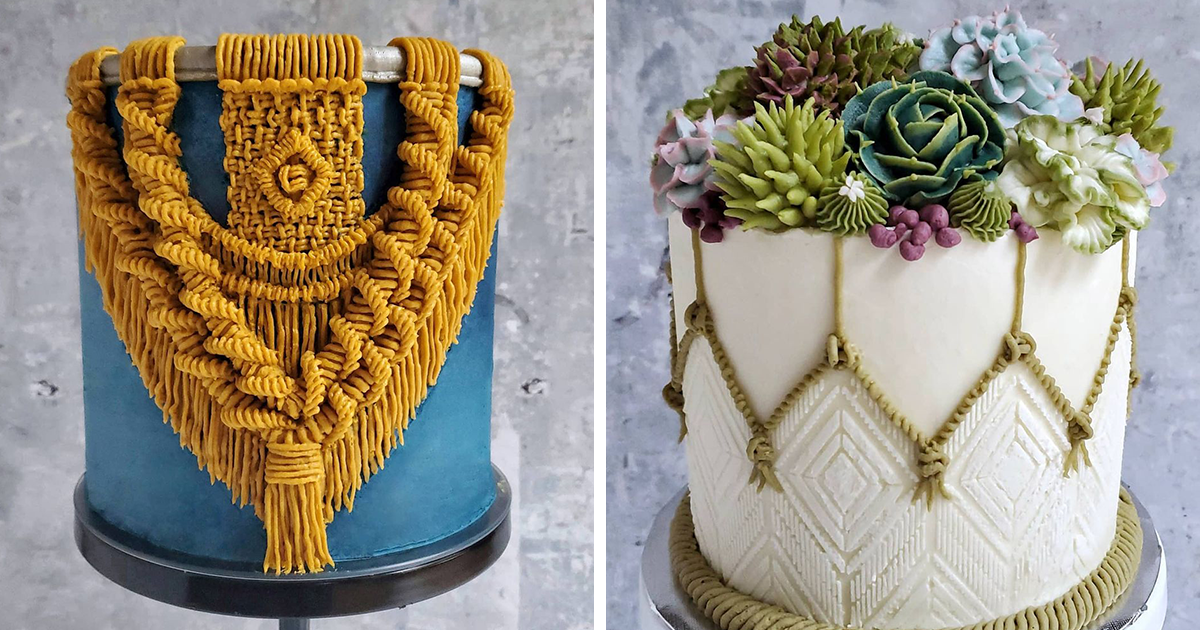
One of the most distinctive parts of Lauren Loves Cake’s work is the way it moves beyond flat floral embroidery. Some cakes look like macramé wall hangings with knotted patterns and dangling shapes. Others mimic woven tapestries with geometric repeats and earthy tones. Some appear plush, like shag rugs or thickly tufted pillows. The visual joke is delightful: the cake looks cozy enough to nap on, but your fork knows better.
This textile-inspired approach gives the cakes warmth. They feel connected to craft traditions that many people associate with home, family, and memory. Embroidery, crochet, weaving, and quilting are slow arts. They require patience. When those visual cues appear on a cake, they make dessert feel personal and sentimental, not just decorative.
Why the Internet Fell in Love With These 60 Decorated Cakes
There are many beautifully decorated cakes online, but these stand out because they trigger a double take. The viewer first sees fabric, then realizes it is frosting. That little moment of surprise is internet gold. It is the same reason people love hyperrealistic cakes that look like shoes, handbags, fruit, or household objects. Our brains enjoy being fooled, especially when the trick ends with dessert.
But these cakes offer more than optical illusion. They are also aesthetically satisfying. The colors are often warm, layered, and carefully balanced. A cake may pair terracotta, coral, cream, mustard, sage, blush, or turquoise in a way that feels more like interior design than bakery décor. The patterns feel intentional rather than random. Even when the surface is busy, the overall composition usually feels harmonious.
They Feel Handmade in a Digital World
Part of the appeal is cultural. In an age of glossy screens, fast content, and mass-produced everything, handmade-looking objects feel refreshing. People respond to visible labor. A cake covered in hundreds or thousands of tiny piped details says, “Someone spent real time on this.” That sense of care makes the dessert feel special before it is even served.
It is also easy to imagine these cakes at modern weddings, baby showers, birthdays, bridal luncheons, gallery-style parties, or intimate celebrations where the dessert table doubles as décor. They suit the rise of cottagecore, vintage-inspired weddings, boho interiors, and maximalist color stories. In short, they are cakes for people who own at least one woven wall hanging and have strong opinions about throw pillows.
The Technique: How Embroidery-Style Buttercream Cakes Are Made
Creating embroidery-style cake art is not just a matter of squeezing frosting randomly and hoping the result looks expensive. The process takes planning, structure, and a steady hand. The cake must be baked, cooled, layered, filled, crumb-coated, chilled, and frosted before the decorative work begins. A smooth base matters because it becomes the canvas for all that piped detail.
Once the cake is ready, the artist plans the design. Some decorators sketch directly onto chilled buttercream with light marks. Others work from inspiration boards, textiles, floral patterns, or color studies. The buttercream must be mixed to the right consistency: firm enough to hold lines and texture, soft enough to move cleanly through a piping tip.
Common Tools Behind the Look
While the final cakes look wildly complex, many embroidery-inspired designs rely on familiar cake decorating tools: piping bags, small round tips, star tips, petal tips, couplers, spatulas, turntables, gel food colors, and plenty of patience. The artistry comes from how those basic tools are used.
A small round tip can make stitch-like lines, tiny dots, bead borders, and delicate outlines. A star tip can create woven-looking ridges, textured borders, or floral centers. A petal tip can make ruffles that resemble fabric trim. Repetition is key. One line is frosting. Fifty careful lines become “thread.” Hundreds become a cake that looks like it escaped from a craft fair.
Color Is Half the Spell
Color is one reason these cakes feel so memorable. Embroidery-inspired cakes can look flat if the palette is too harsh or too chaotic. Wodnicki’s work often uses layered, thoughtful combinations that make the cakes feel stylish rather than merely busy. Warm neutrals can make the texture look soft and natural. Jewel tones can make the cake feel festive and bold. Pastels can turn the entire design into something romantic and springlike.
The best palettes borrow from textiles, gardens, vintage rugs, Southwestern motifs, folk embroidery, or modern home décor. That is why these cakes do not look like typical bakery catalog designs. They feel curated.
Why Buttercream Art Is Having a Moment
Buttercream has always been beloved for flavor, but it is enjoying a major design comeback as well. For years, fondant dominated highly sculptural cake decorating because it could create smooth surfaces, sharp shapes, and dramatic structures. But many clients and home bakers prefer the taste and softness of buttercream. Modern decorators have responded by proving that buttercream can be just as artistic.
Trends such as Lambeth cakes, vintage piping, shag cakes, floral buttercream cakes, and embroidery cakes all point toward the same larger movement: people want desserts that look handmade, abundant, nostalgic, and personal. Clean minimalism is still beautiful, of course, but ornate piping has returned with a wink. It says, “Yes, this cake has ruffles, pearls, flowers, and possibly the confidence of a Victorian parlor.”
Embroidery-style cakes fit neatly into this revival because they combine old-fashioned craft with modern color and social media appeal. They photograph beautifully from above, from the side, and in close-up. Every tiny detail rewards zooming in. That makes them perfect for platforms where visual texture can stop a scroll in half a second.
What Makes These Cakes Different From Regular Floral Cakes?
Floral buttercream cakes usually focus on petals, leaves, and garden-like arrangements. Embroidered cakes may include flowers, but the flowers are often interpreted through stitch-like marks. Instead of aiming for pure realism, they imitate the way a flower might appear on a pillow, table runner, wedding dress, or hand-stitched wall hanging.
That difference matters. A realistic rose says, “Look, I am a rose.” An embroidered buttercream rose says, “Look, I am a rose pretending to be thread pretending to be frosting pretending to be art.” It is a little ridiculous in the best possible way.
The Joy of Edible Illusion
These cakes belong to the world of trompe l’oeil dessert, where food imitates something else. But unlike hyperrealistic cakes that mimic everyday objects, embroidered cakes are less about shock and more about charm. They do not need someone to yell, “That handbag is cake!” They invite a slower kind of admiration. You notice the pattern, then the texture, then the colors, then the fact that the whole thing can be served with coffee.
Design Ideas Inspired by the 60 Decorated Cakes
For anyone planning a celebration, embroidered cake art opens up a huge range of design ideas. A wedding cake could echo lace from the bride’s gown or embroidery from a family heirloom. A birthday cake could use colors from a favorite rug, blanket, or room. A baby shower cake could mimic a handmade nursery quilt. A holiday cake could borrow patterns from stockings, knitted sweaters, or festive table linens.
Here are several popular directions inspired by this style:
1. Boho Macramé Cake
Think cream buttercream, braided piping, tassel-like strands, soft beige accents, and maybe a few dried-flower-inspired details. This design works beautifully for bridal showers, outdoor weddings, and birthdays with a relaxed, earthy theme.
2. Vintage Embroidered Floral Cake
This version uses piped flowers that resemble stitched blossoms. It pairs well with pastel colors, lace tablecloths, antique plates, and the kind of party where someone definitely says, “I found this vase at a flea market.”
3. Colorful Tapestry Cake
Bold geometric patterns, repeating rows, dots, and raised lines can make the cake look like a woven wall hanging. This is a great option for art lovers and anyone who wants a centerpiece that feels modern but handmade.
4. Shag Rug Cake
Yes, a cake can look shaggy. Piped texture can create a plush, retro surface that resembles a colorful rug or pillow. It is playful, unexpected, and ideal for people who believe dessert should have a sense of humor.
5. Garden Textile Cake
This style blends botanical buttercream work with embroidery-inspired surfaces. It might include piped leaves, vines, little blossoms, and stitched-looking borders. The result is fresh, detailed, and perfect for spring events.
Can Home Bakers Try This Style?
Absolutely, although starting with a 60-cake-level masterpiece may be a tiny bit ambitious. That is like deciding to learn piano by opening with a concert performance while your family watches and the dog judges silently from the hallway.
Home bakers should begin with a single-tier cake or even cupcakes. Practice lines, dots, petals, and small woven patterns on parchment paper before piping directly onto a cake. Use a chilled buttercream surface so the design has a stable base. Keep the color palette limited at first; three to five colors are easier to manage than twelve. Most importantly, accept imperfection. Embroidery itself has tiny irregularities, and that handmade quality is part of the charm.
Beginner Tips for Embroidery-Style Cake Decorating
Start with a small round piping tip and practice straight lines. Then try dots, tiny flowers, and short rows of parallel strokes. Once those feel comfortable, experiment with borders, vines, loops, and layered textures. Keep your piping bags only partly filled so your hands do not tire too quickly. If buttercream becomes too warm, switch bags or chill it briefly. If a dot forms a little peak, smooth it gently with a damp brush.
Above all, do not compare your first attempt to a professional cake artist’s gallery. Lauren Wodnicki’s cakes look effortless because they are the result of years of repetition, curiosity, and late-night creative work. Your first embroidery cake may look like a sweater designed by a raccoon. That is fine. The raccoon sweater cake is still cake.
Why These Cakes Matter Beyond Dessert
The most interesting thing about these decorated cakes is that they sit at the crossroads of baking, craft, design, and storytelling. They remind us that cake can be more than a sweet ending. It can be a canvas, a memory object, a tribute to handmade traditions, or a conversation starter.
They also show how modern food artists are expanding what “cake decorating” means. A decorated cake no longer has to follow the old formula of piped roses and birthday lettering. It can borrow from fashion, interior design, textile history, folk art, ceramics, sculpture, and architecture. The dessert table has become a tiny gallery, except this gallery comes with forks and fewer uncomfortable silences.
Experiences and Reflections: What Embroidered Cakes Teach Us About Celebration
Seeing cakes like these changes the way many people think about dessert. Normally, cake is expected to be delicious, festive, and maybe pretty enough for a photo before someone cuts into it. But embroidered cakes slow the moment down. They make guests gather around the table and look closely. People point at details. Someone asks, “Is that really frosting?” Another person leans in too close and becomes a frosting security risk. The cake becomes an experience before it becomes a slice.
That is the real power of this style. It makes celebration feel intentional. A cake that looks embroidered suggests time, patience, and care. It feels less like something grabbed from a bakery case and more like something designed for a specific person, event, or memory. For a wedding, that might mean matching the texture of lace or the colors of the reception flowers. For a birthday, it might mean recreating the mood of someone’s favorite blanket, room, garden, or artwork. For a family gathering, it might even echo the crafts of a grandmother, aunt, or parent who made things by hand.
There is also something wonderfully human about the fact that these cakes are temporary. Embroidery can last for generations. A cake lasts until dessert plates appear and everyone suddenly becomes very practical. That contrast makes the art feel even more special. The creator spends hours piping details that will eventually be sliced, shared, and eaten. It sounds tragic until you remember that cake is supposed to disappear. The beauty is part of the gift, and so is the eating.
For home bakers, the experience of trying this style can be surprisingly calming. Repeated piping motions feel almost meditative. Lines, dots, petals, and loops build slowly. You cannot rush the process without the cake tattling on you immediately. In a world where everything wants to be instant, embroidery-style cake decorating asks for patience. It rewards small movements. It teaches that detail matters, but perfection is not the point.
It also gives beginners permission to be playful. A cake does not have to be smooth as glass to be beautiful. Texture can hide tiny mistakes and turn them into personality. Uneven dots can look handmade. A slightly wobbly line can feel like real stitching. Colors can be adjusted. Borders can be added. Flowers can cover a suspicious patch. Buttercream is forgiving, especially if you have a sense of humor and a backup spatula.
From a party-planning perspective, embroidered cakes are especially memorable because they fit so many themes. They work for bohemian weddings, vintage tea parties, garden birthdays, craft nights, baby showers, and cozy holiday gatherings. They also pair beautifully with simple table styling. Because the cake itself is already highly detailed, it does not need a circus of decorations around it. A plain cake stand, a linen cloth, a few flowers, and good lighting are enough.
Finally, these cakes remind us that food art does not have to choose between beauty and flavor. Lauren Wodnicki’s own philosophy emphasizes delicious scratch-made cake as well as unique buttercream design. That matters. A cake can be stunning, but if it tastes like sweet cardboard wearing a fancy hat, the magic fades quickly. The best decorated cakes deliver both: the gasp when people see them and the happy silence when everyone takes the first bite.
That is why the fascination with these 60 decorated cakes continues. They are not just viral images. They are tiny celebrations of craft, color, nostalgia, and edible imagination. They prove that buttercream can become thread, cake can become textile, and dessert can make people feel like they have stumbled into the world’s sweetest art studio.
Conclusion
Lauren Wodnicki’s embroidered-looking cakes are a perfect example of how far modern cake decorating has evolved. Using buttercream, piping bags, creative color palettes, and inspiration from fiber arts, she transforms simple cake forms into edible tapestries that look stitched, woven, knotted, and lovingly handmade.
The appeal is not only technical. These cakes connect with people because they feel warm, nostalgic, personal, and surprising. They carry the charm of handmade textiles and the joy of a celebration dessert in one beautifully frosted package. Whether they resemble embroidered pillows, macramé wall hangings, shag rugs, or floral tapestries, they prove that cake art can be both playful and sophisticated.
And perhaps that is the sweetest lesson of all: sometimes the best desserts are the ones that make us pause before eating. Not forever, obviously. Let us not get dramatic. But long enough to admire the craft, take a photo, and appreciate the fact that someone turned buttercream into something that looks like it belongs in a gallery, a sewing room, and a bakery case all at once.