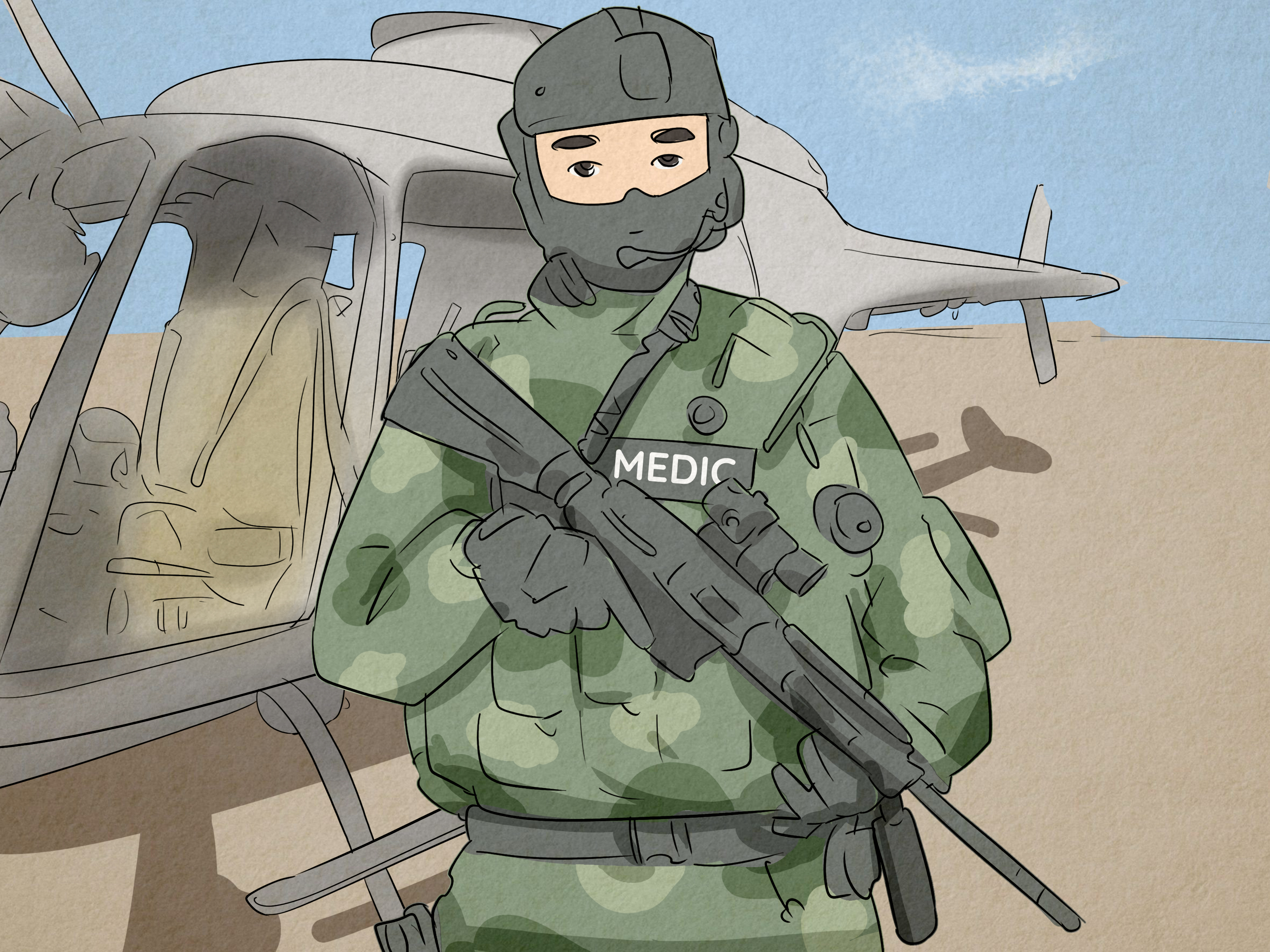
Becoming a SWAT medic is not like signing up for a weekend hobby, buying a tactical-looking backpack, and calling yourself “Doc.” It is a serious, highly specialized public-safety role that blends emergency medicine, tactical awareness, physical fitness, calm decision-making, and an almost heroic tolerance for uncomfortable gear. A SWAT medic may support law enforcement special operations during high-risk warrants, barricaded-person calls, hostage incidents, active-threat responses, training days, and other events where medical care must be close enough to matter but disciplined enough not to create more danger.
The role is often called Tactical Emergency Medical Support, or TEMS. In the United States, SWAT medics may be paramedics, EMTs, nurses, physician assistants, physicians, firefighters, law enforcement officers, or specially assigned EMS professionals, depending on the agency and state rules. The exact pathway varies by jurisdiction, but the core recipe is surprisingly consistent: build legitimate medical credentials, gain field experience, learn tactical medicine, understand law enforcement operations, get physically and mentally ready, work under proper medical direction, and earn the trust of a team that cannot afford guesswork.
If your dream is to become the calm person in the helmet who says, “I’ve got the patient,” while everyone else is trying very hard not to make the evening news, this guide breaks down seven practical ways to move toward the job. No movie nonsense, no superhero fog machinejust a realistic path into one of the most demanding corners of emergency medical services.
What Is a SWAT Medic?
A SWAT medic is a trained medical provider who supports a tactical law enforcement team. The goal is simple to explain and hard to execute: provide preventive, urgent, and emergency medical care during high-risk operations. That can include caring for injured officers, suspects, hostages, bystanders, K-9 partners, or even team members who become dehydrated, overheated, hypothermic, or medically stressed during long operations.
Unlike a traditional ambulance crew staged down the street, a tactical medic may be integrated with the team or positioned closer to the hazard area, depending on agency policy and mission needs. However, the medic’s job is not to “play operator.” The job is to reduce medical risk, support the mission, coordinate with EMS and hospitals, and deliver care within a legally authorized scope of practice. In plain English: bring medical skill into a dangerous environment without becoming the reason the team needs another medic.
1. Build a Strong EMS or Medical Foundation
The first step to becoming a SWAT medic is becoming a real medical provider. Most people begin with Emergency Medical Technician training, then move toward Advanced EMT, paramedic, nursing, or another licensed clinical role. For many tactical teams, paramedic-level capability is preferred because paramedics are trained for advanced assessment, medication administration, airway management, cardiac emergencies, trauma care, and complex decision-making in the field.
At the basic level, EMT training teaches patient assessment, CPR, bleeding control, oxygen administration, splinting, lifting and moving patients, and emergency response fundamentals. That foundation matters. Tactical medicine may look dramatic from the outside, but the basics still save lives. A poorly applied tourniquet is not improved by a cool patch. A sloppy patient assessment does not become smarter because it happened near a BearCat.
If you pursue paramedic certification, expect a serious investment of time. Paramedic programs generally require prior EMT certification or licensure, classroom learning, lab practice, hospital clinical rotations, ambulance field internships, and successful cognitive and psychomotor testing. You will study anatomy, pharmacology, cardiology, trauma, pediatrics, obstetrics, airway care, medical emergencies, operations, and documentation. Yes, documentation. Even in tactical medicine, paperwork waits patiently in the shadows like a villain with a clipboard.
Practical example
A strong candidate might work as an EMT for a busy 911 EMS agency, complete paramedic school, pass National Registry testing if required by the state, obtain state licensure, and spend several years responding to real calls. That experience builds pattern recognition. You learn what shock looks like before the monitor confirms it, how panic sounds in a room, and how to talk to frightened people without sounding like a robot reading a cereal box.
2. Gain Real Street Experience Before Going Tactical
A SWAT medic should not be brand-new to emergency care. Tactical teams need providers who can make decisions quickly under pressure, not people who are still surprised that patients sometimes forget to read the textbook. Field experience teaches judgment, communication, scene management, and humilitythe four horsemen of not embarrassing yourself in public safety.
Busy EMS systems, fire-based EMS departments, hospital emergency departments, critical care transport programs, and law enforcement-support assignments can all help you build the right foundation. Trauma exposure is especially useful. You need to become comfortable managing bleeding, airway problems, altered mental status, shock, chest injuries, fractures, burns, and medical emergencies that occur at inconvenient timeswhich is, medically speaking, all of them.
Experience also teaches you when not to act. That may sound strange, but restraint is a key tactical medical skill. In standard EMS, you may be used to entering once the scene is declared safe. In tactical operations, safety is dynamic. A medic must coordinate with command, follow team instructions, and understand that rushing into the wrong place can turn one patient into two. Good tactical medicine is aggressive about care but disciplined about movement and timing.
What kind of experience helps most?
Look for opportunities that sharpen your clinical and operational judgment. High-call-volume 911 EMS teaches rapid assessment. Emergency department work exposes you to trauma teams and definitive care. Search-and-rescue or disaster response can teach logistics and endurance. Fire service experience may build incident command familiarity. Law enforcement ride-alongs, when authorized, can help you understand police culture and communication. The goal is not to collect badges like refrigerator magnets. The goal is to become useful under stress.
3. Complete Tactical Emergency Medical Training
Once you have a real medical base, pursue tactical emergency medical training. The most relevant courses often include Tactical Emergency Casualty Care, commonly called TECC, and other agency-approved tactical EMS programs. TECC adapts military medical lessons to civilian high-threat environments, with attention to the differences in patient population, legal authority, EMS systems, rescue priorities, and civilian scope of practice.
TECC-style training commonly emphasizes care in phases. Providers learn how priorities change when a threat is active, when the threat is indirect or controlled, and when evacuation is underway. The emphasis is not on turning medics into commandos; it is on helping medical providers make better decisions when ordinary EMS assumptions no longer apply. Bleeding control, airway positioning, chest injury management, hypothermia prevention, casualty movement, triage, communication, and evacuation planning are all major themes.
Other useful courses may include Tactical Combat Casualty Care for appropriate audiences, Rescue Task Force training, active-threat response, Stop the Bleed instructor training, advanced trauma courses, hazardous materials awareness, K-9 emergency care, and tactical medical planning. Course titles vary, and not every class is equal. Choose programs recognized by credible EMS, law enforcement, fire, emergency management, or medical organizations. If a course advertisement looks like it was designed by a movie poster intern, investigate carefully before paying.
Training should match your role
A medic assigned to a law enforcement tactical team may need different training than an EMS provider assigned to a Rescue Task Force during active-threat incidents. A physician medical director needs different preparation than an EMT embedded for basic life support. A patrol officer trained in bleeding control is not the same as a paramedic operating under medical direction. Serious agencies define roles clearly, because confusion in a high-risk event is not spicyit is dangerous.
4. Understand Law Enforcement Operations and Team Culture
SWAT medics operate in the orbit of law enforcement, so they must understand how tactical teams communicate, plan, move, train, and manage risk. This does not mean memorizing every tactical procedure or pretending to be an operator. It means knowing enough to support the team safely and professionally.
Important concepts include chain of command, operational briefings, staging, radio discipline, contact and rescue priorities, personal protective equipment, casualty collection points, evacuation routes, command posts, perimeter control, and interoperability with fire and EMS. You should know where medical planning fits into an operation. You should also know when to speak up. If the team is preparing for a long operation in extreme heat, the medic should be thinking about hydration, rehab, cooling, medications, cardiac risk, and whether anyone has eaten anything besides gas-station beef jerky and regret.
Team culture matters too. Tactical units value competence, reliability, discretion, fitness, and calm communication. They do not need a medic who turns every training day into a personal action movie. They need someone who checks gear, listens during briefings, respects confidentiality, trains consistently, and treats everyoneofficers, suspects, victims, and bystanderswith professional care.
Ride-alongs and joint training
Authorized ride-alongs, joint EMS-law enforcement exercises, active-threat drills, and observer opportunities can help. These experiences show you the rhythm of police work: long waiting, sudden action, endless communication, and decisions made with incomplete information. The more you understand that environment, the better you can design medical plans that are realistic instead of beautifully useless.
5. Get Physically Fit and Mentally Tough
SWAT medic work is physically demanding. You may need to move in body armor, carry medical equipment, climb stairs, kneel, crawl, drag or assist patients, work in heat or cold, and remain functional after hours of waiting. Fitness is not about looking dramatic in a mirror. It is about being able to reach the patient, provide care, and not become the patient.
A practical fitness plan should include cardiovascular endurance, strength, mobility, grip strength, loaded carries, heat acclimatization when appropriate, and injury prevention. You do not need to train like a professional athlete, but you do need a level of durability that matches the job. If your medical pack, armor, helmet, water, and radio make you reconsider every life choice after one flight of stairs, the team will notice.
Mental toughness is equally important. Tactical scenes can involve screams, gunfire, uncertainty, injured colleagues, children, death, media attention, and emotional aftermath. You need stress-management skills, emotional regulation, and the ability to perform patient care while your nervous system is loudly suggesting that you move to a quiet cabin and raise tomatoes.
Build resilience before you need it
Simulation training, scenario-based drills, after-action reviews, peer support, counseling resources, sleep discipline, and healthy decompression habits all matter. The best SWAT medics are not fearless; they are trained, prepared, and honest about stress. They know when to reset, when to ask for help, and when a teammate is not okay even if the teammate insists, “I’m good,” in the universal public-safety language of absolutely not good.
6. Learn Incident Command, Medical Direction, and Scope of Practice
One of the biggest differences between fantasy tactical medicine and real tactical medicine is governance. A legitimate SWAT medic works within a system. That system includes state EMS rules, agency policy, medical protocols, medical direction, law enforcement command, mutual aid agreements, documentation requirements, and incident command principles.
FEMA Incident Command System and National Incident Management System courses are valuable because high-risk events often involve multiple agencies. Police, fire, EMS, emergency management, hospitals, dispatch, public works, and public information officers may all become part of the response. A medic who understands ICS can communicate better, plan better, and avoid freelancing. Freelancing is great for graphic designers. It is terrible in emergency operations.
Medical direction is also essential. A tactical medic’s scope of practice is not determined by enthusiasm, equipment, or what someone saw at a conference. It is determined by education, certification, licensure, agency credentialing, medical director authorization, and state law. Advanced procedures require appropriate authorization. Even basic care should be documented and reviewed through the agency’s quality improvement process.
Know the boring rulesthey protect everyone
Policies may not sound exciting, but they protect patients, medics, agencies, and communities. They define who can deploy, what gear is carried, how controlled substances are secured, how patient care reports are completed, how medics coordinate with transport EMS, and what happens after use-of-force incidents. A strong SWAT medic respects those rules because credibility is built on more than skill; it is built on accountability.
7. Apply Through the Right Agency Pathway and Keep Training
There is no single national application portal for becoming a SWAT medic. Pathways vary widely. Some teams recruit paramedics from local EMS agencies. Some use firefighter-paramedics assigned to tactical support. Some train sworn law enforcement officers as EMTs or paramedics. Some include physicians, nurses, or physician assistants as medical directors or operational medical providers. Some regional teams build TEMS units through memorandums of understanding between police, fire, EMS, and hospitals.
Start by researching your local and state systems. Ask your EMS agency, fire department, police department, sheriff’s office, hospital-based EMS program, or regional tactical team how medical support is selected. Requirements may include years of EMS experience, paramedic certification, clean background check, physical fitness testing, interview boards, firearms safety awareness, tactical medical courses, agency orientation, and ongoing training attendance.
Once selected, the work has only begun. Maintaining competence requires continuing education, realistic scenarios, medical skills verification, protocol updates, equipment checks, physical training, and after-action learning. Tactical medicine changes as evidence, equipment, threats, and EMS systems evolve. The medic who stops learning becomes a museum exhibit with a stethoscope.
How to stand out as a candidate
Be the person who is already doing the fundamentals well. Show up on time. Keep certifications current. Write clean patient care reports. Train without complaining. Know your protocols. Stay fit. Treat dispatchers, nurses, officers, firefighters, patients, and janitors with respect. Learn how your local system works. Volunteer for appropriate committees or training events. Build a reputation as calm, competent, and low-drama. Tactical teams notice that. They also notice the opposite, usually faster.
Common Skills Every SWAT Medic Should Develop
Although every agency is different, several skills appear again and again in tactical medical work. Hemorrhage control is near the top of the list. Severe bleeding can kill quickly, and tactical medical providers must be excellent with direct pressure, wound packing, tourniquets, pressure dressings, and rapid reassessment. Airway and breathing skills are also critical, especially in trauma, overdose, smoke exposure, and altered mental status cases.
Casualty assessment must be fast and practical. A SWAT medic may need to identify who needs immediate intervention, who can wait, who can move, and who needs rapid evacuation. Communication skills are just as important as clinical skills. The medic may need to tell command, “We need transport now,” or explain to EMS crews what happened in ten clear seconds.
Logistics matter more than beginners expect. Tactical medics may prepare medical threat assessments, pack medical kits, stage equipment, plan evacuation routes, coordinate ambulance placement, identify nearby trauma centers, and prepare rehab supplies for long operations. The glamorous part of the job may be trauma care. The lifesaving part may be noticing, before the operation starts, that the nearest ambulance access point is blocked by a locked gate.
Mistakes to Avoid on the Path
The first mistake is chasing tactical identity before medical competence. A SWAT medic is a medical professional first. Cool gear cannot compensate for weak assessment skills. The second mistake is ignoring local rules. A procedure allowed in one state or agency may be prohibited in another. The third mistake is underestimating fitness. The fourth is talking too much about confidential incidents. Trust is fragile, and public-safety circles are smaller than they look.
Another mistake is thinking tactical medicine is only trauma. Yes, trauma is central, but real operations also involve chest pain, diabetic emergencies, allergic reactions, asthma, heat illness, dehydration, behavioral health crises, fatigue, medication issues, and routine injuries. Sometimes the most useful thing a medic does is prevent a team member from becoming heat-injured during hour six of an operation in August. Tactical medicine includes prevention, not just dramatic intervention.
Experience-Based Lessons for Future SWAT Medics
People who work around tactical medicine often say the same thing in different words: the call is rarely as clean as the training scenario. In class, the patient is exactly where the instructor placed them, the wound is obvious, the radio works, and the weather is polite. In real life, the patient may be behind furniture, lighting may be poor, everyone may be yelling, the address may be confusing, and your gloves may suddenly feel like they were designed by someone who hates fingers.
One common experience is the long wait. New medics sometimes imagine nonstop action, but tactical operations may involve hours of planning, staging, negotiation, and containment. During that time, the medic’s job is not to drift mentally. It is to monitor the team, check equipment, review evacuation routes, confirm ambulance access, think about weather, and stay ready. Readiness is a skill. Looking ready while secretly wondering whether your snack bar melted is also a skill, though less official.
Another lesson is that small medical problems can become big operational problems. A team member with a headache, dehydration, or a twisted ankle may not seem dramatic, but in a high-risk operation, one weakened link can affect safety. Good SWAT medics pay attention before injuries become emergencies. They encourage hydration, rest cycles, rehab checks, and early reporting. They also learn how to do this without sounding like everyone’s disappointed parent. “Drink water” works better when delivered with credibility, not nagging.
Communication is a recurring experience too. The best medics learn to speak briefly and clearly. Command staff do not need a medical lecture during a critical moment. They need relevant facts: number of patients, severity, immediate needs, evacuation priority, and transport recommendations. Later, after the scene is stable, there is time for detail, documentation, and review. During the operation, concise communication can save time and reduce confusion.
Training days create some of the most valuable experience. A medic learns how hard it is to treat a patient while wearing armor, how quickly medical supplies disappear in low light, how awkward casualty movement becomes in narrow hallways, and how easy it is to overpack a medical bag until it becomes a portable regret factory. After enough drills, smart medics simplify. They organize gear by priority, label clearly, practice blind access, and carry what they can realistically use.
There is also an emotional side. Tactical medics may care for colleagues, civilians, suspects, or children during terrible moments. Professionalism requires treating every patient according to medical need, regardless of the circumstances. That can be hard, but it is central to the role. The medic is there to preserve life, reduce suffering, and support lawful public-safety operations. In difficult incidents, peer support, honest debriefing, and mental health resources are not luxuries. They are part of staying effective over a long career.
Perhaps the biggest experience-based lesson is humility. The environment is complex, the risks are real, and no one knows everything. A good SWAT medic keeps learning from physicians, paramedics, EMTs, nurses, officers, firefighters, dispatchers, emergency managers, and patients. The badge, patch, or title may open the door, but humility keeps you useful once you are inside.
Conclusion
Becoming a SWAT medic takes more than courage and a well-stocked trauma kit. It requires legitimate medical training, real field experience, tactical emergency medical education, fitness, emotional control, operational discipline, and respect for medical direction and agency policy. The pathway can be demanding, but that is the point. Tactical teams operate in high-risk environments where mistakes can multiply quickly. They need medics who can think clearly, treat effectively, communicate calmly, and support the mission without losing sight of the patient.
If you want this career, start with the basics and build patiently. Become an excellent EMT or paramedic. Seek strong mentors. Train in trauma care and TECC principles. Learn incident command. Understand your local laws and protocols. Get fit. Practice under pressure. Be reliable when nobody is watching. The road to becoming a SWAT medic is not always flashy, but it is meaningful. And when the moment comes, the team will not care how cool your gear looks. They will care whether you can do the job.
Note: This article is for educational and career-planning purposes only. Requirements for SWAT medic roles vary by state, agency, medical director, and local law. Always follow your jurisdiction’s EMS regulations, agency policy, and authorized scope of practice.