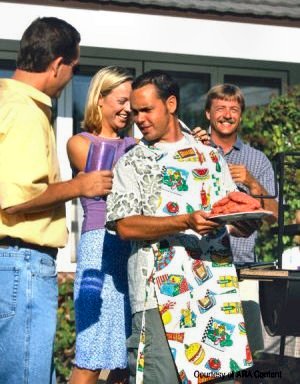
There is a special kind of confidence that appears only when a person is standing next to a grill with tongs in hand. It is not ordinary confidence. It is not “I prepared for this meeting” confidence. It is not even “I parallel parked on the first try” confidence. No, this is theatrical confidence. This is barbecue confidencethe magical state in which somebody flips a burger, nods once, and suddenly speaks like the CEO of Flavor.
You know the type. The hot dogs are still rotating lazily over the flame, and they are already giving a sales pitch worthy of a luxury real estate listing. “These aren’t just burgers,” they say. “These are thick-cut, fire-kissed, backyard masterpieces.” Sir, that is a paper plate and a bag of buns from the grocery store. But honestly? We love the performance anyway.
That is what makes “really, really selling it while barbecuing” such an oddly perfect little slice of life. It captures a moment that is funny, familiar, and surprisingly human. The cook at the grill is not merely making dinner. They are hosting, persuading, entertaining, and building a tiny stage out of smoke and confidence. The backyard becomes a social theater. The spatula becomes a microphone. The corn on the cob becomes a supporting actor. And everybody standing nearby gets front-row seats.
In a world full of rushed meals and distracted conversations, the barbecue still has a way of slowing people down. It invites storytelling, playful exaggeration, and the kind of harmless bragging that somehow makes food taste better. That is why this little moment feels so memorable. It is not just about grilled meat. It is about hospitality, optimism, and the very American art of making an ordinary gathering feel like a headline event.
Why Barbecuing Turns Regular People Into Backyard Broadcasters
There is something about cooking outdoors that encourages a bit of performance. Indoors, making dinner can feel routine. Outdoors, it suddenly feels ceremonial. Fire is involved. Smoke curls upward like stage fog. Neighbors can smell what is happening. Even the person who usually burns toast in the kitchen may start talking about “heat zones,” “char development,” and “letting the protein rest” like they trained in a secret grill academy.
Part of the charm comes from visibility. Grilling is public cooking. Everyone can watch. Everyone can comment. Everyone can lean in and ask, “How much longer?” This creates a natural urge to narrate what is going on. The grill master becomes part chef, part weather forecaster, part motivational speaker. “We’re getting there.” “That sear is exactly what I wanted.” “Trust the process.” Suddenly, a backyard lunch sounds like a moon landing.
And to be fair, there is a reason people act a little dramatic around the grill. Grilling feels primal and modern at the same time. It connects food, fire, smell, timing, and attention in a way that feels more hands-on than everyday cooking. It also comes with just enough challenge to inspire pride. Managing heat, avoiding flare-ups, keeping food juicy, and serving everything at the right moment is an actual skill. So yes, the over-the-top sales pitch may be a little ridiculous. But it is often powered by genuine effort.
The Secret Ingredient Is Not Smoke. It Is Social Chemistry.
Backyard grilling is rarely only about the food. It is also about what happens around the food. People hover near the grill not just because they are hungry, but because the grill naturally becomes the center of the gathering. It is warm, active, and slightly dramatic. It gives people something easy to talk about. It creates a shared focal point, which is social gold.
That is where the “really selling it” part becomes more than a joke. The playful boasting, the mock-serious commentary, the exaggerated confidencethose things help create energy. They keep the mood light. They give everybody something to laugh at together. And laughter matters. It turns a meal into a memory.
A cook who says, “This burger has a life-changing crust,” is not really trying to trick anyone. They are inviting people into the fun. They are setting a tone. They are saying: this is not a plain Tuesday dinner; this is an event. Even if the event involves plastic chairs, citronella candles, and one child running through the yard with a juice box like they are fleeing a heist movie.
That playful talk also builds anticipation. Expectations shape experience more than most people admit. When someone hypes the ribs, the corn, or the smoky chicken, guests pay more attention. They are primed to enjoy the moment. The food does not have to be perfect. It just has to arrive wrapped in confidence, warmth, and a little bit of theatrical nonsense.
Barbecue Culture Has Always Been Bigger Than the Plate
In the United States, barbecue is not just a cooking method. It is a social ritual, a regional identity, and a long-running cultural love story involving smoke, time, and strong opinions. Mention barbecue in a crowded yard and you will instantly discover who has a preferred sauce, who believes sauce is unnecessary, who wants brisket, who wants ribs, and who absolutely will not stay quiet about dry rubs.
That passionate energy is part of the tradition. American barbecue culture has deep roots and many local styles, but one thing stays remarkably consistent: it brings people together. The backyard cookout became an especially iconic scene because it mixed food with leisure, hospitality, and a certain performative cheerfulness. The grill was not hidden in the kitchen. It was brought outside, where the cooking itself became part of the gathering.
That may be why the grill talk gets so enthusiastic. Barbecue has always carried a little swagger. Not bad swagger. More like cheerful swagger. The kind that says, “Come over here and try this,” while waving tongs with the confidence of a conductor leading a symphony made entirely of sizzling sounds.
Grilling vs. Barbecuing: Yes, Someone Will Bring This Up
At some point, somebody at every cookout becomes a technical expert for twelve minutes. This person will explain that grilling and barbecuing are not exactly the same thing. Grilling is usually hotter and faster, while barbecue traditionally refers to lower, slower cooking with indirect heat and smoke. This distinction is helpful, accurate, and almost guaranteed to make at least one guest nod like they have entered an advanced seminar in meat philosophy.
But whether you are grilling burgers fast or barbecuing ribs slowly, the social phenomenon remains the same. Outdoor cooking invites commentary. Commentary invites personality. Personality invites jokes. And jokes, in turn, make the whole gathering feel easier and warmer.
Why the Best Grill Masters Are Really Hosts in Disguise
The person at the grill is often doing more than cooking. They are managing comfort. They are deciding when to serve. They are making sure people have enough to eat. They are pacing the meal and filling awkward silences with phrases like, “Give it two more minutes,” which somehow sounds both reassuring and dramatic.
That is why “selling it” often comes from a good place. It is a form of hosting. When a grill master hypes the food, they are also telling guests they care. They want the gathering to feel abundant, relaxed, and worth showing up for. They want the burger to feel like more than a burger because, in that moment, the meal stands in for generosity.
Good hosts know that details matter. Clean plates for cooked food matter. Safe handling matters. Not cross-contaminating raw and ready-to-eat items matters. So does the humble food thermometer, which may not be glamorous but quietly saves the day. Real barbecue confidence is not just loud talk and dramatic flipping. It is knowing what temperature the food needs, how to control heat, and when to stop poking the poor burger like it owes you money.
In other words, the best grill master is part showman, part caretaker. They talk big, yes, but they also deliver. That combinationwarmth plus competenceis what makes the whole routine so lovable.
The Funny Bragging Is Half the Flavor
Let us be honest: food often tastes better when it arrives with a story. Not a twenty-minute monologue about the pepper blend’s emotional journey. Just enough story to make the plate feel special. “These wings sat in a marinade all night.” “I used a two-zone setup for this batch.” “I pulled these off right before they dried out.” That little bit of storytelling changes everything.
It creates anticipation. It gives guests something to notice. It turns eating into a shared experience instead of a silent transaction between a person and a sandwich. Even the exaggeration helps. “This may be the best corn in the tri-state area” is a ridiculous sentence, which is exactly why it works. It adds sparkle. It says we are here to enjoy ourselves.
And when the food is actually good? The bragging suddenly becomes evidence. The same people who rolled their eyes at the dramatic sales pitch are now standing there with barbecue sauce on their fingers saying, “Okay, wow, that is really good.” This is one of life’s smallest and most satisfying plot twists.
How to Really Sell It While Barbecuing Without Becoming Unbearable
1. Let confidence be playful, not arrogant
There is a fine line between charming hype and unbearable ego. Charming hype makes people laugh. Arrogance makes people look for an excuse to refill their drink in another zip code. The trick is to sell the food with a wink. Talk like an enthusiast, not a tyrant.
2. Know enough to back up the performance
You do not need to become a pit scientist, but basic knowledge helps. Use safe cooking temperatures. Understand direct versus indirect heat. Keep raw items separate. Do not rely on color alone. The more grounded your technique, the funnier and better-earned your dramatic commentary becomes.
3. Make everybody part of the fun
A good cookout is not a solo talent show. It is a group scene. Ask someone to bring the buns, slice the watermelon, or judge the first batch of burgers with suspicious seriousness. Shared participation makes the whole event warmer and less performative in the bad sense.
4. Hype the moment, not just the meat
The smartest grill masters are not really selling the burger. They are selling the gathering. They are selling the idea that this sunny afternoon, this paper plate, this folding chair, and this smoky breeze add up to something joyful. That is a much better product, and thankfully, it is always in stock.
What This Awesome Little Moment Really Means
“Really, really selling it while barbecuing” is funny because it is true, but it sticks with us because it reveals something generous. People do not usually hype food that hard unless they want others to enjoy it. The overstatement, the mock confidence, the backyard theatricsthey are all part of the effort to make a simple meal feel festive.
That is one of the most underrated awesome things in everyday life: not perfection, but enthusiasm. Not culinary greatness, but cheerful commitment. Not a flawless brisket carved under restaurant lighting, but a person in sneakers beside a smoky grill saying, “You are about to have the best burger of your summer,” and somehow making the sentence feel possible.
Maybe that is why the moment lands so well. It reminds us that joy often arrives with a little extra seasoning called sincerity. People want to share what they made. They want to be proud of it. They want the tableor the patio, or the picnic bench, or the driveway with suspiciously comfortable camping chairsto feel alive.
And even when the burger is merely good, not legendary, the sales pitch still improves the day. Because what guests remember is rarely just the exact level of char. They remember the laughter, the confidence, the smell of smoke in the evening air, and the person at the grill acting like they were unveiling a national treasure.
Extra Reflections: Real-Life Experiences With Backyard Grill Hype
Anyone who has spent time around summer cookouts has probably seen at least one unforgettable example of barbecue salesmanship in the wild. Maybe it was an uncle who referred to a pack of supermarket hot dogs as “artisan links.” Maybe it was a neighbor who lifted the lid off the grill like a magician revealing a tiger, only to display six chicken thighs and one lonely ear of corn. Maybe it was a friend who spent twenty minutes discussing wood smoke, texture, bark, and timing before serving burgers on buns that had been slightly crushed in transit. None of this ruins the experience. In fact, it usually improves it.
One of the funniest parts of these moments is how quickly everyone understands the assignment. The guests begin playing along. Someone takes a dramatic bite and nods like they are judging a televised cooking competition. Somebody else announces that the coleslaw has “good structure,” which is an absurd thing to say about coleslaw and therefore perfect. Another person asks whether the chef consulted “the flavor council” before seasoning the ribs. Suddenly, the whole backyard is participating in a playful fiction that this is not just lunch but a major culinary event.
Those experiences stick because they turn ordinary hospitality into shared comedy. A cookout is one of the few social settings where exaggeration feels wholesome. Nobody is trying to deceive anybody. People can see the burgers. The potato salad is right there. The lemonade is not hiding. The joke is the gap between the humble reality and the deluxe language used to describe it. And somehow, that gap creates delight instead of disappointment.
There is also a sweet side to it. Often, the person doing all the selling is the same person who got up early to marinate the chicken, cleaned the grill grates, bought extra ice, and worried whether there would be enough food. The dramatic pitch is partly comedy, but it is also vulnerability wearing sunglasses. It is a person hoping everybody has a good time. It is effort translated into swagger.
I think that is why these barbecue moments feel bigger than they should. They are not just about food. They are about care disguised as confidence. They are about saying, “I made this for you,” but in a more entertaining way. Instead of a quiet speech, you get a loud promise about “world-class burgers” delivered beside a cloud of smoke and a cooler full of soda. Honestly, that is better.
And years later, people rarely remember the exact menu. They remember who kept insisting the beans had “depth.” They remember the person who called the grill “my office” for three hours. They remember the laughter, the overstatement, the smell of charcoal clinging to their shirt, and the oddly moving fact that someone cared enough to make a meal feel special. That is why this tiny moment belongs on any list of awesome things. It is silly, social, generous, and unmistakably human.
Conclusion
In the end, really selling it while barbecuing is one of those everyday performances that makes life feel lighter. It captures the goofy confidence of outdoor cooking, the pride of hosting, and the way humor can turn a simple meal into a real occasion. Good barbecue is delicious. Good barbecue with a dramatic monologue is memorable. And sometimes, memorable wins.