Note: A mantra is not a remote control for someone else’s heart. If only love worked like a TV, breakups would come with a mute button and a “restore previous settings” option. In real life, mantras are best used as tools for calm, clarity, patience, self-respect, and better communication. They cannot force a person to return, but they can help you become steady enough to handle love with wisdom instead of panic.
Introduction: Can a Mantra Really Bring Love Back?
Searching for ways to get my love back by mantra usually begins with a heart that feels like it has been dropped from a tall building, bounced twice, and landed in a playlist of sad songs. When someone you love pulls away, ends the relationship, stops replying, or says “I need space,” the mind can run wild. You may want a powerful love mantra, a quick fix, or a spiritual shortcut that brings your partner back before dinner.
But love is not a vending machine. You cannot insert a chant, press B7, and receive a fully healed relationship wrapped in emotional bubble wrap. What a mantra can do is help you slow your thoughts, regulate your emotions, soften your ego, and act with more care. And those things matter. A calmer person communicates better. A self-aware person apologizes better. A patient person respects boundaries better. Those qualities may not guarantee reconciliation, but they give love its healthiest chance.
This guide explores 9 ways to get your love back by mantra in a realistic, respectful, and emotionally healthy way. You will find simple mantra examples, practical steps, and relationship insights you can actually use. The goal is not to “control” your ex or partner. The goal is to become someone who can love without fear, speak without begging, and rebuild connection without losing dignity.
What Is a Love Mantra?
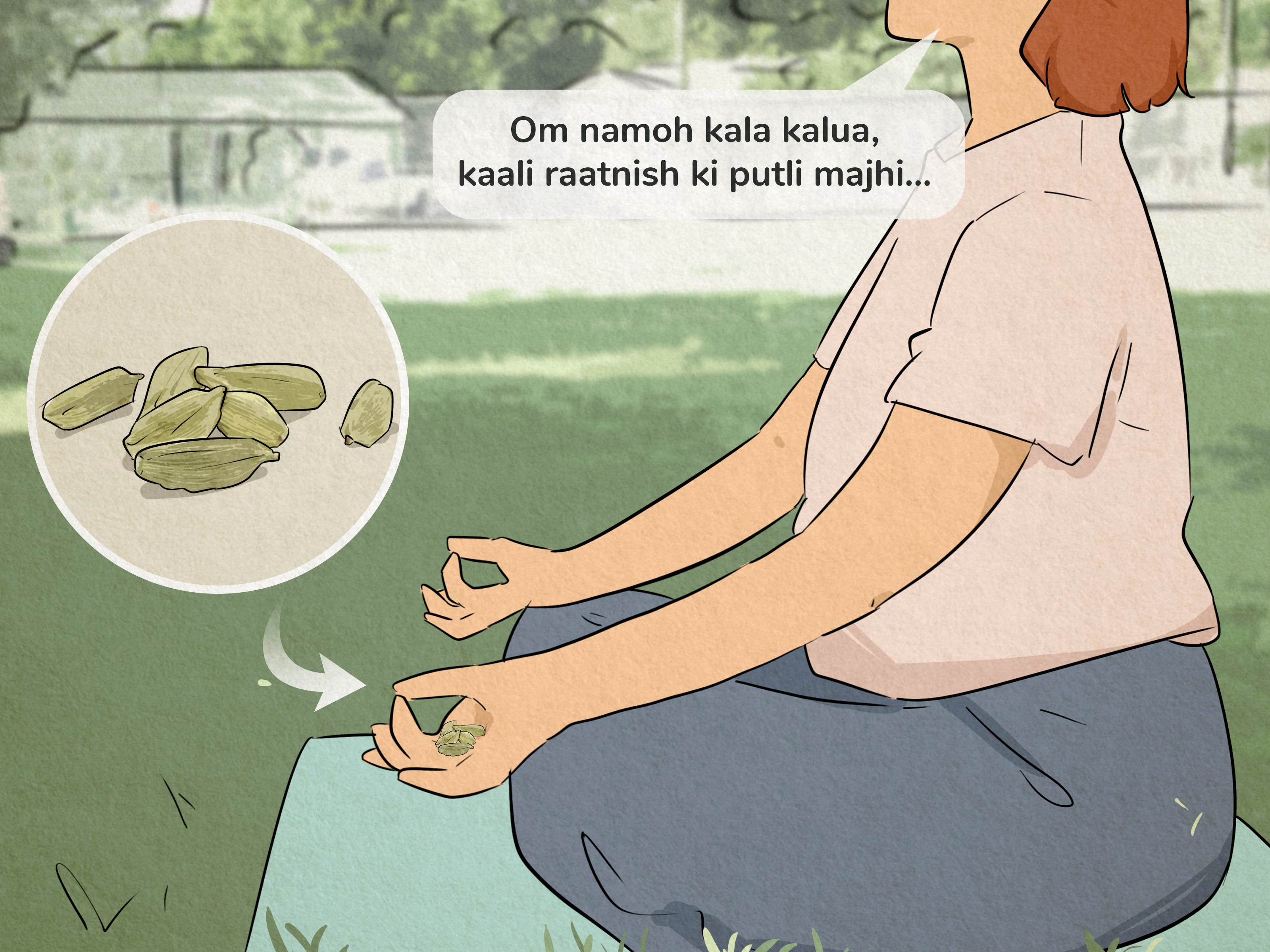
A love mantra is a word, phrase, prayer, or intention repeated during meditation, breathing, journaling, or quiet reflection. Some people use traditional spiritual phrases such as “Om Shanti,” which is often associated with peace. Others use simple English affirmations such as “I choose love with respect,” “I release fear,” or “I am worthy of healthy love.”
The power of a mantra is not that it hypnotizes another person. Its power is that it trains your own attention. When your mind wants to send twelve emotional texts, a mantra can help you pause. When jealousy starts doing cartwheels in your brain, a mantra can bring you back to center. When you want to blame, chase, or collapse, a mantra can remind you to choose calm action.
In relationships, the most useful mantra is not “Come back to me right now.” A better one is: “May love return in a healthy way, or may I heal in peace.” That sentence leaves room for hope, but it also respects reality. Romantic? Yes. Desperate? No. That is the sweet spot.
9 Ways to Get My Love Back by Mantra
1. Use a Calming Mantra Before You Contact Them
The most dangerous time to contact someone you miss is when you are emotionally flooded. This is when texts become novels, apologies become speeches, and “I just wanted closure” becomes a 2 a.m. message with six question marks. Before reaching out, use a calming mantra to settle your body and mind.
Try this mantra: “I breathe first. I speak second.”
Sit quietly for five minutes. Inhale slowly and repeat, “I breathe first.” Exhale and repeat, “I speak second.” This simple practice creates a pause between emotion and action. That pause can save you from saying something that pushes your love further away.
After the mantra, ask yourself: “Is this message respectful, clear, and necessary?” If the answer is no, wait. Love often needs sincerity, but it also needs timing. A calm message has a better chance than a dramatic one wearing emotional glitter.
2. Repeat a Self-Worth Mantra So You Do Not Beg
Wanting someone back is human. Begging someone to love you is painful for both people. It can make you feel smaller and make the other person feel pressured. A self-worth mantra helps you remember that reconciliation should be chosen, not squeezed out of guilt.
Try this mantra: “I am worthy of love that chooses me freely.”
Repeat it when you feel tempted to bargain, plead, or over-explain. This does not mean acting cold or proud. It means standing in your value. If you made mistakes, you can apologize. If you miss them, you can be honest. But you do not need to auction off your dignity like an old couch on a neighborhood app.
Healthy love requires two free people. If your mantra helps you stay grounded, you are more likely to invite reconnection rather than demand it.
3. Use a Forgiveness Mantra to Release Resentment
If you want your love back, resentment is heavy luggage. It follows you into every conversation, sits between you on the couch, and occasionally opens itself to throw old arguments into the room. Forgiveness does not mean pretending nothing happened. It means choosing not to let pain control your next move.
Try this mantra: “I release the need to punish. I choose to understand.”
This mantra is especially useful if the breakup involved hurtful words, disappointment, neglect, or misunderstanding. You are not excusing bad behavior. You are clearing enough emotional smoke to see what actually needs repair.
After repeating the mantra, write two lists. First, write what hurt you. Second, write what you may not fully understand about their side. This exercise can soften defensiveness and prepare you for a more mature conversation. Love returns more easily to a room where both people feel heard.
4. Practice a Responsibility Mantra Before Apologizing
An apology can reopen a door, but only if it does not come with excuses wearing a fake mustache. “I’m sorry you felt that way” is not an apology; it is emotional dodgeball. If you want to repair love, use a mantra that helps you take honest responsibility.
Try this mantra: “I can own my part without losing myself.”
Repeat it before writing or speaking an apology. Then use this structure:
- Name the action: “I ignored your feelings when you tried to talk.”
- Acknowledge the impact: “That probably made you feel alone.”
- Express regret: “I’m truly sorry.”
- Offer change: “I’m working on listening without getting defensive.”
- Respect their choice: “You do not have to respond right away.”
This kind of apology is powerful because it does not chase. It repairs. A good apology says, “I see what happened, and I am willing to grow.” That is much more attractive than “Please forget everything because I am sad now.”
5. Use a Listening Mantra to Rebuild Communication
If your love agrees to talk, your job is not to win the conversation. Your job is to understand. Many relationships break not because two people stop loving each other, but because they stop feeling emotionally safe. A listening mantra can help you stay present instead of preparing your courtroom defense.
Try this mantra: “Listen to understand, not to reload.”
Before the conversation, repeat the mantra several times. During the conversation, reflect back what you hear. For example: “What I’m hearing is that you felt unimportant when I kept canceling plans. Is that right?” This simple sentence can do more than a dramatic speech because it shows emotional maturity.
Listening does not mean agreeing with everything. It means showing that their feelings matter. If your partner or ex feels heard, the emotional temperature may drop. And when the temperature drops, love has a better chance of walking back into the room without a fire extinguisher.
6. Repeat a Patience Mantra During No Contact or Space
Sometimes the best way to get love back is to stop pulling on it. If someone asks for space, respect it. Space can help emotions settle, reduce conflict, and allow both people to think clearly. This is difficult, especially when your phone feels like a tiny rectangle of hope and torture.
Try this mantra: “Space is not always rejection. Silence can be healing.”
Use this mantra when you want to check their social media, send “just one more” message, or ask mutual friends for updates. Respectful distance can be an act of love. It shows that you care about their boundaries, not just your anxiety.
Set a healthy period of no contact if needed, especially after intense conflict. Use that time to sleep, eat properly, move your body, journal, talk to supportive friends, or work with a counselor. Do not use no contact as a manipulation tactic. Use it as emotional first aid.
7. Use a Loving-Kindness Mantra to Soften Anger
Loving-kindness meditation is built around sending goodwill to yourself and others. For heartbreak, it can be surprisingly helpful because it gives your love somewhere healthy to go. Instead of obsessing, blaming, or replaying the breakup like a low-budget movie, you practice compassion.
Try this mantra:
“May I be peaceful. May you be peaceful. May we both find what is right.”
This mantra is not weak. It is brave. It allows you to love without grabbing. It also helps reduce the bitterness that can make reconciliation harder. If the relationship returns, you will bring a softer heart. If it does not, you will not be trapped in anger for months while pretending you are “totally fine.” Spoiler: your sad playlist knows the truth.
Practice this for ten minutes a day. Begin with yourself, then your loved one, then both of you together. Imagine peace around the situation, even if the final outcome is still unknown.
8. Use a Growth Mantra to Become Someone Safer to Love
Getting love back is not only about what you say. It is about who you become after the pain teaches you something. If the same patterns return, the same problems usually return too. A growth mantra helps you focus on real change instead of romantic panic.
Try this mantra: “I grow where love showed me the work.”
Ask yourself honest questions. Did you avoid hard conversations? Did you become jealous? Did you take them for granted? Did you stop showing affection? Did you depend on them for all your happiness? These questions may sting a little, but so does stepping on a Lego. Pain can still be useful.
Choose one behavior to improve for thirty days. Maybe you practice active listening. Maybe you learn emotional regulation. Maybe you stop using sarcasm as a shield. Maybe you become more consistent. Love is more likely to return when change is visible, not just promised in a beautifully dramatic paragraph.
9. End With a Release Mantra That Respects Free Will
The most powerful love mantra may be the one that releases control. This can feel scary because the mind believes control equals safety. But love without freedom becomes pressure, and pressure rarely creates true connection.
Try this mantra: “I welcome love freely. I release what is not mine to force.”
Repeat this mantra when you feel desperate for a specific outcome. It does not mean giving up. It means letting love breathe. You can express your feelings, apologize, grow, and invite reconnection. But the other person still gets to choose.
This mindset protects your heart. If your love returns, the relationship can restart with more respect. If your love does not return, you will still have yourself. And that is not a consolation prize. That is the foundation of every healthy relationship you will ever have.
Powerful Love Mantras You Can Practice Daily
Here are simple mantras you can use depending on your emotional state:
- For panic: “I am safe in this moment.”
- For heartbreak: “My heart can hurt and still heal.”
- For reconciliation: “May our connection heal with honesty and respect.”
- For regret: “I learn, I repair, I grow.”
- For jealousy: “Love is not control.”
- For patience: “What is meant for me does not need to be chased in fear.”
- For acceptance: “I release the outcome and keep the lesson.”
Choose one mantra and repeat it for seven days. Do not switch every hour like you are scrolling through emotional wallpaper. Consistency helps the phrase become familiar, and familiarity helps your nervous system settle faster.
How to Practice a Love Mantra the Right Way
Choose a Quiet Time
Morning is ideal because your mind has not yet been tackled by emails, bills, and random memories of what you should have said three weeks ago. Evening also works well, especially if loneliness tends to visit after dark.
Sit Comfortably and Breathe
You do not need a perfect meditation cushion, incense, or a mountain view. Sit in a chair, rest your hands, relax your shoulders, and breathe slowly. If your dog stares at you like you have joined a mysterious cult, simply continue.
Repeat the Mantra Slowly
Say the mantra silently or out loud. Match it with your breathing. For example, inhale with “I choose calm,” and exhale with “I release fear.” Repeat for five to ten minutes.
Write One Action Step
After your mantra practice, write one healthy action. It could be “Do not text today,” “Write an apology draft but do not send it yet,” “Go for a walk,” or “Ask myself what I truly need.” A mantra becomes stronger when paired with wise action.
Common Mistakes When Using Mantras to Get Love Back
Using a Mantra to Avoid Real Change
Repeating “my love will return” while continuing the same hurtful habits is like watering a plastic plant and expecting tomatoes. Mantras support change; they do not replace it.
Trying to Control Someone’s Free Will
A healthy love mantra should never be about domination, obsession, or emotional pressure. If the goal is to override someone’s choice, the practice has moved away from love and into control.
Breaking Boundaries
If someone asks for no contact, respect it. A mantra should help you honor boundaries, not create excuses to ignore them. “The universe told me to send another text” is not a legal relationship strategy.
Expecting Instant Results
Mantra practice works gradually. It may help you feel calmer today, communicate better this week, and understand yourself more deeply over time. But it is not a same-day shipping service for romance.
Experiences Related to “9 Ways to Get My Love Back by Mantra”
Many people who turn to love mantras are not looking for poetry; they are looking for relief. A common experience is the “phone-checking loop.” Someone repeats a calming mantra each time they want to check whether their ex is online. At first, they may still check. Then they check less. After a few days, they notice something important: the mantra does not erase love, but it reduces panic. That small shift can prevent needy messages and create space for clearer thinking.
Another experience involves apology. Imagine a person named Daniel who lost his partner’s trust because he often dismissed her concerns. His first instinct was to send a huge emotional message promising everything under the sun, including better listening, more romance, and possibly learning to cook something beyond toast. Instead, he practiced the mantra, “I can own my part without losing myself.” After several days, his apology became shorter, cleaner, and more sincere. He named the behavior, acknowledged the hurt, and gave her room to respond. Whether or not reconciliation happened immediately, the conversation became more respectful.
Then there is the experience of silence. Silence after a breakup can feel like punishment, even when it is simply space. A mantra such as “Space is not always rejection” can help someone survive the waiting period without turning into a detective, poet, and private investigator all at once. Instead of stalking social media, they may go to the gym, journal, meet friends, or return to hobbies. This matters because a person who rebuilds their own life becomes emotionally stronger. And emotional strength is far more attractive than constant desperation.
Some people also discover that mantras reveal the truth. They begin with the goal of getting love back, but after weeks of reflection, they realize they were trying to return to a relationship that made them anxious, unseen, or exhausted. Their mantra changes from “May they come back” to “May I choose peace.” This is not failure. This is wisdom arriving, fashionably late but still welcome.
Others find that mantra practice prepares them for a second chance. When communication reopens, they are less reactive. They can say, “I missed you, and I also understand why things became hard.” They can listen without interrupting. They can talk about new boundaries. They can ask, “What would need to change for this to feel safe again?” That kind of conversation is where real reconciliation begins.
The biggest lesson from these experiences is simple: a love mantra works best when it changes the person practicing it. It helps you become calmer, kinder, clearer, and more respectful. Sometimes that creates the conditions for love to return. Sometimes it helps you release a love that was not healthy. Either way, the mantra brings you back to yourselfand that is where every good love story must begin.
Conclusion: Let the Mantra Bring You Back to Love, Not Obsession
Using a mantra to get your love back is not about forcing destiny, bending someone’s will, or chanting until your ex suddenly appears at your door holding flowers and emotional maturity. If that happens, wonderfulbut please still have a conversation.
The deeper purpose of a love mantra is to help you return to calm, compassion, responsibility, and self-respect. It can help you pause before reacting, apologize without excuses, listen without defensiveness, and respect another person’s boundaries. These are the qualities that make reconciliation possible and make healing possible if reconciliation does not happen.
So choose a mantra that feels honest. Practice it daily. Pair it with real growth. Let it guide your actions, not just your hopes. Love may come back. A better version of you definitely can.