Note: This version is cleaned for web publication, uses body-only HTML, and removes unnecessary source-code artifacts.
Some cars fade away quietly. The GM EV1 did not get that luxury. It arrived in the late 1990s like a message from the future, whispered in an aerodynamic teardrop shape and delivered with the kind of optimism that makes engineers grin and accountants reach for aspirin. Then it disappeared in controversy, with recalled leases, crushed shells, and enough public outrage to power a small city. For years, the EV1 lived somewhere between history lesson, cautionary tale, and campfire ghost story for electric-vehicle fans.
Now the EV1 is making noise again, which is impressive for a car famous for not making much noise at all. The reason is simple: one of the few surviving examples is being brought back to life. And that restoration effort is more than a feel-good automotive side quest. It is a reminder that the EV1 was never just a weird little science project. It was a rolling preview of the modern electric era, complete with bold engineering, awkward compromises, and a market that was nowhere near ready for what GM had built.
If you want to understand why resurrecting a GM EV1 matters, you have to look beyond the headlines and the mythology. This is not just a story about one rare electric coupe. It is a story about timing, technology, corporate strategy, and what happens when the future shows up early, rings the doorbell, and nobody in the house is wearing pants.
The GM EV1 Wasn’t Just Early. It Was Uncomfortably Early.
The EV1’s roots stretch back to the GM Impact concept, which stunned people in 1990 and helped prove that an electric car did not have to look like a punishment. When the production EV1 arrived a few years later, it was a purpose-built electric vehicle from a major automaker, not a gas car with batteries stuffed into its spare corners like gym socks in a suitcase. That distinction matters. GM designed the EV1 from the ground up to be electric, and it showed.
The shape was extreme, even by concept-car standards. With its slippery body, covered rear wheels, and obsessive focus on efficiency, the EV1 chased aerodynamic performance like a Labrador chasing a tennis ball. That obsession paid off. The car’s drag coefficient became one of its calling cards, and the low-drag design helped squeeze usable range out of battery technology that now looks charmingly primitive.
Under the skin, the EV1 was a genuine engineering moonshot. It used lightweight materials, a dedicated chassis, and an electric powertrain that delivered smooth, immediate torque. For a car introduced in the 1990s, it packed ideas that feel almost normal today: regenerative braking, a heat-pump-based HVAC strategy, low-rolling-resistance tires, inductive charging, keyless-style startup, preconditioning logic, and an overall software-minded approach to vehicle efficiency. In other words, the EV1 did not merely predict the electric future. It sketched the blueprint.
A Technical Marvel With Real-World Limits
Of course, being ahead of your time is a romantic phrase until you are the one explaining charging times to a confused neighbor. The first EV1s used lead-acid batteries, which were the best practical option GM had for launching the car at the time. Those cars offered respectable performance for the era, but range was modest and charging required patience, planning, and the emotional stability of a saint. Later versions moved to nickel-metal hydride batteries, which pushed range higher and made the car more convincing as daily transportation.
Performance was never the punchline critics expected. The EV1’s electric motor delivered decent acceleration, and the car could cruise comfortably enough for real commuting. Former testers and lessees repeatedly described the same things modern EV drivers still rave about today: quiet operation, smooth power delivery, easy drivability, and the weirdly addictive satisfaction of gliding away from traffic lights without engine drama. The EV1 may have looked like the future in a wind tunnel, but on the road it felt surprisingly normal. That was one of its greatest strengths.
Its greatest weakness was the environment around it. Public charging infrastructure was almost nonexistent. Battery costs were enormous. Consumer understanding of EV ownership was thin. Gas was cheap. SUVs were hot. And GM, despite building a remarkable car, was asking mainstream America to make a cultural leap before the landing pad had even been paved.
Why the EV1 Died
Here is where the EV1 story stops being neat and starts being messy. The car was developed partly in response to California’s zero-emissions push, and the policy context mattered from day one. GM leased the EV1 rather than selling it outright, limiting the program to select markets. That decision made sense from a risk-management perspective, but it also created a fragile ecosystem. If the company changed its mind, customers had almost no leverage.
And GM did change its mind. The EV1 program ended after a relatively short production run, and most cars were reclaimed when leases expired. Many were ultimately destroyed, a move that burned itself into the public imagination with the subtlety of a fireworks factory explosion. The optics were awful. Fans were furious. Former lessees pleaded to keep their cars. Instead of being remembered as a bold first step, the EV1 became a symbol of lost momentum and corporate retreat.
Still, the full picture is more complicated than a simple villain narrative. The EV1 was expensive to produce, hard to support, and launched into a market that lacked the infrastructure, consumer habits, and battery economics needed for large-scale success. GM had built an advanced electric vehicle before the broader technology stack was ready to support it. That does not erase the frustration around the program’s end, but it does explain why the EV1 was never going to become a mass-market hit in that moment.
Think of it this way: the EV1 was trying to stream 4K video on dial-up. The idea was right. The timing was rude.
Why “Raising A GM EV1 From The Dead” Matters Now
In 2026, the EV1 is no longer just a historical argument. It is also a living restoration project. That shift changes the conversation. A surviving EV1 is not merely a relic behind museum rope. It is a chance to examine how the car was engineered, why it mattered, and what modern EV culture owes to this odd little coupe from the Clinton era.
One of the biggest recent developments involves a privately titled 1997 EV1, chassis No. 212, which surfaced through auction and is now being restored. That alone would be a great story. What makes it better is that GM has reportedly opened archives and supplied hard-to-find parts to support the project. In other words, the same company once criticized for burying the EV1’s legacy is now helping preserve it. History does not always repeat itself, but it occasionally shows up wearing a very ironic hat.
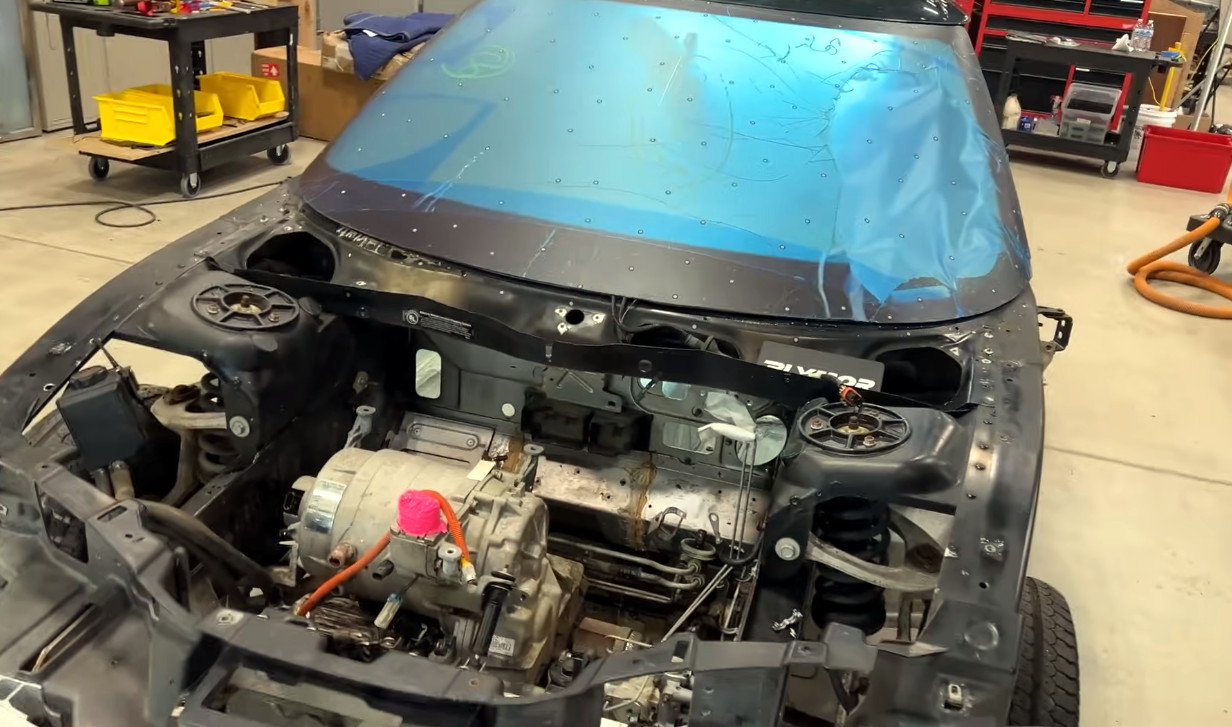
That restoration effort matters because it rescues the EV1 from abstraction. It becomes tangible again: seals, glass, wiring, battery questions, software archaeology, fragile trim pieces, and all. Bringing one back is not like reviving a simple old small-block muscle car where you can order half the catalog and argue about carburetors online. Restoring an EV1 means chasing obsolete electronics, interpreting early EV engineering logic, and dealing with a vehicle that was futuristic in ways that make preservation difficult. You are not just replacing parts. You are translating a dialect of the future that was spoken too early and then nearly forgotten.
The EV1’s Legacy in Modern Electric Cars
The easiest mistake is to treat the EV1 as a dead end. It was not. Many of the ideas explored in that program echo loudly through today’s EV landscape. Efficiency-first engineering, battery thermal concerns, lightweighting, regenerative braking strategy, software-controlled power delivery, user-friendly startup systems, and charging workflow design are all central to modern electric vehicles. The EV1 did not solve these challenges forever, but it forced an automaker to confront them seriously.
Even the car’s biggest weaknesses turned into long-term lessons. Range anxiety became a recognized consumer issue. Charging speed became a product-defining battleground. Battery chemistry became a strategic arms race. The need for better infrastructure, better thermal management, and better cost control stopped being theoretical. The EV1 helped prove that electric cars could be desirable, but it also proved that desirability alone would not carry the industry.
Today’s EVs benefit from denser batteries, stronger electronics, better software, better charging networks, and a public that at least understands what an EV is. The EV1 had to invent the playbook while performing in front of a skeptical crowd. Modern EVs get to revise the second draft.
The Emotional Power of an EV1 Resurrection
There is also something deeply human about restoring an EV1 now. People love comeback stories, especially when the comeback belongs to a machine that once stood for a future that got delayed. The EV1 has become larger than its production numbers. It represents the path not taken, the technological fork in the road, and the suspicion that the electric transition could have started earlier if the stars, policies, and balance sheets had aligned differently.
That emotional weight is part of why the phrase “raising a GM EV1 from the dead” hits so hard. It sounds dramatic, but honestly, the EV1 earned the drama. Most cars do not become documentary subjects. Most cars do not inspire protests when a manufacturer tries to take them back. Most cars do not spend decades hovering over industry conversations like a battery-powered ghost asking, “So, how’s that future coming along?”
The answer, finally, is: pretty well. Electric vehicles are no longer novelty acts. They are a major part of the auto industry’s present and future. And that makes the EV1 restoration feel less like nostalgia and more like overdue recognition.
The Experience of Bringing an EV1 Back to Life
To understand the restoration experience, picture the first walkaround. The shape still looks startlingly slick, even now. The EV1 does not wear age the way most 1990s cars do. It does not look like an old sedan that survived a few bad owners and a tragic aftermarket spoiler. It looks like a design team tried to mail-order the future and accidentally got the right package. Even sitting tired, dusty, and damaged, the proportions still whisper efficiency.
Then the practical reality kicks in. The windshield is wrong or broken. The seals are tired. The electronics are a question mark. Water intrusion may have turned parts of the car into a science experiment nobody asked for. The battery system is no small issue, because reviving an obsolete EV is not just a mechanical task. It is equal parts restoration, reverse engineering, detective work, and emotional stubbornness.
Every surviving EV1 likely asks the same brutal question: what does “original” even mean here? With a gasoline classic, originality often means numbers-matching engines and date-coded parts. With an EV1, authenticity becomes trickier. Do you preserve period-correct battery architecture even if modern cells would make the car more usable? Do you rebuild around original control logic, or adapt carefully for safety and serviceability? How much modernization is preservation, and how much becomes rewriting history with better tools?
That tension is part of the thrill. Restoring an EV1 is not just about getting it to move under its own power. It is about deciding which version of the car deserves to return. The museum piece? The functioning historical document? The nearly stock roadgoing artifact? There is no easy answer, and that is exactly what makes the process fascinating.
There is also the sensory side of the experience. Unlike restoring a rumbling V-8 icon, an EV1 revival is quiet in unexpected ways. The drama is not in exhaust bark or cam lope. It is in the moment a screen wakes up, a control system responds, or a forgotten piece of software finally behaves. It is in the click of something electrical deciding to cooperate after years of silence. That kind of victory sounds small until you have spent weeks chasing a problem through dead connectors, aging modules, and parts catalogs that may as well be archaeological tablets.
And then there is the first drive, or even the hope of it. That is the emotional jackpot. An EV1 moving again is more than a repaired vehicle. It is a live demonstration that early electric ambition was real, functional, and worthy of preservation. It closes the gap between the legends told by former lessees and the reality of what the car could actually do. Quiet acceleration, smooth response, lightness, and that unmistakable EV glide suddenly stop being historical footnotes and become physical sensations again.
For longtime enthusiasts, that experience is validating. For younger EV fans, it is educational. And for the wider auto world, it is a reminder that progress is not always linear. Sometimes a machine disappears, gets mocked, becomes a symbol, and then returns decades later to prove it deserved more respect all along.
Maybe that is the deepest appeal of resurrecting the EV1. It is not just about reviving a rare car. It is about rescuing a chapter of engineering history from oversimplification. The EV1 was not a punchline, not merely a corporate blunder, and not just a martyr for electric dreams. It was a brave, imperfect, deeply influential machine. Bringing one back to life gives that truth four wheels again.
Conclusion
The GM EV1 was never ordinary, and that is exactly why it still matters. It was a purpose-built electric vehicle that arrived long before the market, the infrastructure, and the battery business were ready to support it. It was flawed, expensive, and limited. It was also brilliant. The EV1 pushed technologies and ideas into the real world that later became normal across the EV industry.
That is why raising a GM EV1 from the dead feels bigger than one restoration story. It reconnects the present EV boom to one of its most important ancestors. It reminds us that progress often starts with machines that look slightly strange, ask too much, and make people uncomfortable. In hindsight, those are often the machines worth saving.
The EV1 may have been pulled from the road too soon, but its influence never really left. And now, as one survivor gets a second shot at life, the old electric ghost is becoming something much better: proof.