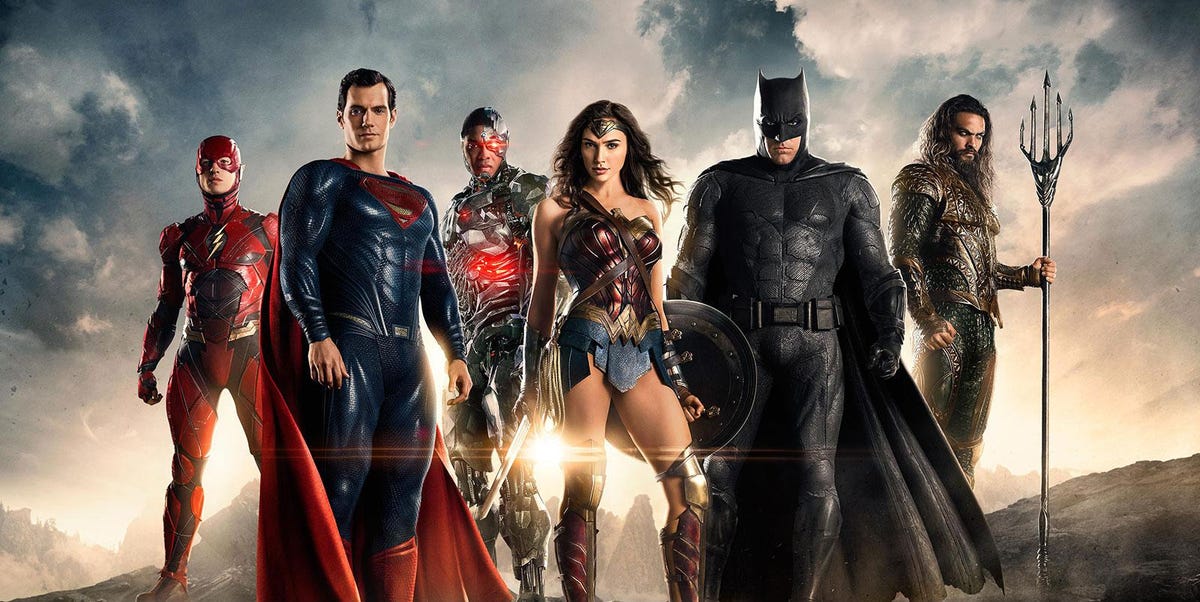
If you have ever tried to watch the DC movies in order and ended up staring at your streaming menu like Batman brooding on a gargoyle, you are not alone. The DC Extended Universe, commonly called the DCEU, is exciting, chaotic, heroic, occasionally confusing, and very much its own cinematic beast. It begins with Superman’s grand return in Man of Steel, expands into Batman, Wonder Woman, Aquaman, Shazam, Harley Quinn, the Flash, and several questionable team meetings, and finally closes with Aquaman and the Lost Kingdom.
The trick is that there are two major ways to watch the DCEU: by release date or by story chronology. Release order gives you the same ride moviegoers experienced from 2013 to 2023. Chronological order rearranges the timeline so you begin with Diana Prince in World War I, then jump to the 1980s, then enter the modern superhero age. Both methods work, but they create different viewing experiences.
This guide explains the best DC movies in order, the full DCEU release order, the chronological timeline, where Zack Snyder’s Justice League fits, and which newer DC films are not part of the DCEU. Grab popcorn, put on your best cape, and prepare for a cinematic universe where gods, billionaires, fish kings, witches, aliens, and one extremely enthusiastic kid named Billy Batson all share the same crowded group chat.
What Is the DC Extended Universe?
The DC Extended Universe is the shared live-action film continuity launched by Warner Bros. with Man of Steel in 2013. Unlike earlier standalone DC films such as Christopher Nolan’s The Dark Knight trilogy or 1978’s Superman, the DCEU was designed to connect multiple superheroes across one world. Henry Cavill’s Superman, Ben Affleck’s Batman, Gal Gadot’s Wonder Woman, Jason Momoa’s Aquaman, Ezra Miller’s Flash, Ray Fisher’s Cyborg, Margot Robbie’s Harley Quinn, and Zachary Levi’s Shazam all belong to this universe.
The franchise includes 15 theatrical movies, ending with Aquaman and the Lost Kingdom in 2023. After that, DC Studios moved into a new era under James Gunn and Peter Safran. That newer continuity, called the DC Universe or DCU, is separate from the DCEU. In simple terms: the DCEU is the 2013–2023 shared movie timeline, while the DCU is the rebooted future that begins its film era with Superman in 2025.
Best Way to Watch DC Movies in Order
For first-time viewers, release order is usually the best choice. It lets you experience the franchise the way audiences did, with each movie revealing characters, conflicts, and universe-building pieces in the intended public order. You meet Superman first, watch the world react to him, see Batman and Wonder Woman enter the picture, then move into team-ups and spinoffs.
Chronological order is better for repeat viewers or timeline nerds who enjoy placing events in story sequence. It starts with Wonder Woman in 1918, then Wonder Woman 1984, and then returns to Man of Steel. This order is fun, but it can make certain character introductions feel less dramatic because some movies were not written to be watched that way.
DC Extended Universe Movies in Release Order
Here is the cleanest DCEU watch order by release date:
- Man of Steel (2013)
- Batman v Superman: Dawn of Justice (2016)
- Suicide Squad (2016)
- Wonder Woman (2017)
- Justice League (2017)
- Aquaman (2018)
- Shazam! (2019)
- Birds of Prey (2020)
- Wonder Woman 1984 (2020)
- Zack Snyder’s Justice League (2021, alternate version)
- The Suicide Squad (2021)
- Black Adam (2022)
- Shazam! Fury of the Gods (2023)
- The Flash (2023)
- Blue Beetle (2023)
- Aquaman and the Lost Kingdom (2023)
Yes, that list has 16 entries because Zack Snyder’s Justice League is a special case. The theatrical DCEU has 15 films, but the Snyder Cut is often included in watch guides because it is a major alternate version of Justice League. It is not generally treated as the main canon version, but many fans prefer it because it gives more room to Cyborg, the Flash, Darkseid, and the larger mythology.
DC Movies in Chronological Order
If you want to watch the DCEU by story timeline, use this order:
- Wonder Woman mostly set during World War I in 1918
- Wonder Woman 1984 set in the 1980s
- Man of Steel Superman arrives in the modern world
- Batman v Superman: Dawn of Justice the world debates Superman’s role
- Suicide Squad government officials respond to a world of metahumans
- Justice League Batman and Wonder Woman form the team
- Aquaman Arthur Curry claims his place in Atlantis
- Shazam! Billy Batson becomes a very confused superhero
- Birds of Prey Harley Quinn starts over after the Joker
- The Suicide Squad Task Force X returns with new chaos
- Black Adam Kahndaq gets its ancient antihero
- Shazam! Fury of the Gods the Shazam family faces divine trouble
- The Flash Barry Allen breaks time, because apparently one timeline was too easy
- Blue Beetle Jaime Reyes bonds with the Scarab
- Aquaman and the Lost Kingdom Arthur Curry’s final DCEU chapter
This chronological order is not perfect down to every flashback, dream sequence, or ancient-history prologue. Man of Steel, for example, includes Krypton material before modern Earth events. Aquaman includes childhood flashbacks. Black Adam reaches back into ancient Kahndaq. But for a practical movie marathon, this order gives you the clearest story flow without requiring a detective board, red string, and Alfred-level patience.
Movie-by-Movie Guide to the DCEU
1. Man of Steel (2013)
Man of Steel introduces Henry Cavill’s Clark Kent as a young man wrestling with identity, power, and responsibility. Directed by Zack Snyder, the film presents Superman as a mythic figure in a grounded world. The arrival of General Zod forces Clark to reveal himself and choose Earth as his home. It is the foundation of the DCEU and the best starting point in release order.
2. Batman v Superman: Dawn of Justice (2016)
This movie brings Batman into the DCEU and explores the fallout from Superman’s destructive battle in Metropolis. Ben Affleck’s Bruce Wayne sees Superman as a potential global threat, while Lex Luthor manipulates both heroes into conflict. The film also introduces Gal Gadot’s Wonder Woman, whose entrance remains one of the franchise’s biggest crowd-pleasing moments.
3. Suicide Squad (2016)
Suicide Squad shifts the focus from noble heroes to dangerous villains forced into government service. Margot Robbie’s Harley Quinn became the breakout star, while Deadshot, Amanda Waller, Captain Boomerang, and others brought a messy, neon-colored energy to the franchise. It is not the smoothest DCEU entry, but it matters because it expands the world beyond capes and Kryptonians.
4. Wonder Woman (2017)
Wonder Woman travels back to World War I to show Diana’s origin outside the island of Themyscira. The film mixes myth, romance, battlefield drama, and superhero spectacle. Diana’s partnership with Steve Trevor gives the story emotional warmth, while her idealism makes her one of the DCEU’s strongest moral centers.
5. Justice League (2017)
Justice League brings Batman, Wonder Woman, Aquaman, Flash, Cyborg, and Superman together against Steppenwolf. The theatrical version is shorter, lighter, and more streamlined than Snyder’s original plan. It is the official theatrical team-up, but it also became one of the most debated superhero movies of the modern era.
6. Aquaman (2018)
Jason Momoa’s Arthur Curry dives into Atlantis, and the result is one of the DCEU’s most colorful adventures. Aquaman blends underwater kingdoms, family drama, sea monsters, political conflict, and action scenes that seem designed by someone who looked at subtlety and said, “No thanks, give me the giant crab army.” It works because it fully embraces comic-book weirdness.
7. Shazam! (2019)
Shazam! is the DCEU’s most playful coming-of-age story. Billy Batson is a foster kid who gains the ability to transform into an adult superhero. The comedy comes from watching a teenager handle powers with the emotional maturity of someone who might still spend lunch money on energy drinks. Beneath the jokes, the movie has a sweet message about found family.
8. Birds of Prey (2020)
Birds of Prey follows Harley Quinn after her breakup with the Joker. It is loud, stylish, violent, funny, and proudly chaotic. The film introduces Black Canary, Huntress, Cassandra Cain, and Renee Montoya while giving Harley room to become more than the Joker’s ex. It is less about saving the world and more about surviving Gotham’s worst people with a breakfast sandwich in hand.
9. Wonder Woman 1984 (2020)
Set decades after Diana’s World War I adventure, Wonder Woman 1984 places her in a bright, consumer-driven 1980s world. The story revolves around wishes, temptation, Max Lord, and Barbara Minerva’s transformation into Cheetah. It is more fantastical and emotional than action-heavy, and it works best when viewed as a mythic fable about wanting what you cannot keep.
10. Zack Snyder’s Justice League (2021)
Zack Snyder’s Justice League is a four-hour alternate version of the 2017 film. It restores major character arcs, especially for Cyborg and Flash, and expands the villain mythology with Darkseid. New viewers do not have to watch it to understand the official DCEU timeline, but fans who want the grandest version of the Justice League story should absolutely include it.
11. The Suicide Squad (2021)
James Gunn’s The Suicide Squad is part sequel, part soft reboot, and part glorious explosion of comic-book absurdity. Returning characters like Harley Quinn and Rick Flag join new faces such as Bloodsport, Peacemaker, Ratcatcher 2, King Shark, and Polka-Dot Man. Somehow, a giant starfish becomes both hilarious and terrifying. That is cinema.
12. Black Adam (2022)
Black Adam introduces Dwayne Johnson as Teth-Adam, an ancient champion awakened in modern Kahndaq. The film also brings in the Justice Society, including Doctor Fate, Hawkman, Cyclone, and Atom Smasher. It is built around antihero spectacle, power clashes, and the question of whether the world needs a savior who does not ask permission before punching through walls.
13. Shazam! Fury of the Gods (2023)
The Shazam family returns to face the daughters of Atlas. Fury of the Gods continues the first film’s humor and family themes while raising the mythological stakes. Billy struggles with leadership, insecurity, and the fear of losing his foster siblings. In other words, even superheroes have group project anxiety.
14. The Flash (2023)
The Flash sends Barry Allen into the multiverse after he tries to change the past. The movie features alternate timelines, multiple versions of Barry, the return of Michael Keaton’s Batman, and a different version of Supergirl. It is one of the most important late-DCEU movies because it directly deals with timeline disruption and franchise transition.
15. Blue Beetle (2023)
Blue Beetle introduces Jaime Reyes, a young hero who bonds with an alien Scarab that gives him a powerful armored suit. While released near the end of the DCEU era, the movie stands nicely on its own. Its focus on family, heritage, and responsibility gives it a warmer identity than many larger crossover-heavy entries.
16. Aquaman and the Lost Kingdom (2023)
Aquaman and the Lost Kingdom is the final DCEU film. Arthur Curry teams up with his half-brother Orm to stop Black Manta and a dangerous ancient power. It functions as a buddy adventure, a sequel to Aquaman, and a farewell to the DCEU’s original movie continuity. The movie may not tie every loose thread into a perfect bow, but it does let Jason Momoa’s Aquaman exit with plenty of sea-soaked swagger.
Where Do Joker, The Batman, and Superman 2025 Fit?
They do not belong to the DCEU watch order. Joker and Joker: Folie à Deux exist in their own separate continuity. Matt Reeves’ The Batman and its related Gotham stories are also separate. James Gunn’s Superman from 2025 begins the film side of the new DCU, not the old DCEU.
This is where many viewers get tangled. DC has multiple labels and timelines. The DCEU is the connected universe that started with Man of Steel. The DCU is the new shared universe overseen by DC Studios. Elseworlds-style projects are separate stories that do not need to connect to either timeline. Think of it like a comic shop shelf: same publisher, different runs, different creative teams, different continuity headaches.
Should You Watch Justice League or Zack Snyder’s Justice League?
If you are watching the official theatrical DCEU release order, watch Justice League from 2017. If you want the richer, more complete version of the story, watch Zack Snyder’s Justice League. Many fans prefer the Snyder Cut because it gives Cyborg a stronger emotional arc, makes Flash more important, and expands the cosmic threat.
The practical answer is simple: first-timers who want a shorter marathon can watch the 2017 version. Fans who enjoy epic superhero storytelling should choose the Snyder Cut. Completionists can watch both, then spend the next three hours explaining the difference to a friend who only asked what time the movie starts.
Recommended DCEU Marathon Plan
If you want the smoothest marathon, break the DCEU into phases:
Phase 1: The Foundation
Watch Man of Steel, Batman v Superman, Suicide Squad, Wonder Woman, and Justice League. This gives you the central heroes, the first major team-up, and the basic world structure.
Phase 2: The Character Adventures
Watch Aquaman, Shazam!, Birds of Prey, and Wonder Woman 1984. These films expand the universe with different tones: underwater fantasy, family comedy, Gotham chaos, and mythic 1980s adventure.
Phase 3: The Wild Finale
Watch The Suicide Squad, Black Adam, Shazam! Fury of the Gods, The Flash, Blue Beetle, and Aquaman and the Lost Kingdom. This final stretch is more uneven as a connected saga, but it includes some of the franchise’s most entertaining standalone moments.
Personal Viewing Experience: What Watching the DC Movies in Order Feels Like
Watching the DC movies in order is less like boarding a perfectly scheduled train and more like getting invited to a superhero road trip where Superman is driving, Batman refuses to use GPS, Harley Quinn packed fireworks, and Aquaman keeps asking if everyone wants seafood. That may sound messy, but it is also the charm of the DCEU. The franchise does not always move in a straight line, yet it offers a wide range of moods that make the marathon surprisingly fun.
The first thing viewers usually notice is the tonal shift. Man of Steel and Batman v Superman feel heavy, mythic, and serious. These movies ask big questions about power, fear, responsibility, and whether humanity would actually welcome a godlike alien or immediately form 900 cable-news panels about him. Then Suicide Squad kicks open the door with pop music, bad decisions, and neon villain energy. By the time Wonder Woman arrives, the universe suddenly feels more emotional and hopeful.
That variety can be jarring, but it also keeps the marathon from becoming repetitive. Aquaman is basically an underwater fantasy epic with royal drama and monster battles. Shazam! feels like a superhero comedy about a kid who got the ultimate cheat code. Birds of Prey is a glitter bomb of Gotham crime chaos. The Suicide Squad is violent, strange, heartfelt, and somehow makes you care about characters with names like Polka-Dot Man and King Shark. Watching all of them together reminds you that DC is not just one flavor. It is a buffet, and occasionally the buffet table explodes.
Chronological order creates a different experience. Starting with Wonder Woman makes Diana the emotional doorway into the universe. Her belief in humanity becomes the first major theme, and that changes how you later view Superman’s struggle in Man of Steel. You see two outsiders trying to understand mankind: Diana through war and compassion, Clark through identity and sacrifice. This order gives the DCEU a more mythological beginning.
Release order, however, provides better dramatic momentum. Superman’s arrival changes the world, Batman reacts to that change, governments panic, villains mobilize, and eventually the Justice League forms. The reveals land more naturally. Wonder Woman’s appearance in Batman v Superman feels mysterious before her solo film explains who she is. Aquaman, Flash, and Cyborg are teased before they become central players. For new viewers, that buildup matters.
The biggest lesson from a DCEU marathon is to enjoy the individual movies without expecting every thread to connect perfectly. Some plotlines are dropped. Some cameos tease futures that never fully arrive. Some continuity details wobble like a folding chair under Darkseid. But the characters often shine even when the larger roadmap gets bumpy. Cavill’s Superman brings sincerity, Gadot’s Wonder Woman brings grace, Affleck’s Batman brings weariness, Momoa’s Aquaman brings rock-star energy, and Robbie’s Harley Quinn brings pure unpredictable electricity.
So the best experience is to watch with curiosity, not homework anxiety. Use release order if you want the historical journey. Use chronological order if you want the story timeline. Add Zack Snyder’s Justice League if you want the fuller epic. Skip nothing if you are a completionist. Skip selectively if you only want the highlights. The DCEU may not be the neatest superhero universe ever built, but it is packed with memorable moments, bold swings, and enough capes to violate several laundry-room safety guidelines.
Conclusion
The best way to watch DC Extended Universe films is by release order, especially if you are new to the franchise. Start with Man of Steel, move through Batman v Superman, Suicide Squad, Wonder Woman, and Justice League, then continue through the solo adventures and late-era films until Aquaman and the Lost Kingdom. This order preserves the character reveals, franchise evolution, and theatrical context.
If you already know the movies, chronological order can be a refreshing alternative. Beginning with Wonder Woman and Wonder Woman 1984 gives the timeline a mythic opening before Superman changes the modern world. Just remember that the DCEU is now complete, and newer DC projects such as Superman belong to a separate rebooted universe.
Whether you are here for Batman’s scowl, Wonder Woman’s heroism, Aquaman’s underwater chaos, Harley Quinn’s mayhem, or Superman’s cape-powered sincerity, the DCEU still offers a fascinating superhero marathon. It is imperfect, ambitious, sometimes confusing, often entertaining, and very rarely boring. In the world of comic-book movies, that counts for a lot.