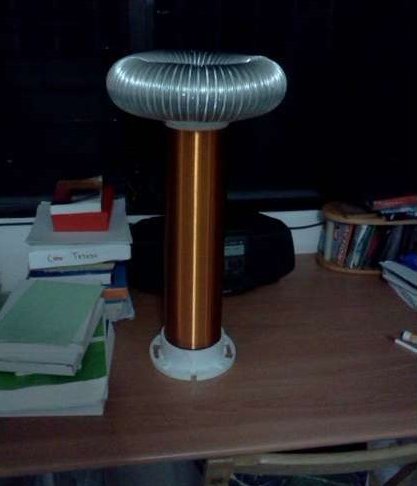
A DIY solid state Tesla coil sounds like the kind of weekend project that begins with “I watched one video” and ends with “why is the screwdriver glowing?” In reality, it is one of the most fascinating electronics builds a hobbyist can studypart high-frequency physics, part power electronics, part safety discipline, and part tiny indoor lightning show. Unlike the classic spark-gap Tesla coil, a solid state Tesla coil, often shortened to SSTC, uses semiconductor switches such as MOSFETs or IGBTs to drive a resonant transformer. That makes it quieter, more controllable, and more suitable for modern experiments like audio modulation and compact tabletop demonstrations.
Before we go further, let’s put the giant blinking warning sign on the bench: Tesla coils are high-voltage devices. Even small coils can create dangerous electric fields, hot components, RF interference, stored capacitor energy, and arcs that should never be treated like party tricks. This guide is written as an educational overview for planning, understanding, and safely approaching a DIY solid state Tesla coilnot as a reckless “plug this in and hope” recipe. If you are new to high-voltage electronics, start with low-voltage circuits, learn measurement safety, and work with someone qualified. Lightning may look cool, but it does not care about your confidence level.
What Is a Solid State Tesla Coil?
A solid state Tesla coil is a resonant high-voltage transformer driven by electronic switching devices instead of a mechanical spark gap. In a traditional spark-gap Tesla coil, a high-voltage transformer charges a capacitor until the voltage jumps across a spark gap, dumping energy into the primary coil. In an SSTC, the switching is handled by solid state components. The result is a coil that can be switched on and off rapidly, tuned more precisely, and controlled with modern driver circuits.
The basic idea remains similar to Nikola Tesla’s original resonant transformer concept: energy is pushed into a primary coil, which magnetically couples to a secondary coil. The secondary coil, often wound with hundreds or thousands of turns of fine wire, resonates with its own capacitance and the top load. When everything is tuned well, voltage rises dramatically at the top terminal, creating streamers, corona, and those mesmerizing purple-white arcs that make every electronics bench look like a science museum after dark.
How a DIY SSTC Works
The Resonant Transformer
The heart of the system is resonance. A Tesla coil does not behave like an ordinary iron-core transformer that simply steps voltage up by a fixed turns ratio. Instead, it uses tuned circuits. The secondary coil has inductance, and it also has capacitance from the winding, nearby objects, and the top load. Together, these form a resonant circuit. When the primary drive frequency matches the secondary’s natural resonant frequency, energy transfer becomes much more efficient.
Think of pushing a child on a swing. Push randomly, and you mostly look awkward. Push at the right rhythm, and the swing rises higher with each push. A solid state Tesla coil works in a similar spirit, except the swing is a tall coil of copper wire and the “push” is delivered by high-speed switching electronics. Less playground, more “please keep both hands away from the glowing thing.”
The Driver Circuit
The driver circuit is the brain of a DIY solid state Tesla coil. Its job is to turn the power devices on and off at the right time. Many SSTCs use feedback from the secondary or primary current so the circuit can track the coil’s resonant frequency automatically. This is useful because the resonant frequency changes when streamers appear, when a top load is adjusted, or when the surrounding environment affects capacitance.
A simple SSTC may use a single MOSFET or a half-bridge design. More powerful versions often use a full bridge or IGBTs. Gate driver ICs are commonly used because power transistors cannot be driven directly and reliably from a weak logic signal. A good gate driver charges and discharges the transistor gate quickly, helping the switch turn on and off cleanly. In bridge circuits, dead time is also important because it helps prevent both switches in the same leg from turning on at once, a disaster known as shoot-through. Shoot-through is basically two transistors joining forces to turn themselves into expensive confetti.
The Interrupter
Many SSTCs use an interrupter, a separate circuit that rapidly enables and disables the main drive. Instead of running continuously, the coil fires in controlled bursts. This reduces heating, limits power, and makes the coil easier to control. Interrupters are also the secret behind musical Tesla coils. By turning the arc on and off at audio frequencies, the plasma itself can produce tones. No speaker cone is needed; the arc becomes the speaker. It is not exactly hi-fi, but it is hard to beat a lightning bolt playing a melody for dramatic flair.
Main Components of a DIY Solid State Tesla Coil
Secondary Coil
The secondary coil is usually wound on a nonconductive tube, such as PVC or acrylic. It uses many turns of fine magnet wire and must be smooth, clean, and well insulated. A neat winding helps reduce weak spots where corona can form. Builders often apply varnish, polyurethane, or epoxy after winding to protect the wire and improve insulation. The secondary is not the place to rush. A sloppy secondary coil may still look cylindrical from across the room, but electricity has a talent for finding every tiny flaw you hoped it would politely ignore.
Primary Coil
The primary coil has fewer turns of thicker wire. In an SSTC, it is usually placed near the base of the secondary. Coupling between the primary and secondary matters: too little coupling wastes energy, while too much coupling may encourage racing sparks or insulation stress. Many small SSTCs use a simple primary arrangement, but careful spacing and mechanical stability are still important. Anything that moves during operation can change tuning or create unwanted arcing paths.
Top Load
The top load is the smooth metal terminal at the top of the coil. It may be a toroid, sphere, or rounded metal object. Its job is to add capacitance and help shape the electric field. A smooth top load reduces premature corona and allows voltage to rise before streamers break out. Some builders add a small breakout point, such as a short wire or rounded screw, to encourage sparks to start at a predictable location.
Power Electronics
The power stage contains the switching devices, gate drivers, rectifier, bus capacitors, current sensing, protection circuits, and heat management hardware. This is where most beginner failures happen. A transistor may be rated for impressive voltage and current on paper, but real switching circuits involve heat, ringing, parasitic inductance, and fast transients. Good layout, short connections, snubber networks, proper grounding, and heat sinking are not decorative extras. They are the difference between a working coil and a small theatrical smoke machine.
SSTC vs. DRSSTC: What Is the Difference?
A standard SSTC usually drives the secondary resonance directly through a primary winding. A dual resonant solid state Tesla coil, or DRSSTC, adds a resonant capacitor in series with the primary coil, creating a resonant primary tank circuit. This allows very high peak currents and much larger sparks for a given input power, but it also increases complexity and risk. DRSSTCs require careful current limiting, interrupter control, and robust power electronics.
For a beginner, a small SSTC is usually the more reasonable educational path. A DRSSTC can produce dramatic results, but it is less forgiving. If an SSTC is a spicy electronics project, a DRSSTC is the extra-hot version that asks you to sign a waiver and bring spare IGBTs.
Safety First: The Non-Negotiable Part
Every DIY solid state Tesla coil project should begin with safety planning, not a shopping cart. High voltage, high frequency, and stored energy create several hazards at once. Capacitors can retain charge after power is removed. Arcs can ignite nearby materials. RF energy can interfere with electronics. People with pacemakers or other implanted medical devices should stay well away from operating coils. Sensitive devices such as phones, laptops, routers, and lab instruments should not be parked next to an active coil unless you enjoy replacing expensive rectangles.
Safe operation means using a proper enclosure for low-voltage and mains circuits, insulated supports, emergency power cutoff, bleeder resistors where appropriate, fusing, grounding, physical barriers, and a strict rule that nobody touches or adjusts the coil while it is energized. After power is removed, stored energy should be discharged and verified with an appropriate meter before work continues. Professional electrical safety guidance also emphasizes discharging high-capacitance equipment through a properly rated resistor and grounding exposed terminals before people enter a test area.
Personal Safety Checklist
- Never operate a Tesla coil near flammable materials, fuel vapors, paper piles, or loose fabric.
- Keep spectators behind a safe physical barrier.
- Use one clear power switch and one emergency cutoff method.
- Do not touch streamers or allow arcs to pass through the body.
- Keep medical implants, phones, computers, and other electronics away from the test area.
- Ventilate the space because ozone and nitrogen oxides can be produced by electrical discharge.
- Test at low power first and increase carefully only after checking temperature, waveform quality, and stability.
Planning a DIY Solid State Tesla Coil Project
Define the Goal
Before choosing parts, decide what kind of coil you want. A tiny desktop demonstration coil has different design needs than a musical SSTC or a large display coil. Are you building for education, photography, music, or simply to understand resonant power electronics? A clear goal prevents the classic hobbyist problem of buying parts for three different designs and accidentally building none of them.
Start Small
A small, low-power SSTC is the best learning platform. It lets you study resonance, feedback, gate drive behavior, insulation, and layout without instantly entering the realm of terrifying stored energy. Small coils are also easier to troubleshoot. When a compact coil fails, you may lose a transistor. When a large coil fails, you may lose the transistor, the driver board, the fuse, your confidence, and possibly the smell of fresh air in the workshop.
Use Proven Concepts
Experienced builders often rely on familiar blocks: an oscillator or feedback input, a gate driver, a MOSFET or IGBT switching stage, a primary coil, a secondary resonator, an interrupter, and protection circuits. You do not need to reinvent every part of the system. In fact, copying the general architecture of proven educational designs while understanding why each section exists is much wiser than improvising a high-frequency power inverter from vibes and leftover wire.
Common Problems and What They Usually Mean
No Breakout
If the coil powers up but produces no visible breakout, the problem may be weak coupling, poor tuning, insufficient drive, a missing breakout point, or incorrect feedback polarity. Sometimes the secondary is oscillating, but the top load is too smooth or too large for the available power. A small breakout point can help the discharge start in a controlled location.
Hot Transistors
Hot switching devices often indicate poor gate drive, incorrect frequency, excessive current, inadequate heat sinking, ringing, or layout problems. Power transistors are not magic valves. They have capacitances, switching losses, and thermal limits. If they are getting hot quickly, the circuit is telling you something, and that something is not “add more voltage.”
Random Arcing
Arcs from the secondary winding, primary strike, or flashover along the coil form usually mean insulation or geometry problems. The top load may be too small, coupling may be too aggressive, or sharp metal points may be encouraging discharge in the wrong place. Smooth surfaces, proper spacing, and a strike rail can reduce the risk, but the best fix is careful design before the first power-up.
Driver Instability
Unstable operation can come from noisy feedback, poor grounding, long wires, weak decoupling, or electromagnetic interference from the coil itself. Tesla coils are talented at attacking their own control electronics. Shielding, optical isolation, fiber-optic interrupter links, short signal paths, and thoughtful grounding can improve reliability.
Can a DIY Solid State Tesla Coil Play Music?
Yes, a solid state Tesla coil can be made musical by modulating the interrupter. The coil does not play music the way a speaker does. Instead, rapid bursts of plasma heat the surrounding air, creating pressure waves that our ears interpret as sound. A microcontroller or MIDI interrupter can translate notes into timed pulses. The result is delightfully strange: recognizable tunes played by electrical arcs. It is like a synthesizer that skipped music school and went straight to wizard academy.
However, musical operation adds complexity. The coil must handle repeated bursts without overheating, and the interrupter timing must stay within safe limits for the power stage. Long notes, high duty cycles, and aggressive settings can overheat switching devices quickly. For this reason, musical Tesla coils usually require conservative tuning, careful thermal monitoring, and current limiting.
Practical Build Philosophy: Measure, Do Not Guess
One of the best habits in any DIY solid state Tesla coil project is measurement. Use appropriate tools for the voltage and frequency range involved. Learn what a clean gate waveform looks like. Check for ringing. Watch device temperatures. Confirm that the interrupter is doing what you think it is doing. Good builders are not people who never make mistakes; they are people who catch small mistakes before those mistakes become expensive fireworks.
Documentation also matters. Record coil dimensions, wire size, number of turns, driver settings, power supply limits, top load changes, and test results. When something improves performance, write it down. When something destroys a MOSFET, write that down toopreferably after opening a window.
DIY Solid State Tesla Coil Experience Notes
Working on a DIY solid state Tesla coil is less like assembling a bookshelf and more like training a tiny electrical dragon. The first lesson is patience. A Tesla coil rewards builders who slow down, check assumptions, and respect invisible forces. The most common beginner temptation is to rush from “the circuit turns on” to “let’s see maximum sparks.” That leap is where parts often fail. A better approach is to test in stages: verify the control electronics, confirm the gate drive, test the power stage at reduced voltage, inspect waveforms, and only then bring the resonator into the picture.
Another useful experience is learning that mechanical details are electrical details. A loose wire, a sharp solder joint, a wobbly primary support, or a poorly mounted heat sink can change performance dramatically. High-frequency circuits dislike messy layouts. Long wires add inductance. Bad grounding invites noise. A beautiful schematic can behave badly if the physical build is chaotic. In a Tesla coil, the air around the circuit becomes part of the system, which is both exciting and mildly rude.
Coil winding is a surprisingly meditative part of the process. It looks simple: turn the tube, guide the wire, keep the spacing even. After a while, though, you realize that consistency matters. Crossed turns, dust, scratches, or uneven coating can become weak points. Many builders discover that the secondary coil teaches craftsmanship better than any motivational poster ever could. If you rush, it shows. If you take your time, the finished coil looks professional before it ever produces a spark.
Troubleshooting also builds humility. A DIY SSTC may refuse to work for reasons that seem almost personal. The feedback signal may be inverted. The interrupter may be too aggressive. A MOSFET may be switching too slowly. The top load may detune the secondary. The coil may work beautifully at low power and misbehave at higher power because the streamers shift the resonant frequency. Each problem teaches a real electronics concept, which is why this project is so valuable. It turns abstract ideasresonance, switching loss, coupling, capacitance, electromagnetic interferenceinto things you can see, hear, and occasionally smell.
The best experience, though, is the first controlled breakout. After careful testing, when a small violet brush appears at the top load, it feels less like a party trick and more like a conversation with physics. You built a system that stores energy, times pulses, excites resonance, and shapes electric fields strongly enough to ionize air. That is impressive. It is also a reminder to stay modest. The same effect that makes the coil beautiful can damage electronics, startle people, and punish careless hands.
For anyone planning a DIY solid state Tesla coil, the winning mindset is simple: build smaller than your ego wants, test more than your impatience allows, and treat safety as part of the design rather than a warning label at the end. A well-built SSTC is not just a machine that makes sparks. It is a compact lesson in power electronics, RF behavior, materials, measurement, and engineering judgment. And yes, it also makes you feel a little like a mad scientistbut ideally the kind with safety glasses, documentation, and a working fire extinguisher nearby.
Conclusion
A DIY solid state Tesla coil is one of the most rewarding advanced electronics projects because it combines visible high-voltage effects with serious engineering ideas. It teaches resonance, switching, feedback, thermal management, insulation, grounding, and safety in a way few projects can match. The key is to approach it with respect. Start small, study proven designs, measure carefully, and never treat arcs as toys. When built thoughtfully, an SSTC can become a stunning educational display, a musical plasma instrument, and a powerful reminder that physics is much more fun when it is not trying to bite you.