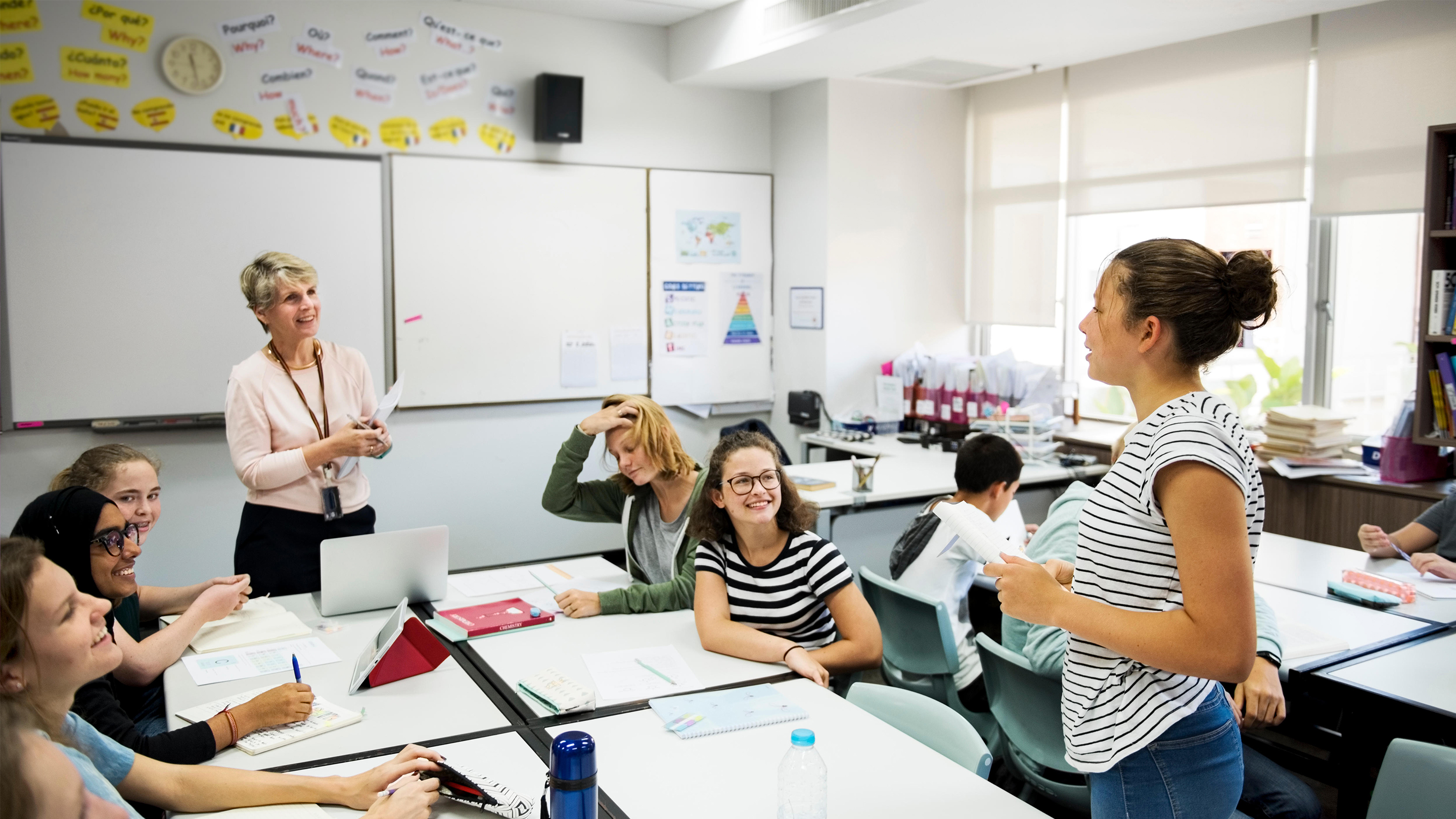
There is no such thing as an “average” student. There is only a classroom full of very real humans: the kid who loves science but hates reading aloud, the student who can explain everything brilliantly but freezes when faced with a blank worksheet, the quiet thinker who needs time, the fast finisher who wants more challenge, and the child who looks distracted but is actually trying very hard not to sink under the weight of too many directions. A Universal Design for Learning approach, often shortened to UDL, starts by accepting that learner variability is not a glitch in the system. It is the system.
That is why UDL has become such an important framework in modern education. Instead of building a lesson for a mythical “middle” student and then scrambling to patch it for everyone else, educators design from the beginning for flexibility, access, and meaningful participation. In other words, the ramp is built in before anyone has to ask where the stairs are.
If that sounds refreshingly sensible, it is. But UDL is not just “be nice and add choices.” It is a structured, research-informed way to create learning experiences that are rigorous, inclusive, and actually usable. While the classic UDL framework is often summarized through three core pillars, many educators discuss four practical principles for putting it into action. Taken together, these ideas offer a smart roadmap for teaching all students without turning every lesson into chaos wearing a cardigan.
What Is Universal Design for Learning, Really?
At its core, Universal Design for Learning is an approach to lesson and curriculum design that helps all students access learning, stay engaged, and demonstrate what they know in different ways. It does not ask teachers to lower standards. It asks them to keep goals clear while making the path to those goals more flexible.
That distinction matters. In a strong UDL classroom, the destination stays firm, but the routes become more flexible. If the goal is for students to analyze a historical argument, they might read a primary source, listen to it, watch a captioned mini-lecture, or use guided annotations. If the goal is to show understanding, one student may write an essay, another may record a presentation, and another may build a visual explanation backed by evidence. Same destination. Different, well-designed roads.
So what are the four principles of a Universal Design for Learning approach? A practical way to understand them is this:
- Keep expectations high and goals clear for every learner.
- Look for barriers in the design, not defects in the student.
- Plan multiple pathways for engagement, representation, and action and expression.
- Use reflection and agency to help students become expert learners.
Let’s walk through each one without making it sound like a compliance memo dressed as inspiration.
Principle 1: Keep Expectations High and Goals Clear for Every Learner
The first principle is both simple and radical: all students should have access to meaningful, challenging learning goals. UDL does not begin with “Who probably cannot do this?” It begins with “What do we want all learners to understand and be able to do?”
That mindset shifts everything. When teachers define the goal clearly, they can separate the true learning target from the extra stuff that often gets tangled around it. For example, if the goal is to understand the water cycle, then struggling with handwriting, decoding a dense block of text, or trying to interpret tiny unlabeled diagrams should not become accidental gatekeepers.
Clear goals also help students. Learners do better when they know what success looks like. A vague instruction like “do the project” sends many students into the academic wilderness with a dull flashlight. A clearer goal such as “explain how energy drives the water cycle using evidence from at least two sources” gives them something concrete to aim for.
What this looks like in practice
A middle school teacher planning a civics lesson might define the goal as evaluating how a local policy affects community members. That teacher can then provide a rubric, model examples, a checklist, and options for how students gather and present evidence. The rigor stays in place. The confusion takes a well-earned vacation.
Principle 2: Look for Barriers in the Design, Not Defects in the Student
This may be the most powerful principle in the whole UDL approach. When students struggle, UDL encourages educators to ask, “What in the design is getting in the way?” rather than, “What is wrong with this student?” That one question can turn a frustrating classroom moment into a productive design decision.
Barriers show up everywhere. Maybe the directions are too wordy. Maybe the reading level is far above the learning target. Maybe students need more background knowledge before they can access the content. Maybe the examples are culturally narrow or irrelevant. Maybe the assessment measures test-taking stamina more than actual understanding.
Once educators begin to spot barriers, they can redesign. They can chunk directions, preview vocabulary, provide captions and transcripts, add visuals, build in peer collaboration, offer structured note-taking tools, or give students different ways to respond. Suddenly, the lesson is not “easier.” It is more usable.
Why this matters so much
Traditional classrooms often assume that students must adapt to the curriculum. UDL flips that script and says the curriculum should be designed to anticipate variability. That benefits students with disabilities, certainly, but it also helps multilingual learners, students with uneven background knowledge, highly capable students who need challenge, and frankly anyone who has ever had a bad day before third period.
Principle 3: Plan Multiple Pathways for Engagement, Representation, and Action and Expression
This principle is where the classic UDL framework becomes most visible. Once goals are clear and barriers are identified, teachers design options across the three widely recognized UDL dimensions: the why of learning, the what of learning, and the how of learning.
Multiple Means of Engagement
Engagement is about motivation, interest, relevance, belonging, and persistence. Students do not all get hooked by the same thing. Some love choice. Some crave structure. Some want collaboration. Some would rather focus quietly without performing their thoughts in public every seven seconds.
Providing multiple means of engagement might include:
- choice of topics, texts, or examples
- clear routines and predictable supports
- goal-setting trackers and progress check-ins
- collaborative work for some tasks and independent options for others
- authentic tasks connected to students’ lives and communities
For example, in a writing unit, students might choose whether to write about a community issue, a scientific problem, or a personal experience connected to the same argumentative writing standard. The standard stays steady, but the relevance goes way up.
Multiple Means of Representation
Representation refers to how learners take in information. Some students understand best through text, others through visuals, audio, demonstrations, or guided discussion. Many benefit from a combination. Good UDL design does not treat one format as the gold standard and everything else as a side dish.
Representation can include:
- captioned videos and audio versions of text
- visuals, diagrams, timelines, and graphic organizers
- vocabulary supports, glossaries, and translated key terms when appropriate
- worked examples and teacher think-alouds
- background knowledge builders before new content
Imagine a biology lesson on cell structure. Instead of assigning a single textbook passage and hoping for the best, the teacher offers a labeled diagram, a short captioned explainer video, a concise reading, and a physical model or digital simulation. Students are not receiving watered-down content. They are receiving accessible entry points.
Multiple Means of Action and Expression
This dimension addresses how students interact with learning and show what they know. A student might understand a concept deeply and still struggle to prove it through one narrow format. UDL encourages options that reveal learning more accurately.
Action and expression can include:
- speech-to-text or keyboarding options
- visual, oral, written, or multimedia responses
- scaffolds such as sentence frames, rubrics, and exemplars
- checklists for planning and self-monitoring
- tools for organization, time management, and revision
A social studies teacher, for instance, might let students demonstrate understanding of a historical turning point through a traditional essay, a slide presentation with narration, a podcast-style reflection, or a video explanation using cited evidence. The goal is not to make grading entertaining like a talent show with rubrics. The goal is to measure understanding in a valid, flexible way.
Principle 4: Use Reflection and Agency to Help Students Become Expert Learners
The final principle pushes UDL beyond access and into long-term growth. Great UDL is not only about helping students finish this assignment. It is about helping them understand how they learn, what strategies help them, how to set goals, and how to improve through reflection and feedback.
That is where learner agency comes in. Students need chances to make decisions, evaluate results, and revise. They should not just complete tasks; they should think about why a strategy worked, what barrier got in the way, and what they will do differently next time. This is how classrooms move from compliance to ownership.
Reflection does not need to be elaborate. It can happen through exit tickets, self-assessment checklists, revision notes, peer feedback protocols, or a quick conference. What matters is that students begin to see learning as a process they can influence.
A strong example
After a science assessment, a teacher might ask students to respond to three short prompts: “Which format helped you learn best?” “Where did you get stuck?” and “What support would help next time?” Those questions generate valuable insight for the teacher and powerful metacognition for the student. That is UDL doing real work.
Common Mistakes When Schools Try a UDL Approach
UDL is popular for a reason, but it is also easy to misunderstand. One common mistake is assuming UDL means unlimited choice all the time. It does not. Too many options can overwhelm students faster than a substitute teacher opening a mystery cabinet. Choices should be purposeful, aligned to the goal, and supported.
Another mistake is confusing UDL with simply adding technology. Tech can support UDL beautifully, but a flashy app does not automatically create access. If the task is still confusing, inflexible, or irrelevant, the technology is just an expensive hat on the same old problem.
A third mistake is treating UDL as something only for special education. In reality, UDL is a general education framework that benefits all learners. It works best when it is part of everyday planning, not an emergency add-on after students hit a wall.
The Payoff of a Universal Design for Learning Approach
When educators consistently use UDL, classrooms become more equitable, more responsive, and often more calm. Students know the goals. They have usable paths toward success. They can access content in ways that make sense to them. They can demonstrate learning more accurately. And teachers spend less time retrofitting and more time teaching.
UDL also supports a healthier view of ability. Instead of sorting students into neat little boxes labeled “can” and “cannot,” it recognizes that performance changes with context, tools, and design. That is a much more realistic understanding of how humans learn.
Most of all, UDL reminds schools that fairness is not giving every learner the exact same thing. Fairness is designing learning so every student has a genuine opportunity to reach meaningful goals. That is a higher standard, not a softer one.
Experiences From Real Classrooms Using UDL
One of the most revealing things about UDL is that it often feels small in the moment and huge in hindsight. A teacher swaps a single worksheet for a choice board and suddenly participation improves. A student who rarely speaks in class records a thoughtful audio response and finally gets to show what she knows. A multilingual learner uses visuals and sentence frames to join a discussion instead of sitting on the edge of it. None of these moments look dramatic from the hallway, but inside the classroom they can change the entire emotional weather.
Consider a fourth-grade reading lesson built around a nonfiction article. In a traditional setup, every student reads the same passage silently, answers the same questions, and submits the same written response. In a UDL-informed version, students may still work toward the same comprehension goal, but the experience changes. Some listen to the article while following the text. Others preview vocabulary through pictures first. A few use a graphic organizer to identify key ideas. When it is time to respond, one student writes paragraphs, another creates a concept map with evidence, and another explains the article orally to the teacher using notes. The standard is still there. The doorway is simply wider.
Middle school classrooms often show another benefit: UDL can reduce learned helplessness. When students regularly experience rigid lessons, they may start to believe success depends on being naturally good at school. But when teachers offer structured choices, model strategies, and normalize revision, students begin to see success as something they can build. That shift is enormous. It turns “I’m bad at this” into “I need a different approach.”
Teachers also report that UDL helps them notice patterns they used to miss. If ten students are confused by directions, that is not ten separate student problems. That is probably one design problem wearing ten different faces. Once teachers start looking through that lens, planning becomes sharper. They begin anticipating where students may get stuck and designing supports before frustration piles up.
Even in high school, where pacing guides and credit requirements can make flexibility feel difficult, UDL can make a noticeable difference. A history teacher might keep the same core content and standards while providing article sets at varying complexity levels, short background videos, guided notes, and a menu of final products. Students still wrestle with serious ideas, but more of them can enter the conversation with confidence.
Perhaps the most meaningful classroom experience tied to UDL is the simple shift in dignity. Students feel it when they are not constantly singled out for special fixes after the lesson is already underway. They feel it when support is built in for everyone. They feel it when their strengths count, their choices matter, and their progress is measured by learning rather than by how closely they resemble an imaginary average student. That is the quiet magic of UDL. It does not just help students complete school tasks. It helps classrooms become places where more learners can actually belong.
Conclusion
The four principles of a Universal Design for Learning approach offer a powerful way to think about modern teaching. Keep goals clear and expectations high. Look for barriers in the design instead of blaming students. Create multiple pathways for engagement, representation, and action and expression. Then build reflection and agency so students become more strategic, independent learners over time.
That combination makes UDL more than a trend or a buzzword. It becomes a practical framework for inclusive teaching that respects learner variability without sacrificing rigor. In a world where classrooms are increasingly diverse in every possible way, that is not a nice extra. It is the job.