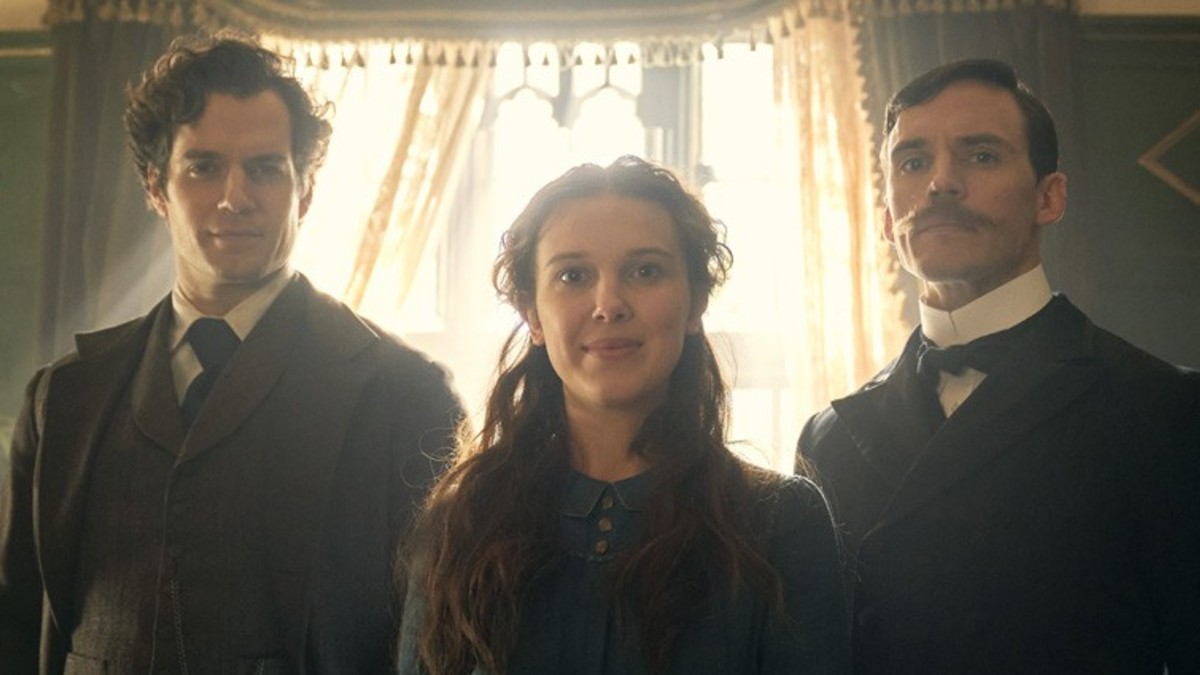
Some lawsuits sound like they were written by a bored law student during a thunderstorm. Then there is the real copyright dispute that made the internet blink twice: Netflix could be sued because Sherlock Holmes seemed too emotional. Yes, the same detective famous for cold logic, violin practice, and making everyone else feel like they failed kindergarten observation class was suddenly at the center of a legal argument about feelings.
The headline may sound like satire, but the story behind it is a serious and fascinating lesson in copyright law, public domain characters, literary estates, and the strange legal life of fictional people who outlive their creators. The lawsuit involved Netflix’s Enola Holmes, the film based on Nancy Springer’s novels about Sherlock Holmes’ younger sister. The Conan Doyle Estate argued that while most Sherlock Holmes stories had entered the public domain, some later stories were still protected at the time, and those later stories allegedly showed a warmer, more emotional Sherlock.
In plain English: old Sherlock was public property, but “Sherlock with feelings” was, according to the estate, still under copyright protection. If that sounds like trying to put a paywall around emotional growth, congratulationsyou have found the delightful weirdness of copyright law.
Why Sherlock Holmes Is a Copyright Puzzle
Sherlock Holmes first appeared in Arthur Conan Doyle’s 1887 story A Study in Scarlet. Over the following decades, Doyle wrote novels and short stories that turned Holmes and Dr. John Watson into one of the most famous detective duos in literary history. The character became so iconic that his pipe, magnifying glass, deerstalker hat, and “elementary” aura are recognized even by people who have never read a single Doyle story.
But copyright does not last forever. In the United States, older works eventually enter the public domain, which means anyone may use them without asking permission. Most of the Sherlock Holmes canon had already become public domain before the Netflix lawsuit. That allowed writers, filmmakers, game designers, and television producers to create new Sherlock stories without needing to negotiate with the Conan Doyle Estate.
The complication was that, at the time of the Enola Holmes dispute, a small number of later Sherlock Holmes stories were still under copyright in the United States. The estate’s argument focused on the difference between the earlier public domain Holmes and the later copyrighted Holmes. According to the estate, Doyle developed Holmes over time, making him more humane, empathetic, respectful, and emotionally expressive in the later stories.
That is where the legal mystery begins: can a character’s emotional development be separated from the character himself? Can copyright protect a “warmer” version of a public domain figure? Or is that like claiming ownership over a sandwich because someone added mustard?
The Enola Holmes Lawsuit: What Actually Happened?
Enola Holmes introduced audiences to Sherlock’s teenage sister, Enola, played by Millie Bobby Brown. Henry Cavill played Sherlock Holmes, but this Sherlock was not the icy machine of deduction some readers expect. He showed concern, affection, and respect for Enola. He was still brilliant, still restrained, and still Sherlock-ish, but he had the emotional temperature of a human being rather than a filing cabinet in a waistcoat.
The Conan Doyle Estate sued Netflix, Legendary Pictures, Nancy Springer, Penguin Random House, and others, claiming that the film and books used protected elements from Doyle’s later stories. The estate argued that Holmes’ softer emotional qualities were not present in the public domain stories and therefore could not be freely copied from the still-protected works.
The defendants pushed back. Their position was that Sherlock Holmes as a character was overwhelmingly in the public domain, and broad traits like kindness, respect, or emotional awareness are not something copyright law should lock away. After all, if every emotional shift in a character were separately protected, creators would need a legal spreadsheet before letting any classic character smile, cry, adopt a dog, or become less annoying at dinner parties.
The lawsuit was eventually dismissed after the parties agreed to end the case. Because the court did not issue a full final ruling on the merits, the biggest legal question remained partly unresolved. Still, the dispute became famous because it highlighted how strange copyright law can become when a fictional character appears across many works published over many years.
Can Copyright Protect a Character’s Feelings?
Copyright protects original creative expression. It does not protect raw ideas, general concepts, stock character types, or basic human emotions. A detective can be brilliant. A detective can be grumpy. A detective can secretly care about his sister. Those general ideas are usually too broad to own.
However, copyright can protect specific expression. For example, an author’s exact sentences, scenes, dialogue, unique plot structure, and distinctive creative choices may receive protection. A highly developed fictional character can also be protected, especially when the character has unique traits, relationships, and expressive details. That is why characters like Sherlock Holmes, Batman, James Bond, and Harry Potter create complicated copyright questions when new creators want to reuse them.
The tricky part is separating an unprotected idea from protected expression. “Sherlock cares about someone” is an idea. A specific Doyle scene in which Holmes expresses concern in a particular way, using particular language and circumstances, may be protected if the story is still under copyright. The lawsuit raised the question of whether Netflix merely used the general idea of a warmer Sherlock or copied protected expression from later Doyle stories.
For many copyright scholars and commentators, the estate’s argument looked too broad. Emotions are part of ordinary character development. If copyright could protect “Sherlock becomes more empathetic,” then public domain characters would remain surrounded by invisible fences long after their stories supposedly became free for public use.
Why the Public Domain Matters
The public domain is not a dusty attic where old works go to nap. It is one of the engines of culture. Public domain works allow artists, students, filmmakers, educators, publishers, and fans to reinterpret stories for new generations. Without the public domain, many beloved modern works would be legally impossible or financially exhausting.
Think about how often creators reuse classic characters. Dracula gets redesigned every few years. Frankenstein’s creature appears in horror, comedy, philosophy, children’s media, and Halloween decorations. Jane Austen’s characters have been turned into modern romances, zombie adventures, and high school comedies. Greek myths are constantly rebuilt into novels, movies, games, and stage productions. The public domain lets culture keep talking to itself.
Sherlock Holmes is especially important because he has become a shared language for mystery storytelling. The brilliant detective, the loyal companion, the impossible clue, the dramatic revealthese elements have influenced crime fiction for more than a century. If creators can use only a frozen, narrow version of Holmes, the public domain becomes less useful. It would be like being told you can borrow a car, but only if you never turn left.
What Makes Sherlock Holmes So Legally Complicated?
Holmes is not a character from one single book. He evolved across dozens of stories published over many years. That creates a layered copyright situation. Some stories entered the public domain earlier, while later stories remained protected until their copyright terms expired. This allowed the estate to argue that certain traits introduced or developed later were still protected.
This is not unique to Sherlock Holmes. Long-running characters often create similar problems. A character may debut in one work, gain new traits in a sequel, receive a major backstory years later, and change dramatically over time. When some works are public domain and others are not, creators must ask: which version of the character can be used freely?
The safest answer is usually this: creators may use elements found in public domain works, but they should avoid copying specific protected elements from later works that remain under copyright. That sounds simple until you try to decide whether “having feelings” counts as a protected later element or a basic human trait. At that point, everyone in the room becomes Watson, blinking politely while the legal Holmes explains the obvious at alarming speed.
The “Sherlock With Feelings” Argument
The estate’s theory was that Doyle changed Holmes after World War I and after personal losses in Doyle’s life. According to this view, the later stories show Holmes becoming more human, compassionate, and emotionally open. The estate claimed that Enola Holmes borrowed from that protected later version by showing Sherlock as caring toward Enola.
There is an interesting literary point here. Characters do evolve. Writers often soften, deepen, or complicate their creations over time. A cold character may become warmer. A loner may develop a family bond. A genius may learn humility. That evolution can be part of the author’s creative expression.
But the legal question is not whether Doyle wrote emotional moments. He did. The question is whether later emotional qualities can be carved out and owned separately after the core character has entered the public domain. Many critics of the lawsuit argued that allowing such claims would weaken the public domain by letting rights holders control broad character traits long after most of the original work became free to use.
Why Netflix Was an Attractive Target
Let us be honest: lawsuits do not usually wander randomly through the forest and bump into small indie poets. Netflix is a global streaming giant. Enola Holmes had star power, a large audience, and major commercial value. When a valuable property uses a famous character, rights holders pay attention.
From a business perspective, the lawsuit made strategic sense. The estate had limited remaining copyright leverage at the time, and Enola Holmes was a high-profile production. Even if the legal theory was controversial, litigation can pressure companies to settle. Large studios often prefer certainty over a long courtroom battle, especially when a release schedule, marketing budget, and franchise plans are involved.
That does not mean the claim was automatically strong. It means copyright lawsuits are not only about pure legal philosophy. They are also about money, leverage, risk, and negotiation. In entertainment law, the courtroom is sometimes less a temple of justice and more a very expensive conference room with robes.
Lessons for Writers, Filmmakers, and Content Creators
The Enola Holmes dispute offers several practical lessons for creators who want to use public domain characters.
1. Public Domain Does Not Always Mean “Everything Is Free”
A character may be public domain in one version but not in every version. For example, early elements may be free to use, while later additions remain protected. If you are adapting a famous character, identify which works are public domain and which are still protected.
2. Avoid Copying Later Protected Details
General traits are usually safer than specific scenes, dialogue, settings, and plot points. A detective can be smart. But copying a protected scene from a later story is a different matter. The more specific the borrowing, the greater the legal risk.
3. Character Development Can Be a Gray Area
Emotional traits are tricky. They may feel too broad to own, but if they are tied to specific protected scenes or relationships, disputes can arise. Creators should build their own emotional arcs rather than relying heavily on later copyrighted material.
4. Big Platforms Attract Big Claims
A small creator may fly under the radar, but a major film, streaming series, or bestselling book is more likely to face legal scrutiny. Success is wonderful, but it also rings the dinner bell for lawyers.
Why This Case Became an Internet Favorite
The lawsuit spread widely online because it was easy to summarize in a funny way: Netflix got sued for giving Sherlock Holmes emotions. That is not the whole legal story, but it is close enough to be irresistible. The internet loves a headline that sounds like a rejected Onion pitch but is somehow real.
The case also touched a nerve because many people feel strongly about public domain access. Fans want classic characters to remain available for reinterpretation. Writers want creative freedom. Legal scholars worry about rights holders stretching copyright beyond its intended limits. And casual viewers simply want Henry Cavill to be allowed to look mildly concerned without requiring a licensing agreement.
There is also something symbolically perfect about Sherlock Holmes becoming the subject of a mystery about intellectual property. A detective famous for solving impossible cases ended up starring in one of the oddest copyright puzzles of modern entertainment law. Somewhere, Watson is writing the blog post and adding, “Holmes seemed moved, though his estate may object to that characterization.”
The Bigger Debate: Copyright vs. Creative Freedom
Copyright law tries to balance two goals. First, it rewards creators by giving them control over their work for a limited time. Second, it eventually releases works into the public domain so society can learn from, adapt, and build upon them. When that balance works, culture benefits. When it tilts too far toward control, old stories become locked behind legal gates.
The Sherlock Holmes dispute shows how rights holders may try to preserve control even as copyright expires. This is understandable from a business standpoint, but it can create tension with the purpose of copyright. Copyright was never designed to make fictional characters private property forever. It was designed to encourage creativity, then allow future creativity to flourish.
That is why public domain cases matter. They decide not just who gets paid, but who gets to tell stories. Can a modern writer give a classic character a sister? Can a filmmaker update old gender dynamics? Can a detective who once seemed emotionally distant become a little kinder without triggering a lawsuit? These questions shape how culture evolves.
Specific Example: Enola as a Modern Lens
Enola Holmes works because it does not merely recycle Sherlock. It shifts the center of the story. Enola is not a decorative younger sibling waiting for Sherlock to explain the plot. She is the main character, the investigator, the rule-breaker, and the emotional engine of the film. Sherlock’s role changes because the story’s perspective changes.
In that context, a warmer Sherlock is not necessarily copied from Doyle’s later stories. It may be a natural result of placing Holmes in a family story led by a young woman. A brother interacting with a younger sister will probably behave differently than a detective dissecting cigar ash with Watson. That does not require theft; it requires basic storytelling.
This is why the lawsuit felt odd to many observers. Modern adaptation often involves changing emphasis, tone, and emotional relationships. If every fresh angle on a public domain character could be challenged because it resembles some later copyrighted development, adaptation would become legally fragile. Creativity would need a permission slip from the past.
Experiences and Reflections Related to the Topic
One of the most interesting experiences related to this topic is watching how ordinary readers react when they first learn about the lawsuit. Most people laugh, then pause, then ask, “Wait, can someone really own a character’s feelings?” That reaction is valuable because it reveals the gap between common sense and legal complexity. Copyright law often deals with invisible boundaries, and those boundaries can feel strange when applied to fictional personalities.
For writers, this case is a reminder that inspiration is not the same as immunity. Many creators love classic characters because they feel familiar, flexible, and culturally shared. A writer might think, “Sherlock Holmes is public domain, so I can use him however I want.” The truth is more careful. You can often use public domain material freely, but you still need to understand which details belong to which version. That does not mean creators should be afraid. It means they should be informed.
For readers and viewers, the case offers a fun way to understand why adaptations sometimes feel different from the original. Every generation reshapes old stories to match new values. A Victorian detective may become more emotionally intelligent in a twenty-first-century film because modern audiences often expect character growth, family dynamics, and emotional stakes. That is not necessarily disrespectful to the original. It is how stories stay alive.
For publishers and studios, the lesson is risk management. Before building a film, show, comic, or game around a public domain character, legal teams usually review source material carefully. They ask what is free to use, what remains protected, what trademarks exist, and whether the new work borrows too closely from protected versions. This may sound boring, but it is the kind of boring that prevents a multimillion-dollar migraine.
For fans, the Sherlock case is also a reminder that the public domain is worth defending. Many beloved stories exist because creators were allowed to remix old material. Without that freedom, culture becomes less playful. Imagine a world where every vampire story required permission from one estate, every fairy-tale retelling needed a licensing fee, and every clever detective had to pass through a legal checkpoint before expressing concern. That world would be tidy, profitable for a few, and creatively dull.
The funniest part of the Sherlock dispute is also the most meaningful. Feelings are universal. Characters become memorable not only because of what they do, but because of how they change. If a public domain character cannot grow, then the public receives only a museum exhibit, not a living story. Sherlock Holmes has survived because writers keep finding new angles: colder Holmes, warmer Holmes, modern Holmes, young Holmes, old Holmes, comedic Holmes, dramatic Holmes, and occasionally Holmes with cheekbones so sharp they deserve their own legal counsel.
In the end, the Enola Holmes lawsuit became more than a fight over one movie. It became a symbol of the strange edge where law meets imagination. Copyright law must protect authors, but it must also allow culture to breathe. Sherlock Holmes entered the public imagination long ago. Giving him a little emotional oxygen should not feel like grand theft empathy.
Conclusion
The lawsuit over Netflix, Enola Holmes, and Sherlock Holmes’ emotions shows how complicated copyright law can become when iconic characters age into the public domain piece by piece. The Conan Doyle Estate argued that a more emotional Sherlock belonged to later protected stories, while critics saw the claim as an attempt to stretch copyright over broad human traits.
Although the case ended without a decisive court ruling, it remains a valuable example for creators, publishers, filmmakers, and fans. Public domain characters can be reused, reimagined, and revived, but creators should understand the difference between borrowing a free character and copying protected expression. Sherlock Holmes may be a master of deduction, but even he would need a legal memo to navigate his own copyright history.
Most importantly, the case reminds us that culture grows through reinterpretation. A classic character should not be trapped forever in the emotional posture of his first appearance. Stories survive because each generation finds new meaning in them. Sometimes that means giving a legendary detective a sister. Sometimes it means giving him feelings. And sometimes it means giving copyright lawyers a very busy afternoon.