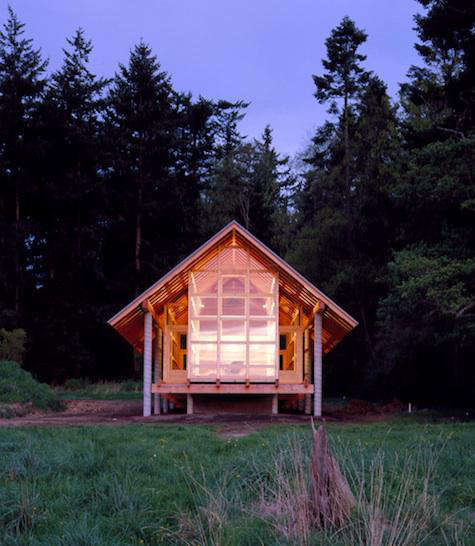
Some architecture firms want to dazzle you in the first five seconds. Suyama Peterson Deguchi, better known as SPD, plays a longer game. Their work does not shout from the sidewalk, wave giant metaphoric jazz hands, or beg for social-media applause. Instead, it settles in slowly. A wall lines up with a grove of trees. A roof seems to hover just enough to feel protective. A corridor turns ordinary walking into a quiet procession. Then, a few minutes later, you realize the building has done something sneaky and impressive: it has changed your breathing.
That is what makes an architect visit centered on Suyama Peterson Deguchi in Seattle so interesting. Founded by George Suyama in 1971, the practice has grown into a multidisciplinary studio known for Northwest contemporary design, architecture, interiors, construction, and furniture-informed thinking. The current firm identity reflects a legacy shaped by George Suyama, Ric Peterson, and Jay Deguchi, while the studio’s more recent evolution also includes architect-led construction and fabrication. In other words, this is not a firm that treats architecture as a pretty rendering followed by crossed fingers. SPD treats design as a full-bodied act of making.
Why Suyama Peterson Deguchi Matters in Seattle
Seattle is a city where architecture can easily fall into one of two traps: scenic cliché or tech-campus blandness. SPD has spent decades dodging both. The firm’s design language is rooted in placemaking, craftsmanship, restraint, and emotional atmosphere. That sounds lofty, but in SPD’s case it usually comes down to practical decisions made with unusual sensitivity: how a building sits on land, how daylight moves through a room, how materials age, and how visual calm can become a real quality of life.
This philosophy helps explain why George Suyama has had such influence on Seattle’s design culture. He is widely associated with a form of architecture that blends Japanese-inflected simplicity with Pacific Northwest naturalism. That combination has shaped not only custom homes, but also the broader regional understanding of what “modern” can mean here. In Seattle, modernism at its best is not cold, flashy, or anti-human. It is grounded, tactile, and aware of weather, topography, and trees that frankly outrank all of us.
An architect visit to SPD is therefore about more than one office or one portfolio. It is a visit into a regional design attitude: calm over clutter, precision over performance, and atmosphere over ego. That may sound almost suspiciously wholesome, but in a profession that sometimes confuses complexity with intelligence, SPD’s discipline feels refreshing.
The Studio Mindset: Quiet Design, Serious Craft
One of the most revealing things about SPD is that the firm openly emphasizes hand-drafting, physical models, and making as design tools. In an era when many studios seem permanently trapped inside glowing screens, that commitment says a lot. It suggests architecture is not just an abstract digital exercise, but a material conversation between eye, hand, body, and site.
That mentality carries through the studio’s broader work. SPD does not separate architecture from interiors the way some firms do, with one team making the shell and another sweeping in later to sprinkle decorative fairy dust. At SPD, structure, furnishings, lighting, artwork, and objects are part of one integrated idea. The result is architecture with rhythm and coherence. You feel it in the way rooms unfold, in the alignment of built-ins, and in the way material palettes are edited down until nothing feels accidental.
The firm’s 3×10 shop makes this even clearer. It extends SPD’s design values into furniture, lighting, accessories, and objects fabricated by local artisans. That is more than a side hustle with good taste. It reveals how the studio thinks: architecture is not an isolated event but part of a larger culture of craft. When SPD designs a house, it is not only designing enclosure. It is also shaping the emotional and tactile world inside it.
What You Notice in an SPD Project
1. Simplicity That Is Not Simple-Minded
SPD’s houses often look restrained, but restraint here is not minimalism for Instagram. It is strategic. Take the Junsei House, a project often described in terms of simplifying life and living with less. The idea was not merely to reduce possessions or make the owners feel morally superior for owning fewer throw pillows. It was to create a home whose spaces felt complete enough that they did not provoke constant accumulation. That is an unusually intelligent version of sustainability: design not only with efficient materials, but with an understanding of how form influences behavior.
Likewise, the Urban Cabin approached downsizing as an architectural opportunity rather than a compromise. Inspired by the idea of a picnic shelter in a forest, the project distilled domestic life into essentials while maintaining warmth, privacy, and a strong relationship to the garden. The lesson is classic SPD: subtraction can produce richness when the remaining elements are carefully tuned.
2. A Strong Sense of Refuge
Many SPD projects create a feeling of retreat without becoming bunker-like. The Lake House, for instance, was conceived as an escape near the city, and its design responds to the awkward pressure of neighboring houses by creating privacy without giving up light or connection to the water. This balancing act appears again and again in the firm’s work. SPD understands that refuge is not about hiding from the world under a blanket forever. It is about creating a protective frame from which you can experience landscape more clearly.
That quality also appears in larger rural projects such as the firm’s Montana work, where long rooflines, restrained materials, and carefully edited forms are used to deepen the sense of calm rather than compete with the scenery. When SPD works in dramatic landscapes, it does not try to out-drama the mountains. Good choice. Mountains are notoriously hard to upstage.
3. Architecture That Feels Made, Not Merely Installed
There is a difference between a building that looks assembled from options and one that feels made. SPD belongs firmly in the second category. Materials are chosen not only for appearance, but for how they support atmosphere: wood for warmth, steel for tension and precision, concrete for weight, glass for framed openness. The combinations are disciplined, sometimes spare, but rarely sterile.
This is one reason SPD’s buildings age well in the mind. They are not chasing novelty. The firm has long been associated with the elimination of “visual noise,” a phrase that captures both its aesthetic and its ethics. Remove what is unnecessary, and what remains can feel more humane, more lasting, and more rooted in place.
Seattle Connections Beyond the Houses
A visit focused on SPD should not stop with residential projects. The firm’s influence extends into Seattle’s cultural and civic life in revealing ways. Suyama Space, the gallery once housed within the firm’s Belltown offices, became an important experimental venue for immersive, site-responsive art installations. That detail matters because it shows the office was never just a workplace. It was also a setting for artistic inquiry, collaboration, and public engagement.
SPD also contributed to the design of Seattle’s Center for Architecture & Design, further cementing its role in shaping how the city talks about architecture in public. This is the kind of contribution that does not always get as much attention as a glamorous house in a magazine, but it says a lot about the firm’s standing within the regional design community.
Even small bits of design history add texture to the story. George Suyama designed an early Starbucks location in Seattle that featured the company’s first coffee bar. That anecdote is not important because it brushes the firm against a famous brand. It matters because it reminds us that architects like Suyama helped shape everyday urban experiences, not just private retreats for design-savvy clients with enviable views.
Awards, Recognition, and Why They Matter Here
Normally, awards sections in architecture articles read like résumés wearing tuxedos. But in SPD’s case, recognition helps explain the consistency of the work. George Suyama was named to the AIA Seattle Gold Medal roster, and he was also inducted into the Residential Architect Hall of Fame. Meanwhile, projects such as the Junsei House received AIA Seattle recognition. These honors do not define the architecture, but they do confirm what careful observers already notice: SPD has earned lasting respect not through spectacle, but through discipline.
And that discipline is probably the most valuable thing a visitor, client, or young architect can take away from studying the firm. SPD shows that quiet architecture is not passive. It is often the result of intense editing, serious technical understanding, and a willingness to resist easy gestures. A building that feels effortless usually contains an enormous amount of effort hiding behind the curtain, hopefully not eating the snacks meant for the guests.
What an Architect Visit to SPD Really Teaches
If you approach Suyama Peterson Deguchi expecting trend forecasting, you may leave slightly confused and under-served in the influencer department. If you approach the firm wanting to understand how architecture can deepen everyday life, you will leave with a notebook full of useful observations. SPD’s work argues that beauty is inseparable from proportion, craft, sequence, and setting. It insists that a building can be modern without being flashy, luxurious without being loud, and serene without being boring.
That is perhaps the deepest lesson of an architect visit here. SPD does not make buildings that demand applause on command. It makes buildings that reward attention. And in a city like Seattle, where light is precious, weather is moody, and landscape is never really background, that kind of architecture feels exactly right.
To visit the world of Suyama Peterson Deguchi is to encounter a design practice that still believes architecture can shape behavior, mood, and memory with extraordinary subtlety. It is a reminder that the best spaces do not always overwhelm you. Sometimes they simply make you feel more awake, more settled, and more aware of where you are. That may not sound dramatic, but honestly, in modern life that is close to a superpower.
Extended Reflections: Experiences Related to Visiting Suyama Peterson Deguchi in Seattle
What does an experience related to SPD actually feel like when you translate all of this theory into human terms? It often begins with a strange moment of visual deceleration. Seattle can be busy in ways that are both obvious and subtle: traffic, infrastructure, digital overload, new development, and the general modern condition of having seventeen tabs open in your brain at all times. SPD’s architecture tends to interrupt that rush. You notice fewer arbitrary moves. Fewer competing materials. Fewer forms trying to prove how clever they are. The building becomes legible without becoming simplistic. That legibility is deeply relaxing.
Another experience people often report when encountering this kind of work is heightened awareness of site. In many buildings, landscape is decoration. In SPD’s work, landscape feels like a collaborator. Trees are not just “nice views.” Light is not just illumination. Slopes, privacy lines, neighboring structures, weather exposure, and distant horizons all become active design material. This changes the visitor’s experience. You are not simply looking at a building; you are registering how a building edits the world around it. That is a much richer experience than walking through a flashy interior that could be dropped into any city on Earth and still feel exactly the same.
There is also a tactile dimension to the experience. Even when you see SPD projects only through photographs and documented descriptions, you get the sense that surfaces matter. Wood is allowed to be wood. Steel is not pretending to be friendly cottage trim. Concrete has mass, and glass is used to frame rather than flatten the outside world. For visitors, this creates a feeling of honesty. The architecture does not need gimmicks because the materials themselves carry tone and meaning. You can imagine the coolness of a steel detail, the soft grain of wood cabinetry, the weight of a concrete wall, and the changing light across all of it during a rainy Seattle afternoon.
Perhaps the most lasting experience, though, is emotional. SPD’s work often creates what could be called composed calm. Not bland calm. Not luxury-spa calm with a cucumber trying too hard. Composed calm. The rooms feel edited, proportioned, and protective. That emotional register is especially meaningful in residential architecture because homes are where people recover, gather, work, grieve, cook, age, and try to make sense of their lives. SPD seems to understand that architecture is not a backdrop for life; it is part of the structure of life itself.
For architecture students, designers, and curious visitors, this kind of encounter can be quietly transformative. It teaches that design authority does not have to be loud. It teaches that regional architecture can be contemporary without losing local character. It teaches that the best buildings are often the ones that continue revealing themselves after the first impression fades. And perhaps most importantly, it teaches that in a culture obsessed with more, there is enormous power in knowing what to leave out. That lesson alone makes any architect visit to Suyama Peterson Deguchi in Seattle worth the trip, the notes, and possibly the sudden urge to throw away three unnecessary side tables when you get home.
Conclusion
Suyama Peterson Deguchi represents a version of Seattle architecture that is disciplined, atmospheric, and deeply tied to place. The firm’s work is not built on noise or novelty. It is built on thoughtfulness, craft, and a conviction that architecture should support a richer daily life. From houses like the Junsei House, Urban Cabin, and Lake House to the studio’s broader role in Seattle’s design culture, SPD offers a compelling model of what contemporary architecture can be when it slows down, looks carefully, and makes every move count.
In a design world crowded with visual over-caffeination, Suyama Peterson Deguchi remains wonderfully, stubbornly lucid. And that may be the firm’s greatest achievement of all.