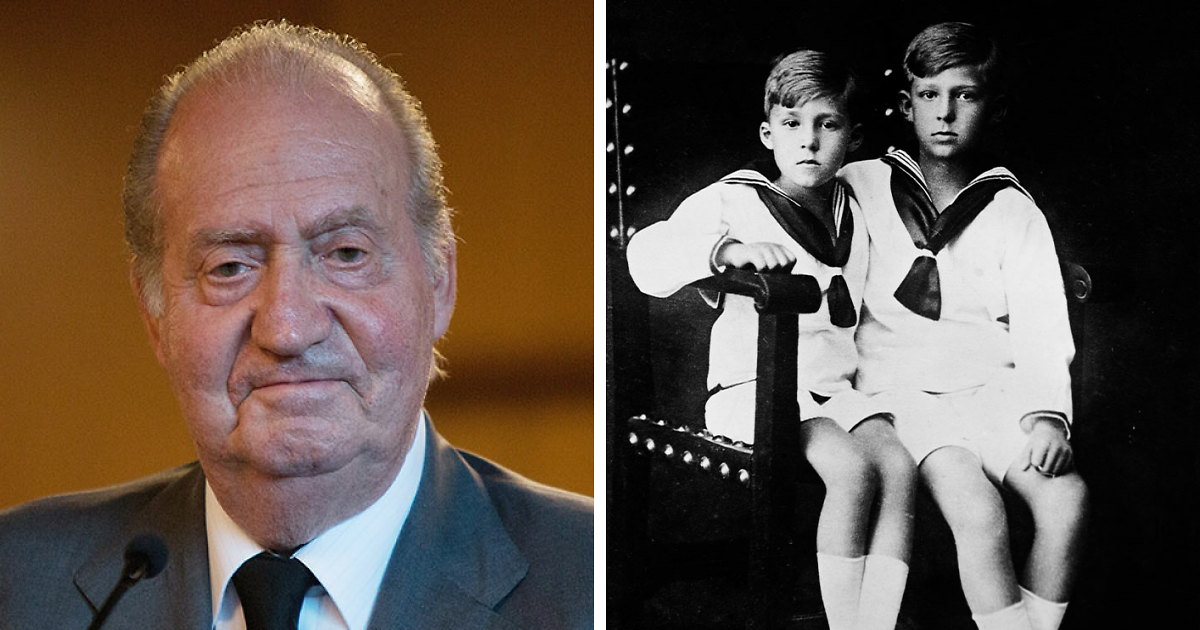
Some royal stories arrive wrapped in velvet, polished with ceremony, and served with a side of trumpet fanfare. This one does not. It arrives quietly, decades late, with the weight of a family tragedy that Spain’s former king, Juan Carlos I, has carried for most of his life.
In his memoir Reconciliation, the former monarch publicly revisits one of the darkest moments in modern royal history: the 1956 death of his younger brother, Infante Alfonso of Spain. Juan Carlos, then a teenager, describes the incident as an accident involving a firearm while the brothers were together in exile in Portugal. For many Spaniards, the story was not new. Rumors, partial accounts, and historical references had circulated for decades. What changed was the voice telling it. This time, Juan Carlos himself stepped into the frame.
The result is not just a royal confession. It is a window into guilt, silence, family loyalty, political pressure, and the complicated legacy of a man once celebrated as the king who helped guide Spain into democracy, only later to become a symbol of scandal and exile. If monarchy is supposed to be about crowns, ceremonies, and polished portraits, this story reminds us that behind palace walls there are people, secrets, and sometimes wounds that refuse to close.
The Tragedy Behind the Headline
The central event took place on March 29, 1956, when Juan Carlos was 18 and his younger brother Alfonso was 14. At the time, the Spanish royal family was living in Portugal because Spain’s monarchy had been displaced. Their father, Don Juan, Count of Barcelona, was the son of King Alfonso XIII and a claimant to the Spanish throne, but Spain was then under the rule of Francisco Franco.
According to accounts surrounding Juan Carlos’s memoir, the brothers were together when a pistol discharged. Juan Carlos has said they believed it was not loaded because the magazine had been removed, but there was still a round in the chamber. The shot fatally struck Alfonso. The young prince died shortly afterward, leaving the family shattered and creating one of the most haunting episodes in Spain’s royal history.
For decades, the details remained surrounded by uncertainty. There was no full public investigation that satisfied every question. That absence of official clarity left space for speculation, and speculation, as history has repeatedly shown, is the mosquito of public memory: small, persistent, and very hard to swat.
Why Juan Carlos’s Memoir Matters
Juan Carlos’s memoir is significant because it moves the story from rumor and biography into first-person testimony. He does not simply acknowledge that his brother died in an accident. He describes the emotional weight of the event and presents it as a trauma that marked his entire life.
That matters for several reasons. First, it gives historians and the public a direct account from the person at the center of the tragedy. Second, it reveals how deeply the incident shaped Juan Carlos’s private identity. Third, it arrives at a time when his public image has already been battered by scandals, exile, and strained family relationships.
The memoir is called Reconciliation, and the title is doing a lot of heavy lifting. Juan Carlos appears to be seeking reconciliation not only with the Spanish public and the royal family, but also with his own past. Whether readers believe the memoir succeeds is another question. Books can confess; they cannot automatically repair.
A Royal Family Living in Exile
To understand the tragedy, it helps to understand the world Juan Carlos and Alfonso grew up in. They were not ordinary teenagers in an ordinary household. They were members of a royal family without a throne, living under the long shadow of Spain’s political upheaval.
Spain’s monarchy had collapsed in 1931 with the establishment of the Second Republic. After the Spanish Civil War, Franco ruled the country as dictator. He did not restore the monarchy immediately, but he carefully shaped the future of the institution on his own terms. Juan Carlos was eventually chosen by Franco as his successor, bypassing Juan Carlos’s father, Don Juan, who had his own claim and political vision.
This meant that Juan Carlos’s youth was shaped by dynastic tension, political calculation, and family expectation. He was not merely being raised as a son and brother. He was being prepared, watched, and maneuvered as a future symbol of Spain. That does not make the tragedy less personal. If anything, it makes the silence around it more understandable. Royal families are often trained to treat emotion like an untidy guest: acknowledge it briefly, then usher it out before anyone sees the carpet.
The Death of Infante Alfonso
Infante Alfonso was Juan Carlos’s younger brother and, by many accounts, close to him. His sudden death devastated the family. The boys’ father reportedly reacted with shock and anguish, and the event left a permanent mark on the household.
What has long troubled observers is the lack of a transparent legal process afterward. The incident happened in Portugal, outside Spain, within an exiled royal family already surrounded by political sensitivities. Over the years, different versions of the event circulated. Some accounts emphasized the accidental nature of the discharge. Others focused on the family’s immediate handling of the aftermath. Juan Carlos’s memoir now offers his own explanation, but it does not erase every question that historians may continue to ask.
Still, one fact stands above the noise: a young boy died, and his brother lived with the memory. That is the emotional center of the story, and it is easy to lose sight of it when headlines turn tragedy into spectacle.
From Tragedy to Throne
Juan Carlos’s life did not stop in 1956. In fact, history pushed him toward one of the most consequential roles in modern Spain. Franco designated him as future head of state, and when Franco died in 1975, Juan Carlos became king.
At first, many doubted him. Some saw him as Franco’s chosen heir and assumed he would preserve the authoritarian system. Instead, Juan Carlos played a central role in Spain’s transition to democracy. He supported political reforms, the legalization of parties, and the move toward constitutional monarchy. His reputation rose even further after the failed coup attempt of February 23, 1981, when he publicly defended democratic order.
For many years, Juan Carlos was regarded as a stabilizing figure. He was not just a king; he was the king who helped Spain step out of dictatorship and into a modern democratic era. That legacy is real. It is also incomplete without the later chapters.
The Later Scandals That Changed His Image
Public admiration for Juan Carlos declined sharply in the 2010s. A controversial elephant-hunting trip to Botswana in 2012 angered many Spaniards, especially because it came during a period of economic hardship. The optics were, to put it mildly, not ideal. When a country is tightening its belt, a luxury safari is not exactly the poster child for humble leadership.
Other controversies followed, including questions around finances, relationships, and the wider image of the royal household. In 2014, Juan Carlos abdicated in favor of his son, Felipe VI. In 2020, he left Spain for Abu Dhabi amid growing pressure and investigations. Although some legal inquiries were later closed, the damage to his reputation was substantial.
This is why the memoir arrives in such a complicated atmosphere. It is not simply the reflective work of a retired king. It is also the testimony of a man trying to recover control over a public narrative that has moved far beyond his command.
Why the Confession Resonates Now
The story of Alfonso’s death resonates because it combines several powerful themes: childhood, accident, guilt, silence, privilege, and accountability. These are not small ingredients. Put them together, and you get the kind of historical moment that refuses to remain neatly filed away.
For supporters of Juan Carlos, his account may feel like a long-overdue act of honesty. They may see a man in old age finally speaking about the grief that shaped him. For critics, the memoir may raise harder questions: Why did it take so long? Why was the event not examined more openly at the time? Does personal pain excuse institutional silence?
The fairest answer may be that both reactions can exist at once. Juan Carlos can be a person marked by tragedy and a public figure whose life deserves scrutiny. Sympathy and accountability are not enemies. In fact, mature history usually needs both.
The Role of Silence in Royal Life
Royal families are experts in ceremony, but not always in confession. Their survival often depends on restraint, discipline, and the careful management of public information. That can create stability. It can also create emotional pressure cookers with very expensive curtains.
In Juan Carlos’s case, the silence around Alfonso’s death became part of the story itself. When public figures do not speak, others speak for them. Biographers, journalists, critics, defenders, and gossip networks fill the empty space. By waiting decades to give his own account, Juan Carlos allowed the tragedy to become a mystery as much as a memory.
His memoir does not fully undo that. But it changes the archive. Future discussions of the event will now have to include his own words and his own framing of what happened.
How This Shapes Juan Carlos’s Legacy
Juan Carlos’s legacy is unusually layered. He is the young prince marked by a family tragedy. He is the monarch who helped Spain become a democracy. He is the king who once enjoyed broad affection. He is also the former monarch whose later scandals damaged the institution he once strengthened.
The confession about Alfonso does not replace these other chapters. It complicates them. It adds a human wound to a political biography. It invites readers to see Juan Carlos not as a marble statue or a tabloid villain, but as a deeply flawed historical figure shaped by trauma, power, duty, and ego.
That does not mean the public must forgive him. Forgiveness is not a tax citizens owe to former kings. But understanding is different. Understanding asks us to look at the full picture, even when the full picture is uncomfortable.
The Difference Between Confession and Closure
A confession can clarify facts, but it does not guarantee closure. For Juan Carlos, speaking publicly about Alfonso may be a personal milestone. For historians, it is a new source. For readers, it is a dramatic revelation. For the royal family, it may be something more delicate: an old grief brought back into public view.
Closure is especially difficult when the people most affected are no longer alive or have lived with the consequences for decades. Alfonso cannot speak. Don Juan and other key family members are gone. What remains is memory, documentation, interpretation, and the former king’s own late-life account.
That is why this story should be handled with care. It is newsworthy, yes. It is historically important, absolutely. But it is also the story of a child’s death and a family’s loss. Sensational headlines may attract clicks, but serious readers deserve context.
What Readers Can Learn From This Royal Tragedy
One lesson is about the long life of hidden pain. Some events do not fade simply because people stop talking about them. Silence may protect a family’s public image for a while, but it rarely dissolves grief.
Another lesson is about the danger of mythmaking. Public figures are often simplified into heroes or villains. Juan Carlos has been both, depending on the decade and the newspaper. The truth is more complicated. He helped defend democracy, but he also became entangled in scandal. He suffered a terrible personal tragedy, but he also benefited from a system that shielded royal life from ordinary scrutiny.
Finally, the story reminds us that history is not frozen. New memoirs, interviews, letters, and archives can reopen familiar events. The past does not change, but our access to it does. Sometimes one late confession can shift how an entire life is read.
Experiences and Reflections Related to Juan Carlos’s Confession
When people read about Juan Carlos and Alfonso, they often respond first with shock. That is understandable. The idea of a future king being involved in the accidental death of his younger brother feels almost too dramatic for real life. It sounds like the plot of a prestige television series with dim lighting, tense violins, and at least one character staring out a palace window in emotional distress.
But beyond the shock, the story connects with ordinary human experiences in a surprisingly direct way. Many families carry a painful event that everyone knows about but no one discusses clearly. It may not be royal. It may not involve politics or history books. It may be an accident, a betrayal, a loss, or a decision made under pressure. The details differ, but the emotional structure is familiar: something happened, it hurt people, and silence grew around it like ivy on an old wall.
Juan Carlos’s confession also speaks to the burden of memory. Anyone who has made a serious mistake, even without harmful intent, understands that guilt does not always obey logic. People can be told, “It was an accident,” and still feel responsible. They can build careers, families, and public lives while privately returning to one moment again and again. The mind has a strange filing system. It can misplace your keys daily but preserve one painful memory in perfect emotional high definition.
There is also an experience here about public identity. Most people are not monarchs, thankfully. The average person’s embarrassing decision does not become an international headline, unless they do something truly spectacular at a wedding reception. But many people know what it feels like to be remembered for only one chapter of their life. Juan Carlos’s story shows how difficult it is to control a legacy once the public has competing versions of you: the democratizing king, the scandal-prone royal, the grieving brother, the exiled father.
For writers, historians, and readers, the experience is a reminder to slow down. A headline can say “confesses,” but the deeper article must ask what kind of confession it is. Is it legal, emotional, historical, moral, or all of these at once? In this case, Juan Carlos is not confessing to a plotted crime. He is publicly recounting a fatal accident that has haunted his biography for decades. That distinction matters. Careless wording can turn tragedy into distortion, and distortion is not analysis.
The topic also encourages reflection on how families handle truth. Some families believe silence is protection. Others believe truth is the only path to peace. Real life is messier. Sometimes silence prevents immediate damage but creates long-term confusion. Sometimes truth brings relief, but also pain. Juan Carlos’s memoir demonstrates that even the most powerful families cannot permanently outrun the need to explain themselves.
In the end, the experience of reading this story is unsettling because it refuses to stay in one category. It is royal history, but also family tragedy. It is political biography, but also personal confession. It is about Spain, but also about universal questions: How do people live with guilt? When does silence become harmful? Can a damaged reputation be repaired by honesty? And can telling the truth late still matter?
The answer to that last question is yes, though not always in the way the speaker hopes. Truth told late may not restore trust, but it can deepen understanding. It can give future generations a clearer record. It can move a story from whispers into history. And sometimes, even when reconciliation is incomplete, the act of finally speaking still changes the room.
Conclusion
Spain’s former King Juan Carlos I has lived a life of extraordinary public importance and extraordinary private difficulty. His memoir’s account of the 1956 death of his brother Alfonso adds a deeply personal dimension to a legacy already shaped by democracy, scandal, exile, and family rupture.
The confession does not turn history into something simple. It does the opposite. It reminds readers that public figures are rarely one thing. Juan Carlos was a democratic symbol, a controversial monarch, a father in conflict with his own dynasty, and a brother marked by a tragedy from youth. His story is not comfortable, but it is important.
For Spain, the memoir reopens a painful royal chapter. For readers, it offers a powerful case study in memory, accountability, and the price of silence. And for Juan Carlos himself, it may be an attemptlate, imperfect, and deeply humanto face the one event even a crown could never cover.
Note: This article is based on publicly reported historical information and recent coverage of Juan Carlos I’s memoir. It avoids unnecessary sensationalism and presents the incident as an accidental tragedy as described in major reporting and historical accounts.