Note: This article is written for web publication in standard American English and is based on real, publicly available information about the 2025 Hackaday One Hertz Challenge, the Valvano Clock project, and related timekeeping technologies.
Introduction: A Clock That Turns Time Into a Staring Contest
Most clocks politely tell us the hour, then mind their own business. The Valvano Clock does something more direct: it reminds us that every day contains 86,400 seconds, and each one leaves the building whether we are ready or not. Built by the Hackaday.io user known as danjovic, the Valvano Clock became one of the memorable entries in the 2025 One Hertz Challenge, a maker contest centered on a wonderfully simple rule: build something that does something once per second.
That sounds easy until you try to make one second interesting. A blinking LED can do the job, sure, but the 2025 One Hertz Challenge encouraged builders to stretch the idea. Some projects pursued accuracy. Others chased absurdity. Some looked like clocks. Others looked like the result of an electronics drawer having a dramatic midlife crisis. The Valvano Clock stands out because it is simple, meaningful, and surprisingly philosophical for a breadboard project.
The project takes inspiration from a quote attributed to Jim Valvano, the legendary basketball coach remembered for his energy, humor, and “Don’t give up” message. The quote says there are 86,400 seconds in a day, and it is up to us to decide what to do with them. The Valvano Clock takes that idea literally. Instead of hiding seconds behind tiny ticking hands, it counts them, displays them, and makes the passing of time impossible to ignore.
What Is the 2025 One Hertz Challenge?
The 2025 One Hertz Challenge was a Hackaday.io contest built around one of the most basic rhythms in electronics and timekeeping: one hertz, or one cycle per second. The challenge invited makers to design a device where something happens once every second. The event was intentionally broad, which is why it attracted clocks, timing gadgets, blinking lights, mechanical contraptions, strange displays, and projects that seemed to ask, “What if we made this harder for no reason?”a sacred engineering tradition.
The contest included honorable mention categories such as precision-focused “Timelords,” absurd “Ridiculous” builds, clock-related “Clockwork” projects, and a playful category for designs that “Could Have Used a 555.” That last one is a wink to the famous 555 timer chip, a classic part that has helped hobbyists blink LEDs, generate pulses, and learn timing circuits for decades.
What made the challenge fun was not just the one-second rule. It was the creative tension between accuracy and personality. A one hertz signal can come from a quartz oscillator, a microcontroller timer, a real-time clock, a GPS pulse-per-second signal, a mechanical gear train, or something wildly impractical like dripping water or candle flame oscillations. In this environment, the Valvano Clock feels elegant because it uses common modules to create a clear emotional effect.
Meet the Valvano Clock
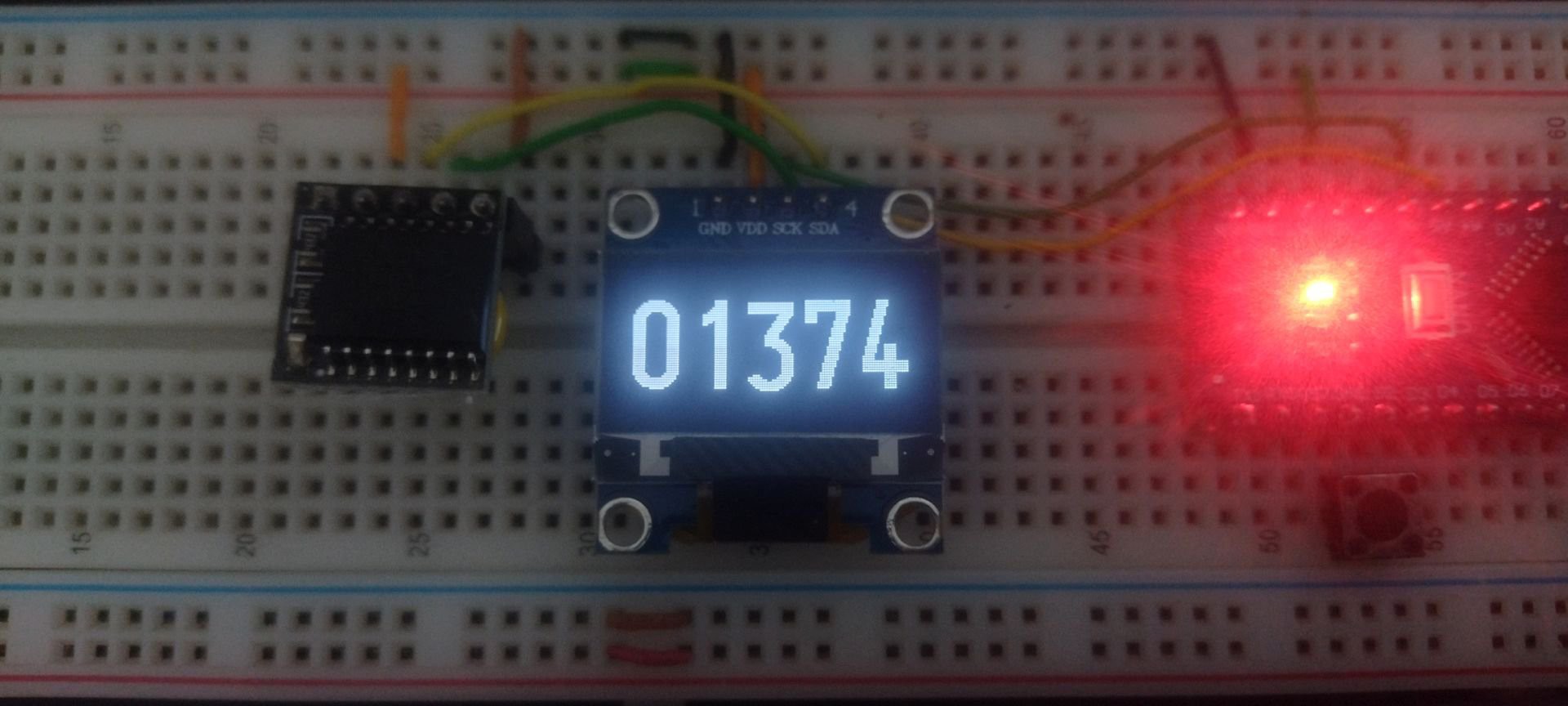
The Valvano Clock is a digital timekeeping project that counts the seconds in a day. It can count upward from zero, count downward from 86,400, or display time in a standard HH:MM:SS format. A pushbutton lets the user switch modes, and no matter which mode is active, the display changes once per second. That behavior places it directly in the spirit of the One Hertz Challenge.
The build uses only a few main components: an Arduino Nano, a DS3231 real-time clock module, an SSD1306 128×64 OLED display, and a momentary pushbutton. This is part of the project’s charm. It does not need a warehouse full of exotic components. It relies on familiar maker hardware, clean logic, and a strong concept. In other words, it is the kind of project that makes you say, “I could build that,” right before spending three hours looking for the jumper wire you absolutely just had.
Core Components
- Arduino Nano: A compact microcontroller board commonly used in breadboard-friendly projects.
- DS3231 RTC module: A highly accurate real-time clock with a temperature-compensated crystal oscillator.
- SSD1306 OLED display: A crisp 128×64 pixel screen that is easy to read and popular in Arduino builds.
- Momentary pushbutton: A simple control input for changing the display mode.
Why the DS3231 Matters
In many beginner clock projects, the microcontroller itself keeps time. That works for demonstrations, but microcontrollers are not always ideal long-term clocks. Their timing can drift depending on oscillator quality, temperature, power conditions, and code structure. The DS3231 solves much of that problem by acting as a dedicated real-time clock. It keeps track of seconds, minutes, hours, date, month, and year, and it uses a temperature-compensated crystal oscillator to improve accuracy.
That matters because a project about seconds becomes a little embarrassing if the seconds are wandering around like they missed their bus. The DS3231 gives the Valvano Clock a stable timing foundation, while the Arduino Nano focuses on reading the time, calculating the display value, and updating the OLED. This separation of duties is good design. The RTC keeps the beat; the microcontroller does the choreography.
How the Valvano Clock Makes Seconds Visible
The cleverness of the Valvano Clock is not that it invents a new kind of clock. It changes the emotional presentation of time. A normal clock tells us it is 2:15 p.m. The Valvano Clock can tell us how many seconds have already been spent today or how many remain. That tiny shift changes the experience. Suddenly, the day feels countable, finite, and strangely motivating.
Counting up is useful because it shows momentum. By noon, 43,200 seconds have passed. Counting down is more dramatic because it turns the day into a resource meter. If the clock says 18,000 seconds remain, you may suddenly remember that you planned to exercise, answer emails, fix the leaky faucet, and become a better person before dinner. No pressure. Just a tiny OLED judging you politely.
The HH:MM:SS mode keeps the project familiar, but the seconds-only modes are what give it identity. They transform a clock into a productivity mirror. You do not simply read the time; you confront it.
The Jim Valvano Connection
Jim Valvano, often called Jimmy V, was a college basketball coach and broadcaster best remembered for leading North Carolina State to the 1983 NCAA men’s basketball championship and for his moving 1993 ESPYS speech. His message about persistence, gratitude, laughter, thought, and emotion still resonates far beyond sports. The Valvano Clock borrows that spirit by turning a motivational idea into a working device.
There is a poetic fit between Valvano’s message and a one hertz clock. A second is small enough to ignore, but a day is made entirely of them. A single tick seems harmless. Thousands of ticks become a deadline, a memory, a practice session, a finished project, or a missed chance. The Valvano Clock makes that invisible accumulation visible.
Why One Hertz Is More Interesting Than It Sounds
One hertz means one cycle per second. It is a basic unit, but it sits at the crossroads of electronics, physics, and human perception. Many digital clocks generate a one-second tick by dividing a higher-frequency oscillator. A common quartz clock approach starts with a 32.768 kHz crystal because that frequency divides neatly by powers of two down to one hertz. More advanced systems may use GPS 1PPS signals or atomic references for extreme precision.
At the official metrology level, the second is tied to the cesium-133 atom. That may sound like something a science teacher says right before assigning homework, but it is the reason modern timekeeping is so consistent. The world’s communications networks, GPS systems, laboratories, financial markets, and computers depend on precise timing. The Valvano Clock does not need atomic-clock performance, of course, but it participates in the same grand idea: measuring time reliably enough that humans can build meaning around it.
A Minimal Circuit With a Strong User Experience
One of the best design choices in the Valvano Clock is its minimal interface. A single pushbutton is enough. The OLED display is small but readable, the Nano is compact, and the DS3231 handles the time base. That gives the project a low barrier to entry for hobbyists and a clean path for improvement.
A future version could add a custom enclosure, a wall mount, a battery backup indicator, brightness control, or a menu for choosing 12-hour or 24-hour time. A larger display could make the seconds visible across a room. A buzzer could mark the hour, although that may turn motivation into mild household hostility. Nobody wants a clock that announces every passing second unless they are training for a movie montage.
The current breadboard style also has educational value. It exposes the parts and shows how modular electronics work. Students can see that a clock is not magic. It is a conversation among a timekeeping chip, a microcontroller, a display, and a human finger pressing a button.
Lessons for Makers and Electronics Beginners
The Valvano Clock is a strong beginner-to-intermediate project because it combines several core embedded systems concepts without becoming overwhelming. It introduces I2C communication, display handling, real-time clock modules, button input, time conversion, and user interface design. It also offers a chance to practice clean code structure: read the RTC, calculate seconds elapsed or remaining, format the output, update the display, and handle button presses without glitchy mode changes.
The project also teaches a practical lesson: good maker projects do not always need complexity. Sometimes a project works because the concept is clear. The Valvano Clock does not chase spectacle. It focuses on a single idea and executes it well. That is valuable for anyone building prototypes, writing code, designing gadgets, or creating content. A strong idea beats a messy pile of features every time.
How It Fits Among Other One Hertz Builds
The 2025 One Hertz Challenge included a wide range of projects, from precision timing entries to electromechanical clocks and intentionally ridiculous devices. Some entries used vintage display technology. Others explored GPS timing, discrete divider chains, mechanical systems, or unusual physical processes. Against that backdrop, the Valvano Clock occupies a thoughtful middle ground. It is not the most complicated project, and it is not trying to be. Its strength is emotional clarity.
That is what makes it memorable. Many clocks show time. This one gives time a personality. It reminds the user that a day is not an abstract block on a calendar. It is a stream of seconds, and the stream is moving.
Practical Ideas for Building Your Own Version
If you want to build something inspired by the Valvano Clock, start with the same simple architecture. Use an Arduino-compatible board, a DS3231 RTC, an OLED display, and a button. First, make the display show the current HH:MM:SS time. Then add a function that converts hours, minutes, and seconds into total seconds elapsed since midnight. Finally, subtract that number from 86,400 to create a countdown mode.
Once the basics work, improve the experience. Debounce the button so accidental double presses do not switch modes. Use a readable font. Add labels such as “elapsed” and “remaining.” Consider dimming the display at night. If the device will live on a desk, give it an enclosure with a slight upward angle so it can silently motivate you while you avoid cleaning your inbox.
The best upgrade may be a thoughtful case. Hackaday’s coverage noted that the breadboard version deserved a proper enclosure, and that is hard to argue with. A project about time deserves a frame, a stand, or a small wall-mounted housing. Otherwise, it risks looking like a tiny robot had an accident in a spaghetti factory.
Experience Notes: What a One-Second Clock Teaches in Real Life
Spending time with a clock concept like the Valvano Clock changes how you think about a day. Most of us understand time intellectually, but seconds are slippery. We say “I’ll do it later,” and later quietly eats the afternoon. A seconds counter makes the day feel less vague. It does not scold; it simply reports. That honesty can be surprisingly useful.
Imagine placing a Valvano-style clock on a desk during a work session. In count-up mode, it becomes a gentle progress indicator. You can see that the day has already accumulated thousands of seconds, which makes small accomplishments feel more concrete. Answering an email, finishing a paragraph, cleaning a workbench, or debugging a function becomes part of a visible timeline. The device turns ordinary effort into measurable motion.
In countdown mode, the experience is different. It is sharper, almost theatrical. Watching the remaining seconds fall can make procrastination feel expensive. That does not mean the clock should become a stress machine. Used wisely, it can encourage better choices: start the project now, take a real break, call the person you meant to call, or stop pretending that reorganizing browser tabs counts as deep work.
For electronics learners, building this kind of clock is also a confidence booster. The parts are understandable. The wiring is manageable. The code can be written in small steps. When the first accurate second appears on the display, it feels like a tiny victory. When the mode button works, it feels like a real product. When the clock survives being unplugged because the RTC has backup power, it feels like wizardry, but with datasheets.
The project also encourages better debugging habits. If the display does not update, you check I2C addresses. If the time is wrong, you verify the RTC setting. If the button jumps two modes, you learn about debounce logic. If the seconds drift, you learn why dedicated timing hardware matters. Each problem is small enough to solve, but meaningful enough to teach something lasting.
There is also a creative lesson here. A one hertz clock does not need to be boring. It can be motivational, funny, beautiful, annoying, educational, or deeply personal. The Valvano Clock proves that a simple technical rule can become a story. It connects a sports quote, a daily number, a real-time clock chip, and a maker challenge into one compact object. That is the magic of good hobby electronics: the circuit works, but the idea keeps ticking after the solder cools.
Conclusion: The Small Tick With a Big Message
The Valvano Clock is more than a neat entry in the 2025 One Hertz Challenge. It is a compact reminder that time is both technical and emotional. On the technical side, it uses accessible components: an Arduino Nano, a DS3231 real-time clock, an SSD1306 OLED display, and a button. On the human side, it turns 86,400 seconds into something visible, countable, and hard to ignore.
That combination is why the project works. It does not need lasers, atomic references, or a heroic pile of custom hardware. It needs one clear idea: every second counts. In a challenge full of clever one-second machines, the Valvano Clock earns attention because it makes the most ordinary unit of time feel important again.