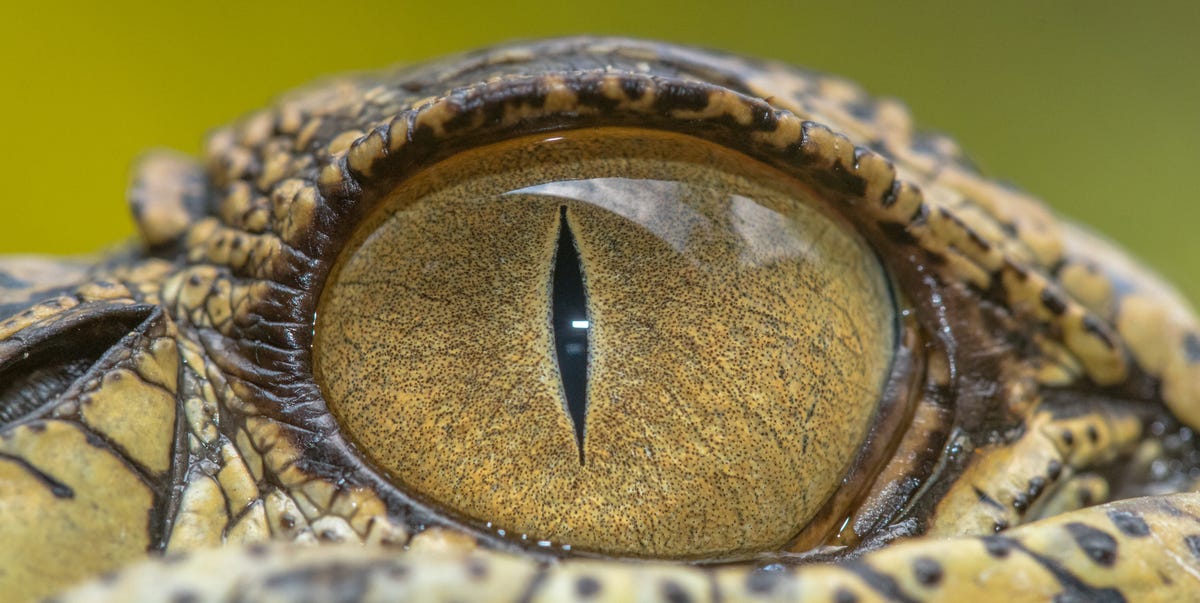
Every now and then, paleontology hands us a fossil that does not simply add a new creature to the prehistoric guest list. It walks in, flips over the seating chart, and politely suggests that scientists may need to rethink who arrived first, who moved where, and which branch of the evolutionary family tree has been mislabeled. That is exactly why the newly described ancient crocodile relative Wadisuchus kassabi is making waves.
Discovered in Egypt’s Western Desert and described from fossils roughly 80 million years old, this long-snouted crocodyliform may help rewrite a major chapter in crocodile evolution. It belongs to Dyrosauridae, an extinct group of ancient, crocodile-like reptiles that lived during the Late Cretaceous and survived the catastrophic mass extinction that ended the age of non-avian dinosaurs. In other words, while many famous reptiles exited the planet’s stage in dramatic asteroid-related fashion, dyrosaurids apparently stayed for the sequel.
The discovery matters because Wadisuchus kassabi appears to be the earliest known member of its group. That pushes the story of dyrosaurid evolution deeper into the past and strengthens the idea that North Africa, especially Egypt, may have been a cradle for these seagoing crocodile relatives. For anyone who thought crocodile evolution was just “big lizard sits in water, waits, repeats,” this fossil is here to ruin that lazy summary in the best possible way.
Meet Wadisuchus kassabi, the Ancient Crocodile With a Big Scientific Reputation
Wadisuchus kassabi was not a modern crocodile, but it was part of the broader crocodyliform story. Crocodyliforms include modern crocodilians and many extinct relatives that experimented with different body shapes, habitats, and hunting strategies over hundreds of millions of years. Some were small. Some were armored bruisers. Some lived on land. Others became highly adapted to water. Evolution, apparently, gave the crocodile family tree a very busy sketchbook.
The fossils of Wadisuchus kassabi were found in the Quseir Formation near the Kharga and Baris oases in Egypt’s Western Desert. Today, this region is dry and sun-blasted, the kind of place where a water-loving predator would need either a time machine or a very optimistic real estate agent. But about 80 million years ago, during the Campanian age of the Late Cretaceous, the area was much wetter. It likely included shallow lagoons, coastal environments, and humid habitats where a long-snouted aquatic hunter could thrive.
Researchers identified the species from partial skulls and lower jaws. These remains may not sound like much to a casual observer, but to paleontologists, skulls and jaws are packed with clues. Tooth positions, nostril placement, snout shape, jaw notches, and bone connections can reveal how an animal fed, breathed, moved, and fit into the evolutionary tree. Fossils are basically ancient paperwork, except the forms are made of bone and buried under rock for tens of millions of years.
Why This Fossil Could Rewrite Crocodile Evolution
The big headline is not simply that scientists found a new ancient crocodile relative. New fossils are exciting, yes, but paleontology is not Pokémon; the goal is not just to collect them all. The real importance of Wadisuchus kassabi is where it sits in the dyrosaurid family tree.
Dyrosaurids were long-snouted crocodyliforms that spread across parts of the ancient world from the Late Cretaceous into the Paleogene. They are especially fascinating because they survived the Cretaceous-Paleogene extinction event about 66 million years ago, the same global crisis that wiped out non-avian dinosaurs. Their survival makes them valuable for understanding how some reptiles adapted after ecosystems collapsed.
Before this discovery, the early history of dyrosaurids had gaps. Scientists knew the group had a wide geographic range and appeared in several regions, but the timing and location of its origin were less clear. Wadisuchus kassabi helps fill that missing chapter. Its age suggests that dyrosaurids began diversifying earlier than previously thought, possibly during the Coniacian-Santonian interval, around 87 to 83 million years ago, rather than closer to the very end of the Cretaceous.
That is a meaningful shift. In evolutionary biology, a few million years can change the entire plot. Moving the origin of a lineage back in time affects how researchers understand migration routes, environmental pressures, and the sequence of anatomical changes. It is like discovering that a family ancestor did not arrive on Tuesday after all, but had already been living in the neighborhood for a decade and may have helped build the place.
The Clues Hidden in Its Long Snout
One of the most important features of Wadisuchus kassabi was its long, narrow snout. Scientists call this condition longirostry, which is a fancy word for “impressive nose situation.” In aquatic predators, a long snout can be useful for snapping up fast, slippery prey such as fish. Modern gharials, for example, show how a narrow snout can work beautifully in a water-based hunting lifestyle.
Wadisuchus kassabi also had tall, sharp teeth, which likely helped it grab fish, turtles, and other aquatic prey. Its nostrils were positioned on top of the snout, a feature that would have allowed it to breathe while keeping much of its body submerged. Anyone who has watched a modern crocodile float like a suspicious log can appreciate the usefulness of that design.
But the snout was not just useful for hunting. It also carried evolutionary information. The fossil shows transitional cranial features, including changes in the number and arrangement of front teeth, a modified bite pattern, and nostrils positioned in a way that points toward more specialized aquatic habits. Researchers noted that Wadisuchus kassabi had four teeth at the front of the snout instead of the more primitive five. That kind of anatomical detail may sound tiny, but in paleontology, tiny details often carry giant implications.
Egypt’s Western Desert Was Once a Crocodile Paradise
It is tempting to picture Egypt’s Western Desert as it appears today: dry, open, and brutally sunny. But the rocks tell a different story. The Quseir Formation preserves evidence of ancient environments that were far more hospitable to aquatic predators. Sediments such as sandstone, siltstone, and claystone point to lagoonal and coastal settings where water shaped the landscape.
That ancient environment helps explain why a dyrosaurid could have lived there. Wadisuchus kassabi was not wandering across dunes with a canteen and a bad attitude. It likely lived in warm, shallow waters, hunting along coastal channels and lagoons. The same region that now preserves its bones may once have been a lush, watery ecosystem filled with prey and competition.
This also gives Egypt a more central role in the story of marine crocodile evolution. The discovery supports the idea that Africa was not merely one stop on a dyrosaurid travel itinerary. It may have been the starting point for major early diversification. From there, related lineages may have spread outward, including across ancient seaways.
How Scientists Study a Fossil Like This
Describing a new fossil species is not as simple as brushing off a skull and announcing, “Looks different. New croc just dropped.” Scientists compare the bones with known species, analyze anatomical features, study the age and geology of the rock layers, and often use digital technology to examine details that are difficult to see from the outside.
For Wadisuchus kassabi, researchers used high-resolution CT scanning and three-dimensional modeling to inspect the fossil material. These tools allow scientists to look inside fossils without damaging them. That is especially useful when dealing with rare specimens, because nobody wants to be the person who cracked open an 80-million-year-old skull like a coconut and then had to explain it at the next department meeting.
Once the anatomy was documented, the team placed the species into a phylogenetic analysis. A phylogeny is an evolutionary family tree built from shared traits. If two species share many specialized features, they may be closely related. If one species has a mix of older and newer traits, it can help show how a group transitioned over time. In the case of Wadisuchus kassabi, the analysis consistently placed it as an early-diverging dyrosaurid, making it especially important for understanding the origin of the group.
Why Dyrosaurids Were Evolutionary Survivors
One of the most fascinating things about dyrosaurids is that they survived the end-Cretaceous mass extinction. Around 66 million years ago, an asteroid impact triggered global environmental chaos. Food webs collapsed. Climate conditions changed rapidly. Many species vanished. Non-avian dinosaurs were gone. Yet some crocodile-line reptiles, including dyrosaurids, made it through.
Why did they survive? Scientists are still exploring the answer, but habitat and diet may have mattered. Semi-aquatic and coastal animals may have had access to food sources that remained more stable than those on land. Flexible feeding habits, broad geographic distribution, and life in aquatic environments may have helped certain reptiles endure when terrestrial ecosystems were hit hard.
Wadisuchus kassabi lived before that extinction, so it does not directly show how dyrosaurids survived the disaster. However, it helps scientists understand the traits dyrosaurids had already developed before the crisis. If long snouts, aquatic hunting, and coastal lifestyles were already present early in the group’s history, then dyrosaurids may have entered the extinction event with useful adaptations already in place.
This Fossil Also Challenges the “Living Fossil” Myth
Crocodiles are often called “living fossils,” but that phrase can be misleading. It suggests they stopped evolving, parked themselves in the Mesozoic, and have been waiting around ever since with excellent patience and terrifying dental hygiene. In reality, crocodile relatives have a deep and varied evolutionary history.
The broader crocodile lineage includes land-running forms, ocean-going forms, armored giants, narrow-snouted fish specialists, and species with skulls that look nothing like modern crocodiles. Modern crocodilians are only the survivors of a once much larger and more experimental group. They may look ancient, but they are not evolutionary leftovers. They are the living tips of a huge, branching, mostly extinct tree.
Wadisuchus kassabi reinforces that point. Its anatomy shows that ancient crocodyliforms were actively adapting to different environments. Its place in the dyrosaurid tree shows that the evolution of long-snouted, marine-adapted forms was already underway earlier than scientists had clearly documented. The fossil does not make crocodile evolution simpler. It makes it richer, messier, and much more interesting.
Why One Fossil Can Change a Whole Branch of Evolution
To understand why this discovery matters, think of evolution as a massive history book with many missing pages. Paleontologists do not usually find complete chapters. They find paragraphs, footnotes, torn pages, and occasionally a very dramatic illustration. A fossil like Wadisuchus kassabi can act like a recovered page from a missing chapter.
Because it is older than other known dyrosaurid evidence and has transitional features, it changes how scientists interpret the group’s timeline. It also affects ideas about geography. If North Africa was central to early dyrosaurid evolution, then researchers may need to look again at how these animals spread across ancient coastlines and oceans.
This is how science works at its best. A discovery does not need to destroy everything previously known. It refines the story. It adds detail. It forces better questions. In this case, the question is no longer just “Where did dyrosaurids go?” It becomes “Where did they begin, how early did they diversify, and what traits helped them become one of the great crocodile-line success stories after the dinosaur age ended?”
What Wadisuchus kassabi Teaches Us About Evolution
The story of Wadisuchus kassabi is not only about one ancient reptile. It is about how evolution often works in branches, experiments, and unexpected survivals. The animal’s long snout, specialized teeth, and aquatic adaptations show how natural selection can shape predators for particular habitats. Its age shows that major traits in dyrosaurids appeared earlier than expected. Its location highlights Africa as a key region in a global evolutionary story.
It also reminds us that the fossil record is incomplete. Absence of evidence is not always evidence of absence; sometimes it just means nobody has found the right rock yet. Egypt’s Western Desert has already produced major fossil discoveries, and this ancient crocodile suggests that more evolutionary surprises may still be waiting beneath the sand.
Experience-Based Reflections: Why This Ancient Crocodile Story Feels So Powerful
One of the most exciting experiences related to a discovery like Wadisuchus kassabi is the mental shift it creates. Many people grow up thinking of evolution as a straight ladder: simple animals at the bottom, advanced animals at the top, humans awkwardly waving from the final rung. But fossils like this ancient crocodile relative show that evolution is not a ladder. It is more like a sprawling river delta, with branches splitting, reconnecting, drying up, and occasionally producing something with a long snout and an attitude problem.
Reading about Wadisuchus kassabi also changes the way we look at modern crocodiles. The next time someone sees a crocodile resting with only its eyes and nostrils above the water, it becomes easier to imagine that posture as part of a very old survival strategy. The stillness is not laziness. It is engineering. The nostrils, eyes, tail, jaws, and teeth are all part of a body plan shaped by ancient pressures. Modern crocodilians are not copies of Wadisuchus, but they carry echoes of the same broad evolutionary drama.
There is also something humbling about the location of the discovery. A desert can look empty to the untrained eye, but to a geologist or paleontologist, it may be a library. Every rock layer is a page. Every fossil fragment is a sentence. The Western Desert of Egypt, dry and quiet today, once held lagoons where predators hunted and ecosystems pulsed with life. That contrast makes the discovery feel almost cinematic: a long-snouted reptile from a vanished wetland emerging from stone in one of the driest landscapes on Earth.
For students, science writers, and curious readers, this fossil is a useful example of why details matter. Four teeth instead of five at the front of a snout may sound like trivia. Nostrils slightly higher on the skull may sound like something only a fossil specialist could love. But those details can change an evolutionary interpretation. They help scientists reconstruct behavior, relationships, and timing. In paleontology, small clues can move big branches.
The discovery also makes the process of science feel refreshingly human. A team works in harsh field conditions. Fossils are collected, prepared, scanned, compared, debated, and finally described. The result is not just a name in a journal; it is a better map of life’s history. Behind every fossil headline is patience, dust, careful measurement, and probably at least one moment when someone looked at a rock and thought, “Please let this be bone.”
Finally, Wadisuchus kassabi offers a good reminder for anyone who writes, studies, or teaches science: the past is not finished. It can still surprise us. A creature that died 80 million years ago can still change what people think today. That is the magic of paleontology. The animals are extinct, but the discoveries are very much alive.
Conclusion
Wadisuchus kassabi is more than a newly named ancient crocodile relative. It is a fossil clue that may reshape how scientists understand the origin, timing, and spread of dyrosaurids. Found in Egypt’s Western Desert and dating to about 80 million years ago, this long-snouted predator suggests that North Africa played a major role in the early evolution of seagoing crocodile relatives.
Its anatomy reveals a mix of primitive and specialized traits, from its narrow snout and sharp teeth to its unusual tooth arrangement and surface-breathing nostrils. Together, those features help scientists trace how dyrosaurids adapted to aquatic and coastal environments before surviving one of the worst extinction events in Earth’s history.
In the end, this ancient crocodile does what the best fossils always do: it makes the past feel less settled and more alive. It reminds us that evolution is not a neat parade of predictable progress. It is a branching, surprising, occasionally toothy story written in stone.