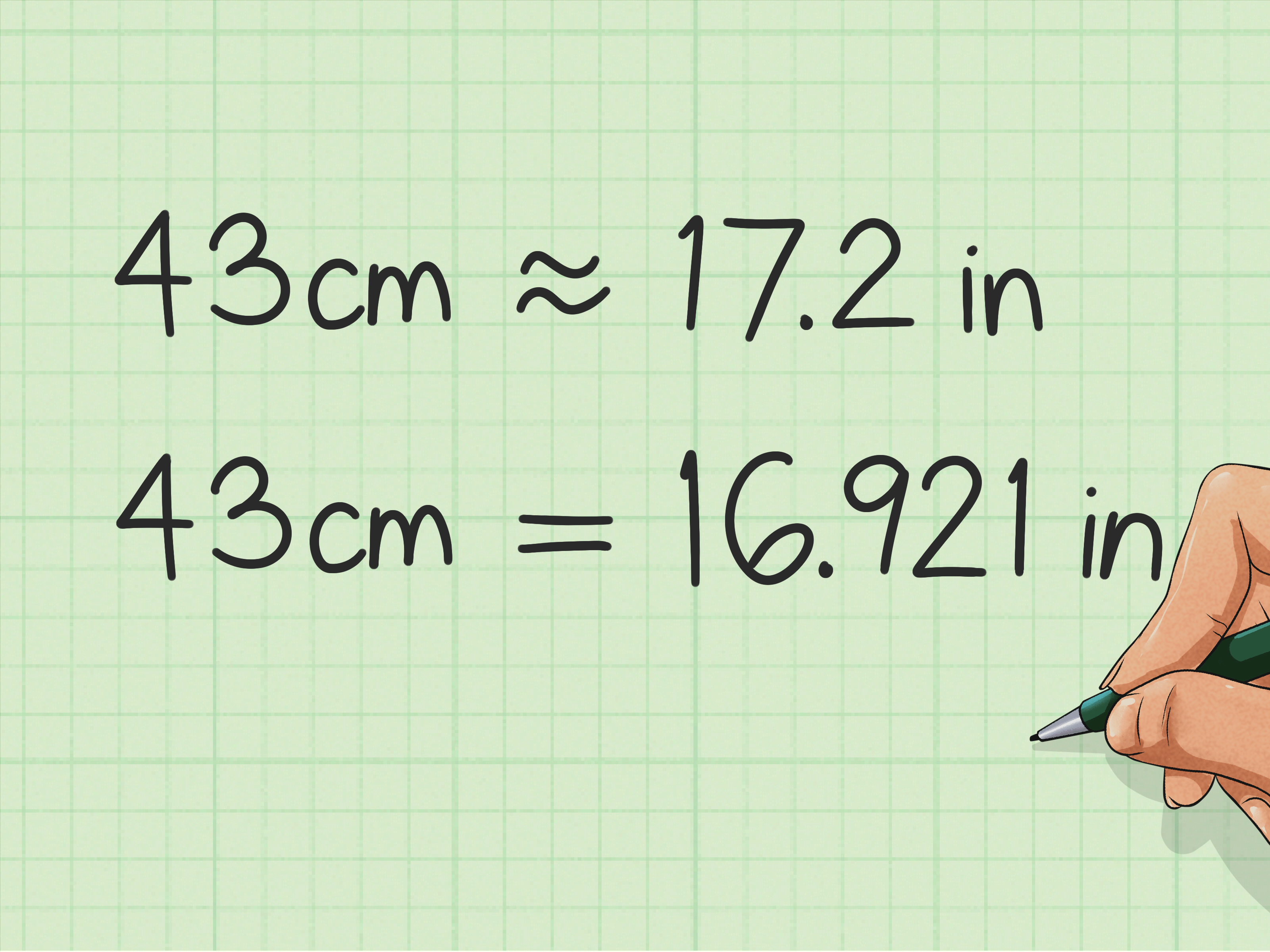
Trying to convert millimeters to inches can feel like translating between two rulers that attended different schools. One speaks metric, the other speaks U.S. customary, and both insist they are perfectly reasonable. The good news? The conversion itself is refreshingly simple: 1 inch equals exactly 25.4 millimeters. That means to convert millimeters to inches, you divide the number of millimeters by 25.4.
Whether you are measuring a screw, checking a product size online, working on a DIY project, reading a technical drawing, or wondering whether a 45 mm watch will look heroic or hilarious on your wrist, this guide will walk you through the process step by step. You will learn the basic formula, how to round your answer, how to convert decimal inches into fractions, and how to avoid the most common mistakes.
Below are the 9 clear steps for converting millimeters to inches without turning your calculator into a tiny panic machine.
Quick Answer: Millimeters to Inches Formula
The formula is:
inches = millimeters ÷ 25.4
Example:
50 mm ÷ 25.4 = 1.9685 inches
So, 50 millimeters is about 1.97 inches.
Step 1: Start With the Millimeter Measurement
Before you convert anything, identify the measurement you already have. Millimeters are written as mm. You may see them on a ruler, product label, furniture diagram, jewelry size chart, camera lens specification, mechanical part, or instruction manual.
For example, you might have measurements such as:
- 10 mm
- 25 mm
- 50 mm
- 100 mm
- 250 mm
The number in front of “mm” is the value you will convert. Do not include the unit in your calculator unless you are using a special conversion tool. For normal math, just use the number.
Step 2: Remember the Conversion Factor
The most important number in this entire process is 25.4. One inch equals exactly 25.4 millimeters. This is not an estimate, a rumor, or something your uncle once said while building a deck. It is the standard relationship between inches and millimeters.
Because 1 inch equals 25.4 mm, converting from millimeters to inches means you are asking, “How many groups of 25.4 millimeters fit into this measurement?”
That is why the formula uses division:
millimeters ÷ 25.4 = inches
If you remember nothing else from this article, remember this: mm to inches means divide by 25.4. Inches to mm means multiply by 25.4. Direction matters. Measurements, like house cats, do not appreciate being handled backward.
Step 3: Write the Formula Clearly
Once you know your millimeter value and the conversion factor, write the formula before you calculate. This prevents common mistakes, especially when you are working with measurements for woodworking, metal parts, 3D printing, sewing, electronics, or home improvement.
The formula is:
inches = mm ÷ 25.4
For example, if you want to convert 75 mm to inches, write:
75 ÷ 25.4 = inches
Then calculate:
75 ÷ 25.4 = 2.9528 inches
So, 75 mm is approximately 2.95 inches.
Step 4: Divide the Millimeters by 25.4
Now it is time for the actual conversion. Use a calculator, phone, spreadsheet, or mental math if you enjoy living dangerously. Enter your millimeter value, divide it by 25.4, and the result is the measurement in inches.
Example 1: Convert 25.4 mm to inches
25.4 ÷ 25.4 = 1
So, 25.4 mm equals 1 inch.
Example 2: Convert 100 mm to inches
100 ÷ 25.4 = 3.9370
So, 100 mm is about 3.94 inches.
Example 3: Convert 6 mm to inches
6 ÷ 25.4 = 0.2362
So, 6 mm is about 0.24 inches.
This basic division method works for every millimeter measurement, whether it is tiny, huge, or oddly specific because someone measured a cabinet hinge with great emotional intensity.
Step 5: Round the Answer Based on Your Purpose
After converting millimeters to inches, your answer may have several decimal places. For everyday use, you usually do not need all of them. The trick is to round based on how accurate your measurement needs to be.
For casual measurements, two decimal places are often enough. For technical work, such as machining, engineering, 3D printing, or precision design, you may need three or four decimal places.
Common rounding examples
- 50 mm = 1.9685 inches, rounded to 1.97 inches
- 100 mm = 3.9370 inches, rounded to 3.94 inches
- 12.7 mm = 0.5 inches exactly
- 200 mm = 7.8740 inches, rounded to 7.87 inches
If you are buying a product online, rounding to two decimal places is usually fine. If you are cutting wood, ordering bolts, fitting replacement parts, or designing something that must physically fit, be more careful. A tiny rounding error can become a big problem when parts need to align. The shelf that is “close enough” may become the shelf that leans like it has secrets.
Step 6: Convert Decimal Inches to Fractional Inches When Needed
In the United States, many rulers, tape measures, and hardware labels use fractional inches instead of decimal inches. That means your answer may need to change from something like 0.3149 inches into a fraction such as 5/16 inch.
To convert decimal inches to a fraction, choose a denominator commonly used on rulers, such as 8, 16, 32, or 64. Then multiply the decimal part by that denominator.
Example: Convert 8 mm to fractional inches
First convert millimeters to decimal inches:
8 ÷ 25.4 = 0.31496 inches
Now compare that to common ruler fractions. The fraction 5/16 equals 0.3125 inches, which is very close to 0.31496. So, 8 mm is approximately 5/16 inch.
This is especially useful for DIY projects, carpentry, sewing, crafts, and quick measurements where a standard ruler is your main tool. Just remember: fractional conversions are often approximate unless the number lands exactly on a common fraction.
Step 7: Use a Conversion Chart for Common Measurements
If you convert millimeters to inches often, a small chart can save time. Here is a handy reference table for common mm to inches conversions:
| Millimeters | Inches | Approximate Fraction |
|---|---|---|
| 1 mm | 0.0394 in | About 1/25 in |
| 3 mm | 0.1181 in | About 1/8 in |
| 6 mm | 0.2362 in | About 1/4 in |
| 10 mm | 0.3937 in | About 3/8 in |
| 12.7 mm | 0.5 in | 1/2 in |
| 25.4 mm | 1 in | 1 in |
| 50 mm | 1.9685 in | About 1 31/32 in |
| 100 mm | 3.9370 in | About 3 15/16 in |
A conversion chart is not a replacement for the formula, but it is helpful when you are doing quick work. For example, if you are comparing wrench sizes, choosing a drill bit, or checking product dimensions, a chart can get you close fast.
Step 8: Check Your Work With the Reverse Conversion
One of the best ways to confirm your answer is to convert it back. After you convert millimeters to inches by dividing by 25.4, multiply the inch result by 25.4. You should get your original millimeter value, or something extremely close if you rounded.
Example: Check 50 mm
Convert to inches:
50 ÷ 25.4 = 1.9685 inches
Now convert back to millimeters:
1.9685 × 25.4 = 49.9999 mm
That is essentially 50 mm. The tiny difference comes from rounding. Congratulations, your math survived the round trip.
This reverse-check method is useful when the measurement matters. If you are ordering parts, cutting materials, checking a fit, or submitting dimensions for manufacturing, take the extra few seconds to verify the result.
Step 9: Use the Right Tool for the Job
You can convert millimeters to inches with several tools. The best choice depends on how precise you need to be and how often you convert measurements.
Calculator
A basic calculator is perfect for quick conversions. Type the millimeter value, press divide, enter 25.4, and press equals.
Spreadsheet
If you have many measurements, use a spreadsheet. Put millimeter values in one column and use a formula in the next column. For example, if cell A2 contains the millimeter value, enter:
=A2/25.4
This is great for product listings, inventory tables, construction plans, and technical documents.
Online converter
Online converters are convenient, especially if you want quick results without typing formulas. However, it is still helpful to understand the formula so you can spot obvious mistakes.
Ruler or caliper
For physical objects, a ruler can help, but a digital caliper is better for precise measurements. Many calipers let you switch between millimeters and inches with one button, which feels like cheating in the best possible way.
Common Mistakes When Converting Millimeters to Inches
Even though the formula is simple, a few mistakes appear again and again. Avoid these and your conversions will be much more reliable.
Mistake 1: Multiplying instead of dividing
To convert mm to inches, divide by 25.4. Do not multiply. Multiplying makes the number much larger, which is the mathematical equivalent of putting your measurement on a trampoline.
Mistake 2: Rounding too early
If you round in the middle of a calculation, your final answer may be less accurate. Keep extra decimal places until the end, then round.
Mistake 3: Confusing centimeters and millimeters
There are 10 millimeters in 1 centimeter. If your measurement is in centimeters, convert it to millimeters first or use a different formula. For example, 5 cm equals 50 mm, and 50 mm equals about 1.97 inches.
Mistake 4: Treating approximate fractions as exact
Some decimal-to-fraction conversions are close but not perfect. For rough DIY work, close may be fine. For precision work, use decimal inches or exact millimeters.
Practical Examples of Millimeters to Inches
Example: Phone thickness
If a phone is listed as 8.2 mm thick, convert it like this:
8.2 ÷ 25.4 = 0.3228 inches
So, the phone is about 0.32 inches thick.
Example: Watch case size
If a watch case is 40 mm wide:
40 ÷ 25.4 = 1.5748 inches
So, the watch case is about 1.57 inches wide.
Example: Furniture part
If a cabinet handle is 128 mm from screw hole to screw hole:
128 ÷ 25.4 = 5.0394 inches
So, the screw spacing is about 5.04 inches.
Real-World Experience: Why This Conversion Actually Matters
The first time many people care about converting millimeters to inches is not in math class. It is usually while holding a part, staring at a product listing, and wondering why the universe decided to use two measurement systems for one tiny object. Maybe you are replacing cabinet pulls and the website lists the hole spacing in millimeters. Maybe you are buying a phone case and the dimensions are in mm. Maybe you are assembling flat-pack furniture and the manual looks like it was translated by a tired robot with a ruler.
In real projects, knowing how to convert mm to inches can save time, money, and a surprising amount of emotional damage. Imagine ordering a replacement screw because it “looked close” online. The package arrives, you try it, and the screw is just a little too wide. Not wildly wrong. Not dramatically wrong. Just wrong enough to ruin your afternoon. A quick conversion before ordering could have prevented the whole tiny tragedy.
DIY work is full of these moments. A shelf bracket might be listed as 300 mm long, which sounds mysterious until you divide by 25.4 and realize it is about 11.81 inches. A 6 mm drill bit is about 0.236 inches, close to 1/4 inch but not exactly. That difference may not matter for a loose wall anchor, but it can matter a lot for hardware that needs a snug fit. Precision is not always necessary, but knowing when it matters is the real skill.
Conversions are also useful when shopping online. International sellers often list product dimensions in millimeters because the metric system is widely used around the world. If you live in the United States and think mostly in inches, those numbers can feel abstract. Is 180 mm big? Small? Breadbox? Hamster-sized? Divide it by 25.4 and you get about 7.09 inches, which is much easier to picture.
Another everyday example is jewelry and accessories. Ring widths, watch case sizes, bracelet thickness, and eyeglass measurements are often given in millimeters. A 2 mm ring band is slim. A 10 mm band is bold. A 45 mm watch case is large on many wrists. Converting these numbers to inches helps, but over time you may also develop a “metric eye.” You start to recognize that 25.4 mm is 1 inch, 12.7 mm is half an inch, and 6 mm is close to a quarter inch.
The best practical habit is to keep both systems in mind. Use millimeters for precision and inches for quick visualization. Millimeters are excellent for small measurements because they avoid awkward fractions. Inches are familiar and useful for many American tools, rulers, and building materials. When you can move between both, you become the calm person in the room while everyone else argues with a tape measure.
Conclusion
Converting millimeters to inches is simple once you know the formula: inches = millimeters ÷ 25.4. Start with your millimeter measurement, divide by 25.4, round based on your needs, and convert decimal inches to fractions when a ruler or tape measure requires it. For quick estimates, a conversion chart is helpful. For accurate work, use the formula and check your answer by converting back.
The key is not just memorizing the number 25.4. It is knowing how to apply it in real situations: shopping, building, repairing, measuring, designing, crafting, and avoiding the dreaded “almost fits” problem. Once you understand the process, converting mm to inches becomes less like math homework and more like a practical life skill with a calculator-shaped cape.