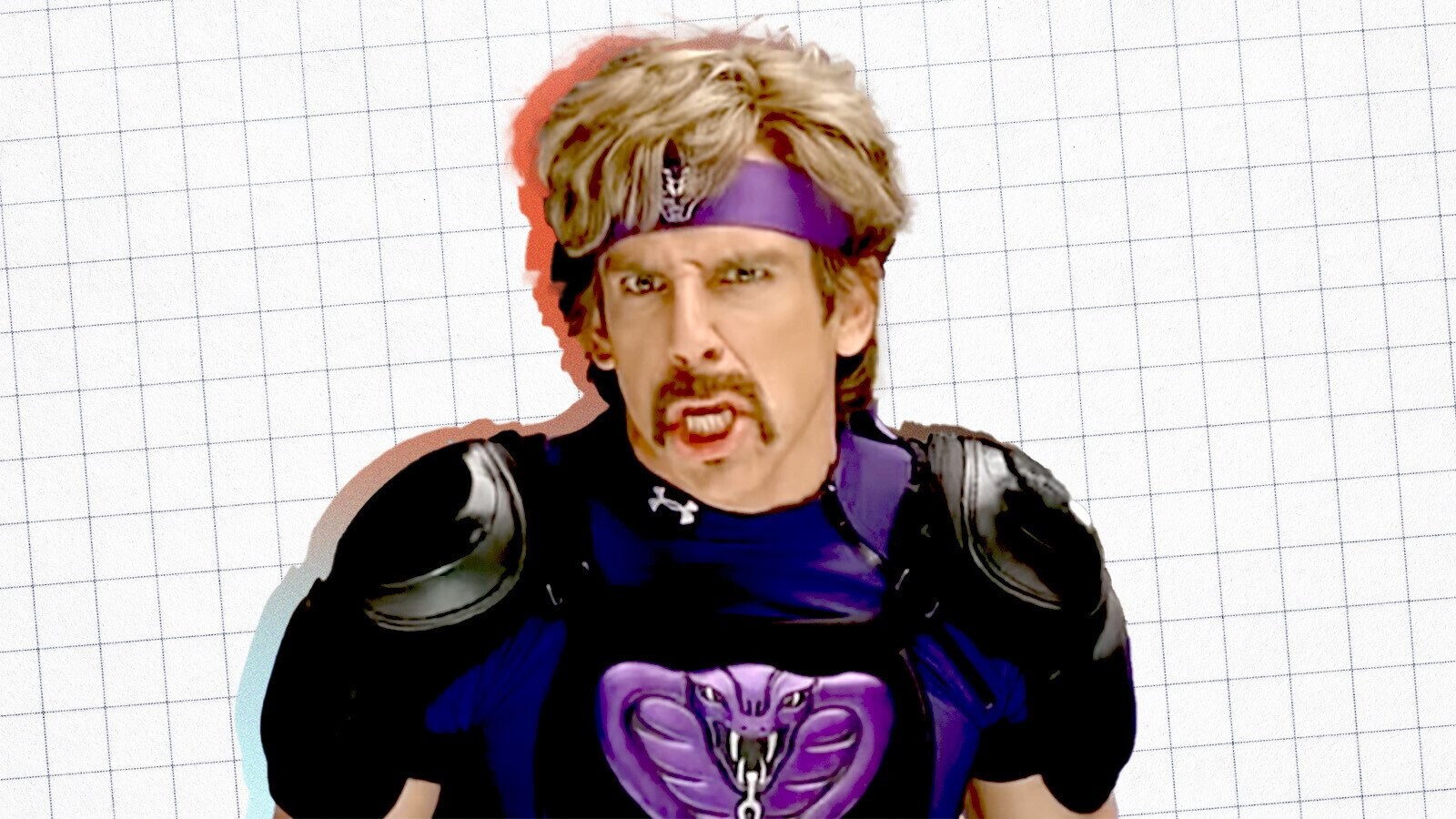
Ben Stiller has built a career out of playing men who are either painfully awkward, dangerously confident, or somehow both before breakfast. But one of his funniest tricks may have been hiding in plain sight for years: his Dodgeball: A True Underdog Story villain, White Goodman, looks suspiciously like a grown-up remix of Tony Perkis from Disney’s 1995 children’s comedy Heavyweights.
And the best part? Stiller more or less admitted it. When asked about the similarities between the two fitness-obsessed tyrants, he acknowledged that Tony Perkis was “definitely a first or second cousin” to White Goodman. He also joked that he thought nobody had seen Heavyweights, so he could get away with returning to that same deranged comedy playground. Unfortunately for him, a generation of Disney Channel kids had already memorized Tony Perkis like he was a camp counselor from a fever dream.
So yes, the headline sounds dramatic. “Stole” may be a little strong. Let’s call it creative recycling with a handlebar mustache, a protein shake, and enough self-esteem issues to power a boutique gym chain.
The Children’s Movie Behind White Goodman: What Is Heavyweights?
Before White Goodman strutted around Globo Gym in Dodgeball, Ben Stiller played Tony Perkis Jr. in Heavyweights, a Disney comedy directed by Steven Brill and co-written by Brill and Judd Apatow. The movie follows kids at Camp Hope, a summer camp that is supposed to be supportive, fun, and outdoorsy. Then Tony Perkis buys the camp and transforms it into a boot-camp nightmare wrapped in fake motivational branding.
Tony is not just strict. He is a walking infomercial with a whistle. He worships discipline, image, control, and his own absurd system of self-improvement. He films motivational videos, lectures the campers about their supposed lack of hustle, and treats normal childhood joy like a disease that can be cured with sit-ups.
That setup is exactly why Heavyweights became such a memorable oddity. It was a kids’ movie, but its villain was played with the intensity of a man trying to conquer Wall Street, the fitness industry, and a snack cabinet at the same time. Stiller did not wink softly at the audience. He charged into Tony Perkis with full comic commitment.
At the time, Heavyweights did not become a box-office giant. It made a modest impact theatrically, then found its real audience later through home video, cable reruns, and nostalgic word of mouth. In other words, it became the exact kind of movie that adults assume “nobody saw,” while thousands of kids quietly turn it into a personality trait.
White Goodman in Dodgeball: Tony Perkis With Better Branding
Released in 2004, Dodgeball: A True Underdog Story gave Stiller another chance to play a fitness villain with the emotional temperature of a malfunctioning tanning bed. White Goodman is the founder of Globo Gym, a glossy, corporate fitness empire that wants to crush Average Joe’s Gym, the shabby but lovable hangout run by Peter LaFleur, played by Vince Vaughn.
White Goodman is richer, flashier, and more aggressively stylized than Tony Perkis. He has the gym, the team uniforms, the corporate motto, the purple villain aesthetic, and the kind of facial hair that says, “I have sued a smoothie.” Yet underneath the new packaging, the machinery feels familiar.
Like Tony, White is obsessed with physical transformation. Like Tony, he weaponizes fitness as a moral hierarchy. Like Tony, he sees ordinary people not as human beings but as weaklings waiting to be corrected. And like Tony, he is funniest when his polished self-image starts cracking under pressure.
That is the real connection. Stiller did not simply repeat a voice or a posture. He returned to a comic idea: the fitness guru as villain, a man who claims to sell self-improvement but is obviously powered by insecurity, vanity, and a desperate need to dominate the room.
Why Fans Noticed the Connection
Fans noticed the link because it is almost impossible not to notice once both movies are in your head. Tony Perkis and White Goodman are not identical characters, but they share the same comic DNA. They both have a theatrical relationship with exercise. They both use wealth and authority to push around people who are less powerful. They both confuse cruelty with motivation. They both seem like they would turn a group lunch into a quarterly performance review.
The body language is similar too. Stiller plays both men with sharp movements, tight smiles, and sudden bursts of rage. He gives them the confidence of motivational speakers and the emotional stability of a treadmill with a loose screw. Their comedy comes from contrast: they preach discipline while being completely out of control.
Even their backstories rhyme. Tony Perkis is tied to family money through his father, Tony Perkis Sr., whom Stiller also plays. White Goodman talks about using inherited money to build Globo Gym. Both men have histories connected to body insecurity. Both appear to have remade themselves and then decided the entire world should be punished for reminding them of who they used to be.
That is why some fans joke that Dodgeball is secretly a sequel to Heavyweights. The theory usually goes like this: after the Camp Hope disaster, Tony Perkis rebrands himself, changes his name, builds Globo Gym, and returns with a bigger budget and a worse haircut. Officially, that is not canon. Emotionally, it is dangerously persuasive.
Did Ben Stiller Really Think Nobody Saw Heavyweights?
Stiller’s comment about assuming nobody saw Heavyweights has become part of the joke because it captures a perfect entertainment industry misunderstanding. A movie can underperform in theaters and still become deeply important to a specific generation. Box-office numbers measure ticket sales. They do not measure how many kids watched the same VHS tape twelve times while eating cereal on a Saturday morning.
Heavyweights was not a massive theatrical phenomenon, but it had the perfect ingredients for a cult following: Disney distribution, a strange tone, a young cast, early Judd Apatow involvement, and a Ben Stiller performance that felt too big to stay trapped inside one movie.
By the time Dodgeball arrived, Stiller had become a major comedy star. Audiences knew him from movies like There’s Something About Mary, Meet the Parents, and Zoolander. But many younger viewers also remembered him as Tony Perkis, the camp tyrant who turned childhood recreation into a fitness dictatorship.
So when White Goodman appeared, those viewers immediately felt the echo. It was like seeing your old gym teacher become the CEO of a sinister wellness startup.
Why the “Stolen” Villain Works So Well
The reason this creative borrowing works is that White Goodman is not a lazy copy. He is an evolved version of the same joke. Tony Perkis belongs in a children’s summer-camp comedy, where his villainy is aimed at campers who eventually outsmart him. White Goodman belongs in a PG-13 sports comedy, where his villainy becomes corporate, romantic, competitive, and absurdly adult.
Dodgeball also gives the archetype a sharper satirical target. Globo Gym is not just a gym. It is a parody of fitness culture at its most smug and exclusionary. Everything about it screams status: the polished equipment, the matching uniforms, the expensive branding, the belief that health is less about feeling good and more about looking superior in public.
White Goodman turns fitness into class warfare. Average Joe’s is messy, welcoming, and human. Globo Gym is sleek, exclusive, and emotionally hostile. That contrast makes White more than just a goofy villain. He is the movie’s walking argument against turning self-improvement into a business model for humiliating people.
That is also why Stiller’s performance remains so quotable. He plays White as a man who desperately wants to be feared, admired, desired, and applauded, preferably all before lunch. The comedy is not just that he is mean. The comedy is that he is clearly miserable underneath all the swagger.
Ben Stiller’s Gift for Comedy Villains
Stiller is often remembered for playing anxious everymen, but his comedy villains are a special category. Tony Perkis, White Goodman, Derek Zoolander, and even smaller roles across his filmography show a performer who understands that arrogance is funniest when it is secretly fragile.
With Tony and White, Stiller adds another layer: the villain as self-help monster. These men talk about discipline, improvement, and success, but they are really selling control. They do not want people to be healthy. They want people to obey the fantasy that made them feel powerful.
That is why the performances still connect. Plenty of comedy villains are loud. Stiller’s best villains are loud with purpose. They are exaggerations of real social pressures: look better, try harder, buy the upgrade, hate your old self, never admit weakness, and please ignore the man in the tiny shorts screaming about excellence.
How Heavyweights Changed Over Time
Watching Heavyweights today can be complicated. The movie comes from a different comedy era, and some of its language and assumptions about bodies feel dated. Modern viewers are more aware of how jokes about weight can land, especially for younger audiences. That does not erase the film’s charm, but it does change how people talk about it.
The strongest reading of Heavyweights is that the campers are not the joke. Tony Perkis is the joke. His obsession with control is the target. His cruelty is ridiculous. His fitness empire collapses because the kids refuse to accept that their worth depends on his approval.
That distinction matters. The film works best when it is understood as a comedy about rejecting shame, not embracing it. Camp Hope is happiest when it becomes a place of friendship, fun, and confidence rather than punishment. Tony loses because he misunderstands what growth actually means.
Dodgeball uses a similar structure. Average Joe’s wins not because its players become perfect athletes, but because they build a team out of weirdness, loyalty, and persistence. White Goodman loses because he cannot imagine a world where people who do not fit his ideal still deserve victory.
Is Dodgeball Secretly a Heavyweights Sequel?
Officially, no. There is no confirmed shared universe where Tony Perkis legally becomes White Goodman after a failed summer-camp takeover. Disney and 20th Century Fox did not quietly build the Perkis Cinematic Universe, though frankly Hollywood has made stranger decisions.
Still, fan theories thrive because emotional logic can be more fun than official continuity. The idea that Tony Perkis rebranded himself as White Goodman makes sense because both characters are built from the same wounds. Both are obsessed with transforming themselves. Both rely on money and image. Both use fitness language to disguise insecurity. Both are defeated by communities that refuse to worship them.
That does not mean the theory is true. It means Stiller tapped into a comic type that had unfinished business. Tony Perkis was too strange, too intense, and too memorable to vanish after one Disney movie. White Goodman gave that energy a second life, a bigger stage, and a much more ridiculous wardrobe.
Why This Pop-Culture Connection Still Matters
The Tony Perkis and White Goodman connection matters because it shows how cult movies survive. A studio may move on. A box office report may shrug. Critics may give mixed reviews. But audiences keep certain characters alive because they feel specific, bizarre, and impossible to replace.
For many viewers, Heavyweights was not just a random Disney comedy. It was a movie they discovered when they were young, quoted with friends, and rewatched until the jokes became part of their memory. Then Dodgeball arrived years later and accidentally rewarded that memory. The audience got to feel like they were in on a joke that Stiller assumed nobody would catch.
That is a rare pleasure in comedy: recognition. Not the cheap kind, where a movie simply points at nostalgia and waits for applause, but the deeper kind, where a performance carries a hidden history. White Goodman is funny on his own. He becomes even funnier when you realize Tony Perkis was already lurking in the background, stretching aggressively and waiting for his comeback.
Experience: Rewatching the Perkis-to-Goodman Connection
The best way to understand this connection is to watch the movies in order: Heavyweights first, then Dodgeball. The experience feels like finding an old school photo of someone who later became a motivational speaker with a suspiciously expensive watch. At first, Tony Perkis seems like a one-off Disney oddball. Then White Goodman appears, and suddenly the earlier performance feels like a secret origin story.
During a rewatch, the similarities do not creep in quietly. They kick the door open. Tony’s fake-inspirational speeches, dramatic pauses, and obsession with “hustle” all feel like early drafts of White Goodman’s corporate gym persona. White has more money, more polish, and more adult-comedy edge, but the emotional engine is the same. He is still a man trying to outrun his own insecurity by making everyone else feel smaller.
This is why fans enjoy introducing the theory to friends. You can watch someone’s face change in real time. First comes confusion: “Wait, is that Ben Stiller?” Then recognition: “Why does he sound like White Goodman?” Then the final stage: “Oh no, Dodgeball might actually be a Heavyweights sequel.” It is one of those pop-culture observations that turns a casual movie night into a full investigation, complete with snacks, rewinding, and at least one person declaring themselves an expert in fictional gym ownership.
The connection also makes both films richer. Heavyweights becomes more than a nostalgic kids’ comedy; it becomes the place where Stiller tested a very specific type of villain. Dodgeball becomes more than a sports spoof; it becomes the grown-up version of the same satirical idea. Together, they create an accidental double feature about confidence, shame, branding, and the hilarious danger of giving an insecure man a fitness empire.
There is also something oddly satisfying about seeing a performer reuse an idea without pretending it came from nowhere. Comedy has always involved evolution. A voice, a rhythm, a facial expression, or a character type can begin in one project and mature in another. Stiller did not simply copy and paste Tony Perkis into Dodgeball. He took the bones of that performance and dressed them in Globo Gym spandex.
For viewers who grew up with both movies, that discovery feels personal. It rewards memory. It says, yes, that strange Disney movie you watched years ago mattered. It was not just background noise from childhood. It was part of a larger comedy trail, and one of its strangest villains escaped camp, got a new name, and opened a gym.
That is why the joke still has legs. Or at least very sculpted calves.
Conclusion
Ben Stiller may have thought no one would notice that White Goodman from Dodgeball shared a very obvious family resemblance with Tony Perkis from Heavyweights, but audiences absolutely noticed. They noticed the fitness obsession, the authoritarian pep talks, the inherited-money energy, the insecurity dressed up as confidence, and the unmistakable Stiller intensity behind both performances.
What could have been a simple case of comic recycling became something more interesting: a cult-movie connection that makes both films more fun to revisit. Tony Perkis gave Stiller the blueprint. White Goodman turned that blueprint into a mansion with mirrors on every wall. Together, they prove that a great comedy villain does not always disappear after one movie. Sometimes he just changes his name, grows a mustache, and starts charging monthly membership fees.