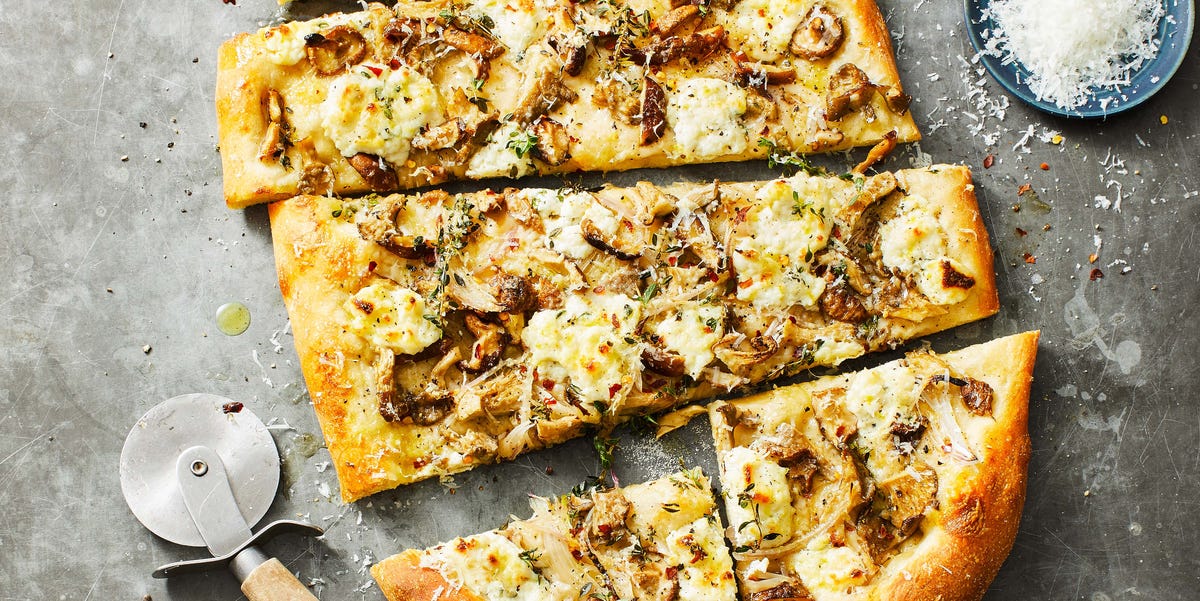
A truly great cheesy mushroom pizza should deliver three things in every slice: a crisp-bottomed crust, deeply browned mushrooms, and enough molten cheese to produce an impressive stretch without turning dinner into an oil slick. This recipe achieves that balance with savory cremini and shiitake mushrooms, a restrained layer of tomato sauce, and a three-cheese blend of mozzarella, fontina, and Parmesan.
The secret is surprisingly simple: cook the mushrooms before they go on the pizza. Raw mushrooms contain plenty of moisture, and when that water escapes in the oven, it can leave the crust pale and the cheese swimming in mushroom broth. A quick sauté concentrates their earthy flavor, creates golden edges, and prevents the dreaded soggy middle. In other words, we are making pizza, not a tiny edible swamp.
Cheesy Mushroom Pizza Recipe at a Glance
- Prep time: 25 minutes
- Cooking time: 10 to 14 minutes
- Total active time: About 40 minutes
- Yield: One 12-inch pizza
- Servings: 3 to 4
- Difficulty: Easy to moderate
This homemade mushroom pizza works with either fresh store-bought dough or your favorite homemade pizza dough. For the best texture, bring refrigerated dough to room temperature before attempting to stretch it. Cold dough has the cooperative spirit of a cat being placed in a bathtub.
Ingredients for the Best Cheesy Mushroom Pizza
For the Mushroom Topping
- 8 ounces cremini mushrooms, cleaned and thinly sliced
- 4 ounces shiitake or oyster mushrooms, stems trimmed and caps sliced
- 1 tablespoon extra-virgin olive oil
- 1 tablespoon unsalted butter
- 2 garlic cloves, finely minced
- 1 teaspoon fresh thyme leaves, or 1/3 teaspoon dried thyme
- 1/4 teaspoon kosher salt, plus more as needed
- 1/4 teaspoon freshly ground black pepper
For the Pizza
- 1 pound pizza dough, at room temperature
- All-purpose flour, for handling the dough
- Fine cornmeal or semolina flour, for the pizza peel or pan
- 1/3 cup thick pizza sauce
- 1 1/2 cups shredded low-moisture whole-milk mozzarella
- 3/4 cup shredded fontina cheese
- 1/4 cup finely grated Parmesan cheese
- 1 teaspoon extra-virgin olive oil, for the crust
- Crushed red pepper flakes, optional
- Fresh basil, parsley, or thyme, for finishing
How to Make Cheesy Mushroom Pizza
1. Bring the Dough to Room Temperature
Remove refrigerated pizza dough from its container and place it in a lightly oiled bowl. Cover it and let it sit at room temperature for 45 to 90 minutes. The exact time depends on the temperature of your kitchen, but the dough should feel relaxed, slightly puffy, and easy to stretch.
Do not force cold dough into a circle. If it keeps snapping back, cover it and let it rest for another 10 to 15 minutes. Resting allows the gluten to relax, saving you from an unnecessary wrestling match with your dinner.
2. Preheat the Oven and Baking Surface
Place a pizza steel or stone on a rack in the upper-middle portion of the oven. Preheat the oven to 500°F for at least 45 minutes. A thoroughly heated surface gives the underside of the crust an immediate blast of energy, producing better browning and a crisper base.
If you do not own a pizza stone or steel, place a heavy rimmed baking sheet upside down in the oven while it preheats. You can also bake the pizza in a cast-iron skillet or on a standard sheet pan, although the crust may require a few extra minutes.
3. Brown the Mushrooms
Heat a large skillet over medium-high heat. Add the olive oil and butter. Once the butter has melted and stopped foaming, add the mushrooms in an even layer.
Leave them alone for about two minutes before stirring. This gives the mushrooms time to make direct contact with the hot pan and develop golden color. Continue cooking for 5 to 7 minutes, stirring occasionally, until they release their moisture and the liquid evaporates.
Add the garlic, thyme, salt, and black pepper. Cook for another 30 to 60 seconds, just until the garlic becomes fragrant. Transfer the mushrooms to a plate and let them cool slightly. Avoid leaving them in the hot skillet, where they may continue cooking and become overly soft.
4. Stretch the Pizza Dough
Lightly flour your work surface. Place the dough in the center and press it gently into a thick disk. Using your fingertips, press outward from the center while leaving a slightly thicker rim around the edge.
Lift the dough and rotate it over your knuckles, allowing gravity to stretch it into an approximately 12-inch round. Perfection is unnecessary. A slightly irregular homemade pizza looks charming; a perfectly circular one merely raises suspicions that you secretly own a pizzeria.
Dust a pizza peel or the back of a sheet pan with semolina or cornmeal. Place the stretched dough on top and give it a gentle shake to confirm that it slides freely.
5. Add the Sauce, Cheese, and Mushrooms
Spread the pizza sauce over the dough, leaving a 3/4-inch border around the edge. Keep the sauce layer thin. Too much sauce can overpower the mushrooms and contribute excess moisture.
Sprinkle about two-thirds of the mozzarella and fontina over the sauce. Arrange the cooked mushrooms evenly over the cheese, then add the remaining mozzarella, fontina, and Parmesan. This layered approach helps hold the mushrooms in place while leaving enough cheese on top to brown attractively.
Brush the exposed crust lightly with olive oil. Add a small pinch of crushed red pepper flakes if you enjoy a gentle kick.
6. Bake Until Bubbling and Browned
Slide the pizza onto the preheated steel, stone, or baking sheet. Bake for 8 to 12 minutes, rotating it once if your oven browns unevenly. The pizza is ready when the crust is deeply golden, the cheese is bubbling, and the mushrooms have crisp edges.
For extra color, switch the oven to broil for the final 30 to 60 seconds. Watch it continuously. The distance between “beautifully blistered” and “smoke alarm solo” is remarkably short.
7. Rest, Garnish, and Slice
Transfer the pizza to a cutting board and let it rest for 3 to 5 minutes. This brief pause allows the cheese to settle so it stays on the slice instead of sliding onto your shirt.
Finish with fresh basil, parsley, or thyme. Add extra Parmesan and black pepper, then cut the pizza into six or eight slices and serve immediately.
Why This Cheesy Mushroom Pizza Recipe Works
Pre-Cooking Prevents Watery Pizza
Mushrooms absorb and release moisture readily. When piled raw onto pizza, especially in a standard home oven, they may steam instead of brown. Sautéing them first removes much of that water and concentrates their umami-rich flavor.
Three Cheeses Provide Better Flavor and Texture
Low-moisture mozzarella provides the familiar stretch and dependable melting quality. Fontina contributes buttery richness and melts smoothly, while Parmesan adds saltiness and a nutty finish. Using several cheeses creates complexity without requiring an excessive quantity of any one type.
A Thin Sauce Layer Keeps the Crust Crisp
Mushrooms and cheese are already substantial toppings, so the tomato sauce should act as a bright supporting player. One-third cup is enough to add acidity and tomato flavor without soaking the dough.
High Heat Builds a Pizzeria-Style Crust
Professional pizza ovens reach temperatures far above those of most home ovens. Preheating a steel, stone, or heavy pan helps compensate by storing heat and transferring it rapidly to the dough. The result is a crust that puffs at the rim while becoming crisp underneath.
Which Mushrooms Are Best for Pizza?
Cremini mushrooms are the most dependable choice for homemade mushroom pizza. They are inexpensive, widely available, pleasantly earthy, and firm enough to retain some texture after sautéing and baking.
Shiitake mushrooms add a deeper, almost smoky flavor, but their tough stems should be removed. Oyster mushrooms offer delicate, ruffled edges that can become crisp in a hot oven. Maitake mushrooms provide an especially meaty texture and dramatic appearance when torn into small clusters.
White button mushrooms also work well and have a mild flavor that is friendly to children or mushroom skeptics. Portobello mushrooms are delicious but should be sliced thinly and cooked thoroughly because they contain considerable moisture.
A blend usually produces the most interesting pizza. Pair familiar cremini mushrooms with a smaller amount of shiitake, oyster, or maitake mushrooms for a topping that tastes complex without becoming expensive.
Tips for a Crisp, Flavorful Mushroom Pizza
- Do not crowd the skillet. Mushrooms brown better when they have room. Use two batches if your pan is small.
- Season near the end of sautéing. Salt encourages mushrooms to release moisture, so adding it after browning begins helps improve color.
- Use low-moisture mozzarella. Fresh mozzarella can work, but it should be drained and patted thoroughly dry.
- Shred your own cheese. Pre-shredded cheese often contains anti-caking ingredients that can reduce smooth melting.
- Use a restrained hand with toppings. An overloaded pizza cooks unevenly and becomes difficult to transfer.
- Check that the dough slides. Shake the peel before topping and again before launching the pizza. Add a little more semolina if it sticks.
- Let the oven recover. When making multiple pizzas, allow the steel or stone to reheat for several minutes between pies.
Easy Cheesy Mushroom Pizza Variations
White Mushroom Pizza
Skip the tomato sauce and brush the dough with garlic-infused olive oil. Add small spoonfuls of ricotta along with the mozzarella, fontina, mushrooms, and Parmesan. Finish with lemon zest to cut through the richness.
Mushroom and Caramelized Onion Pizza
Add 1/2 cup of caramelized onions beneath the mushrooms. Their sweetness complements the earthy topping particularly well. Goat cheese or blue cheese can replace part of the fontina for a sharper finish.
Spicy Mushroom Pizza
Add sliced pickled jalapeños, red pepper flakes, or small pieces of spicy Italian sausage. Cook sausage completely before placing it on the pizza.
Mushroom and Greens Pizza
Add a handful of chopped kale or spinach to the skillet during the final minute of mushroom cooking. Alternatively, toss fresh arugula with lemon juice and olive oil and scatter it over the baked pizza.
Truffle Mushroom Pizza
Finish the baked pizza with a very light drizzle of truffle oil or a pinch of truffle salt. Use restraint: truffle flavor should whisper from the table, not kick down the front door.
What to Serve With Mushroom Pizza
Because this pizza is rich and cheesy, pair it with something crisp, fresh, or acidic. A simple arugula salad with lemon vinaigrette is an ideal choice. Caesar salad, roasted broccoli, marinated olives, or a tomato and cucumber salad also work well.
For a casual pizza night, serve the pie with garlic knots, roasted peppers, or a platter of raw vegetables. Sparkling water with lemon, iced tea, or a light beer balances the melted cheese without competing with the mushrooms.
How to Store and Reheat Leftover Mushroom Pizza
Allow leftover slices to cool, then place them in an airtight container with parchment paper between layers. Refrigerate for up to four days.
For the best reheated texture, place a slice in a dry skillet over medium-low heat. Cover the skillet for two or three minutes so the cheese warms, then uncover it and continue cooking until the bottom becomes crisp. You can also reheat slices in a 400°F oven for 5 to 8 minutes.
A microwave is convenient but softens the crust. When speed matters, microwave the slice briefly and then place it in a hot skillet for a minute to restore some crispness.
Kitchen Experience: What Making Mushroom Pizza Teaches You
The first lesson of homemade mushroom pizza usually arrives in the form of water. A beginning cook may slice a generous mountain of raw mushrooms, scatter them proudly over the dough, and expect the oven to handle everything. The finished pizza may still taste good, but the center often bends under a shiny puddle. That experience quickly explains why sautéing the mushrooms is not unnecessary fuss. It is the step that turns a decent topping into a concentrated, deeply savory one.
The second lesson concerns quantity. Mushrooms shrink dramatically as they cook, which makes the uncooked skillet look absurdly full. It is tempting to use only a few handfuls, but after the moisture evaporates, the pile becomes surprisingly modest. Starting with about 12 ounces gives a 12-inch pizza enough coverage without burying the crust.
Dough provides another memorable learning curve. When it is cold, it fights every attempt to stretch it. You press it into a circle, turn away for two seconds, and discover that it has contracted into a stubborn little disk. Letting the dough warm and rest transforms the process. Suddenly, it stretches under its own weight, and shaping pizza feels less like manual labor and more like cooking.
Launching the assembled pizza can also produce a formative kitchen moment. A pizza that sticks to the peel may fold, tear, or deposit its toppings directly onto the oven floor. The easiest preventive habit is to shake the peel several times during assembly. If the dough does not move freely, lift the sticky area and add a little semolina underneath before proceeding.
Cheese teaches restraint. Adding more mozzarella seems like the obvious path to a better cheesy mushroom pizza, but an overly thick layer can insulate the dough and release too much grease. A thoughtful mixture works better than sheer volume. Mozzarella stretches, fontina melts into a creamy layer, and Parmesan supplies concentrated flavor. Together, they make the pizza taste cheesier than a larger amount of mozzarella alone.
Oven behavior becomes easier to understand with each pizza. One side may brown faster, the back may blister before the front, or the bottom may need more time than the cheese. Rotating the pizza halfway through baking helps reveal and correct those hot spots. Moving the rack or adjusting the broiler during future attempts makes each pie more predictable.
Most importantly, homemade pizza becomes less intimidating once you accept that it does not need to look factory-perfect. An uneven rim can become the crispiest bite. A mushroom that falls onto the crust may develop a delicious roasted edge. A slightly oval pizza tastes exactly as good as a circular one, and perhaps better because nobody had to measure it with a ruler.
The best experience comes when the pizza reaches the table after its brief rest. The crust crackles under the cutter, the browned mushrooms smell of garlic and thyme, and the cheese stretches without dragging every topping off the slice. That moment makes the preheating, sautéing, stretching, and careful topping worthwhile. It also makes ordering delivery seem considerably less urgent.
Final Thoughts
The best cheesy mushroom pizza is not defined by the largest quantity of cheese or the most exotic mushrooms. It succeeds because each component is handled carefully. The mushrooms are browned until flavorful, the sauce is applied lightly, the cheeses have distinct jobs, and the crust meets a thoroughly heated baking surface.
Once you master this basic method, the recipe becomes an adaptable foundation for white pizza, caramelized onion pizza, mushroom and sausage pizza, or an elegant wild mushroom version. Keep the heat high, the toppings balanced, and the mushrooms out of the swimming pool, and homemade pizza night will be in excellent shape.