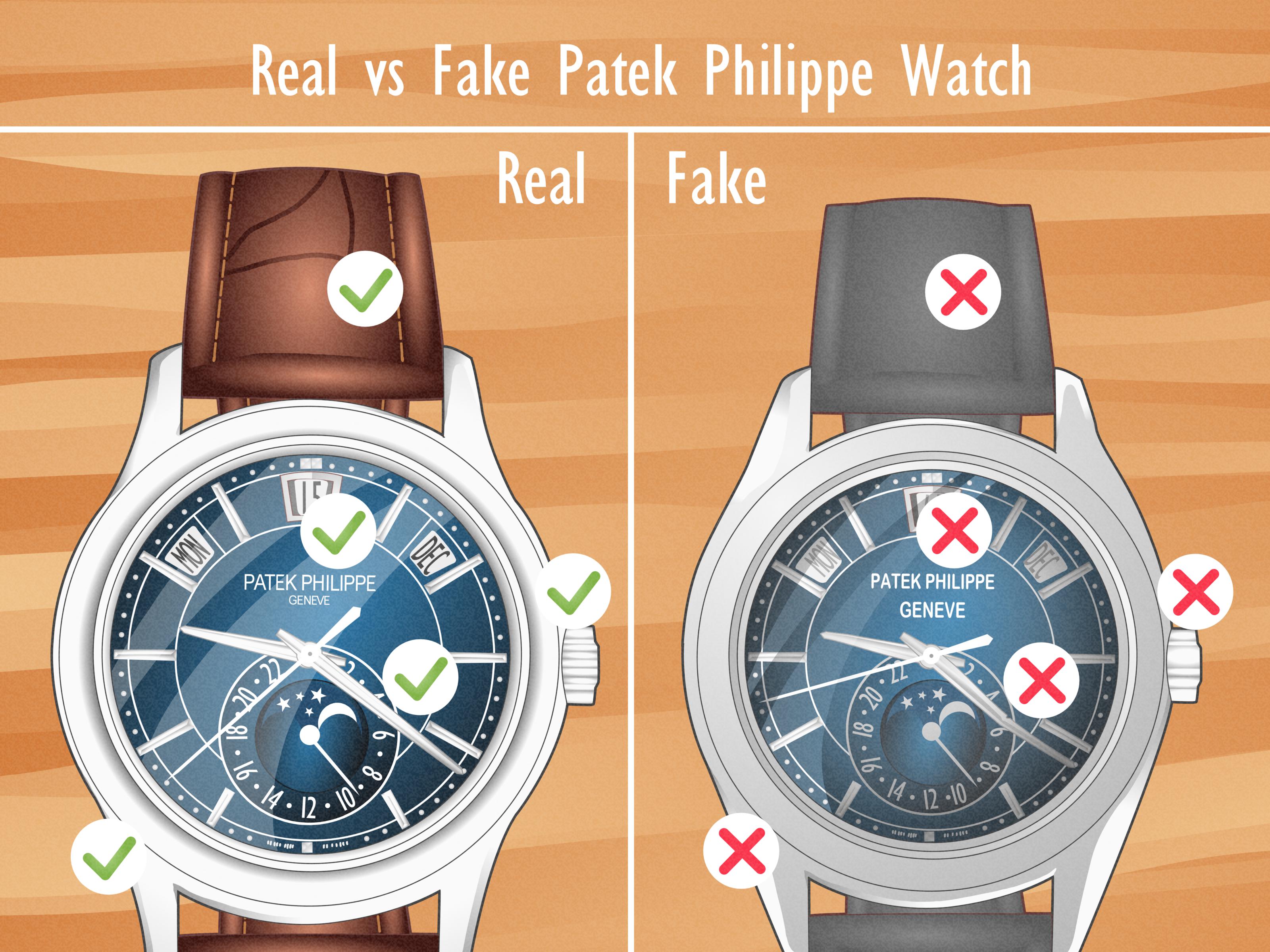
Buying a Patek Philippe is not like buying a regular watch. It is closer to adopting a tiny mechanical heirloom that happens to tell time, impress collectors, and make your bank account sit down for a minute. Because Patek Philippe watches are among the most respected luxury timepieces in the world, they are also heavily targeted by counterfeiters. Some fakes are laughably bad. Others are dangerous because they are good enough to fool a rushed buyer, a blurry online listing, or an overexcited collector who has already imagined the watch on their wrist.
The good news? A fake Patek Philippe usually gives itself away. The bad news? It may whisper, not shout. The difference between a fake Patek Philippe and a real one is often hidden in the dial printing, movement finishing, case proportions, documentation, serial numbers, and the behavior of the seller. In other words, you need more than a quick glance and a dream.
This guide breaks down how to spot the difference between a fake Patek Philippe and a real Patek Philippe in plain American English. No snobbery. No “you simply must have handled 10,000 perpetual calendars before breakfast.” Just practical signs, smart buyer habits, and a few red flags that should make you put your wallet back in your pocket.
Why Patek Philippe Watches Are So Often Faked
Patek Philippe sits near the top of the luxury-watch world because of its history, craftsmanship, finishing, limited production, and serious collector demand. A genuine Calatrava, Nautilus, Aquanaut, Annual Calendar, Perpetual Calendar, or Grand Complication can command major money on the retail and secondary markets. That makes the brand a tempting target for counterfeiters.
Unlike many ordinary products, a Patek Philippe is valuable even when it is decades old. Vintage models with original dials, crisp cases, correct movements, and strong provenance can become more desirable over time. That value creates a market not only for outright fake watches, but also for “Frankenwatches” assembled from mixed genuine, aftermarket, refinished, or incorrect parts. A watch can be partially real and still be a terrible buy.
That is why authentication is not just about asking, “Is this watch real?” A smarter question is: “Is this entire watch correct for its reference, era, movement, case, dial, bracelet, paperwork, and condition?” That may sound like a mouthful, but when five or six figures are on the line, a mouthful is cheaper than a mistake.
Fake Patek Philippe vs Real: The Biggest Differences
1. The Dial Should Look Perfect, Not Almost Perfect
The dial is often the first place to inspect. On a real Patek Philippe, printing should be crisp, balanced, and properly aligned. The logo, minute track, date window, subdials, applied markers, and hands should all look intentional. Not “pretty good.” Not “close enough.” Patek Philippe did not build its reputation by letting crooked text sneak out the door like it had somewhere else to be.
Common signs of a fake Patek Philippe dial include uneven lettering, incorrect font weight, poor spacing, fuzzy printing, misaligned date windows, sloppy lume application, and markers that do not sit evenly. On complicated models, subdials should be positioned correctly for the specific reference. If the day, month, moon phase, chronograph registers, or power-reserve indicator seems slightly off, that “slightly” matters.
Compare the watch to verified photos of the exact reference, not just any Patek Philippe model. A Nautilus 5711, Aquanaut 5167, Calatrava 5227, and Perpetual Calendar Chronograph 5270 each has its own layout, proportions, and design language. Counterfeiters often copy the general vibe but miss the tiny details that collectors notice immediately.
2. The Case Should Have Correct Shape, Weight, and Finishing
Real Patek Philippe cases are beautifully proportioned. The edges, brushing, polishing, lugs, crown guards, pushers, and case-back fit should feel refined. A fake may look bulky because counterfeiters sometimes use thicker cases to hide cheaper movements. That is especially noticeable on elegant dress models, where Patek Philippe is known for slimness and restraint.
Weight matters, but it is not a magic test. A platinum watch should feel different from steel. Gold should feel dense. But counterfeiters can add weight, and some genuine vintage watches are lighter than modern buyers expect. Use weight as one clue, not as the final verdict.
Look closely at the transition between polished and brushed surfaces. On a genuine Patek Philippe Nautilus, for example, the finishing should be sharp and controlled. If the brushing looks uneven, the polishing is wavy, or the case lines look soft on a supposedly “unpolished” watch, slow down. Over-polishing can also hurt a genuine watch’s value, so the case can reveal both counterfeit problems and condition problems.
3. The Movement Is the Heartand Fakes Often Have a Weak Pulse
The movement is one of the strongest ways to separate a fake Patek Philippe from a real one. Genuine Patek Philippe mechanical movements are known for high-level finishing, including clean bevels, polished screw heads, decorative striping, perlage, precise engraving, and careful architecture. The finishing should look deliberate even under magnification.
Many fake Patek Philippe watches use generic movements that do not match the correct caliber. A counterfeit may show rough surfaces, cheap rotor engraving, incorrect bridge layout, missing finishing, visible machining marks in the wrong places, or parts that simply do not belong. A fake movement can be like wearing a tuxedo jacket with pajama pants: from far away, maybe; up close, absolutely not.
Do not open the case back yourself. Patek Philippe states that movement and case numbers are found inside the watch and that removal of the case back should be handled by an authorized retailer or authorized service center. That is not brand drama; it is good sense. Opening a valuable watch without proper tools can damage it and reduce its value.
4. Serial and Case Numbers Must Make Sense
A real Patek Philippe has identifying numbers that must correspond with the watch. The movement number is engraved on the movement, while the case number is inside the case back. These numbers should align with the reference, production period, movement type, and documentation.
Here is the tricky part: a number by itself does not prove authenticity. Counterfeiters can copy real numbers from genuine watches. That means a serial number check is useful, but it is not a magic force field. The numbers must be evaluated with the watch, the paperwork, and expert inspection.
For older watches, Patek Philippe offers an Extract from the Archives for eligible timepieces that were first sold at least ten years ago. This document can confirm archival details such as the watch’s relevant features and date of sale. However, buyers should understand what any document does and does not prove. Paperwork helps, but the physical watch still needs careful authentication.
5. Documentation Should Match Exactly
Original Patek Philippe paperwork can add value and confidence. A Certificate of Origin, sales documents, service records, box, manuals, and accessories can help establish provenance. But “box and papers” should never hypnotize you. Counterfeit papers exist. Fake boxes exist. Even genuine boxes can be paired with the wrong watch.
Check whether the reference number, case number, movement number, dial description, metal, bracelet, and sale information match the watch. Spelling mistakes, low-quality printing, strange fonts, incorrect dealer details, mismatched numbers, or suspiciously fresh paperwork for an old watch should raise your eyebrows high enough to qualify as exercise.
Also remember that Patek Philippe says a lost Certificate of Origin cannot be reissued. If a seller claims to have a newly reissued original Certificate of Origin, treat that claim with extreme caution and verify it through proper channels.
6. The Bracelet, Clasp, and Crown Should Feel Expensive
On real Patek Philippe sports models, the bracelet and clasp are not afterthoughts. Links should articulate smoothly, finishing should match the case, and the clasp should close with confidence. Engravings should be clean, deep enough, and correctly positioned. The crown should wind smoothly, set the time properly, and carry the correct design for the model.
Fakes often struggle with bracelets. You may see sharp link edges, poor brushing, loose end links, incorrect screws, cheap-feeling clasps, or stamping that looks too shallow or too heavy. On a watch where every millimeter matters, the bracelet can expose shortcuts quickly.
7. Complications Must Work Correctly
Patek Philippe is famous for complications: annual calendars, perpetual calendars, chronographs, world timers, minute repeaters, moon phases, travel-time displays, and more. A real complication should function smoothly and according to the design of the specific caliber.
On fakes, complications may be decorative, inaccurate, or incorrectly arranged. A moon phase may not advance properly. A chronograph may have dead subdials. A calendar may use a simplified mechanism that only imitates the layout. If the seller says, “That little dial is just for decoration,” congratulations: you have found a red flag wearing tap shoes.
8. The Price Should Be Believable
Everyone loves a deal. But a Patek Philippe listed far below market value deserves serious skepticism. Real bargains can happen, but they are rare, especially for highly desired references such as the Nautilus and Aquanaut. If a watch is priced like a miracle, it may be a trap with a buckle.
Research recent market prices from reputable dealers, auction results, and established watch platforms. Compare the exact reference, metal, dial, year, condition, accessories, and service history. A low price may be justified by condition, missing papers, service needs, or market movement. But if the discount is huge and the seller is rushing you, the safest move is usually to walk away.
How to Authenticate a Patek Philippe Before Buying
Buy the Seller, Not Just the Watch
The old collector phrase “buy the seller” is still one of the best rules in watch collecting. A trustworthy seller has history, references, transparent policies, clear photos, a real location, return options, and a willingness to answer detailed questions. A suspicious seller avoids specifics, pressures you, uses stock photos, refuses inspection, or suddenly develops a tragic emergency that requires immediate wire transfer. Funny how every scammer’s cousin needs surgery exactly when you ask for movement photos.
Choose authorized Patek Philippe retailers for new watches whenever possible. For pre-owned watches, work with established dealers, auction houses, or platforms with strong authentication procedures. Private sales can be legitimate, but they carry more risk, especially for beginners.
Request High-Quality Photos
Before buying online, request sharp photos of the dial, case, crown, case back, clasp, bracelet, lugs, hallmarks, documents, box, and any service paperwork. Ask for photos in natural light and from multiple angles. Blurry images are not always proof of fraud, but they are proof you need better images.
For expensive models, video can also help. Ask the seller to show the watch running, the crown operating, the date changing, and complications functioning. For chronographs, ask to see start, stop, and reset. For annual or perpetual calendars, be careful: improper quick-setting can damage the movement, so this should be done only by someone who understands the watch.
Use an Independent Watchmaker or Authentication Service
A professional inspection is worth the cost. A qualified watchmaker can evaluate the movement, case, dial, parts, water-resistance concerns, and signs of tampering. For high-value Patek Philippe watches, authentication should be done by specialists familiar with the brand and the specific reference.
Do not rely only on a pawnshop opinion, a social media comment, or your friend who “knows watches” because he owns three straps and says “patina” a lot. Enthusiasm is lovely. Expertise is better.
Check Service History
Service history can support authenticity and value. Patek Philippe maintains a strong service tradition, and official service records can be meaningful. However, a lack of service papers does not automatically mean fake, especially for older watches. Many genuine watches have incomplete histories.
What matters is whether the story makes sense. If the seller claims the watch was recently serviced, ask by whom, when, and what was done. A vague “fully serviced” claim without documentation should not be treated as gospel.
Model-Specific Red Flags
Fake Patek Philippe Nautilus
The Nautilus is one of the most copied Patek Philippe designs. Inspect the case shape, bezel proportions, horizontal dial texture, bracelet finishing, date window, hands, markers, and clasp. The real Nautilus has a distinctive balance: sporty but elegant, angular but refined. Many fakes look too thick, too shiny, too flat, or too crude in the bracelet.
Fake Patek Philippe Aquanaut
The Aquanaut’s “grenade” dial and rubber strap are frequent trouble spots. The dial pattern should be crisp and properly aligned, the numerals should be correct, and the strap should fit the case cleanly. Counterfeit Aquanauts may have weak dial texture, incorrect lume, poor date alignment, and straps that feel cheaper than the watch’s price tag has any right to allow.
Fake Patek Philippe Calatrava
The Calatrava is simple, which makes it difficult to fake well. There are fewer distractions, so details matter more. Inspect the thinness, dial printing, small seconds placement if applicable, crown shape, case edges, and movement finishing. A fake Calatrava often feels too thick or has a dial that looks slightly “off” even before you can explain why.
Fake Patek Philippe Perpetual Calendar or Grand Complication
Complicated Patek Philippe watches require extra caution. The dial layout, pushers, correctors, moon phase, leap-year indicator, calendar displays, and movement architecture must match the exact reference. Because these watches are extremely valuable, professional authentication is not optional. It is the seatbelt, airbag, and emergency brake.
Quick Checklist: Real vs Fake Patek Philippe
- Dial: Real printing is sharp, balanced, and correct for the reference. Fake printing may be fuzzy, misaligned, or poorly spaced.
- Case: Real cases have refined proportions and finishing. Fakes may be too thick, too soft, or poorly polished.
- Movement: Real movements show high-grade finishing and correct caliber architecture. Fakes often use generic or crude movements.
- Numbers: Real case and movement numbers must make sense together. Copied numbers alone do not prove authenticity.
- Documents: Real paperwork should match the watch exactly. Fake papers may have font, printing, dealer, or number errors.
- Bracelet and clasp: Real parts feel precise and well-finished. Fakes may feel loose, sharp, or cheaply stamped.
- Seller: Real sellers welcome inspection. Risky sellers rush, dodge, blur, and demand irreversible payment.
Common Mistakes Buyers Make
They Trust the Box Too Much
A genuine box does not make a genuine watch. Boxes can be bought separately, swapped, or faked. Treat accessories as supporting evidence, not proof.
They Ignore the Reference Number
A Patek Philippe reference number is not decoration. It tells you what the watch should be. Compare every detail against the exact reference, including dial configuration, case metal, movement, bracelet, and complications.
They Fall in Love Too Fast
Emotion is the enemy of authentication. The moment you start saying, “I know it has issues, but…” pause. A luxury watch purchase should feel exciting, not frantic.
They Skip Professional Inspection
The inspection fee may feel annoying, but it is tiny compared with the cost of buying a fake Patek Philippe. Paying an expert before the purchase is much cheaper than paying for a lesson afterward.
What to Do If You Suspect a Patek Philippe Is Fake
If you already own the watch, do not attempt to open it yourself. Gather all documents, photos, seller messages, receipts, and payment records. Contact a qualified watchmaker, established dealer, or authorized service channel for guidance. If you bought it recently and the seller offered a return period, act quickly and communicate in writing.
If you are still considering the purchase, pause the deal. Ask for better photos, documentation, and permission for third-party inspection. A legitimate seller should understand. A scammer will suddenly become allergic to patience.
If the watch is confirmed fake, do not resell it as genuine or “replica.” Counterfeit goods create legal and ethical problems, and passing one along only moves the damage to someone else. Report the issue to the platform, payment provider, or appropriate consumer-protection channel.
Real-World Experience: Lessons From Comparing Fake and Real Patek Philippe Watches
One of the most useful experiences when learning how to spot a fake Patek Philippe is comparing watches side by side. Photos are helpful, but the hand and eye learn faster when they can feel differences in finishing, weight, winding, bracelet articulation, and dial depth. The first surprise is usually how calm a real Patek Philippe looks. It does not scream for attention. It does not need oversized logos or theatrical shine. The quality is quiet, controlled, and confident.
With many fakes, something feels too eager. The dial may be shinier than expected, the case may be thicker, or the bracelet may rattle in a way that does not match the price. On a fake Nautilus-style watch, for example, the bracelet can be the giveaway before the dial is even inspected. The links may feel slightly sharp underneath, the brushing may run unevenly, or the clasp may close with a cheap snap instead of a precise click. It is the watch equivalent of a luxury hotel lobby with folding chairs.
Another lesson is that counterfeiters often improve the obvious details while missing the deeper ones. A fake may have a decent logo, convincing dial color, and a case shape that looks fine in a social media photo. But under magnification, the date numerals may sit too high or low, the minute markers may vary in length, the hands may show rough edges, or the movement may be completely wrong. That is why “it looks good on Instagram” is not an authentication method.
Documentation can also create false confidence. A buyer may see a box, booklets, and a certificate-style paper and assume the watch is safe. In practice, paperwork should start questions, not end them. Does the reference match? Do the movement and case numbers make sense? Is the dealer information plausible? Is the date consistent with the model’s production? Does the dial configuration match what the paperwork says? When one piece of the story disagrees with another, listen to the disagreement.
The seller’s behavior is often as revealing as the watch. Good sellers usually answer clearly, provide extra images, allow inspection, and do not panic when you ask reasonable questions. Risky sellers push urgency: “Many buyers waiting,” “Price only today,” “No returns,” “Trust me,” or the classic “I do not know watches, selling for a friend.” Maybe that is true. Maybe the friend is named Red Flag.
Experienced collectors tend to be patient because they have learned that another watch will always appear. Beginners often feel that one listing is their only chance. That mindset is expensive. The best buying experience is boring in the right ways: clear documentation, good photos, consistent story, fair price, reputable seller, and independent verification. No drama, no mystery, no heroic leap of faith.
The biggest personal lesson from studying fake Patek Philippe watches is simple: authenticity is a pattern. No single clue tells the whole story. A real watch usually has harmony between design, movement, numbers, documents, condition, and seller history. A fake often has friction somewhere. Maybe the dial is good but the movement is wrong. Maybe the watch is correct but the papers are suspicious. Maybe the photos look fine but the seller refuses inspection. Your job is to notice the friction before money changes hands.
In the end, spotting a fake Patek Philippe is less about being paranoid and more about being disciplined. Respect the brand, respect the money involved, and respect the fact that counterfeiters are counting on excitement to overpower judgment. Slow down. Compare carefully. Ask questions. Use experts. A genuine Patek Philippe should bring pride for years, not a stomachache every time someone asks, “Is it real?”
Conclusion
The difference between a fake Patek Philippe and a real Patek Philippe is found in details: the dial, case, movement, numbers, documents, bracelet, complications, and seller behavior. A genuine Patek Philippe reflects generations of watchmaking discipline. A fake usually imitates the appearance but fails to capture the precision, finishing, and consistency that make the real thing valuable.
If you are buying your first Patek Philippe, do not rush. Study the exact reference, compare verified examples, demand clear documentation, and pay for professional authentication. The safest purchase is not always the cheapest listing; it is the one with the least uncertainty. In luxury watches, confidence is part of the value.
A real Patek Philippe is more than a status symbol. It is mechanical art, family history, and collector-grade craftsmanship. A fake is just an expensive reminder that shortcuts can be very costly. Choose patience, choose expertise, and let the watch earn your trust before it earns your money.