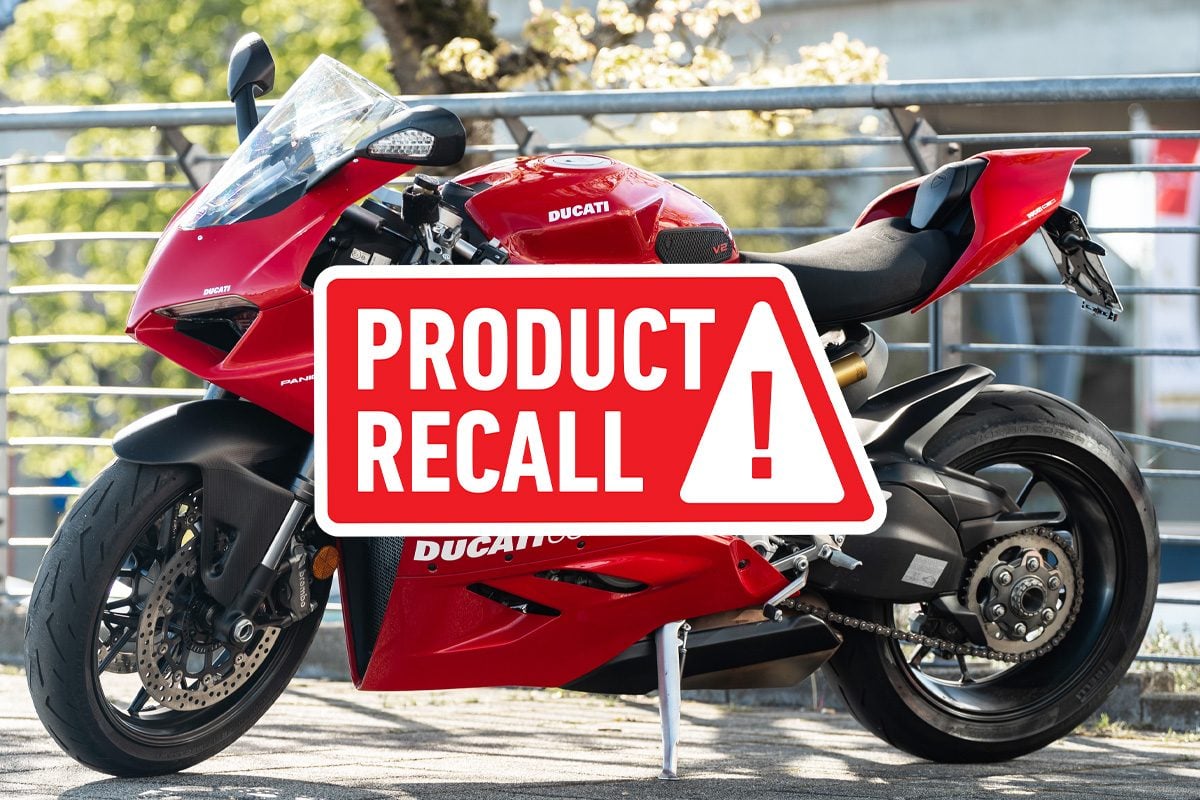
There are few things a motorcycle rider wants less than a surprise warning light during hard braking. A surprise pizza topping? Fine. A surprise road closure? Annoying, but survivable. A possible anti-lock braking system failure that could increase the risk of wheel lockup? That is firmly in the “please fix this immediately” category.
Ducati North America has recalled more than 1,000 motorcycles because an assembly error involving ABS fuses may cause the anti-lock braking system to malfunction. The recall affects certain 2025 Ducati Panigale V2 motorcycles and certain 2025–2026 Ducati Streetfighter V2 motorcycles. The concern is not a cosmetic hiccup or a loose cup holdermotorcycles do not even get cup holders, which feels like a missed opportunity. The issue involves a key braking safety system designed to help riders maintain traction during aggressive braking.
According to the recall documentation, improperly positioned fuses or fuse holders could leave the ABS pump protected by a lower-rated fuse than intended. Under certain prolonged braking conditions that activate ABS, that fuse could blow. If the ABS pump stops functioning, the front or rear wheel could lock up, potentially causing a rider to lose control.
Which Ducati Motorcycles Are Included in the Recall?
The recall involves 1,016 motorcycles in the United States. The affected models include certain:
- 2025 Ducati Panigale V2 motorcycles produced between February 4, 2025, and May 23, 2025
- 2025–2026 Ducati Streetfighter V2 motorcycles produced between March 31, 2025, and June 12, 2025
The NHTSA recall campaign is identified as 25V838, while Ducati’s internal recall number is SRV-RCL-25-004. Ducati reported that motorcycles produced after June 13, 2025, had their fuse and fuse-holder positions verified, meaning those later-production bikes are not expected to be part of this particular recall.
That production-date detail matters, especially for riders shopping for a used Panigale V2 or Streetfighter V2. A motorcycle may look flawless under showroom lighting, but a clean fairing and shiny exhaust do not reveal whether a fuse holder was installed in the correct position. That is why the vehicle identification number, or VIN, is the final authority.
What Caused the Ducati ABS Recall?
The problem traces back to the motorcycle wiring assembly process. Ducati reported that two ABS-related fuses, or their respective fuse holders, may have been reversed during supplier assembly.
One fuse is rated at 25 amps and is intended for the ABS pump. The other is rated at 10 amps and is intended for the ABS control unit. When those components are switched, the ABS pump may be protected by the smaller 10-amp fuse instead of the proper 25-amp fuse.
That sounds like a minor paperwork mistake, but electrical systems are not known for appreciating creative improvisation. A fuse is designed to protect a circuit at a specific electrical load. If the ABS pump is protected by a fuse with too little capacity, the fuse may blow when the system is heavily engaged.
In practical terms, the motorcycle could lose ABS functionality during a braking event when the system is needed most. It is a little like discovering your umbrella has a hole exactly when the rain starts. Except, in this case, the rain is emergency braking and the umbrella is a major safety system.
Why Wheel Lockup Is Such a Serious Motorcycle Safety Risk
Motorcycle braking is different from car braking in one obvious but important way: motorcycles balance on two narrow contact patches. If a wheel loses traction and locks during braking, a rider may have far less time and space to recover.
ABS is designed to reduce that risk. The system monitors wheel speed and adjusts brake pressure when it detects that a wheel is approaching lockup. This helps preserve traction and stability, particularly during hard braking or when road conditions are less than ideal.
Without functioning ABS, a rider may face a greater risk of skidding, sliding, or losing directional control. The consequences can become more severe on wet pavement, uneven roads, loose gravel, painted lane markings, or during a panic stop when instinct takes over and every muscle suddenly remembers it has a job.
What Happens If the ABS Fuse Blows?
Ducati’s recall filing explains that if the ABS pump fuse blows while the motorcycle is braking and ABS intervention is occurring, the ABS pump may stop functioning. That could allow the front or rear wheel to lock, increasing the risk of a crash or injury.
The rider may see an “ABS Error” message on the dashboard, along with an illuminated ABS warning light. The warning is useful, but it is not something riders should treat as a decorative dashboard feature. An ABS warning light should be taken seriously, especially on a motorcycle covered by this recall.
Ducati’s filing referenced a report from outside the United States in which a rear wheel locked during braking and the rider dropped the motorcycle. The rider was not injured. Ducati also reported no incidents, injuries, or property damage in the United States connected to this issue at the time of the filing.
What Ducati Owners Should Do Now
If you own a 2025 Ducati Panigale V2 or a 2025–2026 Ducati Streetfighter V2, the smartest move is simple: check your VIN as soon as possible.
Do not rely only on the model year, a seller’s memory, or the deeply scientific method of staring at the bike and saying, “It seems okay.” Safety recalls are VIN-specific. A motorcycle built during the affected production window may or may not be included, depending on its exact identification number and recall status.
Step 1: Check the VIN
Owners can use Ducati’s recall campaign lookup tool or the NHTSA recall database to check whether their motorcycle has an open recall. The VIN is a 17-character identifier commonly found on the motorcycle frame, registration paperwork, insurance documents, or purchase records.
Step 2: Contact an Authorized Ducati Dealer
If the motorcycle is affected, contact an authorized Ducati dealer to schedule the recall service. Ducati dealers are expected to inspect the ABS fuses and fuse holders, then correct the placement if necessary.
Step 3: Do Not Delay the Repair
Recall repairs are performed at no cost to the owner. That makes this one of the rare situations where the best financial decision and the best safety decision are exactly the same. There is no reason to postpone a free repair involving the braking system.
Step 4: Watch for Warning Lights
Even riders whose motorcycles are not included in the recall should never ignore an ABS warning light. A warning message does not automatically mean the bike will become unsafe instantly, but it does mean the anti-lock braking function may not be operating as intended. A qualified technician should inspect the motorcycle before it is used aggressively, on wet roads, or for high-speed riding.
How the Recall Repair Works
The recall remedy is relatively straightforward compared with a major engine repair or a full brake-system rebuild. Ducati dealers will inspect the positions of the ABS fuses and their holders. If the components are reversed, technicians will place them in the correct positions.
That may sound like a small repair, but small parts can have very large responsibilities. A fuse weighs almost nothing, yet it helps protect an electrical circuit that supports a system designed to prevent wheel lockup. Motorcycles are full of examples like this: a tiny sensor, connector, bolt, seal, or wire can have an outsized impact on how safely the machine behaves.
The recall also highlights why manufacturers use layered quality checks. Ducati reported that it investigated the original issue, examined motorcycles in production and warehouse inventory, and identified additional assembly concerns. The company then initiated monitoring and ultimately launched the recall campaign.
What This Ducati Recall Means for Used-Bike Buyers
Anyone shopping for a used Ducati Panigale V2 or Streetfighter V2 should add recall verification to the pre-purchase checklist. That list should already include service history, tire age, brake condition, chain maintenance, crash damage, title status, and whether the previous owner says “always garaged” with the confidence of someone selling a haunted house.
Ask the seller for the VIN before visiting the motorcycle. Check for open recalls, then ask whether the repair has been completed. A seller who has the paperwork ready is usually easier to work with than one who suddenly becomes very interested in discussing the weather.
A completed recall repair is not automatically a reason to avoid a motorcycle. In fact, an affected motorcycle that has received the proper inspection and correction can be a more transparent purchase than a bike with an unknown maintenance history. The key is documentation.
Why ABS Maintenance and Recall Compliance Matter
Modern sport motorcycles combine mechanical braking hardware, electronics, sensors, control units, hydraulic components, and wiring. That combination delivers impressive performance, but it also means owners need to take warning lights, recalls, and service notices seriously.
ABS is not a substitute for rider skill, good tires, proper following distance, or sensible speed. It is a safety net, not a magic spell. However, it can provide crucial help when traction is limited or braking pressure becomes difficult to manage perfectly.
Independent motorcycle-safety research has consistently found that ABS-equipped motorcycles can reduce crash risk compared with comparable non-ABS models. That makes an ABS-related recall especially important. Riders deserve to know that the safety technology installed on their motorcycles is functioning as designed when they need it most.
Real-World Ownership Experience: What This Recall Can Feel Like
A Ducati recall can be frustrating, especially for riders who bought a Panigale V2 or Streetfighter V2 specifically because they wanted sharp performance, modern electronics, and that unmistakable Italian sense of occasion. Nobody buys a Ducati because they enjoy adding dealership appointments to their calendar. They buy one because starting it feels like opening night at an opera, except the opera has handlebars and occasionally makes your neighbors jealous.
For many owners, the experience will likely begin with a letter, email, dealer message, or a VIN search that reveals an open campaign. The initial reaction may be concern, followed by a long stare at the motorcycle in the garage. That reaction is understandable. Braking-related recalls sound dramatic because braking-related problems can be serious.
The reassuring part is that this recall has a defined inspection and repair process. The dealer is not being asked to guess at a vague noise or chase an intermittent problem across ten different systems. Technicians can inspect the ABS fuse and fuse-holder positions, then correct the placement if needed. Clear repairs are often less stressful than mysterious ones.
Owners may also experience the recall as a reminder to pay attention to the dashboard. Riders often become familiar with the normal startup sequence of lights and messages, then mentally tune them out after a few rides. That is human nature. The bike starts, the engine sounds wonderful, and suddenly the only important question is whether the road ahead has enough curves. But an ABS warning light deserves a second look every time.
A practical owner response is calm rather than panicked. Check the VIN, call the dealer, arrange the inspection, and keep the confirmation paperwork. Riders should not attempt to alter fuse positions themselves unless they are qualified and following official service information. Electrical components are deceptively simple until one wrong move creates a new problem.
For riders who have already completed the recall repair, the experience may end as a brief inconvenience: a dealership visit, some waiting-room coffee, perhaps an unnecessary amount of time browsing accessories, and a repaired motorcycle ready to ride. For riders who discover that their VIN is not included, the experience can still be worthwhile because it reinforces a good habitchecking recall status regularly.
The biggest takeaway is not that Ducati motorcycles are uniquely risky or that every affected bike is unsafe. The takeaway is that recalls work best when owners respond quickly. A recall is a manufacturer and regulator saying, “We found something that needs attention.” The safest answer is not to debate it on the internet for three weeks. The safest answer is to schedule the service.
Final Thoughts
The Ducati recall involving certain Panigale V2 and Streetfighter V2 motorcycles is a serious but manageable safety issue. The potential problem stems from reversed ABS fuses or fuse holders that could disable ABS during extended braking and increase the risk of wheel lockup.
For affected riders, the path forward is straightforward: verify the VIN, contact an authorized Ducati dealer, and complete the free recall repair. The bike may still be beautiful, fast, thrilling, and fully capable of making ordinary errands feel like a track-day warm-up lap. It just needs the ABS electrical system checked first.
When it comes to motorcycle safety, small details matter. A correctly positioned fuse may not be glamorous, but neither is stopping safelyand both are worth appreciating.