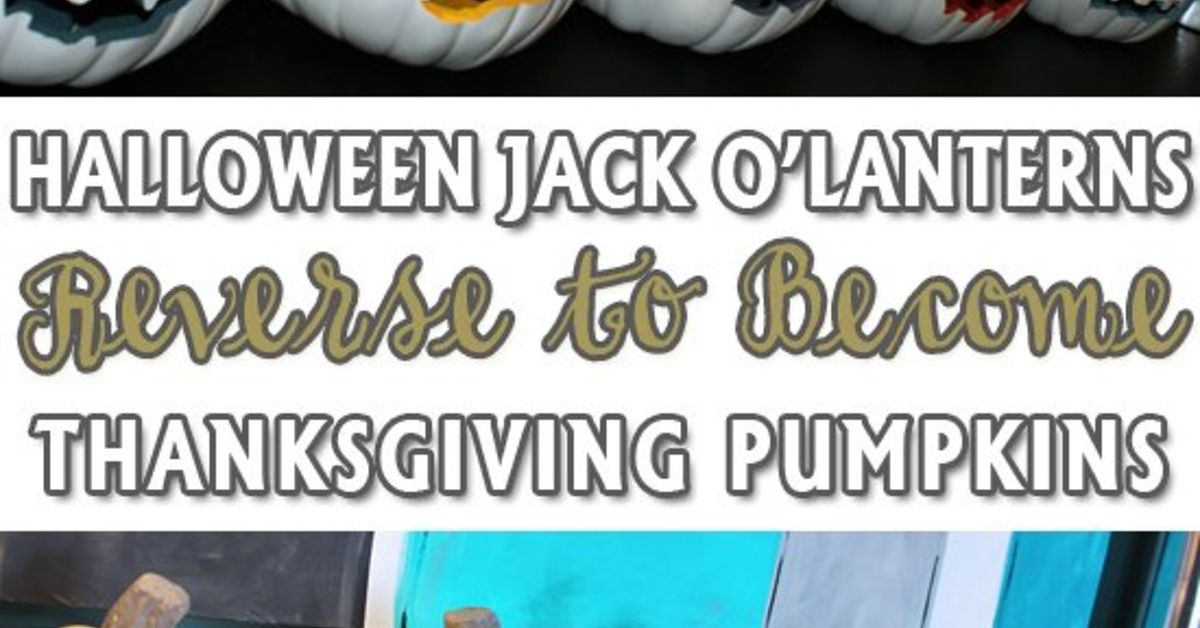
Fall decorating has a funny way of escalating. One minute you place a cute pumpkin by the front door. The next minute your house looks like a pumpkin patch opened a satellite office in your living room. That is exactly why reversible pumpkins for Halloween and Thanksgiving are such a smart idea. They let you decorate once, enjoy the full fall season, and avoid the annual ritual of buying one batch of spooky decor in October and another batch of “grateful” decor three weeks later.
A reversible pumpkin is exactly what it sounds like: one pumpkin, two personalities. One side can lean Halloween with bats, stripes, black ribbon, or a playful jack-o’-lantern mood. The other side can shift into Thanksgiving with leaves, metallic accents, soft neutrals, plaid, dried florals, or a simple harvest message. It is practical, stylish, and honestly a little smug in the best way. Your pumpkin is doing two jobs while most decorations barely manage one.
Better yet, this idea works for almost every decorating style. You can make reversible pumpkins that feel farmhouse, elegant, modern, rustic, kid-friendly, or delightfully dramatic. You can use faux pumpkins for long-lasting decor, or real pumpkins if you want a short-term project for a party or dinner table. Either way, the concept is budget-friendly, creative, and surprisingly easy to customize.
What Are Reversible Pumpkins?
Reversible pumpkins are pumpkins designed to transition between two fall holidays without needing a full makeover. Some are literally decorated front and back, with one face for Halloween and the other for Thanksgiving. Others use interchangeable accessories such as ribbons, tags, mini signs, floral picks, or Velcro-backed embellishments that can be swapped in minutes.
Think of them as seasonal multitaskers. On October 1, they can be charmingly spooky. By early November, they can calm down, put on a sweater, and become table-ready for turkey day. No drama. No frantic craft emergency. No glitter crisis at 11 p.m.
Why Reversible Pumpkins Make So Much Sense
They save money
Instead of buying separate Halloween and Thanksgiving pumpkin decor, you create one flexible piece that works across the entire fall season. This is especially helpful if you like decorating mantels, entry tables, porches, bookshelves, and dining tables all at once. Seasonal decor has a sneaky way of multiplying.
They reduce clutter
If your storage closet already looks emotionally unavailable, reversible pumpkins are a win. Fewer items to store means less off-season chaos. Faux reversible pumpkins are especially good for small homes, apartments, dorms, or anyone who has ever shoved a wreath into a bin and hoped for the best.
They look more intentional
There is something polished about decor that evolves instead of disappearing overnight. Reversible pumpkins help your home move naturally from playful Halloween energy to warm Thanksgiving style. That creates a more cohesive fall decorating story, which sounds fancy because it is.
They are family-friendly
If you decorate with kids, no-carve reversible pumpkins are much easier than carving. Paint, ribbon, fabric, stickers, stencils, and removable embellishments are safer and usually less messy. That is important because “family memory” should not mean “remember when we got acrylic paint on the dog.”
Real vs. Faux Pumpkins: Which One Should You Use?
Faux pumpkins are best for long-term use
If you want a pumpkin that can truly last from September through Thanksgiving, faux craft pumpkins are the better choice. They are lightweight, easier to paint, easier to store, and much more forgiving if you want to attach embellishments. They also hold up better indoors and on covered porches, especially when you are using layered details like bows, temporary decals, metallic finishes, or floral stems.
Foam or carvable faux pumpkins are especially useful because they allow you to pin, glue, stencil, or add dimensional details without worrying about rot. If you love the idea of decorating once and reusing the pumpkin next year, faux is the move.
Real pumpkins work for short-term charm
Real pumpkins bring authentic texture, color variation, and old-school fall charm. They are ideal if you want a centerpiece or porch display for a shorter window. But they are less practical for a truly reversible design, because moisture, soft spots, and natural aging can shorten their lifespan. If you use a real pumpkin, keep the design simple and avoid adding anything too precious. Real pumpkins are lovely, but they are not known for their commitment issues.
Best Materials for Reversible Pumpkin Decor
A successful reversible pumpkin is less about artistic genius and more about choosing the right materials. The best options are durable, flexible, and easy to remove or cover up.
- Faux pumpkins: best base for reusable seasonal decor
- Acrylic craft paint: easy to layer, dries quickly, and comes in every fall shade imaginable
- Spray paint: great for a smooth base coat, especially white, black, gold, bronze, or cream
- Painters tape and stencils: helpful for clean patterns, lettering, stripes, leaves, or spiderweb designs
- Velcro dots: excellent for removable bows, tags, mini signs, and themed accents
- Hot glue: useful for more permanent details on faux pumpkins
- Ribbon, twine, raffia, and burlap: easy ways to switch from spooky to harvest style
- Floral picks and dried stems: perfect for Thanksgiving styling
- Rub-on transfers or decals: fast and neat for words like “boo,” “gather,” or “grateful”
If your goal is a reversible pumpkin that still looks good next year, choose quality paint and keep your removable elements organized in a labeled bag. Future You will be thrilled. Future You is tired.
5 Smart Ways to Design Reversible Pumpkins
1. The front-and-back pumpkin
This is the most obvious version, and sometimes the obvious idea is obvious because it works. Paint one side for Halloween and the opposite side for Thanksgiving. Keep the stem and top neutral so the pumpkin looks finished from every angle.
Halloween side ideas: black-and-white stripes, bats, spiderwebs, moons, stars, ghosts, a subtle jack-o’-lantern face, or elegant gothic florals.
Thanksgiving side ideas: painted leaves, wheat motifs, warm metallic brushstrokes, plaid ribbon, monograms, or words like “thankful,” “gather,” or “harvest.”
2. The removable accessory pumpkin
Paint the pumpkin in a neutral fall color such as cream, sage, taupe, muted orange, or soft white. Then change the vibe with accessories. For Halloween, add a black bow, mini spiders, or a tag that says “boo.” For Thanksgiving, swap in burlap ribbon, dried eucalyptus, velvet leaves, or a wooden tag with “grateful.”
This method is one of the easiest because the base stays the same and only the accessories change.
3. The wraparound band pumpkin
Create a center band around the pumpkin using fabric, ribbon, or decorative paper. Make one Halloween band and one Thanksgiving band. Wrap the pumpkin with the appropriate band and secure it with hidden Velcro. This works beautifully for modern homes because the pumpkin itself can stay simple while the details do the talking.
4. The stacked reversible pumpkin set
Use two or three pumpkins in a topiary-style arrangement. Make the top pumpkin lean Halloween and the bottom one neutral, then switch the middle pumpkin or accessories for Thanksgiving. This is especially effective for porches and entryways because stacked pumpkins instantly feel grand without being difficult.
5. The centerpiece pumpkin with interchangeable picks
Choose a faux pumpkin with a carved or removable top. Insert a small foam block inside. For Halloween, add black feathers, berry stems, or moody florals. For Thanksgiving, replace them with wheat, mini mums, seed pods, eucalyptus, or amber-toned leaves. Same pumpkin, new attitude.
How to Make a Reversible Pumpkin Step by Step
Step 1: Start with the base
Clean your pumpkin and apply a base coat if needed. White, cream, tan, muted rust, and soft gray all work well because they transition across both holidays.
Step 2: Choose a consistent color palette
The easiest way to make a reversible pumpkin feel intentional is to choose colors that connect both sides. For example, black, cream, and copper can swing from Halloween to Thanksgiving with almost no effort. Orange and brown can work too, but the look tends to feel more traditional.
Step 3: Plan both sides before painting
Do not freestyle this unless you are unusually gifted or dangerously optimistic. Sketch your Halloween side and Thanksgiving side first. Make sure the scale of both designs feels balanced.
Step 4: Paint or stencil the permanent details
Add any painted stripes, leaves, lettering, or background texture. Let the paint dry fully between layers. This is not the moment for impatience. A smudged pumpkin is still a pumpkin, but it will judge you.
Step 5: Add removable details
Use Velcro dots, ribbon loops, or tucked floral picks for accents you want to swap later. This is what makes the pumpkin truly reversible instead of merely indecisive.
Step 6: Seal if appropriate
If the pumpkin will be displayed indoors or on a covered porch, a matte or satin sealer can help protect the finish. Avoid over-glossing unless that is part of your look. A little polish is lovely. Full bowling ball is not.
Best Style Ideas for Halloween-to-Thanksgiving Pumpkins
Classic farmhouse reversible pumpkins
Use white or soft orange pumpkins with black script or simple Halloween silhouettes on one side. Flip to burlap ribbon, plaid accents, or muted leaf designs for Thanksgiving. This style works beautifully with lanterns, wood risers, and cozy textiles.
Elegant neutral pumpkins
Paint faux pumpkins in cream, taupe, mushroom, sage, or dusty blue. Add subtle gold stars or crescent moons for Halloween. On the Thanksgiving side, switch to gilded leaves, pearl pins, velvet ribbon, or soft dried florals. This is the kind of pumpkin that gets compliments from people who say things like, “Oh, I don’t usually do seasonal decor.”
Kid-friendly reversible pumpkins
Keep the base bright and playful. Halloween can include friendly ghosts, candy corn colors, or smiling monster faces. Thanksgiving can feature turkey feathers, happy leaves, or gratitude messages. Stickers, washable paint, and removable felt pieces make this project fun and less stressful.
Modern minimalist pumpkins
Think clean lines, monochrome colors, and restrained detail. A matte black geometric pattern can shift into a copper leaf line drawing. A simple ivory pumpkin with tiny bat decals can become a neutral tablescape piece once those decals come off and a velvet ribbon is added.
Where to Use Reversible Pumpkins in Your Home
One of the best things about this idea is how flexible it is. A reversible pumpkin can live almost anywhere.
- Front porch: use large faux pumpkins with removable bows or signs
- Mantel: mix reversible pumpkins with candles, framed art, and garland
- Entry table: a medium pumpkin with interchangeable tags makes a strong first impression
- Dining table: centerpieces with floral picks are perfect for shifting from Halloween dinner to Thanksgiving feast
- Kitchen shelves: mini reversible pumpkins add a small seasonal touch without taking over the room
Common Mistakes to Avoid
Making both sides too busy
If both holidays are packed with color, texture, ribbon, glitter, and wording, the pumpkin can start to look confused. Let one side be the star and keep the other side a bit calmer.
Using colors that clash
If your Halloween side is neon purple and slime green, it may be harder to transition gracefully into a soft Thanksgiving palette. Unless your personal style is “haunted disco barn,” choose a color family that can bridge both holidays.
Forgetting the stem
The stem matters more than people think. Wrapping it in velvet ribbon, painting it metallic, or adding a removable topper can help unify the design.
Choosing the wrong size
Mini pumpkins are charming but can be hard to decorate in detail. Large pumpkins give you more room for lettering and layered embellishments. Medium pumpkins are usually the sweet spot for beginners.
Experience Notes: What It’s Actually Like to Decorate with Reversible Pumpkins
The experience of making reversible pumpkins is one part craft project, one part seasonal therapy, and one part realizing you have very strong opinions about ribbon. People tend to start with a practical goal: save money, avoid waste, simplify decorating, make one centerpiece do the work of two. But once the project begins, it becomes more personal than expected.
For many decorators, the first surprise is how satisfying it feels to create something that lasts beyond one party or one weekend. A carved pumpkin is fun, but it is temporary by design. A reversible pumpkin feels more like a keepsake. You spend time choosing colors, balancing patterns, and deciding how “spooky” is too spooky for your own taste. By the end, the pumpkin reflects your style in a way store-bought decor rarely does.
Another common experience is that the project tends to evolve while you are making it. You may start out intending to create a bold Halloween side with bats and black paint, then realize you prefer something moodier and more elegant. Or you may think your Thanksgiving side should be all neutral tones, then suddenly find yourself adding copper leaves and a velvet ribbon because apparently your pumpkin deserved a promotion. That flexibility is part of the appeal.
Families often enjoy reversible pumpkins because the project naturally invites collaboration. Adults can handle the base painting and layout, while kids can help with stickers, stencils, felt shapes, tags, or removable pieces. It is easier to keep the mood fun because there is less pressure than there is with carving. If a painted bat looks more like a confused butterfly, it can still be charming. In fact, it may become everyone’s favorite part.
There is also a practical kind of joy that comes later, when Halloween ends and you do not have to strip the house bare and start over. You simply turn the pumpkin around, swap the bow, tuck in a few stems, and the room instantly feels ready for Thanksgiving. That moment is oddly satisfying. It is the decorating equivalent of finding cash in an old coat pocket.
People who entertain also tend to appreciate how versatile reversible pumpkins are. A single pumpkin can sit on the mantel for weeks, move to the dining table for a holiday meal, and then return to the entryway without feeling out of place. Guests notice the thoughtfulness. They may not say, “What a smart seasonal transition strategy,” but they will absolutely say, “Wait, this was your Halloween pumpkin too?”
Perhaps the best experience, though, is that reversible pumpkins make fall decorating feel less disposable and more intentional. Instead of rushing from one holiday aesthetic to the next, you get to enjoy the full season. October feels playful. November feels warm and welcoming. The pumpkin stays with you through both, quietly proving that good decor does not need to be complicated. It just needs a little creativity, a little planning, and maybe one less bag of glitter than your heart originally suggested.
Conclusion
Reversible pumpkins for Halloween and Thanksgiving are one of the smartest fall decor ideas because they combine creativity, function, and style in one easy project. They help you stretch your budget, cut clutter, and make your home feel beautifully seasonal from early fall through Thanksgiving. Whether you choose a painted faux pumpkin, a floral centerpiece pumpkin, or a kid-friendly no-carve version with removable accents, the concept is simple: decorate once, enjoy longer, and let your pumpkin work overtime.
If you want fall decor that feels fresh, practical, and a little bit clever, reversible pumpkins are worth making. They are festive without being wasteful, customizable without being complicated, and charming enough to earn a permanent place in your autumn decorating lineup. In other words, they are the overachievers of the pumpkin world, and honestly, we respect that.