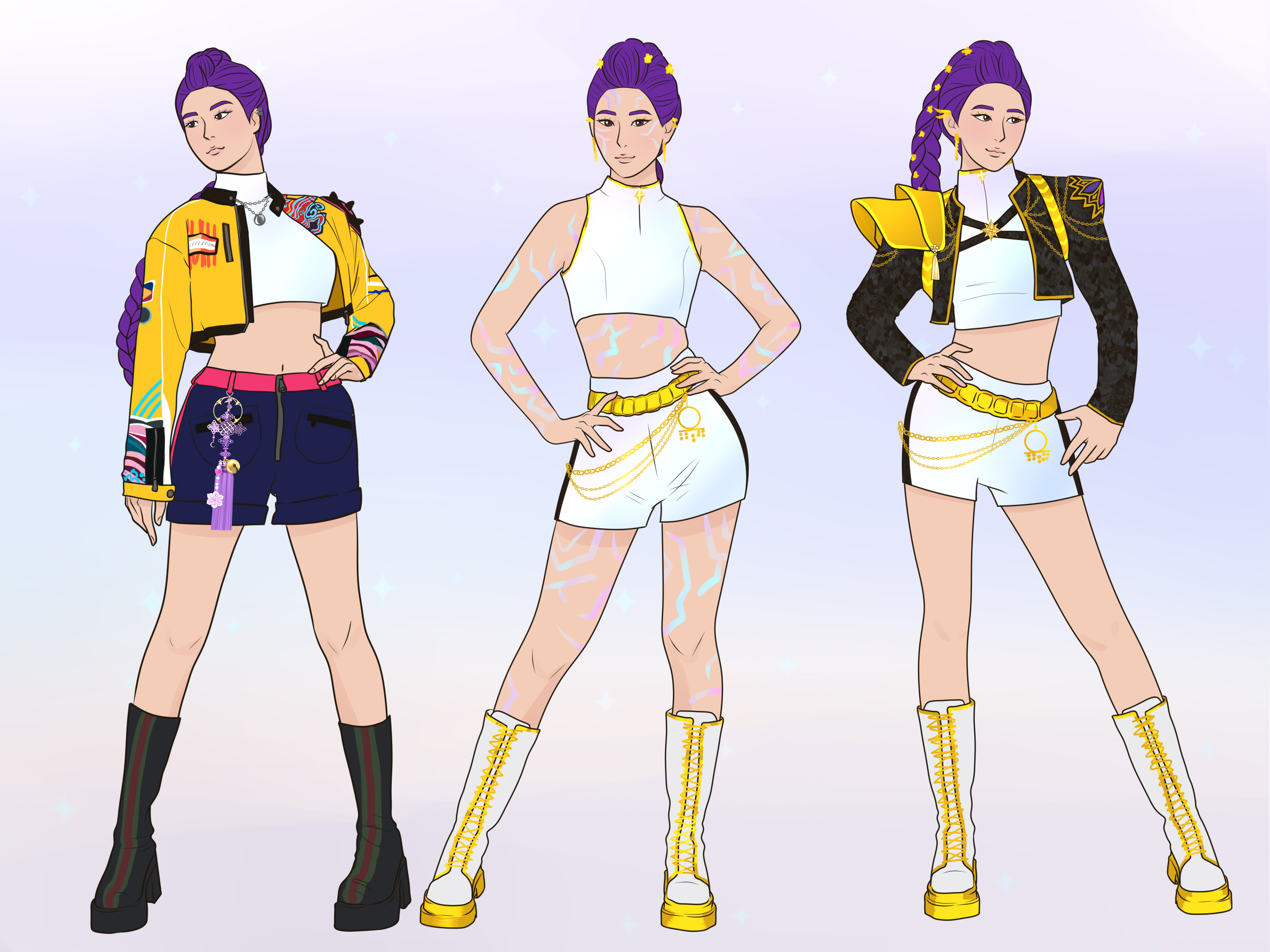
If your Halloween mood board looks like it got hit by a glitter cannon, a K-pop stage light, and a demon-slaying soundtrack all at once, congratulations: you are spiritually prepared to make Rumi’s costume. This look works because it blends pop-idol polish with action-hero energy. It is bold, recognizable, and surprisingly doable with thrifted basics, a little paint, and a healthy respect for the power of a purple braid.
The secret to pulling off a great Rumi KPop Demon Hunters costume is not chasing a museum-level replica on your first try. It is choosing the visual clues people notice first, then building around them. For Rumi, those clues are simple but dramatic: a cropped yellow jacket, a fitted light top, blue shorts, black knee-high or lace-up boot styling, and that iconic purple hair. Once those pieces click together, the whole outfit starts saying, “Yes, I do battle evil before lunch, thanks for asking.”
Why Rumi’s Look Works So Well as a DIY Costume
Rumi’s outfit is one of those rare costumes that feels high-impact without demanding a professional studio, a five-person sewing team, or a suspiciously large budget. The silhouette is clean. The colors do the heavy lifting. And the accessories instantly sell the character. That makes it perfect for DIY cosplay ideas, especially for anyone who wants a stylish result without spending three weeks arguing with a zipper.
It also helps that the look can be scaled. You can make a closet-cosplay version in one evening, a polished convention version over a weekend, or a stage-ready version if you want to add more detail, trim, and structure. In other words, Rumi’s costume is flexible. Your wallet may now unclench a little.
The Core Pieces You Need
1. The yellow cropped jacket
This is the star piece. A cropped moto jacket, bomber jacket, or fitted zip jacket in yellow will get you most of the way there. If you cannot find the exact shade, start with a white or pale jacket and customize it with fabric paint or costume-safe spray paint designed for clothing. Keep the shape neat and slightly sharp rather than oversized and slouchy. Rumi’s vibe is performer-meets-warrior, not “I borrowed my cousin’s windbreaker and hoped for the best.”
2. The fitted top
A white or very light cropped tank works best. A plain ribbed tank is ideal because it sits close to the body and keeps the jacket as the main visual moment. If you only have a longer tank, fold and hem it, use fashion tape for a temporary crop, or tuck it securely under shorts if you prefer a more comfortable version.
3. The shorts
Blue athletic shorts, fitted dance shorts, or slim casual shorts can all work. The goal is a clean, performance-ready shape rather than baggy denim. If the color is slightly off, do not panic. Rumi’s hair and jacket do so much visual work that most people will still recognize the costume immediately.
4. The boots
Tall black boots are ideal, especially anything that reads sleek and a little dramatic. If you do not own them, use black shoes plus DIY boot covers made from stretch fabric, faux leather, or even sturdy costume fabric. This is where smart illusion beats spending money. From five feet away, your costume just needs to say “fierce demon hunter,” not “I refinanced my rent to buy accurate footwear.”
5. The purple braid or wig
This is the instant-recognition piece. Even if your jacket is not perfect, the purple braid tells people exactly who you are. A wig is easiest for accuracy, but a synthetic braid extension attached to your real hair can be lighter and more comfortable. If you already have long hair, you can braid it and add washable purple color spray to the outer layers for a lower-cost version.
Best DIY Approaches by Budget
Budget-friendly version
Shop your closet first. Start with a white tank, blue shorts, black knee socks or leggings, and black shoes. Add a thrifted yellow jacket or transform an old one with paint. Then spend most of your effort on the purple braid and makeup. This version is affordable, fast, and still highly recognizable.
Mid-range version
Upgrade the jacket fabric, use better-fitting shorts, and make proper boot covers. Add trim, zipper details, and a polished wig. This version photographs well and holds up for parties, school events, and longer wear.
Detail-lover version
Use a fitted pattern for the jacket, line it cleanly, and add costume-grade finishing. Make boot covers from stretch vinyl or faux leather, shape the silhouette with light interfacing, and include performance accessories like a prop microphone headset or sword-inspired detail piece. This version takes more time, but it has that “Yes, I absolutely planned this and no, I am not sorry” energy.
How to Make the Jacket Without Losing Your Mind
The easiest route is jacket modification. Buy a yellow cropped jacket if you can. If not, start with a white, cream, or pale jacket in a similar shape. Mark your changes before touching paint. That means trying it on, pinning the desired crop length, and sketching any trim or graphic placement with tailor’s chalk.
If sewing is not your thing, use iron-on adhesive for hems and clean edges. For painted details, test the color on a hidden section first. Thin coats are better than one thick coat that dries like a pancake of regret. Let each layer dry fully before adding the next one. If you are painting synthetic fabric, be patient. Fabric likes drama and will resist you at first.
Want a more premium finish? Use faux leather or vinyl-look fabric for panels or accents. That gives the jacket more stage presence and makes the whole outfit feel closer to cosplay than last-minute costume. The trick is balance: structured enough to look intentional, comfortable enough to survive walking, dancing, or posing for 87 photos in a row.
No-Sew Tricks That Actually Help
Not everyone owns a sewing machine, and honestly, that should not disqualify anyone from dressing like a glamorous supernatural pop icon. You can still get a strong result with no-sew methods.
Use iron-on hem tape to crop the tank or shorten sleeves. Use fabric glue for lightweight trim. Make boot covers from stretch fabric with hook-and-loop closures inside the calf. Add foam or felt details with hot glue, but only on areas that do not need to stretch. For younger makers, adult supervision is smart around hot glue guns, craft knives, or heat tools. Heroic costume building is fun. Emergency room paperwork is not.
How to Style the Hair So It Looks Like Rumi
The purple hair is the crown jewel. If you are using a wig, flatten your hair first with a wig cap so the front sits smoothly. If you are using a braid extension, anchor your real hair into a high ponytail or secure braid, then blend the extension in. The goal is a long, dramatic line that moves well and photographs even better.
If the braid feels heavy, reinforce it with soft elastics instead of turning your scalp into a bobby-pin parking lot. A heavy wig can look amazing for ten minutes and then make you question all your life choices. Comfort matters. A secure, lighter hair setup is usually smarter than an ultra-heavy one that spends the evening trying to escape your head.
Makeup and Accessories That Sell the Character
Makeup should be clean, bold, and stage-ready. Think sharp liner, defined brows, glowing skin, and a lip color with some attitude. You do not need monster makeup unless you are doing a battle version. For a classic Rumi costume, polished performance makeup works beautifully.
Accessories can push the costume from “cute outfit” to “obviously Rumi.” Consider a prop microphone headset, statement earrings, fingerless gloves, or a safe, lightweight prop inspired by her demon-hunter side. EVA foam is useful for prop details because it is light, shapeable, and beginner-friendly. Keep props lightweight enough to carry comfortably. You are dressing like a hunter, not training for a medieval furniture-moving competition.
DIY Ideas for Different Skill Levels
For beginners
Focus on color matching and silhouette. Use store-bought basics and customize only one or two pieces. Prioritize the hair, jacket, and boots.
For intermediate makers
Create custom boot covers, repaint or rework the jacket, and add cleaner trims and closures. Use better fabrics so the costume looks intentional up close.
For advanced DIYers
Draft a fitted jacket pattern, line it, reinforce the collar and cuffs, and build styled accessories from foam, thermoplastic, or faux leather. Add performance-ready finishing, hidden closures, and more precise seam work.
Common Mistakes to Avoid
Do not overcomplicate the outfit. The strength of this costume is clarity. Too many random details can muddy the look.
Do not ignore fit. A decent fit will usually look better than a perfect fabric in the wrong shape.
Do not leave the hair until the last minute. The purple braid is not an optional garnish. It is the costume’s neon sign.
Do not make heavy props unless you truly need them. Lightweight wins for comfort, safety, and photos.
Do not use permanent materials on clothes you may want to save. Test adhesives, paints, and color sprays first.
How to Make the Costume Look Better in Photos
Good lighting does half the job for you. The yellow jacket and purple hair pop under bright, clean light, especially against neutral backgrounds. Pose with movement: turn slightly, lift the chin, angle the braid, and let the jacket catch some shape. Rumi’s look is not shy. Stand like you are two seconds away from a chorus drop and a demon-fighting entrance cue.
For group costumes, pair Rumi with Mira and Zoey for an instantly recognizable trio. For a solo look, lean into confidence. A costume like this needs posture as much as fabric. Wear it like you are on tour and very slightly judging everyone else’s lack of sparkle.
What Making This Costume Is Really Like: The DIY Experience
Here is the funny part about making a costume like Rumi’s: you usually begin by thinking the jacket will be the hard part, then discover the real boss battle is the hair. The jacket feels straightforward. You can thrift it, crop it, paint it, and call it character development. But the purple braid? That thing becomes a whole emotional journey. You will hold it up, stare at it, and ask important life questions like, “How can one fictional hairstyle contain this much drama?” The answer is simple: because it is fabulous, and fabulous things are never casual.
Most people also learn that DIY costume-making is really a game of visual priorities. At first, it is tempting to obsess over tiny details nobody will notice from more than six inches away. Then you put on the yellow jacket, add the purple braid, step back from the mirror, and suddenly the look clicks. That is the magic moment. Not because it is perfect, but because it reads correctly. It feels like Rumi. You realize costume-building is less about cloning every seam and more about understanding what the character communicates instantly.
There is also a very real thrill in making something recognizable from ordinary pieces. A basic tank top becomes part of a stage costume. Old shorts suddenly look intentional. Boots you bought for something completely unrelated now have a second life as demon-hunting footwear. That transformation is one of the best parts of DIY. It feels clever. It feels resourceful. It feels like you have outsmarted the costume aisle and saved yourself from spending too much money on a polyester disaster with trust issues.
Another experience many makers share is that the costume keeps improving in layers. It might look underwhelming on the table when everything is spread out separately. The jacket looks random. The braid looks chaotic. The accessories look like they belong to three different people. But once you put it all on at once, the pieces start cooperating. Suddenly the color palette makes sense. The silhouette sharpens. The makeup pulls everything together. You stop seeing “craft supplies” and start seeing a character. That payoff is ridiculously satisfying.
And then there is the confidence factor. Certain costumes are cute. Some are nostalgic. Rumi’s is different. It has swagger. The second you wear it properly, you stand a little taller. You pose more dramatically. You become weirdly aware that your braid has its own wind-machine personality. It is hard to mope in a yellow cropped jacket and long purple braid. The costume practically bullies you into having stage presence, which, frankly, is very on-brand.
Finally, making this costume teaches a useful lesson that applies to almost every cosplay project: perfection is not the goal; clarity is. The best DIY Rumi costume is not necessarily the most expensive or the most exact. It is the one that captures the spirit of the look while still being wearable, comfortable, and fun. If your braid stays on, your jacket reads bright and bold, and somebody recognizes the character without needing a five-slide presentation, you have won. That is the true demon-hunter victory. No magic portal required.
Final Thoughts
If you want a costume that feels energetic, stylish, and genuinely fun to build, Rumi is a fantastic pick. Her look gives you room to thrift, paint, sew, glue, improvise, and still come away with something eye-catching. Focus on the pieces people notice first, keep the silhouette clean, and let the purple braid do its dramatic little masterpiece routine. Whether you are making a quick Halloween outfit or a more polished KPop Demon Hunters cosplay, this costume proves that a little creativity can go a very long way.
In the end, the best Rumi costume is the one that feels confident on your body and unmistakable in the room. Build smart, edit ruthlessly, and remember: when in doubt, add more braid energy.