January is supposed to be the month of fresh starts, ambitious resolutions, organized closets, and people confidently announcing that this is finally their year. Parents, however, know better. When you live with children, January is mostly December wearing sweatpants.
That was especially true in January 2021. Families were still navigating pandemic disruptions, working from home, virtual learning, changing routines, endless screen time, and the daily logistical puzzle of keeping everyone fed, educated, entertained, and reasonably dressed. Pew Research Center reported that 52% of employed parents with children younger than 12 found handling child-care responsibilities during the pandemic difficult, while later American Psychological Association findings showed sharply elevated stress among parents.
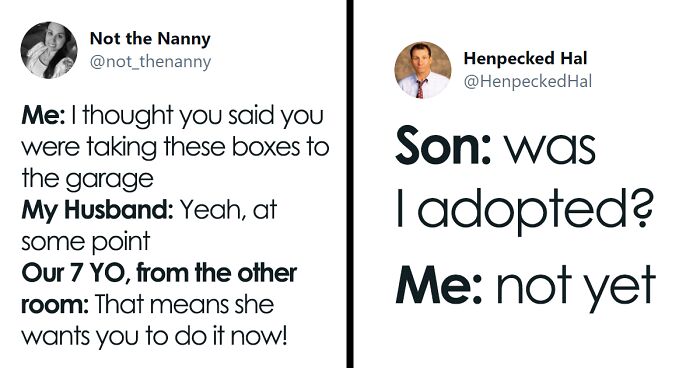
Fortunately, funny parents on Twitter were documenting the chaos one punchline at a time. The original January 2021 parenting-humor roundups featured familiar online voices, absurd kid logic, domestic disasters, sibling battles, and brutally accurate observations about family life. Similar humor appeared across major parenting publications because apparently children everywhere had agreed to become extremely weird at exactly the same time.
The 50 highlights below capture the spirit and comic themes of those January parenting tweets without reproducing individual posts word-for-word. Think of this as a guided tour through the universal experience of loving tiny people who can lose a shoe while currently wearing it.
Why January 2021 Was a Perfect Month for Parenting Humor
Parents entered 2021 carrying nearly a year of accumulated pandemic fatigue. Kitchens had become cafeterias, offices, classrooms, craft stations, charging centers, and places where someone was always asking whether there were any snacks. Remote learning made technology a central part of family life, and organizations studying American families documented both the practical strain of online education and unequal access to reliable devices and internet connections.
That backdrop made parenting jokes especially relatable. Humor did not erase the difficulty, but it gave parents a shared language for saying, “Yes, this situation is ridiculous, and no, you are not the only person hiding in the pantry for thirty seconds of peace.”
50 Of the Funniest Parenting Moments From January 2021
1–10: Kids, Questions, and Completely Unnecessary Negotiations
- The bedtime attorney: A child who cannot remember where the hamper is suddenly presents a 14-point legal argument against going to sleep.
- The snack emergency: Dinner was rejected five minutes ago, but somehow starvation has now reached a level previously seen only in disaster movies.
- The dangerous silence: Parents learn that screaming is annoying, but silence is terrifying. Silence usually means someone has discovered permanent markers.
- The impossible question: Children casually ask things like why humans exist precisely when a parent is trying to open a jar.
- The weather critic: A kid demands snow, sunshine, and swimming-pool temperatures simultaneously, then looks disappointed when the parent cannot arrange it.
- The tiny detective: Children cannot find their shoes but can locate a piece of candy hidden behind frozen peas since November.
- The bedtime hydration crisis: Nobody has been thirsty all day. The moment bedtime arrives, the child requires enough water to cross a desert.
- The selective listener: “Put on your coat” disappears into the void. Whisper “ice cream” from another floor and every child immediately appears.
- The honesty department: Kids will compliment your cooking, criticize your haircut, and announce your age to strangers with equal confidence.
- The question loop: Answer one “why?” and receive six additional questions, two philosophical dilemmas, and an unexpected discussion about dinosaurs.
11–20: The House Is Never Really Clean
- The five-minute miracle: A parent cleans the living room. The children return. Historians later debate whether the clean room ever actually existed.
- The mysterious stickiness: Every surface is somehow sticky, including objects that have never been within fifty feet of food.
- The laundry cycle: Wash clothes, dry clothes, fold clothes, distribute clothes, discover the laundry basket is somehow full again.
- The toy migration: Toys begin in the playroom and slowly colonize the entire house like colorful plastic settlers.
- The vacuum invitation: Nothing inspires children to eat crackers on the carpet quite like the sound of a freshly switched-off vacuum cleaner.
- The refrigerator stare: A child opens the refrigerator, studies its contents, closes it, and repeats the process seven minutes later.
- The couch archaeology project: Searching beneath the cushions may uncover coins, cereal, crayons, a sock, and evidence of several lost civilizations.
- The bathroom mystery: Children can use an astonishing amount of toilet paper while apparently using none of it for its intended purpose.
- The decorative fingerprint: Clean windows are simply blank canvases waiting for a child with peanut butter on both hands.
- The inevitable destruction: Parents eventually stop asking, “How did this break?” and begin asking, “Is anyone bleeding?”
That house-is-always-under-attack theme was a recurring feature of parenting humor at the time. Parenting publications repeatedly highlighted jokes about children creating messes, destroying household objects, and turning ordinary cleaning into a Sisyphean lifestyle choice.
21–30: Remote School Meets Working From Home
- The mute-button gamble: Every work call became an exciting opportunity for a child to yell something deeply personal from another room.
- The reluctant student: Children who could navigate complicated video games suddenly forgot how keyboards worked when school began.
- The parent-teacher-tech-support combo: Adults became educators, IT specialists, lunch staff, and motivational speakers without receiving additional coffee.
- The camera surprise: Virtual meetings introduced coworkers to children, pets, laundry piles, and the exact moment household patience disappeared.
- The Wi-Fi hierarchy: Internet access became a family resource negotiated with the seriousness of an international peace treaty.
- The homework paradox: Parents discovered they could understand mortgages and taxes while being completely defeated by elementary-school math instructions.
- The snack interruption: Children developed a supernatural ability to request food precisely when a parent began speaking during an important meeting.
- The background cameo: Toddlers did not recognize live television, video conferences, or professional dignity as reasons to postpone climbing on a parent.
- The school-day wardrobe: For many families, “getting dressed for class” became a highly flexible concept.
- The family office: Open-plan working sounded modern until everyone in the household tried to talk, learn, play, and attend meetings in it.
These jokes reflected real changes in family routines. Remote learning and work-from-home arrangements blurred boundaries between professional life, school, and parenting, while parenting outlets documented viral moments in which children wandered directly into their parents’ on-camera workdays.
31–40: Meals, Snacks, and Tiny Food Critics
- The rejected masterpiece: Spend an hour cooking dinner and your child may inspect it like a restaurant critic personally offended by vegetables.
- The beige-food era: Some children approach dinner with a strict rule: if the food has a naturally occurring color, suspicion is required.
- The identical-but-wrong problem: Yesterday’s favorite yogurt becomes unacceptable because today it was presented in the wrong bowl.
- The parent tax: Children refuse their meals but immediately become fascinated by whatever happens to be on a parent’s plate.
- The banana emergency: Breaking a banana in half can transform a peaceful breakfast into an irreversible diplomatic crisis.
- The grocery betrayal: A child passionately requests one specific snack, then permanently stops liking it immediately after the bulk package arrives.
- The invisible vegetable: Parents become amateur food scientists, disguising produce while pretending this is a completely normal use of their education.
- The restaurant reversal: Order what the child requested and prepare emotionally for the child to request what somebody else ordered.
- The floor menu: Toddlers may reject carefully prepared food yet display troubling enthusiasm for unidentified crumbs discovered beneath furniture.
- The eternal question: No matter how recently everyone ate, someone will soon ask, “What are we having?”
Food battles were another reliable source of online parenting comedy. January 2021 parenting coverage included discussions of picky eating, hidden vegetables, and the peculiar challenge of convincing young children that food they requested moments earlier remains edible.
41–50: The Strange, Sweet Logic of Family Life
- The sibling justice system: Every argument has two witnesses, three versions of events, and absolutely no reliable evidence.
- The unexpected compliment: A child may tell you that you are beautiful, then clarify that you look exactly like a potato.
- The privacy myth: Parenthood reveals that closed bathroom doors are interpreted by children as invitations to begin important conversations.
- The favorite-parent election: Approval ratings change rapidly depending on who controls snacks, screen time, and bedtime enforcement.
- The dramatic injury: A microscopic scratch can require immediate medical attention until someone mentions dessert.
- The unwanted audience: Parents receive extensive supervision while cooking, cleaning, exercising, showering, and attempting to exist quietly.
- The memory imbalance: A child forgets five instructions in ten seconds but remembers one unfulfilled promise from eighteen months ago.
- The accidental comedian: Kids rarely intend to be funny, which is exactly why their confident misunderstandings can be comedy gold.
- The emotional whiplash: A parent can feel exhausted, irritated, proud, worried, amused, and overwhelmingly loving before breakfast.
- The final parenting truth: Raising children is repeatedly discovering that the story ruining your day may become the story making you laugh later.
Why Funny Parenting Tweets Feel So Relatable
The best parenting humor usually avoids pretending that one family has discovered a secret formula for raising perfect children. Instead, it focuses on recognition. A child refuses the wrong-colored cup. A parent hides in the kitchen with a snack. Someone starts crying because a sandwich was cut incorrectly. Another parent reads the joke and thinks, “Oh, good. It is not just my house.”
That sense of recognition mattered in early 2021. Parents were dealing with disrupted routines, reduced child-care options, technological problems, and unusually high demands at home. Pediatric guidance during the pandemic emphasized the value of maintaining routines where possible, but even professional advice acknowledged how difficult schedules could be for families juggling work and children at home.
Social media humor created an informal counterweight to polished images of family life. Instead of perfect kitchens and coordinated pajamas, funny parents offered crumbs, chaos, sarcasm, and the reassuring discovery that everybody else’s children were also doing something inexplicable.
Experiences Behind the Humor: What Parenting in January 2021 Really Felt Like
Looking back at these funny parenting tweets is like opening a time capsule filled with charging cables, half-finished coffee, abandoned worksheets, and one lonely sock whose partner was never found.
The experience of parenting in January 2021 was unusual because ordinary family challenges had become compressed into the same physical space. Before the pandemic, many families had clearer transitions. Adults went to workplaces. Children went to school. Teachers taught lessons. Coworkers held meetings somewhere that did not contain a toddler asking why the dog had nipples.
Then those boundaries collapsed.
A kitchen table could host breakfast at 7:30, algebra at 9:00, a business presentation at 10:00, lunch at noon, an art project at 2:00, and an exhausted parent staring silently into space at 5:30. One room had to perform the duties of an entire community.
That created a peculiar kind of family intimacy. Parents saw more of their children’s school days than many had ever expected. Children heard more corporate vocabulary than any eight-year-old should reasonably encounter. Families became familiar with phrases such as “You’re on mute,” “The Wi-Fi is down,” and “Please put on pants before walking behind my camera.”
The funniest parenting tweets from the period worked because they compressed these experiences into tiny moments. A joke about a child interrupting a meeting was not merely about interruption. It represented the collision between professional expectations and the unpredictable reality of caring for another human being. A joke about endless snacks was not only about crackers. It reflected the exhausting repetition of keeping a household running when everyone seemed to be home all the time.
There was also the experience of lowered standardsand, honestly, sometimes that was healthy. A perfectly structured day became less important than getting through the day. Screen-time rules became negotiations. Dinner occasionally became cereal. A child appearing for virtual class with brushed hair could feel like a major operational victory.
Parents also discovered that children are exceptionally good at finding absurdity during serious times. Kids continued asking strange questions. Toddlers continued removing clothing without warning. Siblings continued fighting over objects nobody cared about until someone else touched them. Childhood did not stop being chaotic simply because the world outside had become complicated.
That may explain why the humor still works years later. The pandemic circumstances were historically specific, but the underlying parenting experiences were timeless. Children still negotiate bedtime. They still reject food for impossible reasons. They still interrupt adult conversations at exactly the wrong moment. Parents still clean rooms that immediately become messy again.
The technology may change. The social platform may change. The vocabulary may change. But somewhere, right now, a parent is probably searching the entire house for an object that is currently in their child’s hand.
Perhaps that is the greatest value of funny parenting stories. They transform frustration into connection. Alone, a disastrous morning can feel like failure. Shared with the right comic perspective, it becomes a story. Shared with thousands of other tired parents, it becomes a community joke.
And sometimes laughter offers just enough distance to recognize what is really happening: childhood is temporary, family life is messy, and many of the moments that test a parent’s patience are also the moments that eventually become family folklore.
Conclusion: The Kids Were All RightJust Extremely Weird
The funniest parenting tweets of January 2021 captured a month when families desperately needed something to laugh about. They celebrated no expert system, flawless routine, or Instagram-perfect version of parenthood. Instead, they found comedy in bedtime negotiations, demolished living rooms, virtual-school confusion, picky eaters, sibling arguments, and children who treated personal privacy as a dangerous adult conspiracy.
That is why great parenting humor lasts. The details may belong to a specific moment, but the emotional truth is universal. Parenting can be exhausting and hilarious within the same thirty seconds. Sometimes the best survival strategy is simply noticing the joke before someone spills juice on it.
Note: This article is an original, fully rewritten synthesis inspired by January 2021 parenting-humor coverage and broader reporting on family life during that period. Tweet concepts are paraphrased and thematically summarized rather than reproduced verbatim. Research context was drawn from publications including Bored Panda, Scary Mommy, Pew Research Center, the American Psychological Association, HealthyChildren.org, Common Sense Media, Fatherly, Romper, Parents, and The Everymom.