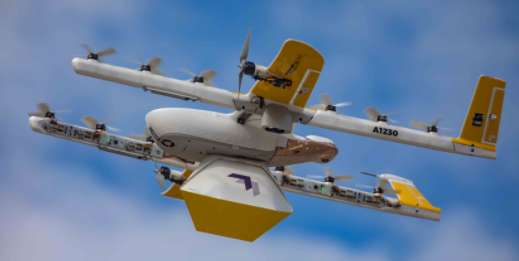
Imagine being a kid, staring out at your yard, waiting not for the ice cream truck, not for a pizza driver, and not even for that one squirrel who keeps acting suspicious around the bird feeder. Instead, you are waiting for a drone to fly in and lower a library book onto your lawn. That is not a scene from a children’s sci-fi novel. It actually happened in Christiansburg, Virginia, when Wing, the drone delivery company owned by Google parent company Alphabet, helped bring library books to students during a time when schools and libraries were difficult to access.
The story of Wing book delivery is charming because it combines three things people rarely expect to see in the same sentence: drones, school librarians, and summer reading. Yet the idea was refreshingly simple. Kids needed books. Libraries had books. Wing had drones. Put those pieces together, add a little imagination, and suddenly a front yard could become a landing zone for stories, mysteries, graphic novels, biographies, and maybe a dragon or two if the catalog was feeling dramatic.
Although many people casually call it “Google drones dropping library books,” the more accurate description is Alphabet’s Wing delivering library books by drone. Wing is a sister company to Google under Alphabet, and its delivery aircraft had already been operating in Christiansburg before the book program began. The library project showed that drone delivery was not just about snacks, medicine, or convenience items. It could also support education, reading access, and community creativity.
How Wing Book Delivery Started
The idea came from Kelly Passek, a school librarian in Montgomery County, Virginia. During the pandemic, students were learning from home, and many families could not easily visit school libraries. Passek had already seen Wing drones delivering household goods in her town, so she wondered: why not books?
That question turned into a practical, surprisingly joyful program. Families of eligible Montgomery County Public Schools students living within Wing’s Christiansburg delivery area could request books from the school library catalog. Passek gathered the requested titles, packed them in special delivery boxes, and brought them to Wing. From there, the drones did the flying.
The catalog included more than 150,000 titles, giving students far more choice than a small take-home packet or a dusty emergency shelf in the garage. For a child who had been stuck at home, the ability to request a book and watch it arrive from the sky was the kind of reading motivation that no ordinary bookmark could compete with.
Why Drone Delivery Made Sense for Library Books
At first, drone-delivered library books sound like a novelty. And yes, the novelty is part of the magic. A drone lowering a book into a yard has the same “wait, did I just see that?” energy as a magician pulling a rabbit from a hat, except the rabbit is a paperback and nobody has to clean up after it.
But beneath the fun was a real access problem. During remote learning, many students lost the daily habit of browsing school library shelves. Public libraries and school libraries are essential because they give children free access to books, especially children who may not have large home libraries. When the physical building becomes harder to reach, the gap between “I want to read” and “I have something good to read” gets wider.
Drone delivery helped shrink that gap. The program allowed eligible students to keep reading without needing a car ride, a crowded public space, or a complicated pickup schedule. In practical terms, it was a library outreach program with propellers.
How the Wing Drone Delivery Process Worked
Step 1: Students Requested Books Online
Students or families used an online form to request books. This kept the process simple and familiar for households already managing digital schoolwork, video calls, and the daily mystery of where the charger went.
Step 2: The Librarian Prepared the Order
Passek located the books from the district’s library resources, packed them safely, and prepared them for delivery. This part matters because the drone may be the headline, but the librarian remained the heart of the system. Technology did not replace the library; it extended the library’s reach.
Step 3: Wing Delivered the Package by Drone
Wing’s aircraft carried the book package to the student’s home. Instead of landing in the yard, the drone hovered above the delivery spot and lowered the package with a tether. Once the package reached the ground, it detached, and the drone flew away. For a child watching from the window, the whole thing probably felt like receiving mail from the future.
What Makes Wing’s Drones Different?
Wing’s delivery drones are designed for small, lightweight packages. They use vertical lift motors for takeoff and hovering, along with separate cruise motors for efficient forward flight. That dual-style design lets the aircraft lift like a helicopter, travel more like a plane, and deliver without needing to touch down in someone’s yard.
Wing has described its lightweight aircraft as capable of flying up to 65 miles per hour, carrying about 2.5 pounds, and traveling up to 12 miles round trip. In other words, the system is built for the kind of local, quick-turn delivery that fits small packages well. A library book is almost comically perfect for that job. It is compact, useful, non-perishable, and unlikely to complain about turbulence.
The tether system is also important. By lowering packages rather than landing, the drone avoids obstacles on the ground and reduces the need for a perfect landing zone. That makes sense in residential neighborhoods, where yards may contain trees, toys, pets, patio furniture, and at least one garden gnome silently judging the entire operation.
Why Christiansburg, Virginia Became a Drone Delivery Testbed
Christiansburg was not chosen at random. Wing had already launched U.S. commercial drone delivery operations there in 2019, working with partners such as Walgreens, FedEx, and local businesses. The town became a real-world testing ground for how residents would use drone delivery in everyday life.
Before the library book program, people in the area had already seen drones delivering small consumer items. That familiarity made it easier to imagine a drone carrying something more meaningful than snacks or household basics. The library book project was a natural next chapter, and yes, in this story, “next chapter” is absolutely intended.
Wing’s U.S. operations also mattered because drone delivery is not as simple as buying a flying gadget and telling it to “go forth, little robot.” Commercial drone delivery in the United States requires FAA oversight, certifications, waivers, and careful operational planning. Wing became the first drone delivery company to receive air carrier certification from the Federal Aviation Administration, a major step in turning drone delivery from futuristic demo into regulated service.
The Educational Value: More Than a Cool Delivery Trick
The biggest benefit of Google-linked drone book delivery was not the drone. It was the book. The aircraft created excitement, but the real goal was to help students keep reading when normal library routines were disrupted.
Reading access matters. Children who can choose books they enjoy are more likely to read for pleasure. Libraries help students discover those books, whether they want fantasy adventures, sports stories, graphic novels, science books, biographies, animal tales, or something with enough jokes to make homework temporarily less tragic.
During summer and school breaks, reading can slip. Educators often worry about students losing academic momentum when school is out, especially if they do not have regular access to books. A drone delivery program cannot solve every literacy challenge, but it does offer one clever solution to a specific problem: how to put books into kids’ hands when the library building is not easy to reach.
Why Kids Loved the Idea
Kids are naturally curious. Tell a child, “Your library book is coming,” and that may get a polite nod. Tell a child, “Your library book is arriving by drone,” and suddenly the front window becomes mission control.
The delivery method turned reading into an event. That matters because motivation is a huge part of childhood reading. A child who may not be thrilled about opening a book might become interested because the book came with a story before the story even began. The delivery itself becomes a memory: the buzz in the sky, the package lowering down, the family watching, the book waiting in the grass.
That sense of wonder is not a gimmick. It is a doorway. If the delivery gets a reluctant reader to open the first page, the drone has done more than transport paper. It has helped create a moment of connection between a child and a book.
Community Innovation at Its Best
One of the most appealing parts of the Wing library book delivery story is that it did not start in a corporate boardroom with someone pointing at a slide titled “Synergistic Literacy Drone Ecosystem.” It started with a librarian noticing a community need and asking a practical question.
That is how useful innovation often works. The technology already existed. The missing ingredient was local imagination. Passek understood her students, her library system, and the problem families were facing. Wing had the delivery network. Together, they created a service that was small in scale but big in symbolism.
It also reminded people that school librarians are not just keepers of quiet rooms. They are educators, problem-solvers, technology guides, reading coaches, and occasionally the reason a flying robot drops a novel in your yard.
Benefits of Drone Book Delivery
1. Faster Access to Reading Materials
Drone delivery can move small items quickly across a local service area. For books, that means students do not have to wait for a weekly pickup or a bus route. The faster the book arrives, the faster the reading can begin.
2. Better Support for Remote or Limited-Access Families
Not every family can easily visit a library. Work schedules, transportation issues, health concerns, and distance can all create barriers. Drone delivery is not available everywhere, but where it works, it can make library access feel less like a logistical puzzle.
3. A Fresh Way to Promote Summer Reading
Summer reading programs compete with video games, streaming shows, social media, and the ancient childhood art of saying “I’m bored” while standing directly next to a shelf full of books. Drone delivery adds excitement to the reading process and gives students a reason to talk about books.
4. Contactless Delivery
During the pandemic, contactless delivery was a major advantage. Books could reach students without in-person exchange, supporting social distancing while still keeping educational resources moving.
5. A Memorable STEM Connection
Drone book delivery also introduces students to real-world technology. A child waiting for a library book might start asking how drones fly, how navigation works, how packages detach, or whether the drone has a favorite author. Three of those questions are excellent STEM prompts. The fourth is adorable and should still be encouraged.
Challenges and Limitations
As delightful as drone-delivered books are, the model has limits. Wing’s service area only covered eligible homes, meaning not every student could participate. Drone delivery also depends on weather, safe delivery zones, aircraft capacity, regulatory approval, and community acceptance.
Books are relatively easy cargo, but not every book is equally drone-friendly. A paperback novel? Perfect. A giant art encyclopedia with the density of a paving stone? Maybe not. Since drones have payload limits, libraries would need to consider size and weight when preparing orders.
Privacy and noise are also common concerns in drone delivery conversations. Even small drones can raise questions from residents who wonder how flights are routed, what data is collected, and whether the neighborhood sky will become busier. Any community drone program needs clear communication, safety rules, and public trust.
Could Drone Libraries Become Common?
Drone-delivered library books are unlikely to replace traditional libraries, and they should not. A library is more than a distribution center. It is a place to browse, ask questions, attend programs, use technology, meet neighbors, and accidentally leave with seven books when you promised yourself you would only get one.
However, drone delivery could become one tool in a broader library access strategy. In rural communities, suburban neighborhoods, campuses, senior communities, or emergency situations, small-package drone delivery may help libraries reach people faster. It could work alongside bookmobiles, curbside pickup, digital lending, mail delivery, classroom libraries, and community reading events.
The best future is not “drones instead of libraries.” The best future is “libraries with more ways to reach people.” Wing book delivery showed how technology can serve a human goal when it is guided by educators and community needs.
What This Story Teaches About Technology
The Wing book delivery project is a useful reminder that technology is only impressive when it solves a real problem. A drone carrying a random novelty item is interesting for about ten seconds. A drone carrying a child’s chosen library book during a period of isolation is something warmer and more meaningful.
Good technology disappears into the mission. In this case, the mission was reading. The drone got attention, but the real success was a student opening a book they wanted. That is the kind of outcome educators, parents, librarians, and communities can support.
It also shows that innovation does not have to be cold or impersonal. In the right hands, even a highly automated aircraft can become part of a very human story: a librarian trying to keep kids connected to books.
Experiences Related to Google Drones Dropping Library Books to Kids
There is something wonderfully unforgettable about the idea of a child receiving a library book by drone. Think about the experience from the family’s point of view. A student chooses a book online, maybe with help from a parent or librarian. The request goes through. Then, instead of a normal errand, the family gets a tiny countdown to a moment that feels like it belongs in tomorrow’s world.
The child may stand by the window, listening for the faint hum overhead. A parent might step outside with a phone ready, because when a drone brings a library book to your lawn, you record it. That is not oversharing; that is civic duty. The aircraft appears, hovers, lowers the package, releases it, and heads back. The whole delivery may take only moments, but the memory lasts much longer.
For reluctant readers, this experience can change the emotional temperature around books. Instead of reading feeling like another assignment, the book arrives as a special delivery. The package says, “This story was chosen for you, prepared for you, and flown to you.” That sense of personal attention matters. Children often respond to rituals, surprises, and stories around the story.
For parents, the experience can be both convenient and encouraging. Many families want their children to read more but struggle to keep fresh books available at home. Buying every book is expensive, and visiting a library may be difficult during busy weeks. Drone delivery does not replace parental involvement, but it removes one barrier. It gives parents a new way to say, “Let’s pick something you actually want to read.”
For librarians, the experience is a powerful example of outreach. The job does not end at the library door. A good librarian helps match readers with the right books, whether that happens across a desk, through a school website, on a bookmobile, or through a drone delivery partnership. The Wing project showed that librarians can be bold technology adopters when the goal is student access.
For communities, drone book delivery creates a shared story. Neighbors talk about it. Local media covers it. Students compare what they ordered. Teachers can use it as a conversation starter about aviation, engineering, logistics, reading habits, and public service. Suddenly, a library program becomes a bridge between literacy and STEM learning.
There is also a subtle emotional benefit. During times when children feel separated from school routines, receiving a library book can remind them that their school community is still thinking about them. The drone may be mechanical, but the message is deeply human: you still belong, your curiosity still matters, and your next good book is on the way.
Of course, not every community will have drone delivery soon. Some neighborhoods are too dense, some homes lack safe drop zones, and some regions face regulatory or weather challenges. But the experience in Christiansburg offers a model worth studying. It suggests that the future of libraries may not be one single format. It may be a mix of shelves, screens, buses, pickup lockers, community events, and yes, occasionally, a flying robot with excellent taste in children’s literature.
Conclusion
The story of Google drones dropping library books to kids is more than a quirky headline. It is a case study in creative problem-solving. Wing’s drone delivery technology gave a Virginia school librarian a new way to connect children with books when normal access was disrupted. The result was practical, memorable, and just futuristic enough to make summer reading feel like an adventure.
Wing book delivery worked because it kept the focus where it belonged: on students, books, and access. The drone was the delivery method, not the mission. The mission was helping children read, imagine, learn, and stay connected to their libraries.
In the end, the most exciting part was not that a drone could carry a book. It was that a book could still find its reader.