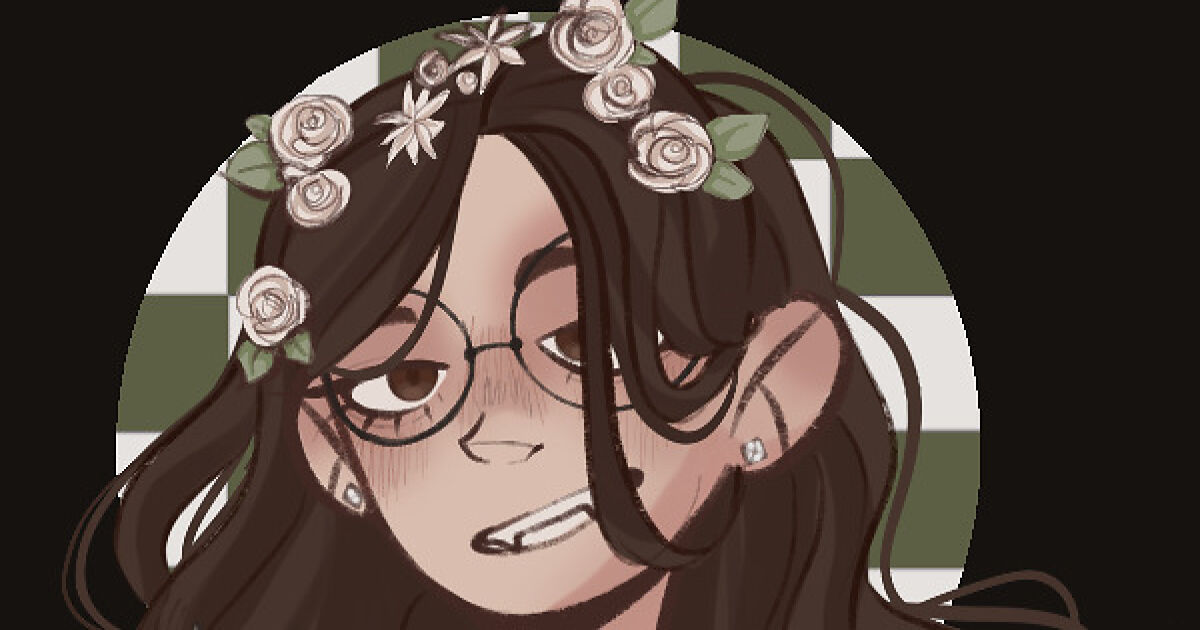
Some people introduce themselves with a carefully posed photograph. Others prefer a tiny illustrated version of themselves wearing elf ears, star-shaped sunglasses, three necklaces, and the expression of someone who has not trusted society since breakfast. Welcome to the delightful world of Picrew characters.
Picrew lets people build customized avatars using image makers created by independent artists. Depending on the maker, you may be able to select facial features, hairstyles, skin tones, clothing, accessories, backgrounds, fantasy details, and enough decorative sparkles to make a disco ball feel underdressed. The result can resemble your real appearance, represent an original character, or show the gloriously dramatic person you become whenever nobody is enforcing a dress code.
So, Pandas, consider this your invitation: create a Picrew character, post it, and tell everyone a little about the choices behind it. Is your avatar an accurate self-portrait? A fictional alter ego? A medieval librarian who secretly controls the weather? There are no wrong answers, although adding six swords may raise reasonable questions.
What Is a Picrew Character?
A Picrew character is an image assembled through one of the customizable image makers available on Picrew. Instead of drawing every element from scratch, users choose from options supplied by the artist who created that particular maker. One artist might specialize in soft watercolor portraits, while another offers gothic outfits, fantasy horns, animal companions, cyberpunk accessories, or exaggerated cartoon expressions.
Every image maker has its own visual style and selection of features. That means your character may look completely different when recreated through several makers. In one version, you might appear as a cozy cottage resident holding a cup of tea. In another, you are apparently the final boss of an intergalactic karaoke tournament.
Picrew’s official guidance also makes an important distinction between using an image maker and owning its artwork. The artist retains rights to the materials they created, and each maker can have different permissions for personal, noncommercial, commercial, or modified use. Picrew’s terms generally prohibit selling or redistributing generated images unless the creator has specifically permitted that activity.
Why Picrew Characters Are So Much Fun to Share
They Turn Self-Expression Into a Game
Making a Picrew avatar feels like combining a personality quiz, a digital paper doll, and a miniature costume department. Every choice says something, even when that something is simply, “I firmly believe my fictional self deserves a pet frog.”
You can recreate details from your everyday appearance, such as your hairstyle, glasses, freckles, favorite jacket, or usual facial expression. You can also exaggerate your personality by adding visual symbols. A book may represent your love of reading. A flower crown can communicate your peaceful side. A flaming sword can communicate that the peaceful side is currently unavailable.
Researchers who study digital identity have long treated avatars as more than decorative profile pictures. Avatar customization can become a selective projection of personality, values, interests, appearance, and imagined possibilities. MIT researchers have explored how virtual identities can reflect or influence real-world values, while Stanford research has examined how digital self-representation may affect attitudes and behavior.
They Let People Experiment Without Making Permanent Changes
Perhaps you have wondered whether silver hair would suit you, but you are not ready to introduce bleach to your scalp and chaos to your bathroom towels. A Picrew character lets you experiment safely. Try a shaved head, dramatic eyeliner, an elaborate cape, or enough facial piercings to interfere with airport security.
Digital avatars can provide space to explore different styles, names, moods, gender expressions, and fictional identities. For some users, the character is aspirational: it represents how they hope to look or feel. For others, it is pure role-play. Both approaches are valid. An avatar does not need to be a sworn statement submitted under penalty of perjury.
Writing about digital culture, WIRED has documented how customized characters can help people explore identity and experience acceptance in virtual settings. PBS educational materials have likewise described online spaces as places where young people may experiment with perspectives and aspects of identity.
They Create Easy Community Conversations
“Post your character” challenges work because they give everyone an accessible starting point. You do not need to write an autobiography or reveal deeply personal information. You can post an image and explain three details: why you chose the hairstyle, what the accessory means, and whether the tiny animal beside you has a name.
The answers often lead to conversations about art, fashion, fandoms, original characters, books, games, and personal style. One avatar might inspire another person to search for the same maker. Another may spark a discussion about an unusual accessory. Before long, twenty strangers are emotionally invested in the backstory of a cartoon moth wizard named Kevin.
Community-centered creative activities can also encourage support and inspiration. Research on social media has found that many young users value the connection they experience with friends online, while reporting on fan-art communities shows how feedback and shared interests can help creators feel encouraged.
How to Make a Memorable Picrew Character
1. Decide Who You Are Creating
Before opening every customization menu and becoming overwhelmed by twelve nearly identical shades of lavender, choose a basic direction.
- Your real self: Recreate your current appearance and everyday style.
- Your ideal self: Build the version of you who owns excellent boots and always knows what to say.
- An original character: Design someone with a name, personality, history, and suspiciously complicated family tree.
- A fantasy version: Add wings, horns, magical eyes, animal ears, armor, or other features currently discouraged by ordinary workplace policies.
- A mood avatar: Create a character representing your current emotional state, whether that is cheerful, exhausted, mysterious, or “please do not schedule another meeting.”
2. Start With the Face
Skin tone, face shape, eyes, eyebrows, mouth, and markings establish the character’s overall personality. Small adjustments can completely change the impression. Raised eyebrows may look curious or skeptical. A tiny smile can appear friendly, mischievous, or suspiciously aware of where the missing cookies went.
Do not worry about achieving a perfect physical match. Each image maker reflects the artist’s style and available options. The goal is to create a character that feels recognizable or meaningful, not to complete a forensic reconstruction.
3. Use Hair and Clothing to Build a Story
Hair and clothing often provide the strongest clues about a character. A neat uniform suggests discipline. A giant sweater suggests comfort. A velvet cape suggests either royalty or someone who has recently discovered a fabric store and lost all restraint.
Consider what the outfit says about the character’s environment. Do they live in a modern city, a haunted forest, a magical academy, or an apartment where the laundry chair has become a permanent piece of furniture? Colors can also create a clear mood. Soft neutrals feel calm, bright colors feel energetic, and black with red accents announces that the character has at least one dramatic monologue prepared.
4. Choose Accessories With Purpose
Accessories make the avatar feel personal. Glasses, jewelry, headphones, flowers, weapons, pins, books, animals, food, and background objects can communicate interests faster than a long biography.
Try selecting two or three details that support a theme instead of clicking everything at once. Of course, maximalism is also a theme. In that case, continue adding accessories until the character looks ready to attend a royal wedding, a rock concert, and an emergency wizard council meeting simultaneously.
5. Write a Caption That Invites Conversation
A good caption gives people something to respond to. Along with posting your Picrew character, answer a few playful questions:
- What is your character’s name?
- Is this you, an original character, or an alternate version of you?
- Which detail best represents your personality?
- What item would your character never leave home without?
- What is their hidden talent?
- Would they survive a haunted house?
- What song plays when they enter a room?
You could write: “This is Juniper, my forest-witch alter ego. She collects unusual teacups, communicates with crows, and becomes extremely judgmental when people fold book pages instead of using bookmarks.” That gives readers much more to enjoy than simply writing, “Here is mine.”
How to Share Picrew Images Respectfully
Check the Maker’s Usage Rules
Before saving and posting an image, read the description and permission labels attached to the maker. Some creators allow only personal use. Others permit broader noncommercial use or editing. Commercial permission should never be assumed merely because an image was easy to generate.
Using a Picrew avatar as a personal profile image may be allowed when the maker permits personal use. Using the same artwork on merchandise, monetized branding, advertising, or products is a different matter. Check the individual creator’s rules instead of relying on the ancient legal doctrine of “but everyone else was doing it.”
Credit the Artist or Link the Maker
When possible, keep the maker’s link and include it with your post. This allows other people to try the same creator and helps direct attention back to the artist whose work made the activity possible. Do not remove watermarks, signatures, or credits simply because they do not match the aesthetic of your caption.
Avoid Reuploading the Artist’s Individual Assets
A finished avatar and the separate illustrations used to build it are not the same thing. Do not extract hairstyles, clothing, eyes, backgrounds, or other components and distribute them as stickers, clip art, game assets, or downloadable files. Those elements remain the creator’s artwork.
Protect Personal Information
An illustrated avatar can offer more privacy than posting a real photograph, but your caption can still reveal identifying details. Avoid combining the image with your full name, exact location, school, workplace, phone number, or other sensitive information. Online safety organizations generally recommend sharing less personal information in public profiles and considering avatars instead of real photographs, particularly for younger users.
Creative Picrew Challenge Ideas
Once everyone has posted a basic character, keep the activity going with themed rounds. These challenges encourage people to revisit the same avatar from a new angle.
Recreate Yourself in Different Genres
Make modern, fantasy, science-fiction, superhero, historical, horror, and cottagecore versions of the same character. You may discover that your true calling was not office administration but serving as a highly respected mushroom sorcerer.
Build a Character From Your Favorite Colors
Choose a limited color palette and use it for hair, clothing, eyes, accessories, and the background. This creates a visually cohesive avatar and can produce combinations you would not normally select.
Design Your Opposite
If your usual character is cheerful and brightly dressed, create a serious gothic version. If your avatar normally looks like the ruler of a haunted kingdom, make them wear cheerful overalls and carry a basket of strawberries. Character development sometimes begins with aggressively wholesome gardening.
Create a Friend Group
Use one maker to design several characters who belong in the same story. Give each person a role: leader, strategist, comedian, mysterious newcomer, snack coordinator, or individual who repeatedly says, “I have an idea,” immediately before everything catches fire.
Make Your Character at Different Ages
Design childhood, teenage, adult, and elderly versions of the same character when the maker’s options allow it. Think about which traits remain consistent and which details change with time.
What Your Picrew Choices Might Say About You
Avatar choices can reflect current interests, familiar features, cultural influences, aspirations, humor, and mood. Someone who always chooses oversized sweaters may genuinely love comfortable clothes. They may also simply enjoy how the artist drew the sweater. Not every selection requires a twelve-page psychological interpretation.
The most interesting question is often not what you selected but why you selected it. Did you choose green hair because you want to dye your own? Did you add scars because they belong to your original character’s story? Did you choose a cat companion because you love cats, or because the dog option looked like it knew too much?
Online identity is frequently selective rather than false. People highlight different aspects of themselves in different settings, just as they choose different clothing for work, home, formal events, or a quick trip to the grocery store that somehow becomes a forty-five-minute social encounter. A Picrew character offers another way to decide which parts of yourself you want to place in the frame.
Experiences From the Picrew Character Rabbit Hole
A typical Picrew session begins with confidence. You open an image maker thinking the process will take five minutes. You will choose the face, add your hair, select a shirt, and leave. This plan survives for approximately twelve seconds.
First, you discover that the maker has several eye styles. You test each one because apparently the emotional difference between “gentle sparkle” and “slightly rounder gentle sparkle” has become critically important. Then you find the eyebrow menu. Suddenly, your harmless avatar appears furious, concerned, sleepy, smug, or prepared to question the financial decisions of everyone in the room.
The hair section creates a second crisis. The style closest to your real haircut is available, but so is waist-length purple hair decorated with tiny moons. Accuracy begins losing the argument. You tell yourself that avatars are about creativity. Within minutes, the character has purple hair, pointed ears, golden eyes, and a floating ghost companion. The plain blue shirt you originally selected now seems inadequate. Clearly, this person needs ceremonial robes.
Accessories are where the experience becomes dangerous. You add glasses because you wear them in real life. Then you add earrings because they look good. Then a necklace, a flower, a hair clip, a bandage, a pair of headphones, and an unexplained magical flame. The character now carries enough visual information to support a six-season streaming series. You know nothing about their story, but the magical flame strongly suggests unresolved family issues.
Sharing the finished character creates another surprisingly enjoyable stage. Friends notice details you almost skipped. One person asks about the ghost. Another wants the maker link. Someone decides your avatar looks like a librarian who solves supernatural crimes on weekends. That interpretation is better than anything you planned, so it immediately becomes official.
Group challenges can become even more entertaining. Everyone begins with the same set of options, yet the results rarely look identical. One person carefully recreates their real appearance. Another designs a polished fantasy hero. A third creates a chaotic goblin wearing formal clothes and holding a pastry. The differences reveal how people approach creativity: some prioritize resemblance, some build stories, some chase a consistent aesthetic, and some select every option that makes them laugh.
There can also be a meaningful side to the activity. A person may use an avatar to show a hairstyle they hope to try, clothing they do not yet feel confident wearing, or a version of themselves that feels more comfortable than a photograph. Someone creating an original character may finally visualize a figure they have been writing about for years. Another person may simply enjoy participating without placing their real face online.
The experience becomes richer when people explain their choices rather than treating the post as an appearance contest. Compliment the creativity, color scheme, storytelling, or unusual combination of features. Ask friendly questions. Avoid criticizing someone for making an idealized character, a fantastical character, or an avatar that does not resemble them. The entire point is choice.
After finishing one character, you may decide to create a second version with different clothing. Then you wonder how the character would look as a villain. Then you create their sibling, best friend, rival, mentor, and emotionally complicated former teammate. It is now two hours later. You have accidentally developed an entire fictional universe, and the original task was to make a profile picture.
That is the special appeal of Picrew. The tool provides the pieces, but users supply the personality, context, humor, and story. A small illustrated portrait can become a conversation starter, an experiment in self-expression, or the first visual draft of a much larger creative idea.
Conclusion: Show Us Your Picrew Character
Now it is your turn, Pandas. Choose a Picrew maker whose style catches your eye, check the artist’s usage rules, and create a character that represents something about you. It can resemble your everyday self, embody your ideal style, introduce an original character, or reveal the fantasy hero you would become if capes were socially acceptable at the supermarket.
Post your character with the maker credit or link, then share a few details about the design. Tell us the character’s name, personality, favorite possession, unusual talent, or highly specific fictional grievance. Most importantly, celebrate other people’s creativity. Behind every combination of hairstyles, expressions, outfits, and tiny animal companions is a person making choices about how they want to be seenor simply having a wonderfully silly time.
Note: Usage permissions vary between Picrew image makers. Review the creator’s description and allowed-use labels before posting, editing, monetizing, or repurposing a generated image.