Note: This article is written from publicly reported information about Grace VanderWaal’s career, recent interviews, TikTok appearance, music releases, acting roles, and public life updates.
Grace VanderWaal has never been the kind of celebrity who moves in a straight line. She entered pop culture at 12 years old with a ukulele, a raspy voice, and the sort of original song that made America pause mid-snack. Years later, the former America’s Got Talent winner resurfaced in a rare TikTok street interview, offering life advice that was surprisingly simple, slightly mysterious, and very Grace: “Don’t trust everyone.”
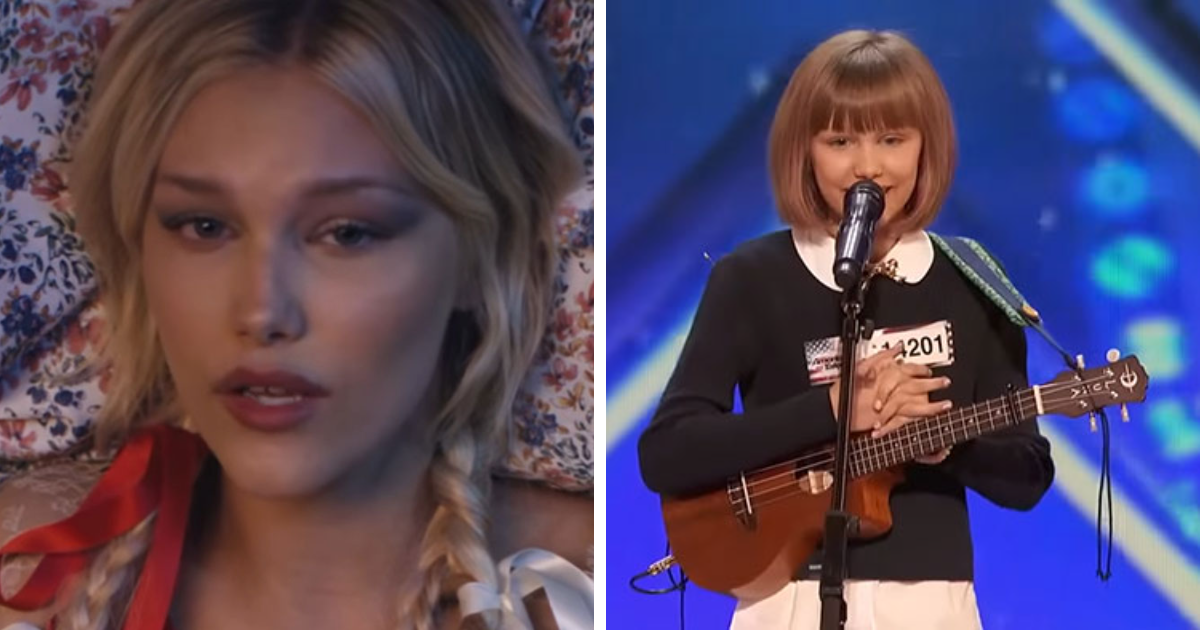
The moment spread quickly because fans still remember the wide-eyed kid who sang “I Don’t Know My Name” and walked away as one of the most memorable young winners in reality TV history. But the Grace VanderWaal who appeared on TikTok was not frozen in that 2016 frame. She was older, sharper, more self-aware, and visibly more comfortable with the complicated truth that growing up in public is not exactly a spa day with cucumber water.
Her life update struck a nerve because it was not packaged like a glossy press release. There was no dramatic countdown, no overproduced “I’m back” montage, no suspiciously perfect lighting. Instead, she appeared casually, answered questions about confidence, reflected on public scrutiny, and reminded viewers that maturity often sounds less like a motivational poster and more like someone who has finally learned which doors not to open.
From AGT Wonderkid To Artist With A Whole New Voice
Grace VanderWaal became a household name after winning Season 11 of America’s Got Talent in 2016 at just 12 years old. Her audition felt different from the usual talent-show formula. She did not arrive with a huge backing track or a polished child-star routine. She brought a ukulele, sang an original song, and looked like she might be equally prepared to win the show or go home and reorganize her bedroom.
That performance of “I Don’t Know My Name” became one of those rare television moments that felt genuinely unscripted. It was quirky, vulnerable, and memorable without trying too hard. Simon Cowell famously compared her potential to major singer-songwriters, and Howie Mandel gave her the Golden Buzzer. Suddenly, Grace was not just a contestant. She was a storyline, a brand-new voice, and, whether she wanted it or not, a symbol of youthful originality.
After her win, she moved quickly into a recording career. Her debut EP, Perfectly Imperfect, arrived in 2016, followed by her first full-length album, Just the Beginning, in 2017. Songs like “Moonlight,” “Clay,” and “So Much More Than This” helped define her early sound: earnest, melodic, youthful, and built around the idea that being different was not a flaw but a secret superpower.
But childhood fame comes with fine print, and the font is usually very tiny. Grace’s early career was full of praise, awards, performances, and fans, but it also came with criticism, comparison, and a kind of public ownership that can become heavy for anyone, let alone a teenager still figuring out breakfast preferences and personal boundaries.
The TikTok Moment That Made Fans Look Twice
Grace’s rare life update came through an unexpected TikTok appearance in a street-style interview format. In the clip, she was asked about confidence and what advice she would give her younger self. Her answer immediately caught attention because it was direct without being overly explained.
When asked what made her look confident, she joked that having somewhere to go can create the illusion of confidence. It was funny because it felt true. Many people have accidentally looked powerful simply by walking fast while late for coffee. Grace turned that everyday observation into a tiny lesson: confidence is not always a permanent personality trait. Sometimes it is posture, motion, purpose, and not overthinking every step.
She also reflected on growing up in the spotlight, saying that public scrutiny pushed her outside her comfort zone. That idea is central to understanding her evolution. Fame did not gently invite her to mature; it shoved her onto a moving sidewalk and told her to keep up. Her phrase about learning to “sink or swim” resonated because it described the pressure many young performers face when admiration and judgment arrive at the same time.
Then came the advice that traveled furthest: don’t trust everyone. It was short, almost blunt, and heavier than the usual celebrity answer. She did not frame it as bitterness. It sounded more like hard-won wisdom from someone who has learned that openness is beautiful, but discernment is survival.
Why Her Advice Hit So Hard
Grace VanderWaal’s TikTok advice landed because it was not generic. “Believe in yourself” is lovely, of course, but it can start to sound like something printed on a mug in a gift shop next to a candle called “Corporate Serenity.” Grace’s advice had edges. It suggested lived experience. It acknowledged that growing up means learning not only who you are, but also who deserves access to you.
For fans who watched her become famous as a child, the comment felt especially meaningful. Grace was introduced to the world as an unusually authentic young artist. People admired her originality, but they also formed strong opinions about how she should look, sound, dress, and evolve. When child stars grow up, audiences can act startled, as if someone changed the channel without permission. Grace’s public transformation challenges that habit.
Her message about accepting who you are also fits the arc of her career. She has never stayed in one aesthetic lane. She has moved from ukulele folk-pop to more experimental sounds, from soft inspirational songs to darker, more confrontational work, and from Disney acting roles to an ambitious Francis Ford Coppola film. Her career is less a straight highway and more a thrift-store treasure map, which is part of the charm.
Grace VanderWaal’s Career After America’s Got Talent
After America’s Got Talent, Grace did what many young winners hope to do: she turned a viral moment into a real career. Her music earned attention because she wrote with a distinctive point of view. Even when the production changed, the center of her work remained personal storytelling.
She also stepped into acting. In 2020, she starred as Stargirl Caraway in Disney’s Stargirl, a coming-of-age film based on Jerry Spinelli’s novel. The role made sense for Grace: Stargirl is a free-spirited, musically gifted outsider whose presence forces others to confront conformity. That is not exactly a stretch from the public image of Grace VanderWaal, though the character also gave her room to show emotional nuance beyond the talent-show stage.
She returned for Hollywood Stargirl in 2022, expanding her acting résumé and proving that she was not interested in being remembered only as “the kid with the ukulele.” That phrase may have helped introduce her, but it was never big enough to contain her.
In 2024, Grace appeared in Francis Ford Coppola’s Megalopolis, a major step into more adult and experimental film territory. Her Cannes Film Festival appearance for the movie marked another public turning point. Fans saw a more mature style, a bolder fashion identity, and an artist clearly willing to take creative risks.
A New Era: Music, Womanhood, And Childstar
Grace’s recent work has leaned into the complexities of growing up famous. Her 2025 album Childstar explored memory, identity, girlhood, public consumption, and the emotional cost of being watched too closely too young. It is not the kind of album designed merely to sit politely in the background while someone folds laundry. It asks listeners to pay attention.
The album and its surrounding visuals show Grace examining the gap between the person audiences remember and the person she actually became. That gap can be uncomfortable, especially for fans who prefer nostalgia to evolution. But it is also where her most interesting work now lives.
Her song “Babydoll,” featuring Aliyah’s Interlude, showed another side of this new phase: playful, theatrical, and fashion-forward. Rather than rejecting pop performance, Grace appears to be reclaiming it on her own terms. She can be serious, strange, glamorous, funny, dark, vulnerable, and mischievous. In other words, she can be a full human being. Revolutionary concept, apparently.
Public Scrutiny And The Reality Of Growing Up Online
Grace VanderWaal’s life update matters because it opens a broader conversation about young fame. Reality TV and social media can turn talented children into public property almost overnight. At first, the attention looks like applause. Then come comments, comparisons, expectations, edits, rumors, and strangers writing emotional essays about someone’s haircut as if it were a constitutional crisis.
For Grace, the challenge has been especially visible because her earliest appeal was authenticity. Audiences loved that she seemed untouched by industry polish. But authenticity changes as people grow. The 12-year-old writing about not knowing her name becomes the 21-year-old making art about what fame did to that child. That is not a contradiction. That is development.
Her TikTok advice, especially the warning not to trust everyone, sounds like a boundary. It suggests that kindness and openness should not require naivety. For young fans, that is useful advice. For adults, it is a reminder they probably should have learned before replying to that suspicious “your package is delayed” text message.
What Fans Are Really Responding To
Many fans responded to Grace’s TikTok appearance with surprise at how grown up she looked. That reaction is understandable, but it also reveals how the internet freezes young stars in time. Grace is no longer the child who stood on the AGT stage in 2016. She is an adult artist with new music, new roles, new style, and new boundaries.
The fascination is not only about appearance. It is about watching someone reclaim her narrative. Grace’s public image was once shaped largely by adults around her, television producers, judges, headlines, and fans. Now, her interviews, songs, visuals, and casual TikTok moments show her speaking more directly about what that experience felt like.
That shift is powerful. It turns her from a former talent-show winner into an artist analyzing the machinery that made her famous. She is not simply saying, “Look how much I’ve changed.” She is asking people to consider why they expected her not to.
The Confidence Lesson Hidden In Plain Sight
Grace’s confidence advice was funny because it was practical. Having somewhere to go sounds like a joke, but it reveals something useful: confidence often follows movement. You do not always need to feel perfectly ready before taking action. Sometimes you start walking, and the confidence catches up, slightly out of breath but doing its best.
She also pointed toward self-acceptance. For Grace, accepting who you are does not mean becoming one fixed version of yourself forever. Her career suggests the opposite. Self-acceptance can include phases, experiments, mistakes, reinventions, and a few outfits that future you may file under “important research.”
That is why her message feels relevant beyond celebrity culture. People change. They outgrow old identities. They disappoint expectations. They learn boundaries. They become harder to summarize, which is usually a good sign. Grace VanderWaal’s life update reminded fans that confidence is not about being universally understood. Sometimes it is about being misunderstood and still leaving the house.
Experiences And Reflections Related To Grace VanderWaal’s Life Update
Grace VanderWaal’s TikTok moment feels relatable because almost everyone has experienced some version of being trapped inside an old image. Maybe it was not millions of people remembering you from national television, but it could be classmates who still think of you as shy, relatives who treat you like your teenage self, or coworkers who met one version of you and never updated the software. Human beings evolve, but other people often prefer the familiar screenshot.
One lesson from Grace’s story is that growth may confuse people who benefited from your predictability. When she changed her music, her style, and her public tone, some fans celebrated it while others seemed startled. That happens in ordinary life too. When someone becomes more assertive, stops over-explaining, changes careers, sets boundaries, or simply dresses differently, people may react as if a committee meeting should have been held first. Spoiler: no committee is required.
Her advice about not trusting everyone is also deeply practical. Trust is not about becoming suspicious of the entire planet and side-eyeing the grocery cashier for asking about rewards points. It is about learning that access to your time, energy, and private life should be earned. Grace’s career shows how quickly public attention can blur the line between admiration and entitlement. The same lesson applies to friendships, workplaces, creative collaborations, and online communities.
Another experience connected to her update is the pressure to perform confidence. Many people assume confident individuals wake up glowing, stretch dramatically by a window, and begin the day with perfect emotional posture. In reality, confidence is often built through repetition. You attend the meeting. You post the song. You say no. You try again. You walk like you have somewhere to go, and eventually your nervous system gets the memo.
Grace’s evolution also offers a useful example for creative people. Early success can be a gift, but it can also become a box. If audiences love your first style, they may resist your second. If they praise your innocence, they may resent your complexity. Artists have to choose between staying easy to recognize and becoming honest. Grace appears to be choosing honesty, even when it makes people uncomfortable.
For fans, the healthiest way to support someone like Grace is to allow room for change. Enjoy the old songs, but do not demand that the artist live inside them forever. Celebrate the AGT audition, but recognize that the person who performed it has lived many years since then. Nostalgia is sweet, but when it becomes a cage, it needs better manners.
In that sense, Grace VanderWaal’s rare TikTok life update was more than a celebrity check-in. It was a compact lesson in boundaries, identity, and moving forward. She reminded viewers that confidence can be casual, wisdom can be blunt, and growing up may involve disappointing anyone who preferred the simpler version of your story. And honestly, that may be the most grown-up advice of all.
Conclusion
Grace VanderWaal’s rare TikTok appearance gave fans a quick but meaningful look at where she is now: older, more grounded, more guarded, and still unmistakably creative. From winning America’s Got Talent at 12 to building a career across music, film, fashion, and experimental storytelling, she has moved far beyond the label of child prodigy.
Her advice to accept yourself, keep moving, and avoid trusting everyone too easily reflects the complicated education that comes with fame. It also speaks to anyone learning how to protect their peace while becoming a new version of themselves. Grace VanderWaal is not asking to be remembered exactly as she was. She is asking, through her art and public moments, to be seen as she is becoming.