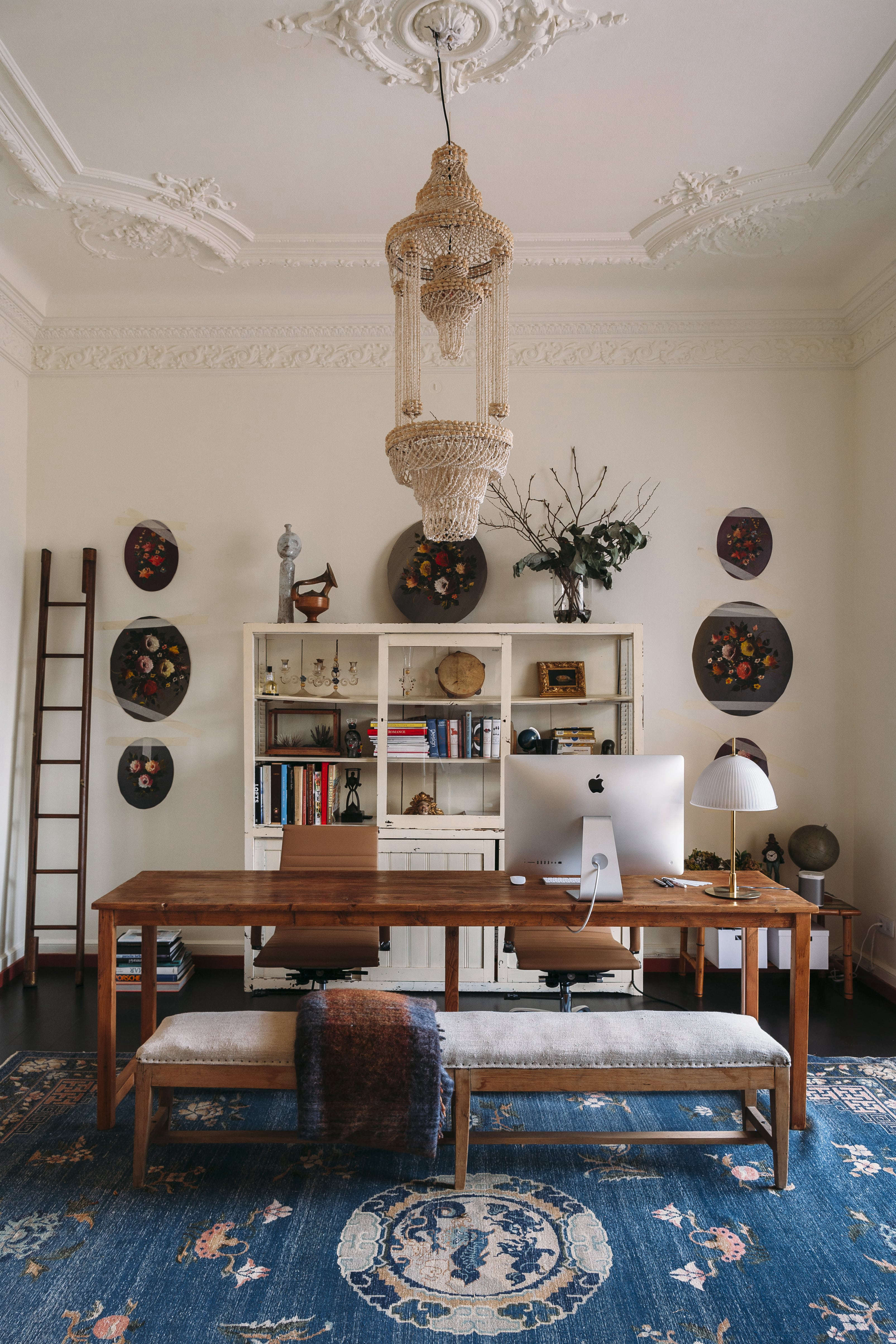
Some apartments whisper. Others clear their throats, straighten their plaster moldings, and announce, “Yes, I have seen things.” A historic Barcelona apartment revitalized by Quintana Partners belongs firmly in the second category. Set within the spirit of Catalan Modernisme and the elegant grid of Barcelona’s Eixample district, this space is not a sterile renovation wearing fresh paint like a nervous tuxedo. It is a layered, character-rich interior where old walls, vintage furniture, warm color, and a little decorative mischief come together with unmistakable joie-de-vivre.
Quintana Partners, the Barcelona and Menorca-based design studio founded by Benito Escat and Pol Castells, has built a reputation for interiors that feel collected rather than manufactured. Their work is deeply Mediterranean but never predictable, luxurious but not stiff, historic but not trapped under museum glass. In this revived Barcelona apartment, the studio demonstrates a lesson many modern renovations forget: old buildings do not need to be “fixed” into blandness. They need to be listened to, repaired with respect, and then invited to dance again.
The Soul of a Catalan-Modernist Apartment
Barcelona’s Eixample is one of the most recognizable urban districts in Europe, shaped by Ildefons Cerdà’s 19th-century plan of grid streets, chamfered corners, and orderly blocks. But behind those rational façades, the interiors often tell more romantic stories. High ceilings, decorative plasterwork, generous windows, carved doors, tiled floors, and long sightlines create homes with both dignity and drama. They are the architectural equivalent of a person who owns linen napkins but also knows where to find excellent vermouth.
The apartment associated with Quintana Partners’ Barcelona base sits in a late-19th-century family residence in Eixample. Rather than gutting the place and inserting a generic “luxury apartment” package, the designers worked with what was already there: tall rooms, moldings, period atmosphere, and the natural grace of an old Barcelona building. The project required repair, paint, patience, and an eye for the kind of imperfections that make a room feel alive. In other words, the design was not about erasing age. It was about making age look fabulous again.
Quintana Partners: Luxury with Memory, Not Makeup
Quintana Partners describes its work through architecture, atmosphere, materiality, and narrative. That may sound polished, but the rooms themselves explain it better. Their interiors rarely look as though a truck from a single showroom arrived at 9 a.m. and finished “personality installation” by lunch. Instead, they combine antique and vintage pieces, handmade details, reworked surfaces, artful color, and objects that appear to have lived previous lives.
This is where the studio’s approach becomes especially relevant for historic apartment renovation. Too many old homes are treated as problems to solve: the walls are uneven, the floor creaks, the plaster is too ornate, the doors are not minimal enough, and the kitchen is smaller than a modern influencer’s skincare drawer. Quintana Partners flips that thinking. The irregularities become clues. The patina becomes texture. The inconvenient details become the very reasons the home feels unforgettable.
Repair First, Replace Carefully
The strongest idea behind this Barcelona apartment is the difference between revitalizing and updating. Updating can be superficial: new countertops, trendy lighting, a pale sofa, perhaps a sculptural chair that looks beautiful but appears to have been designed by someone who dislikes knees. Revitalizing is deeper. It asks what should remain, what should be repaired, what should be reimagined, and what should be allowed to show its age.
That philosophy aligns with respected preservation principles: repair historic features when possible, and when replacement is necessary, ensure new elements honor the design, color, texture, and visual character of the original. In a Barcelona apartment, this might mean preserving moldings, stabilizing old doors, maintaining the rhythm of rooms, or choosing paint and trim that complement rather than fight the architecture. The goal is not to freeze the home in 1899. The goal is to let 1899 and today have a very stylish conversation.
The Power of Patina
Patina is one of those design words that can sound suspiciously like “dust, but expensive.” In skilled hands, however, it is far more meaningful. Patina is the visible record of use, age, repair, and touch. It is the softened edge of wood, the faded tone of an old wall, the slight irregularity in hand-finished surfaces, and the depth that new materials often need decades to earn.
Quintana Partners understands that patina should not be overproduced. A room cannot simply be “aged” into authenticity with a shopping cart and a faux-rust finish. The Barcelona apartment succeeds because the vintage and antique elements feel integrated with the architecture. A work table, a chandelier, collected objects, books, glass pieces, framed art, textured fabrics, and warm paint choices create the impression of a home that has evolved naturally. Nothing screams, “I was staged for a photoshoot,” even if every corner is clearly composed with a sharp editorial eye.
Color: The Secret Ingredient in Joie-de-Vivre
Many historic renovations play it safe with white walls, beige upholstery, and the emotional temperature of a dental waiting room. Quintana Partners is not afraid of color. In a Catalan-modernist apartment, color works especially well because the architecture can handle it. Tall rooms and ornate details do not collapse under strong tones; they often become more legible.
Brick red trim, earthy accents, warm neutrals, faded greens, smoky blues, antique gold, terracotta, and deep wood tones can all feel at home in this style of interior. The trick is balance. Color should frame the architecture, not mug it in broad daylight. When used on baseboards, wainscoting, doors, or selected walls, saturated color gives historic rooms a sense of rhythm. It draws the eye across moldings and thresholds. It also makes the apartment feel joyful without becoming cartoonish. Think “cultured Mediterranean dinner party,” not “paint store accident.”
Vintage Furniture as Storytelling
One reason Quintana Partners’ interiors feel so rich is their use of vintage and found furniture. The pieces do not need to match perfectly; in fact, it is better when they do not. A Chinese Art Deco rug, a beaded chandelier, old tables, glass candelabra, upholstered chairs, framed works, and travel-worn objects can coexist because the apartment itself provides the unifying structure.
Vintage furniture also supports a more sustainable mindset. Reusing existing pieces reduces demand for newly manufactured items and keeps characterful objects in circulation. In a historic Barcelona apartment, this matters aesthetically and environmentally. A brand-new replica may look correct from across the room, but a real old piece carries a kind of visual gravity. It has dents, repairs, and a little attitude. It may also have one drawer that sticks, because nobody is perfect.
Why the Apartment Feels Lived-In, Not Decorated
The phrase “lived-in luxury” is overused, but here it applies. The apartment does not chase perfection. Instead, it creates comfort through layers. Books are not merely decorative rectangles. Chairs appear ready for conversation. Tables feel useful. Lighting is atmospheric rather than clinical. The rooms make space for work, meetings, reading, display, and daily life.
This is important because the apartment functioned as a live/work second base for the studio. That dual purpose changes everything. A purely residential interior can lean into softness; a workspace needs clarity and function. Quintana Partners bridges the two by treating utility as part of the charm. A meeting table can still be beautiful. A shelf of materials can feel like a cabinet of curiosities. A room used for creative work can be practical without wearing the sad gray uniform of corporate productivity.
Barcelona’s Design DNA: Local, Layered, and Cosmopolitan
Barcelona has always balanced local identity with international influence. Catalan Modernisme drew from Art Nouveau but developed its own language through craft, symbolism, structure, and a deep attachment to place. In Eixample, the movement found an urban stage: façades, balconies, stained glass, carved stone, metalwork, tiles, and decorative interiors turned everyday buildings into cultural statements.
That background matters when reading Quintana Partners’ apartment. The design is not simply “old European apartment plus antiques.” It reflects a specifically Barcelona attitude: elegant but relaxed, artistic but functional, proud of history but open to reinvention. The studio’s Mediterranean sensibility comes through in the warmth of materials, the respect for craft, and the feeling that beauty should be part of ordinary life, not locked away for special occasions.
Small Kitchens, Tiny Bathrooms, Big Personality
Historic apartments often come with a delightful reality check: the grand rooms may be spectacular, while the kitchen and bathrooms are small enough to make modern expectations gasp dramatically. But limited utility spaces do not ruin a renovation. They simply require intelligence.
In older Barcelona apartments, the best approach is often to keep wet areas efficient and let the main rooms carry the visual drama. Compact kitchens can shine through quality hardware, good lighting, durable stone or tile, open shelving, and a restrained palette. Bathrooms can use mirrors, wall-mounted fixtures, patterned tile, and warm metals to feel intentional rather than apologetic. The lesson is simple: not every room needs to be enormous. Some just need good manners and decent storage.
How to Borrow the Look at Home
Start with what already exists
Before buying anything new, study the room. Is there original woodwork? A beautiful window shape? Old flooring? A ceiling medallion? Brick under plaster? Even in a newer home, there may be one detail worth emphasizing. Let that become the beginning of the design story.
Mix eras without panic
A 19th-century table can sit near a midcentury lamp. A contemporary sofa can work beneath old artwork. A rustic stool can stand beside a polished console. The goal is not historical accuracy. The goal is emotional coherence. If the materials, colors, and proportions speak to one another, the room will feel intentional.
Use color with discipline
Pick a few tones and repeat them. A red-brown trim can echo a rug. A green lampshade can connect to a painted cabinet. A cream wall can soften strong wood. Color becomes sophisticated when it behaves like a chorus, not a room full of people singing different karaoke songs.
Choose objects with evidence of life
Old ceramics, framed sketches, worn books, handmade baskets, imperfect mirrors, and vintage textiles can bring warmth to a space quickly. The key is editing. Too few objects can feel cold; too many can make the room look like an antique mall sneezed. Leave breathing room.
Why This Apartment Matters Now
The revitalized Barcelona apartment feels especially relevant because design culture is tired of disposable sameness. Fast furniture, trend cycles, and copy-paste interiors have made many homes look expensive but oddly forgettable. Quintana Partners offers another path: preserve what has value, reuse what has soul, add what is necessary, and let the final space feel human.
There is also a sustainability lesson here. Renovation and adaptive reuse can reduce the need for new materials and help preserve embodied carbon already stored in existing buildings. While a single apartment will not save the planet by itself, the mindset matters. Keeping old structures useful is one of the most beautiful ways design can be practical. It honors craft, reduces waste, and keeps cities from turning into bland collections of “luxury residences” with identical pendant lights.
Experience Notes: Living With the Quintana Partners Spirit
To understand the appeal of a space like this, imagine arriving in Barcelona after a long walk through Eixample. Outside, the city is orderly and alive: balconies stacked above cafés, plane trees filtering the sun, scooters performing their usual ballet of questionable confidence. Then you step inside a historic apartment building, and the mood changes. The street noise softens. The stairwell has a coolness that feels older than air-conditioning. Light falls differently. You become aware that buildings can have memory.
Inside an apartment shaped by the Quintana Partners spirit, the first impression is not perfection. It is atmosphere. A room might greet you with a slightly theatrical chandelier, a table that looks like it has hosted both serious work and unserious gossip, and walls that have been treated as surfaces with history rather than blank backgrounds. You do not feel pressured to admire everything immediately. The space reveals itself slowly, like a charming guest who waits until dessert to tell the best story.
The most enjoyable experience is how relaxed the grandeur feels. High ceilings and moldings could easily become formal, but the vintage pieces loosen the collar. A sculptural object adds wit. A rug softens the room. A stack of books suggests curiosity. The furniture does not line up like soldiers awaiting inspection. It gathers, converses, leans, and invites. You can imagine working there in the morning, meeting friends in the afternoon, and lingering after dinner because nobody wants to break the spell by turning on overhead lighting.
For homeowners, the experience offers a useful lesson: character is not created by buying more; it is created by noticing better. A chipped table may be more interesting than a flawless new one. An old door may deserve repair instead of replacement. A strange corner may become the perfect reading nook. The apartment teaches that design does not always need to shout. Sometimes it needs to wink.
It also changes the way you think about comfort. Comfort is not only a deep sofa or a good mattress, though nobody is arguing against either. Comfort is the sense that a room accepts real life. You can set down a coffee cup. You can move a chair. You can let sunlight fade a fabric slightly and not call an emergency meeting. In this kind of interior, beauty is durable because it is not terrified of use.
That may be the real joie-de-vivre of Quintana Partners’ Barcelona apartment. It is not joy as decoration. It is joy as permission: permission to keep the old, to mix the imperfect, to choose color, to trust texture, to value craft, and to make a home feel like it belongs to people rather than algorithms. In a world of over-smoothed interiors, that feels quietly radicaland very Barcelona.
Conclusion
A historic Barcelona apartment revitalized by Quintana Partners is more than a beautiful interior. It is a persuasive argument for design with memory. Through repair, reuse, vintage furniture, layered color, and respect for Catalan-modernist architecture, the studio shows how old spaces can become fresh without losing their soul. The result is not nostalgia. It is continuity with better lighting.
For anyone renovating a historic home, the lesson is clear: do not rush to erase the past. Study it. Repair it. Add your own chapter with confidence and humor. A room with history does not need to become precious. It needs to become alive. Quintana Partners makes that look effortless, although the best kind of effort is always the kind you feel before you notice.