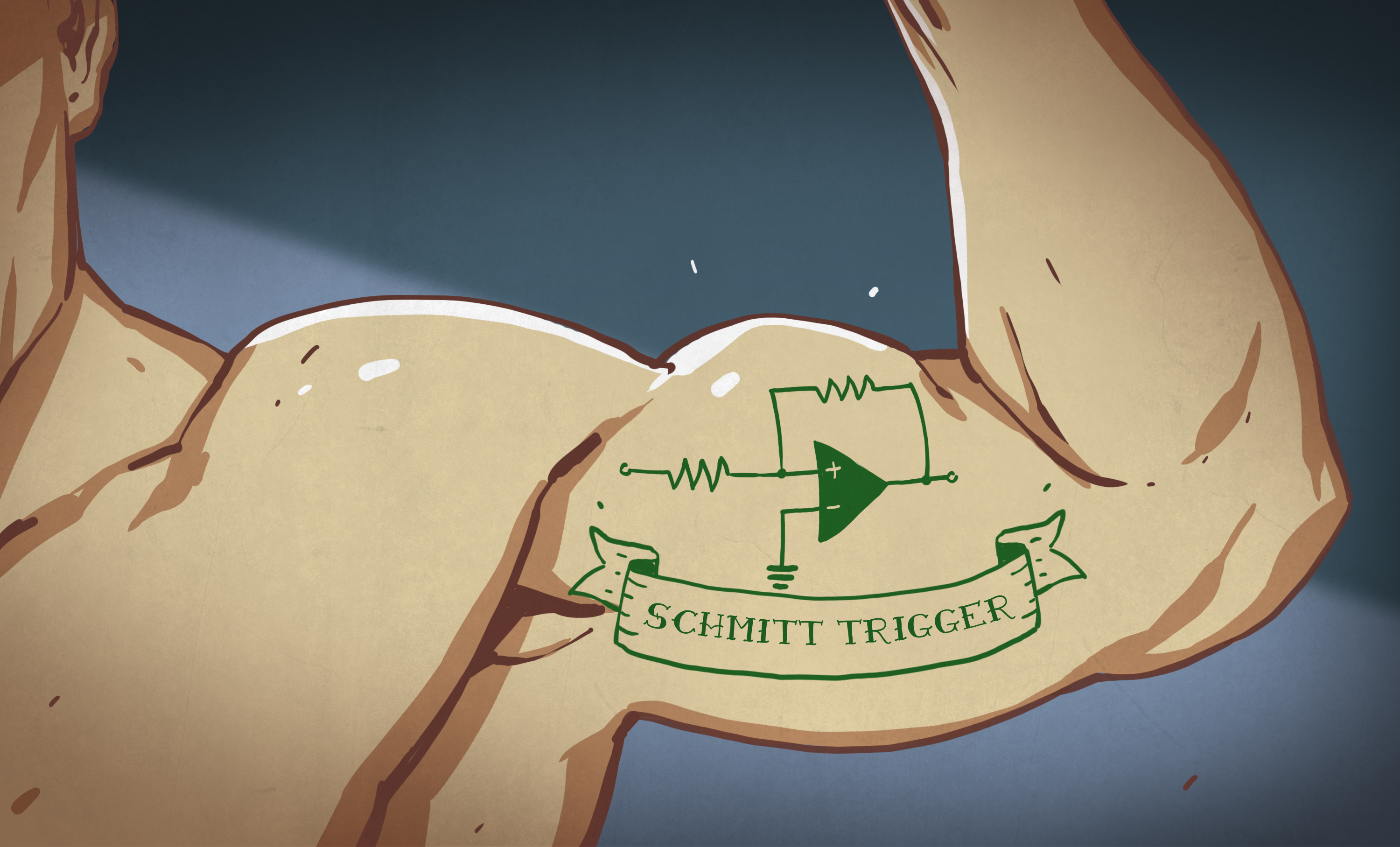
If you have ever watched a circuit panic because a signal hovered awkwardly between “definitely low” and “probably high,” then congratulations: you have already met the problem that Schmitt triggers were born to solve. A Schmitt trigger is one of those quiet heroes of electronics. It does not usually get top billing, it does not wear a cape, and it definitely does not make flashy marketing promises. What it does do is make messy signals behave.
At its core, a Schmitt trigger is a switching circuit with hysteresis. That means it uses one threshold when the input is rising and a different threshold when the input is falling. This tiny detail changes everything. Instead of chattering, flickering, or changing its mind five times in a row like a hungry person scrolling a takeout app, the output stays stable until the input crosses a clear boundary.
This article breaks down what Schmitt triggers are, why they matter, how they work, where they show up in real products, and why engineers keep reaching for them when noise, bounce, and slow edges start making trouble. We will also look at practical design ideas, common mistakes, and real-world experiences that make Schmitt triggers feel less like textbook theory and more like a useful tool you actually want in your kit.
What Is a Schmitt Trigger?
A Schmitt trigger is a comparator-style circuit that turns an analog or slowly changing input into a crisp digital output. The name comes from Otto Schmitt, the inventor associated with the circuit and a pioneer in biophysics. Over time, the Schmitt trigger became a foundational building block in electronics because it solves one stubborn problem extremely well: unstable switching.
In a normal threshold detector, there is usually one transition point. If the input is noisy and hangs around that point, the output can flip back and forth repeatedly. A Schmitt trigger fixes that by creating a deadband, or hysteresis window, between two thresholds:
Upper threshold: the input level that must be crossed before the output changes in one direction.
Lower threshold: the input level that must be crossed before the output changes back.
Because these thresholds are different, the output “remembers” its last valid state while the input moves inside the hysteresis band. That memory-like behavior is why Schmitt triggers are often described as bistable. They are not indecisive. They wait, watch, and only switch when the evidence is strong enough.
Why Hysteresis Matters
If the word hysteresis sounds like something a doctor prescribes after a long weekend, do not worry. In electronics, it simply means the circuit responds differently depending on whether the input is moving up or down.
Imagine a noisy signal from a mechanical switch. When you press the button, the contacts do not settle cleanly in one perfect instant. They bounce. Electrically, that bounce can look like several tiny transitions instead of one neat press. A plain digital input may interpret that as multiple button presses. A Schmitt trigger sees the mess, shrugs, and waits until the input has crossed the proper threshold. Then it switches once and holds that decision until the signal crosses the return threshold.
That same idea helps with slow sensor outputs, RC timing waveforms, dirty signal lines, fan tachometer signals, and any input that rises or falls lazily instead of snapping to a clean logic level. In short, hysteresis improves noise immunity. It reduces chatter, prevents false triggering, and produces cleaner digital behavior.
How a Schmitt Trigger Works
Positive Feedback Does the Heavy Lifting
The secret sauce in a Schmitt trigger is positive feedback. In a basic comparator, the output changes state when the input crosses a reference voltage. In a Schmitt trigger, part of the output is fed back in a way that shifts the effective reference after the output switches. That shift creates the two distinct thresholds.
When the output is low, the circuit may require a relatively higher input voltage to flip high. Once the output goes high, the feedback changes the internal reference so the input must fall to a lower voltage before the output flips low again. That gap between the rising and falling trip points is the hysteresis window.
This is why a Schmitt trigger can take a fuzzy, noisy, or slow-changing waveform and turn it into a cleaner square-ish digital signal. It is not magically removing all noise from reality. It is simply refusing to overreact to small fluctuations near the switching point. Frankly, more meetings could benefit from that strategy.
Inverting vs. Non-Inverting Versions
Schmitt triggers can be built in inverting or non-inverting forms. In an inverting version, the output changes in the opposite direction of the input crossing behavior. In a non-inverting version, the output follows the input direction more directly. Both forms use the same core idea: positive feedback plus two thresholds.
From a design standpoint, the choice depends on the rest of the circuit. If your system already expects an inverted signal, an inverting Schmitt trigger is fine. If not, use a non-inverting implementation or add another stage. The important point is not which version is morally superior. It is whether the signal that leaves the stage is clean, stable, and compatible with what comes next.
Schmitt Trigger vs. Comparator
This is where engineers sometimes start friendly arguments.
A Schmitt trigger is closely related to a comparator, and many Schmitt trigger circuits are implemented using comparator-like behavior with added hysteresis. In practice, you can think of a Schmitt trigger as a comparator that has been taught patience. It does not switch at one razor-thin point. It switches with a deliberate gap between turn-on and turn-off thresholds.
That said, there is an important design lesson here: a general-purpose op-amp can sometimes be used to mimic comparator behavior, but it is often not the best choice for serious comparison tasks. Dedicated comparators are built for switching behavior. General op-amps are built for linear amplification, and they may recover slowly or behave poorly when driven hard into saturation. So yes, you can force an op-amp into Schmitt-trigger-like service. But “can” and “should” are not the same word.
Where Schmitt Triggers Show Up in Real Circuits
1. Switch Debouncing
This is the classic use case. Mechanical switches bounce. Schmitt triggers help convert that messy contact behavior into one clean transition. If you are reading a button with a microcontroller and you want fewer accidental repeats, a Schmitt-trigger input or a debounce circuit built around one is a smart move.
2. Cleaning Up Slow Edges
Not every signal makes a crisp transition. Some rise slowly because of long cables, weak pull-ups, RC timing networks, sensor front ends, or open-drain outputs. Schmitt trigger inputs are especially useful here because they tolerate slow rise and fall times better than plain logic inputs.
3. Sensor Conditioning
Many sensors do not produce perfect logic-level outputs. Hall sensors, light sensors, tach outputs, and other real-world signals often contain noise or gradual transitions. A Schmitt trigger can act as the bouncer at the digital nightclub door: clean shoes, clear threshold, no random chatter allowed.
4. Oscillators and Pulse Shaping
Schmitt triggers are also used in oscillator circuits, especially simple RC relaxation oscillators. In these designs, the hysteresis window determines when the capacitor charge crosses the switching thresholds, and that creates a repeating square-wave output. This makes Schmitt triggers handy for pulse generation, timing experiments, and low-complexity waveform shaping.
5. GPIO and Embedded Systems
Many modern digital interfaces include Schmitt-trigger behavior right at the input stage. That is not an accident. It is there because embedded systems regularly deal with noisy environments, non-monotonic signals, and imperfect external circuitry. Some microcontrollers and interface chips even distinguish between ordinary digital inputs and Schmitt-trigger inputs in their datasheets.
6. Mixed-Signal Designs
In mixed-signal systems, Schmitt triggers are useful right up until they are not. That sounds dramatic, but it is true. They are excellent for turning analog-ish edges into digital decisions. However, when a pin is being used for a real analog function, some devices disable the input Schmitt trigger specifically to avoid unwanted current paths or parasitic effects. In other words, Schmitt triggers are helpful at the digital boundary, but they are not something you sprinkle everywhere like parmesan.
Common Implementations
Dedicated Logic ICs
One of the easiest ways to use a Schmitt trigger is to choose a logic IC that already includes one. Common parts include Schmitt-trigger inverters and buffers. These devices are popular because they are simple, cheap, and easy to drop into digital designs. Some are optimized for low power. Some are overvoltage tolerant. Some are designed for automotive conditions. The family matters, so the datasheet matters.
Comparator-Based Designs
If you want specific thresholds, a comparator with external resistors is often the better path. This approach gives you more control over the hysteresis window and lets you tailor the switching behavior to your input signal. That is especially helpful when dealing with sensors, custom trigger points, or signals with DC offset.
555 Timer Configurations
The legendary 555 timer can also be used as a Schmitt trigger. This is one of those wonderfully practical facts that makes electronics feel like a well-stocked toolbox instead of a museum. If you already have a 555-based design and need threshold behavior with hysteresis, it can often do the job without adding a dedicated trigger IC.
Design Tips That Save Time and Sanity
Check the Actual Thresholds
Never assume all Schmitt triggers switch at the same voltages. Thresholds vary by device family, supply voltage, and manufacturer. One device might use thresholds that feel generous; another might be much tighter. Read the datasheet before you commit a design to the board and before the board commits emotional damage back to you.
Make the Hysteresis Window Big Enough
If the hysteresis band is too small compared with the expected noise, the circuit can still chatter. If it is too large, the circuit may ignore legitimate signal changes or introduce too much delay in switching. Good design means sizing the hysteresis around the real noise margin of the application.
Separate Analog and Digital Thinking
A Schmitt trigger is fantastic for deciding when something has crossed a threshold. It is not a substitute for accurate analog measurement. If you need precision amplitude information, use an ADC or analog front end. If you need a clear yes-or-no decision, that is when the Schmitt trigger earns its keep.
Remember the Source Impedance
High source impedance, RC networks, and long traces all affect how signals reach the threshold region. In many circuits, the Schmitt trigger cleans things up beautifully. In others, it hides symptoms while layout, grounding, or edge-rate issues still need attention. It is a valuable fix, but it is not a permission slip for sloppy signal integrity.
Practical Examples
Example 1: A pushbutton input. Without hysteresis, one press can look like several presses because of contact bounce. Add a Schmitt-trigger buffer and the microcontroller sees one clean event.
Example 2: A light sensor near a threshold. Imagine a sensor output hovering near a logic decision point at dusk. Without hysteresis, a lamp might flicker on and off as the voltage wobbles. With a Schmitt trigger, the “turn on” point and the “turn off” point are different, so the lamp stops acting like it is haunted.
Example 3: A fan tachometer signal. Tach outputs can have slow edges, especially over wiring harnesses or pull-up networks. Schmitt-trigger inputs help interpret those edges reliably.
Example 4: A simple oscillator. Pair a Schmitt trigger with an RC network and you can build a square-wave generator that is useful for timing, blinking, or basic clocking experiments.
Why Schmitt Triggers Still Matter
Schmitt triggers remain relevant because the real world remains rude. Signals are noisy. Switches bounce. Sensors drift. Cables pick up junk. Inputs rise slowly. And digital systems still need clean, decisive logic levels. The Schmitt trigger sits right at that messy border between analog uncertainty and digital certainty.
That is why it keeps showing up everywhere from simple hobby boards to industrial gear, embedded controllers, sensor interfaces, and support circuitry inside larger chips. It is one of those ideas in electronics that feels almost embarrassingly simple once you understand it. Then you realize how many headaches it prevents, and suddenly simple looks brilliant.
Experiences Related to Schmitt Triggers
One of the most common real-world experiences engineers describe with Schmitt triggers starts on a breadboard with a pushbutton. The code is fine, the microcontroller is fine, the wiring looks fine, and yet the LED or counter behaves as if a single button press happened three or four times. New designers often blame software first. Then they blame the breadboard. Then, after enough muttering, they discover contact bounce and the magic phrase input hysteresis. Adding a Schmitt-trigger input stage often turns that tiny electrical tantrum into a clean, predictable response. It is a memorable lesson because the fix feels almost unfairly simple.
Another common experience happens with sensors that live near a threshold. A temperature, light, or proximity sensor may produce an output that drifts slowly instead of snapping between logic rails. On the bench, everything can look fine until the signal reaches the decision region. Then the output chatters, relays click repeatedly, or an indicator flickers like it is auditioning for a horror movie. Designers who add a Schmitt trigger often describe the result in the same way: the system suddenly feels calm. That is the emotional side of hysteresis no datasheet really captures. The circuit stops second-guessing itself.
Schmitt triggers also show up in debugging stories about “mystery noise” that turns out not to be mysterious at all. Long wires, weak pull-ups, open-drain outputs, and shared grounds can stretch edges into slow ramps. A plain digital input may not love that. A Schmitt-trigger input usually handles it much better. In practice, that means fewer phantom interrupts, fewer false counts, and fewer late-night conversations with an oscilloscope where one person in the room is definitely losing the argument.
Embedded developers run into Schmitt-trigger behavior when reading datasheets closely. A chip might advertise Schmitt-trigger GPIO inputs, and that seems like a small detail until a design has to survive noisy cables, motor switching, or real factory conditions. Suddenly that detail becomes a quiet form of insurance. At the same time, designers working with analog pins learn the opposite lesson: on some devices, the Schmitt trigger is intentionally disabled in analog mode to avoid parasitic cross currents. That experience teaches an important boundary. Schmitt triggers are wonderful at the digital edge, but they are not always welcome inside sensitive analog paths.
There is also a very practical experience tied to oscillator designs. Build a simple RC oscillator around a Schmitt trigger, and you get a square wave with surprisingly few parts. It is one of those circuits that makes electronics fun again because the theory connects so directly to what you can measure on the bench. Change the resistor or capacitor, and the frequency changes. Adjust the thresholds, and the timing shifts. It is immediate, intuitive, and slightly addictive.
In short, working with Schmitt triggers tends to leave designers with the same impression: this is not a glamorous circuit idea, but it solves annoyingly real problems. And when a circuit finally behaves after adding hysteresis, the feeling is less “wow, what a clever innovation” and more “finally, the nonsense has stopped.” In engineering, that counts as joy.
Conclusion
Schmitt triggers matter because electronics rarely operate in a perfectly clean world. They give circuits a way to make stable decisions in the presence of noise, bounce, slow transitions, and uncertain signal edges. By using hysteresis and positive feedback, they create two switching thresholds instead of one, which dramatically improves reliability in digital interfacing.
Whether you are debouncing a switch, cleaning up a sensor output, shaping a waveform, or building a simple oscillator, the Schmitt trigger is one of the most practical building blocks you can understand. It is easy to underestimate because the concept is so compact. But once you start noticing how often real systems need clean threshold behavior, the Schmitt trigger stops looking like a small trick and starts looking like essential design hygiene.